ArdorComm Media Group

Monday, April 27, 2026 10:40 PM

Author name: admin

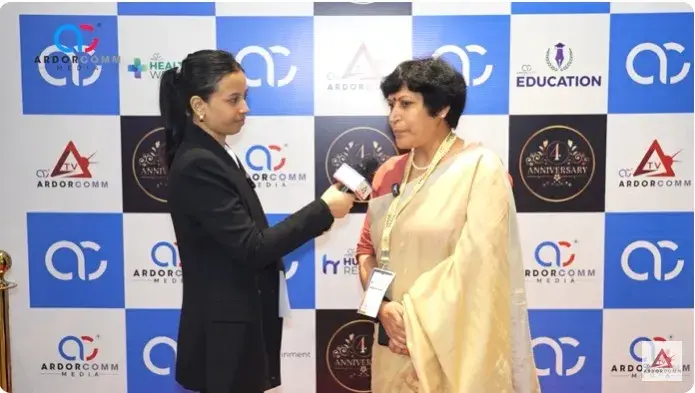
Dr. Seema Negi emphasised over the vision of New Education Policy 2020 and the implimentation

“The more adaptable we are to new technologies, the more we stay ahead of our students” said Dr. Seema Negi Q: What are some of the new and upcoming highlights of your school? A: Our school always focuses on two key aspects: retaining values and culture while providing students with the wings to embrace technology. We ensure that nothing in AI is left unexplored. As a principal, I make it a priority to learn about AI first, then my core team learns, and finally, we bring that knowledge to our parents and students. Q: How quickly was AI adopted in your institution, and why was it necessary? A: We have been working on this extensively and recently started exploring Deep Seek, which we learned about just a few days ago. The more adaptable we are to new technologies, the more we stay ahead of our students. Since children are digital natives, they already know so much. If we, as educators, do not learn what interests them, we may fail to develop a strong connection with them. Q: How have classrooms evolved over time? A: Classrooms have changed in many ways. While smart boards and whiteboards have been around for over a decade, the biggest shift is in the role of teachers. Today, teachers are not just educators; they are guides, facilitators, friends, and mentors. We are now open to learning from our students, co-creating the knowledge system together. Q: What does ‘skilling’ mean to students? Do they truly understand its significance? A: Students do understand the concept of skilling, though their perspective might differ from ours. To illustrate, if a child always greets me with “Hello, ma’am, how are you?” and I respond with “Jai Bharat”—which is our school’s way of greeting—after ten interactions, the child understands that I expect “Jai Bharat” in return. Skills must be role-modeled, and we see this in how students engage in discussions about entrepreneurship with me because they recognize my passion for research. By displaying skills consistently, we create stronger connections with our students. Q: How are students adapting to emerging educational trends such as STEAM education and entrepreneurship? A: Students are highly receptive. From Grade 4 onwards, they participate in entrepreneurship Olympiads, and from Grade 1, they engage in competitions like Idea-Thon. The ideas they generate are incredible, and when they pitch their products, some are so convincing that we tell them to start taking orders. They are developing strong business acumen at an early age, and the days of waiting until Grades 10 or 12 to introduce these concepts are long gone. Q: What message do you have for students preparing for board examinations? A: My message to students is to stay calm and breathe. They have already studied enough, and now is the time for revision. If they have any doubts, they should reach out to their teachers. Often, instead of staying calm, students become anxious, which leads to unnecessary stress. I always refer to the Bhagavad Gita, where Arjuna, in his moment of confusion, became a seeker and turned to Lord Krishna for guidance. Similarly, I urge students to seek help when needed and maintain a positive mindset. What we think is what we become. Q: How do forums like this, which bring together representatives from various educational and corporate sectors, benefit society? A: Forums like this broaden our vision as educators and help us understand the gaps between school education and higher education. For instance, recognizing this gap led us to introduce financial literacy from nursery level. By understanding what’s missing, we can bring these elements into early education, ensuring students are better prepared for the future.

Dr. Seema Negi emphasised over the vision of New Education Policy 2020 and the implimentation Read More »

Dr. Yasmin Pirzada, Founder & Trustee of Belvedere Spring International school emphasised over hygiene and safety in the curriculum

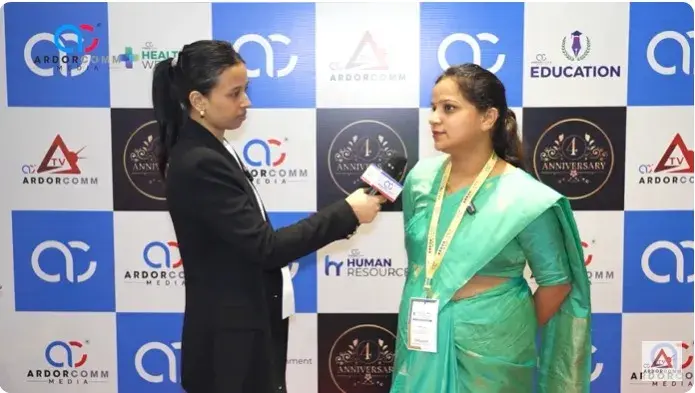
Dr. Yasmin Pirzada said “Our school caters to a diverse section of society, and I would describe it as a boutique school—offering a unique, single-division education from Kindergarten to Grade 12” Q: We would like to know more about your institution. A: We are affiliated with Cambridge International, UK. Belle Vue Spring School is a Cambridge-accredited institution, and we have been operational for 14 years. Our school caters to a diverse section of society, and I would describe it as a boutique school—offering a unique, single-division education from Kindergarten to Grade 12. Q: What are the key skills and initiatives you focus on at different academic levels? A: Our approach to education is holistic. The skill set introduced to a 3-year-old differs from that of a 12-year-old. Our goal is to equip students with the necessary skills to navigate life successfully. Learning should not be restricted but rather tailored to each age group, ensuring they are well-prepared for the future. Q: Hygiene and safety play a crucial role in schools. What initiatives have you taken in this regard? A: Hygiene and safety are integral to our school environment. Post-COVID, we have emphasized sanitization and awareness among children about personal hygiene—like keeping their hands clean and avoiding habits such as putting hands in their mouths. Additionally, safety measures such as proper lift usage, CCTV surveillance, and campus-wide monitoring ensure a secure environment. These precautions help prevent any untoward incidents, and we remain vigilant at all times. Q: Could you share insights into lifelong learning and how your institution promotes it? A: I recently spoke as a panelist on this very topic. Lifelong learners are self-driven and self-motivated individuals. As educators, we can provide them with the right exposure, mentorship, and guidance, but ultimately, the drive to learn must come from within. As the saying goes, you can lead a horse to water, but you can’t make it drink. Similarly, students must develop intrinsic motivation. Our role is to instill this mindset and help them navigate their learning journeys independently. Q: How do forums that bring together educators from different backgrounds contribute to the community? A: Such forums are immensely beneficial. When we meet people from diverse educational and professional backgrounds—ranging from K-12 education to higher learning, corporate leaders, and even government representatives—we exchange valuable insights. It’s a teach one, reach one approach. When ideas are shared, we collectively learn and evolve, ultimately strengthening the educational community as a whole. Q: Ma’am, we are celebrating our third anniversary as a media startup. Do you have a message for us? A: Congratulations on completing three years! Every startup begins small, but with a clear vision and mission, success is inevitable. Wishing you continued growth and success ahead.

Dr. Yasmin Pirzada, Founder & Trustee of Belvedere Spring International school emphasised over hygiene and safety in the curriculum Read More »

Karnataka Govt to Table Greater Bengaluru Governance Bill After Budget on March 7

The Karnataka government is set to introduce the revised Greater Bengaluru Governance Bill in the upcoming budget session, following recommendations from a joint legislature committee that examined the proposal to split the Bruhat Bengaluru Mahanagara Palike (BBMP) into multiple corporations. The 13-member committee, formed in July 2024, submitted its report to the Assembly Speaker on Monday. Committee chairman Rizwan Arshad confirmed that the report would be presented in the Assembly soon after the governor’s address on March 3, with the Bill scheduled for tabling on March 7, following the state budget. The Congress government’s move to restructure the BBMP comes after opposition from the BJP when the Bill was initially tabled in the July 2024 monsoon session. The committee has recommended dividing the civic body into up to seven smaller corporations to improve governance and administration in the rapidly growing metropolis. “Initially, BBMP can be split into two or three bodies, but the Bill will allow the government to decide on further divisions as needed,” Arshad said, emphasizing that the restructuring is crucial for Bengaluru’s development over the next 20-30 years. Piloted by Bengaluru Development Minister D K Shivakumar, this marks the Congress government’s second attempt at restructuring BBMP, after a similar proposal between 2013-2018 was abandoned due to BJP opposition. The proposed Bill is expected to ignite fresh political debates, with stakeholders closely watching its progress in the Assembly. Source: Indian express

Karnataka Govt to Table Greater Bengaluru Governance Bill After Budget on March 7 Read More »

Prof. (Dr.) A.N. Acharya expressed her thoughts on multidisciplinary subjects

“The emphasis was on resilience—helping students navigate both success and failure with confidence” said Prof. (Dr.) A.N. Acharya You have witnessed this event since morning. What were the key takeaways from today’s event? A: The takeaway from this event is that a lot of input was given regarding transformative education and how we have to align with the National Education Policy (NEP) 2020. It will help students in their careers and improve teaching-learning processes. Q: Coming to the digital era, what was the learning from today’s event? A: We had wonderful speakers discussing various aspects of education. They spoke about not just collaboration and networking with fellow students and competitors, but also self-development. The emphasis was on resilience—helping students navigate both success and failure with confidence. This will go a long way in character building and preparing them for future challenges. Q: In an era where digitalization is evolving rapidly, what initiatives has your institution taken to bridge the digital divide? A: We have introduced several digital-driven courses, such as: Computer Science Artificial Intelligence & Machine Learning Mechanical Engineering with AI & Robotics Computer Engineering Additionally, we have incorporated Advanced Computing courses in our curriculum and established multiple Centers of Excellence. These centers provide hands-on training with reputed companies like Tech Mahindra, Philips, and others. Students not only gain knowledge of the latest technologies but also get real industry exposure. Our vision is to produce students who are knowledgeable, confident decision-makers, responsible citizens, and problem-solvers. Q: Ma’am, would you like to highlight any special initiatives happening in your institution currently? A: Recently, our institute launched a startup incubator called “Fine – Foundation for Innovation and Entrepreneurship.” It promotes and supports startups by providing a conducive ecosystem. It’s not just for entrepreneurs; our students also learn from this initiative, gaining insights into building startups and innovation. Moreover, each of our departments has specialized clubs, such as: Energy Club (for Electrical Engineering) Robotics Club (for hands-on projects) Students actively participate in national and state-level competitions, including Smart India Hackathons, where they have performed exceptionally well. They have won several awards instituted by reputed institutes like IITs and NITs. Q: ArdorComm Media recently celebrated its third anniversary as a media startup. Would you like to share a message for us? A: Congratulations to ArdorComm Media for organizing such a wonderful event. This platform brings together industry leaders and academia, fostering a collaborative environment. It helps universities showcase their strengths on both national and international levels, attracting students from diverse backgrounds. Our university, one of the largest public universities in Odisha, offers: 15 undergraduate programs (including 13 B.Tech programs, B.Arch, and Bachelor of Planning) 28 M.Tech programs, MSc, MBA, and other multidisciplinary courses We encourage students to select from multidisciplinary subjects, ensuring holistic development. Importantly, students are also members of academic councils and other key committees, enabling them to contribute meaningfully to university decision-making. Q: Any final message for ArdorComm Media? A: First, congratulations once again to ArdorComm Media for successfully bringing together academia and industry. This event fosters a symbiotic relationship, helping both sectors grow together. I wish ArdorComm Media all the best for future events and look forward to continued collaboration in the journey toward success.

Prof. (Dr.) A.N. Acharya expressed her thoughts on multidisciplinary subjects Read More »

Dr. Kavita Aggarwal shared her journey in upskilling and reskilling students

“Teachers must also reskill and upskill to keep up with changing times” said Dr. Kavita Aggarwal Q: Can you introduce yourself and tell us about your institution and association, MISA? A: I am Dr. Kavita Agarwal, the Director and Head of Schools at DG Khetan International School. I am also the Chairperson of the Members of International Schools Association (MISA) in Mumbai. DG Khetan International School is one of the largest Cambridge schools in Mumbai, with around 2,800 learners. MISA is an association formed by like-minded individuals exclusively for Cambridge schools, and currently, we have 140 member schools across India. Our main focus is to empower teachers and ensure quality education reaches students at their doorstep. Q: What initiatives are you leading for teacher training in your school? A: Teacher training is an ongoing process for us. We focus on upgrading and reskilling our teachers through digital training, research-based learning, and classroom management techniques. Additionally, we emphasize content training and, most importantly, mental health training for students, as their well-being is crucial for holistic development. Q: How important is holistic development in today’s curriculum, and how are you incorporating it? A: Holistic development is not just a part of the curriculum—it is the curriculum. We believe in a balance of IQ (Intelligence Quotient), EQ (Emotional Quotient), SQ (Spiritual Quotient), and AQ (Adversity Quotient). Without balancing these, education is incomplete. Q: Nowadays, academics often take precedence over sports. How much importance should sports have in school education? A: The digital era has replaced physical education to some extent, and we need to motivate children to engage in outdoor activities. It is essential to have physical exercise and reduce excessive screen time. Although it is a challenge, promoting sports is crucial for both the physical and mental well-being of students. Q: How relevant is upskilling and reskilling in schools, and how can we encourage students to adopt it? A: Upskilling and reskilling are 100% relevant. If you don’t evolve and upgrade yourself, you will fall behind. Teachers must also reskill and upskill to keep up with changing times. Earlier, teaching relied on rote learning and the chalk-and-talk method, but today, educators need to be tech-savvy. Similarly, students who once relied solely on note-making and writing are now learning through digital content and videos. The world is changing, and education must change with it. Q: As a media startup, we have recently completed three years of our journey. Do you have any message for our organization? A: First of all, my full support is with you. MISA will always stand by you. I wish you all the best in your future endeavors.

Dr. Kavita Aggarwal shared her journey in upskilling and reskilling students Read More »

Dr. Nidhi Gautam emphasised on improving team activity between students

“Our goal is to provide students with maximum knowledge in digital learning” said Dr. Nidhi Gautam Q: Welcome to this event, Please tell us a little about yourself and your institute. A: First of all, I would like to congratulate you on your third anniversary. I am from Lakshmipati Group of Institutions, Bhopal. This is my second time attending your event, and I would like to thank you for the opportunity. It has been a great experience. Our institution is a group of colleges that includes Engineering, Management, Physical Education, and Professional Courses. Q: What initiatives are being taken at your institution for skill development? A: As we move towards a digital India, our institution is heavily focused on creating a digital campus. Our goal is to provide students with maximum knowledge in digital learning. We are also working on AI-related courses and promoting subjects like CSE with AI. Additionally, we are incorporating digital teaching methods into our curriculum. Q: What is the ratio of remote students to urban students at your institution, and what attracts them to join? A: The ratio is about 50:50. Our core belief is that while infrastructure and buildings are essential for education, the most important thing is delivering knowledge. If students cannot come to us, we aim to reach them with knowledge. Our team is actively working on ensuring that education and information are accessible to students in both urban and rural areas. Q: How do events, seminars, and conferences like this benefit society, especially when educators from various educational sectors come together? A: That’s a great question! This event is not only beneficial for students but also for educators like us. Since attending, I have gained a wealth of information, and for that, I am truly grateful. Such events allow educators, employees, teachers, professors, and HODs to share and learn from each other. This is my second time attending from our college, and I hope to continue joining in the future. We are also nominated for an award, and I hope we go far in this journey.

Dr. Nidhi Gautam emphasised on improving team activity between students Read More »

White House to Control Press Access to Trump, Breaking Long-Standing Tradition

The White House announced on Tuesday that its officials will now decide which news outlets can regularly cover President Donald Trump up close, marking a significant departure from a century-old tradition where an independent press pool held the president accountable on behalf of the American public. The move, alongside the government’s arguments in a federal lawsuit filed by The Associated Press over media access, has sparked concerns among free speech advocates and journalists. Critics argue that it represents an unprecedented attempt to control coverage of the presidency, potentially limiting transparency and press freedom. White House Press Secretary Karoline Leavitt defended the decision, stating that the changes aim to modernize the press pool by rotating traditional outlets and incorporating streaming services. She framed the shift as a way to enhance inclusivity and restore access to the American people who elected Trump. However, media experts warn that allowing the president to selectively choose coverage raises serious First Amendment concerns. Three major wire services that distribute news globally criticized the decision, emphasizing that restricting press access could hinder the dissemination of reliable information about the U.S. president. Free speech advocates have also voiced alarm, warning that such control over media access sets a dangerous precedent for democracy. The announcement adds to growing tensions between the Trump administration and the press, with concerns that limiting access could undermine journalistic independence and public accountability. Source: Business Standard

White House to Control Press Access to Trump, Breaking Long-Standing Tradition Read More »

ArdorComm Media Education Conclave 2025 – Insights from Kumar Chandan Anand

“The evolution of the education sector, the impact of digitalization, and the ethical adoption of AI and technology in education” said Kumar Chandan Anand at DBEC Mumbai 2025 Q: Please tell me about the conclave and your journey in the education sector. How did you start, and what has been your inspiration? A: You are asking about the journey, which has been very interesting. I have been seeing this education community for many years now and the way it has evolved, the way the dynamics of education have changed. During the unprecedented time, it has given a boost to adopt digitalization at a faster pace as it was going at a much slower pace earlier. Three years earlier, the edtech sector has contributed a lot to this sector, and likewise, the education system has seen a lot of changes, a lot of resilience, and a lot of adaptability in terms of technology. Every day we are trying to hear a new terminology in education, let it be big data, IoT—now the buzzword is about artificial intelligence, then machine learning, and so many things. In whatever ways you are trying to adopt technology, use it wisely. With the adoption of technology comes limitations, threats, and ethical concerns regarding digitalization. So, you have to be very apt in ensuring the adoption of digitalization in a very ethical way. This is how we have been moving ahead, and the event is turning out to be very successful because of the kind of gathering we have seen since morning. It was a mix of corporate representatives, edtech players, startups, academicians, and educators who have represented the education fraternity from KG to PG. Not only regionally, but they have come nationally from all parts of the states to the city of Mumbai, Maharashtra. We have been getting messages and good wishes from government dignitaries and the ministry, and likewise, it has helped us execute this event in the way we envisioned.

ArdorComm Media Education Conclave 2025 – Insights from Kumar Chandan Anand Read More »

Dr. DH Singh Thakur, Defence Institute of Advanced Technology emphasised on Defence organizations

Dr. DH Singh Thakur on Defence Education & Innovation said “We Are the Only Defence University in India” Q: Could you tell us more about your institution? A: I’m really glad to talk about my institute. In a nutshell, this is the only defence university in India, operating under the Ministry of Defence. It is part and parcel of DRDO itself. We offer only postgraduate courses, including MTech, MS, MSc, and PhD programs. We cater to the needs of defence organizations across India. Q: Do graduates from your institution have job opportunities in the defence sector? A: The majority of our students are sponsored professionals from defence organizations like the Tri-Services, DRDO, Ordnance Factory, and DPSUs. Recently, we have started admitting civilian students to meet the demand of private defence industries. Our aim is to educate and help in recruiting skilled professionals for both public and private defence sectors. Q: Where does digital literacy stand in your institution? What digital education processes have you implemented? A: In defence, IT and cybersecurity are crucial. Our defence organizations are vulnerable to cyber threats, so we work extensively in this domain. We also train a large number of central government officers to address cybersecurity challenges. Q: What factors do you consider before adopting education technology products? A: We are strong believers in “Make in India.” We ensure that any technological products we adopt are tamper-proof and prefer homegrown solutions rather than relying on foreign technologies. Q: Does your institution have an incubation center? A: Yes, and you are talking to the right person—I was the former director of the incubation center at DIAT. I established it, and it is running successfully. We encourage young students to engage in defence innovation. DRDO has an initiative called “Dare to Dream,” which provides funding from a few crores up to ₹10 crores. Q: What initiatives does your institution take for faculty training? A: Since the defence sector has a high manpower requirement, we conduct faculty training at both national and state university levels. This ensures that knowledge reaches students effectively through trained faculty members. Q: How do forums like this, where academia, corporates, and government come together, benefit the community? A: These forums help us connect, exchange ideas, and understand each other’s perspectives. Earlier, we weren’t in the public domain, but now we are, thanks to platforms like yours. We also get insights into what civilian universities require. Q: ArdorComm Media has recently completed three years as a media startup. Any message for us? A: I really appreciate that ArdorComm Media, despite being just three years old, has already started making an impact. Media houses like yours play a vital role as “E-weapons” in today’s world. Q: Thank you for attending this forum and sharing your insights. A: Thank you for inviting me. I wish you all the best in your future endeavors.

Dr. DH Singh Thakur, Defence Institute of Advanced Technology emphasised on Defence organizations Read More »

Dr. Parag Amin on “Empowering Students with Skills to Become Job Creators”

“We have created a tech-driven environment where everything—from attendance monitoring to assignments, examinations, and assessments—is digital” said Dr. Parag Amin Q: What are some new skill initiatives at your university? A: First and foremost, let me thank Kumar Anand for organizing this wonderful conclave. I think the theme ‘Digital Bharat’ is not only innovative but also very contemporary and realistic in today’s context. India needs a lot of focus on skills, but the real question is—what are we doing about it? At our university, we take pride in being the first urban private skills university based in Mumbai’s corporate hub, BKC. Our emphasis is on empowering students to learn by doing. Traditional learning has two components—knowing and doing. As a SkillTech university, we prioritize the latter. For example, one of the biggest challenges in India today is employment. Many seek jobs, but few generate employment. At our university, we focus on fostering entrepreneurship by developing startups so students can become employment generators rather than seekers. This is achieved through a confluence of technology, leadership, management, and design—our four core pillars. We ensure our students are equipped to stand on their own and create their own enterprises. Q: What initiatives have you taken in teacher training? A: We do not just train or teach teachers—we empower them. There are three key areas where we focus on faculty empowerment: Technology Integration: We have created a tech-driven environment where everything—from attendance monitoring to assignments, examinations, and assessments—is digital. We empower faculty by providing them with this environment and training them to leverage it effectively. Creating a Learning Environment: We conduct faculty development programs every semester, where faculty share best practices, and experts from outside bring fresh perspectives. Student-Centric Approach: We believe students must be at the center of the learning process. Faculty are trained to bring student-centricity and empathy into the classroom, ensuring a more engaging and effective learning experience. Q: How do forums like this help stakeholders in education? A: You are doing a commendable job by bringing all key stakeholders together. Some are providers (like universities), some are consumers (like corporates hiring students), and then there are regulators (like government bodies). If these stakeholders do not share a common platform, a communication gap arises. For example, what we produce as a university and what the industry wants should align. Similarly, regulatory policies should empower universities to meet industry demands. Platforms like this bridge the gap between education providers, employers, and policymakers, ensuring a balanced demand-supply equation in the skill development ecosystem. This is the second event I am attending organized by ArdorComm Media, and I was very impressed by the first event in Pune last year.

Dr. Parag Amin on “Empowering Students with Skills to Become Job Creators” Read More »