ArdorComm Media Group

Saturday, May 30, 2026 1:55 PM

Author name: admin

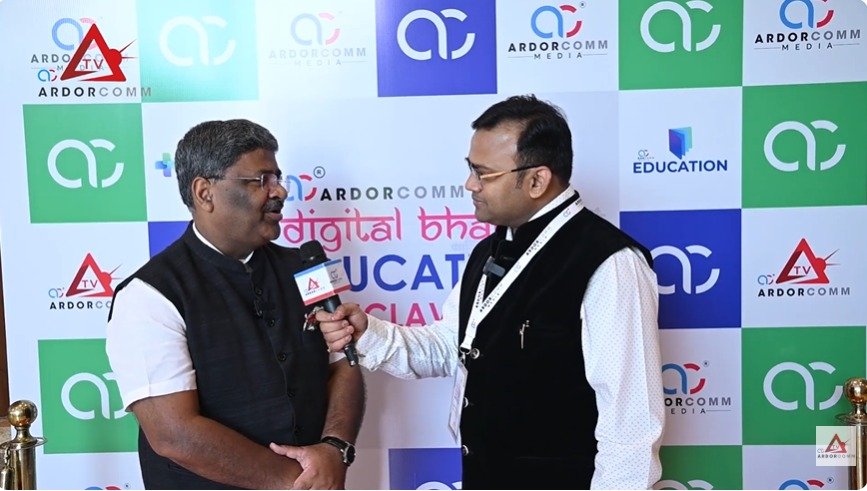
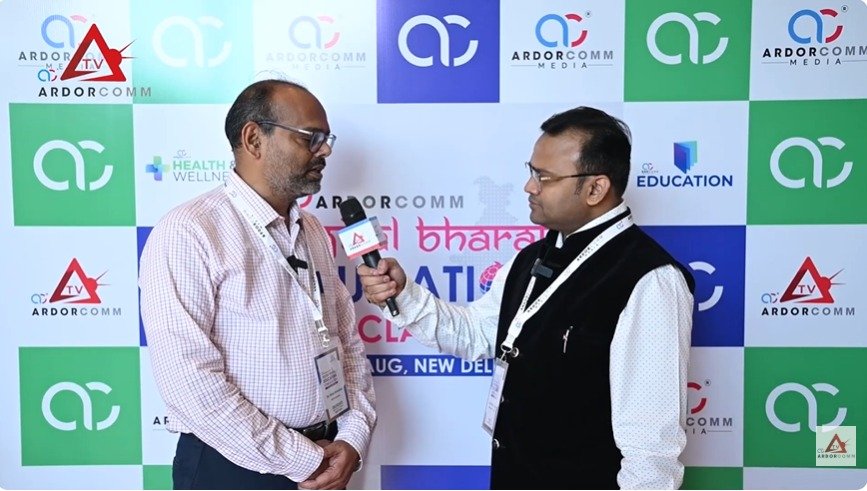
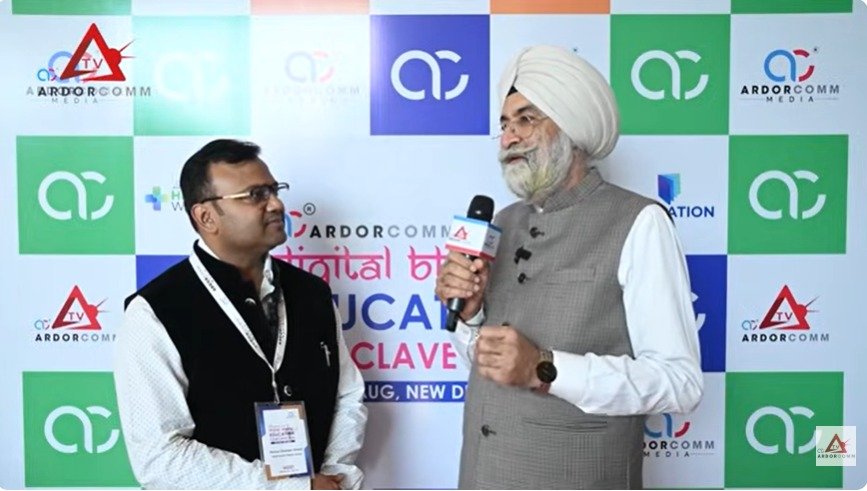
Amar Jeet Soni, Director, EBC Group of Schools, Ahmedabad, shares insights on digital learning, LMS adoption, and bridging urban-rural education gaps

How has your experience been at today’s event, and what value does such a platform bring? Thank you so much. You invited us to this ArdorComm event, and it is a really wonderful platform for all school owners as well as university representatives. We came on a single platform that is purely for learning. At our school, we are running and managing operations, but here all school owners, directors, and principals are present. We get new ideas and learn from others on how to tackle present challenges. What are the key challenges when comparing schools in rural and urban areas? If you talk about schools in rural areas, students are very proactive, teachers are also proactive, and management is also proactive. But the main challenge is that the things we implement in Ahmedabad take around 2–3 years to reach nearby towns or surrounding areas. That is the gap. They have the infrastructure and even AI-enabled campuses, but implementation takes time. However, we ensure that across Gujarat—whether in Ahmedabad or Bharuch—we follow the same pedagogy. How do you decide on curriculum and academic patterns across different regions? It varies from area to area. Even within Ahmedabad, in the west region we follow a different set of books, and in the east region, a different set. Similarly, across Gujarat, for example in Nadiad, we first understand the local student needs and what parents expect. Based on that, we decide the curriculum and content to implement. How important are digital tools like ERP and LMS in schools today? ERP is a 10–15-year-old platform. It covers basic functions like fee generation, accounts, and attendance. But now the demand is for LMS systems. LMS focuses on what you actually deliver to students—how parents can track performance, how students can learn better using technology, and how teachers can interact directly with students. So LMS is essential for modern school campuses. Are such digital systems implemented in rural schools as well? Yes. Recently, we tied up with a Delhi-based company. We have implemented systems where every classroom has cameras, and AI generates reports on what the teacher is delivering. From these AI reports, teachers can understand their performance and improve their teaching methods. How do forums like this benefit the education community at large? These forums definitely help. As school owners, we are usually surrounded by a limited group of people. But here, people from across Gujarat—from different schools and universities—come together. We learn from each other about what they are implementing. Such events provide ideas, and it is great that you are organizing a platform where everyone can come together, learn, and share. What are your key takeaways from today’s event? I met many good people who are implementing strong learning platforms in their schools. We learned from them, and we also shared our ideas. It is a very good learning platform for all school owners.

Amar Jeet Soni, Director, EBC Group of Schools, Ahmedabad, shares insights on digital learning, LMS adoption, and bridging urban-rural education gaps Read More »

JEE Main 2026 Results Announced: 26 Candidates Achieve Perfect 100 Percentile, Aarush Singhal Tops AIR 1

The National Testing Agency (NTA) has released the results for JEE Main 2026 Session 2 Paper 1 (BE/BTech), with 26 students securing a flawless 100 percentile score. Out of these, 12 candidates had already achieved the same score in the January session, reaffirming their top performance. Aarush Singhal from Chandigarh has emerged as the All India Rank (AIR) 1 holder. Notably, Telangana and Andhra Pradesh lead the tally with five toppers each. All 26 candidates who secured perfect scores are male. Some of the high achievers include Jonnala Roshan Manideep Reddy (Andhra Pradesh), Shreyas Mishra (Delhi), Mantha Shiva Kamesh (Telangana), and Siddharth Shrikant Athaley (Maharashtra), along with several others representing states across the country. The NTA score, which is a normalized percentile, ensures fair comparison among candidates appearing in different shifts of the examination. These results will now determine eligibility for the next stage, including admission processes and qualification for JEE Advanced. Source: NDTV

JEE Main 2026 Results Announced: 26 Candidates Achieve Perfect 100 Percentile, Aarush Singhal Tops AIR 1 Read More »

Pocket FM Promotes Lalit Gangwar to COO, Eyes Next Wave of Global Expansion

Pocket FM has elevated Lalit Gangwar to the role of Chief Operating Officer (COO), entrusting him with the responsibility of leading its global audio business operations. In his new position, Lalit will oversee end-to-end functions across international markets, including growth, monetisation, execution, and overall business performance. The leadership move comes at a crucial stage as the company strengthens its operational framework to enable scalable and sustainable global growth. A founding member of Pocket FM, Lalit Gangwar has been instrumental in shaping the company’s growth journey. He played a key role in building the early marketing and growth strategies in India, helping the platform surpass 150 million users within its first year and establishing a strong foothold in the category. He later spearheaded the company’s expansion into the United States, where he built the business from scratch—setting up teams, refining growth strategies, and driving large-scale adoption. Under his leadership, the US market emerged as a significant contributor, demonstrating Pocket FM’s ability to scale globally. As COO, Lalit will now focus on expanding global markets, enhancing operational efficiency, and strengthening the systems, talent, and processes needed for the company’s next growth phase. Commenting on the appointment, Rohan Nayak, Co-founder and CEO of Pocket FM, said that Lalit has been at the core of the company’s journey since inception. He highlighted Lalit’s ability to combine strong execution with long-term vision, making him well-suited to lead the company’s global audio business. Lalit Gangwar expressed enthusiasm about his new role, emphasizing Pocket FM’s mission to create impactful storytelling that transcends borders. He noted that the company will continue to focus on scaling international markets, investing in AI-driven storytelling, and strengthening monetisation strategies. Over the past few years, Pocket FM has established itself as a major player in the audio storytelling space, driven by a growing global audience. The platform is actively investing in new formats, including AI-powered content, while building a robust creator ecosystem to support long-term growth. Source: VMPL

Pocket FM Promotes Lalit Gangwar to COO, Eyes Next Wave of Global Expansion Read More »

NMC Proposes Easier Norms for New Medical Colleges, Stricter PG Standards in Draft Reforms

The National Medical Commission (NMC) has introduced draft amendments to its 2023 regulations, aiming to simplify the process of establishing medical colleges while simultaneously tightening the quality benchmarks for postgraduate (PG) medical education. Under the proposed changes, the Commission plans to relax eligibility norms, enabling more trusts and societies to set up medical institutions. At the same time, it is reinforcing stricter compliance requirements for PG programmes, focusing on infrastructure, faculty strength, and clinical exposure. Stakeholders have been invited to submit feedback on the draft regulations by May 7. A key reform targets doctors serving under the Armed Forces Medical Services (AFMS). The NMC has proposed a single-State registration system, allowing AFMS doctors to practice nationwide during active service without requiring multiple State licences. However, upon retirement, they will need to re-register in the State where they intend to practice. The amendments also aim to streamline administrative processes. Annual licence renewals would be centrally managed to prevent lapses, while cases of professional misconduct will be handled by the registration council, based on inputs from the State where the issue arises. Additionally, teaching experience gained in unrecognised departments will no longer be considered valid. To ensure higher standards in PG medical education, the NMC has proposed revised norms, including a minimum of 220 beds for standalone PG institutes, at least 80% bed occupancy, and a stricter faculty-to-student ratio of 1:2. Private medical colleges will be limited to a maximum of four seats when launching or expanding PG courses. Meanwhile, Minister of State for Health and Family Welfare Anupriya Patel informed the Rajya Sabha that 43 new medical colleges have been established for the 2025–26 academic year. The government has also approved 11,682 MBBS seats and 8,967 PG seats nationwide. The Union Health Ministry continues to support expansion through a centrally sponsored scheme focused on setting up medical colleges linked to district and referral hospitals, particularly in underserved and aspirational regions. So far, 157 colleges have been approved under this initiative, with substantial financial backing from both central and state governments. These proposed reforms reflect a dual approach—expanding access to medical education while ensuring tighter quality control across institutions. Source: The Hindu Photo Credit: Getty Images  

NMC Proposes Easier Norms for New Medical Colleges, Stricter PG Standards in Draft Reforms Read More »

PM Modi, South Korea’s President Lee Jae Myung Hold High-Level Talks to Deepen Strategic Partnership

Prime Minister Narendra Modi held bilateral discussions with South Korean President Lee Jae Myung in New Delhi, focusing on enhancing cooperation across key sectors and strengthening strategic ties between the two nations. The talks are expected to result in the signing of multiple Memorandums of Understanding (MoUs), aimed at boosting collaboration in areas of mutual interest. Earlier in the day, President Lee was accorded a ceremonial reception at the forecourt of Rashtrapati Bhavan. The welcome ceremony was attended by President Droupadi Murmu, External Affairs Minister S. Jaishankar, and Information and Broadcasting Minister Ashwini Vaishnaw. President Lee, accompanied by First Lady Kim Hea Kyung, also paid homage to Mahatma Gandhi at Rajghat by laying a wreath. Later in the evening, President Lee is scheduled to meet President Murmu for further discussions at Rashtrapati Bhavan, followed by a state banquet in his honour. President Lee arrived in India on a three-day official visit, marking his first trip to the country since assuming office. He is accompanied by a high-level delegation, including ministers, senior officials, and business leaders. India and South Korea share a strong and evolving partnership anchored in historical ties, democratic values, and a shared commitment to the rule of law. This visit is expected to further solidify existing collaborations while opening new avenues in emerging sectors. Source: Newsonair

PM Modi, South Korea’s President Lee Jae Myung Hold High-Level Talks to Deepen Strategic Partnership Read More »

Goa Institute of Management and XIM University Study Finds Firms with Diverse Boards Respond Better to Climate Risks

GOA, 20th April 2026: Goa Institute of Management (GIM) and XIM University researchers have highlighted the role of gender-diverse corporate boards in determining firms’ response to climate-related risks and sustainability disclosures. The research suggests that firms with boards that are gender balanced demonstrate improved attention and consistency in tracking environmental issues and climate risk reporting. Published in prestigious Finance Research Letters, the research analyses data from 9,128 firms across 91 countries between 2015 and 2023. It provides new global evidence showing that firms do not respond uniformly but rather adjust their Environmental, Social and Governance (ESG) disclosures differently depending on the nature and intensity of the risks they encounter. Prof. Purba Bhattacherjee from Goa Institute of Management and Prof. Sibanjan Mishra from XIM University have identified two specific forms of climate risks, including – Long-term transitional risks emerging from market shifts towards decarbonisation Short-term or immediate physical risks stemming from extreme weather events and other climate-related disruptions Speaking about the research, Prof. Purba Bhattacherjee, Assistant Professor, Finance and Accounting area, GIM said, “Climate risk forces firms into trade-offs between reporting and resilience, and gender-diverse boards are at the centre of navigating this tension.” Key findings of the analysis include: Firms with higher women representatives on boards have significantly increased ESG disclosure in response to long-term climate transition risks. These disclosures act as strategies of sustainability commitment, and reflect a more forward-looking approach where firms try to signal preparedness for regulatory changes, shifting investor expectations, and low-carbon transitions. During acute disruptions, firms with gender-diverse boards prioritise operational resilience over ESG disclosures for immediate risk management. When this happens, the focus shifts to maintaining business as usual and managing short-term shocks rather than extending sustainability communication. The presence of gender-diverse boards becomes more influential in countries with weak governance and institutional structures. It indicates that when external oversight, regulation, or enforcement mechanisms are scarce, board composition plays a more significant role. Outcomes of this study refute the one-size-fits-all ESG strategy. Prof. Purba Bhattacherjee and Prof. Sibanjan Mishra evidences that firms do not follow a common practice and instead adjust their ESG disclosure based on climate risk type and temporal nature. Speaking about the findings of the study, Prof. Sibanjan Mishra from XIM University said, “Given that companies shift their approach as risks develop, it is evident that ESG reporting is more dependent on climate risk circumstances compared to general perception.” Furthermore, firms with more women on their boards are able to respond to changing environmental uncertainties more effectively and flexibly. The responses oscillate between long-term sustainability signalling and short-term risk management, suggesting a more flexible decision-making process rather than a fixed ESG approach. The study by Prof. Purba Bhattacherjee and Prof. Sibanjan Mishra, contributes to ongoing global discussions on climate governance by distinguishing between different types of climate risks, rather than treating them as a single category, and by showing that firms respond differently depending on whether the risks are gradual or sudden. It also demonstrates how board composition influences firms’ behaviour under uncertainty, suggesting that who is involved in decision-making can shape how firms interpret risks and choose between disclosure, adaptation, or immediate response actions. (Disclaimer: This report is generated from PRO services. ‘ArdorComm Media’ holds no responsibility for its content.)

Goa Institute of Management and XIM University Study Finds Firms with Diverse Boards Respond Better to Climate Risks Read More »

FedEx and IIT Madras Successfully Complete India’s First Urban Drone Logistics trials in a Milestone for Future Supply Chains

CHENNAI, 20th April 2026: Federal Express Corporation, the world’s largest express transportation company, and Indian Institute of Technology Madras (IIT Madras) have successfully completed India’s first intra–city drone delivery flight trials in Bengaluru. The trials mark a significant milestone in the evolution of urban logistics and reinforce FedEx’s commitment to advancing next-generation, technology-enabled supply chains in India. The trials validated a mid-mile aerial logistics service connecting Electronic City Phase II with a site near Bangalore International Airport Limited. Conducted under the research framework of the FedEx SMART Centre at IIT Madras, the initiative tested high-speed drone operations in complex urban airspace and assessed their potential to enhance network efficiency and reduce reliance on congested road infrastructure. The trials form part of FedEx’s broader efforts globally to explore innovative, safe, and scalable logistics solutions for the future. Commenting on this successful trial, Nitin Navneet Tatiwala, vice president of marketing, customer experience, and air network, Middle East, Indian Subcontinent, and Africa (MEISA), FedEx, said, “Innovation is central to how FedEx enables global commerce. This milestone reflects the FedEx SMART Centre’s broader research agenda across air cargo optimisation, electric vehicle integration, and advanced demand forecasting. Together, these efforts are focused on shaping future-ready, resilient and sustainable supply chain ecosystems in partnership with academia, industry and policymakers.” Through detailed analysis of aerial corridors, the IIT Madras FedEx SMART Centre established that a 53 km road journey, which typically takes over 60 minutes, can be replaced by an aerial route of approximately 39-42 km. During the trials, this reduced one-way transit time to nearly 21 minutes – demonstrating the potential for step-change improvements in time-critical logistics. The flight path involved coordinated navigation through Airport Yellow and Red Zones, with all necessary permissions granted by the Directorate General of Civil Aviation. Elaborating on the technical significance of this successful trial for India, Prof. Satyanarayanan R Chakravarthy, core faculty member, FedEx SMART Centre, IIT Madras, said, “These trials represent a significant leap in our mission to create a sustainable and progressive supply chain model. By integrating advanced aerial robotics into urban logistics, we are moving beyond theoretical research to prove the efficacy of high-impact, future-ready solutions that can redefine the global logistics landscape.” Highlighting its long-term impact for Indian Logistics, Prof. Arshinder Kaur, professor in-charge, FedEx SMART Centre added, “The high-speed drone-delivery trials are a strong demonstration of the centre’s commitment to driving innovation across modern supply chains and accelerating cutting-edge technologies.” Technical Parameters  Operations were conducted at an altitude of 120 metres as per guidelines. Safety systems included an autonomous flight termination system, return-to-home capability and anti-collision strobe lighting. The implementation partner for this landmark trial was Amber Wings—a pioneering deep-tech start-up incubated at IIT Madras and founded by the FedEx SMART Centre’s Core Faculty Member, Prof. Satyanarayanan R. Chakravarthy. (Disclaimer: This report is generated from PRO services. ‘ArdorComm Media’ holds no responsibility for its content.)

FedEx and IIT Madras Successfully Complete India’s First Urban Drone Logistics trials in a Milestone for Future Supply Chains Read More »

Nagaland University-led research team convert invasive plant into a tool for drugs, antibacterial & cancer research

LUMAMI, NAGALAND, 20th April 2026: Researchers from Nagaland University and Fazl Ali College, Mokokchung, have transformed one of the State’s most problematic invasive weeds into a powerful tool for next-generation healthcare and sustainable manufacturing, unlocking major end-use applications in pharmaceuticals, medicine and green industry. The research team has developed an eco-friendly method to convert the invasive plant Mikania micrantha into silver nanoparticles that can efficiently accelerate drug production, combat harmful bacteria, and show promising anticancer activity, all without relying on toxic chemicals conventionally used in nanomaterial synthesis. The researchers adopted a “green chemistry” approach that replaces hazardous industrial processes with plant-based science. Using leaf extracts, the team created highly stable silver nanoparticles that act as ultra-fast catalysts that can produce essential drug components known as ‘Imidazoles’ in 30 to 180 seconds. These compounds are foundational to a wide range of medicines used across therapeutic areas. The Research was supported by Anusandhan National Research Foundation (ANRF) and the National Fellowship for Scheduled Tribe Students (NFSTMOTA). The findings were published in Biochemical and Biophysical Research Communications (https://doi.org/10.1016/j.bbrc.2026.153682), a peer-reviewed scientific journal that disseminates short reports of significant findings across the fields of biochemistry, biophysics, and molecular biology. The Paper was co-authored by Manthae C. Phom, Phitovili Sumi, Betokali K. Zhimomi, Khonzani Yanthan, Tonge W W, Shokip Tumtin and Tovishe Phucho. Commending the Nagaland University-led research team for their groundbreaking work in transforming an invasive plant into a valuable resource for pharmaceutical development, Prof. Jagadish K. Patnaik, Vice Chancellor, Nagaland University, said, “This innovative study highlights a fast, eco-friendly approach to drug synthesis while demonstrating significant antibacterial and anticancer potential. Such research underscores the university’s commitment to scientific excellence and sustainable solutions to address global health challenges.” The study’s most immediate impact lies in pharmaceutical manufacturing. The nanoparticles function as reusable catalytic engines, enabling faster, cleaner, and more cost-effective production of key drug ingredients. Unlike conventional methods that depend on expensive and toxic reagents, this approach offers a scalable and sustainable alternative for industry. Importantly, the nanoparticles can be reused at least six times with minimal loss of efficiency, significantly reducing production costs and chemical waste—an advantage with strong implications for large-scale drug manufacturing. Elaborating on the important outcomes of this research, Dr. I. Tovishe Phucho, Associate Professor, Department of Chemistry, Nagaland University, said that there is still a huge potential for many more locally available plants to show such promising properties and with proper funding, further research is possible. Beyond their productions, these nanoparticles demonstrated strong antibacterial activity against dangerous pathogens, including Staphylococcus aureus (a major cause of hospital infections) and Yersinia pestis. This opens up potential applications in antimicrobial coatings, wound care products, and infection control systems. In parallel, lab tests on human colon cancer cells revealed that the nanoparticles significantly reduce cancer cell viability, showing nearly twice the potency of the plant extract alone. This positions the research as a promising step toward developing plant-based nanomaterials for future cancer therapies. The nanoparticles are naturally coated with plant-derived compounds, giving them exceptional stability even at temperatures as high as 165°C. This makes them suitable for demanding industrial environments, including pharmaceutical processing and biomedical applications. TACKLING AN ECO-CHALLENGE Mikania micrantha has long posed ecological challenges across Nagaland. This research converts an invasive species into a high-value raw material for advanced medical and industrial applications. By leveraging Nagaland’s unique biodiversity as part of the Eastern Himalayas, a global hotspot, the study also highlights how local plant species can yield globally relevant scientific innovations. The specific chemical properties of plants from this region contributed to the efficiency and stability of the nanoparticles, marking a first-of-its-kind achievement. (Disclaimer: This report is generated from PRO services. ‘ArdorComm Media’ holds no responsibility for its content.)

Nagaland University-led research team convert invasive plant into a tool for drugs, antibacterial & cancer research Read More »

Zee to Invest ₹116 Crore in PhantomFX to Scale Animation & VFX Capabilities

Zee Entertainment Enterprises Ltd. has approved an investment of up to ₹116 crore in Phantom Digital Effects Ltd. (PhantomFX) as part of its strategy to strengthen its presence in the fast-growing Animation, Visual Effects, Gaming and Comics (AVGC) sector. The decision, cleared during a board meeting on April 17, 2026, involves funding through compulsorily convertible debentures (CCDs) via preferential allotment, to be executed in one or more tranches. The transaction remains subject to shareholder approval from PhantomFX, with internal clearances already underway. Through this investment, Zee aims to tap into PhantomFX’s global expertise, proprietary production workflows, and AI-integrated capabilities to enhance its content ecosystem. The partnership is expected to improve production efficiencies across animation and VFX-driven projects, enabling the creation of high-quality content across OTT originals, kids’ animation, gaming, interactive formats, and mythology and fantasy genres. CEO Punit Goenka described the move as a significant step toward scaling innovation and building immersive content intellectual properties with global appeal. He emphasized that PhantomFX’s strengths align with Zee’s vision of expanding across formats and geographies. Echoing this sentiment, Bejoy Arputharaj highlighted the long-term strategic value of the collaboration, noting that it will preserve PhantomFX’s operational independence while enhancing creative and technological capabilities through AI-powered workflows and global craftsmanship. Both companies also plan to co-develop original intellectual properties spanning OTT, gaming, and licensing segments. The collaboration is expected to unlock synergies in content creation and distribution, opening new growth avenues for both players. Shares of Zee Entertainment Enterprises closed at ₹81.04 on the NSE, gaining 1.05% at the end of the trading session. Source: CNBC

Zee to Invest ₹116 Crore in PhantomFX to Scale Animation & VFX Capabilities Read More »

Wipro Sees Attrition Ease to 13.8% as Hiring Slows Amid Uncertain Demand

Wipro reported a modest improvement in employee retention, with attrition declining to 13.8% in the fourth quarter from 14.2% previously. However, hiring momentum remained subdued, as the company added just 136 employees between January and March, taking its total workforce to 242,156. This comes after a significantly stronger December quarter, during which the company onboarded over 6,500 employees. Wipro stated that its hiring strategy is now more tightly aligned with project demand, reflecting a cautious approach in a volatile business environment. The company had earlier revised its fresher hiring target for FY26 downward to 7,500–8,500 from the initially planned 10,000. It ultimately hired 7,500 fresh graduates during the year but refrained from offering hiring guidance for FY27, citing ongoing uncertainty. Meanwhile, rival Tata Consultancy Services (TCS) reported a notable decline in its overall workforce for FY26, ending the March quarter with 584,519 employees—a reduction of over 23,000 compared to the previous year. Despite a slight increase in attrition, TCS added more than 2,000 employees sequentially and indicated that its restructuring phase has concluded. The company also signaled plans to ramp up campus hiring going forward. On the financial front, Wipro posted a 1.6% drop in annual revenue in constant currency terms for FY26, mirroring broader industry trends impacted by geopolitical tensions, slower deal ramp-ups, and disruptions driven by artificial intelligence adoption. The company’s total revenue stood at $10.48 billion for the fiscal year ending March 31. For the fourth quarter, Wipro reported revenue of ₹24,236 crore, marking a 7.7% year-on-year increase and a 2.9% sequential rise. Net profit declined marginally by 1.9% compared to the same period last year to ₹3,502 crore, though it registered a 12.2% increase on a quarter-on-quarter basis. TCS also reported its first annual revenue decline since listing, with a 2.4% drop in constant currency, attributing the slowdown partly to AI-led shifts in the industry. While ongoing tensions in West Asia have not yet materially impacted revenues, companies remain cautious and are factoring in potential risks if the situation persists. Source: Economic Times

Wipro Sees Attrition Ease to 13.8% as Hiring Slows Amid Uncertain Demand Read More »