ArdorComm Media Group

Friday, February 20, 2026 9:43 AM

Health & Wellness Community

COVID pandemic highlighted numerous gaps in the global health architecture: PM Modi

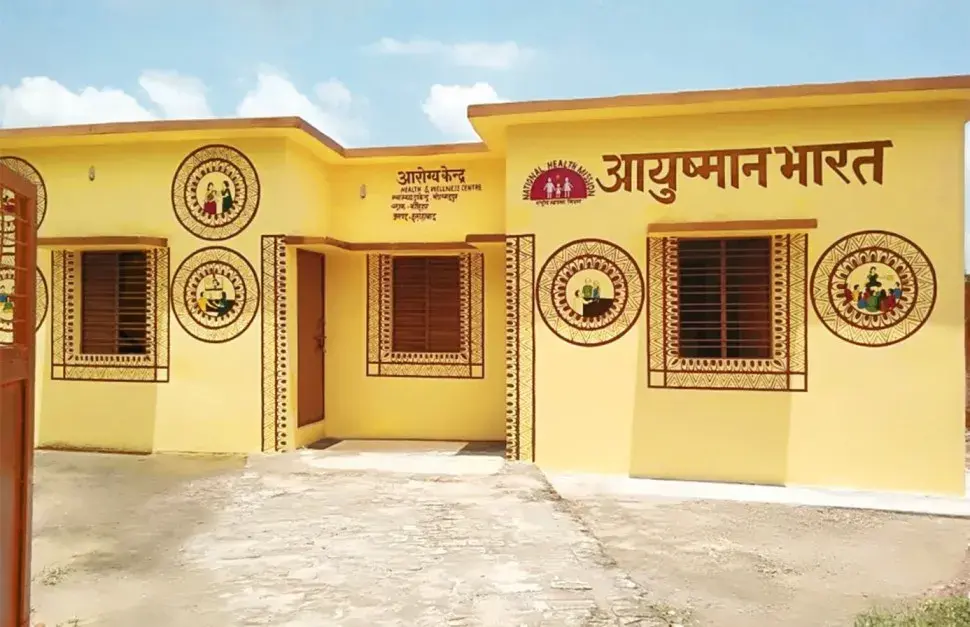
The COVID-19 pandemic, according to Prime Minister Narendra Modi, has shown numerous weaknesses in the global health infrastructure. He also underlined that concerted action is required to create resilience in global systems. While India demonstrated its commitment to international cooperation by sending nearly 300 million vaccine doses to more than 100 countries, Modi said the pandemic also highlighted the need to improve global health equity in his video message to the 76th session of the World Health Assembly in Geneva, Switzerland. “Many of these countries were from the Global South. I am sure that supporting equal access to resources will be a top priority for the WHO in the coming years,” he said. Modi stated that during the past five years, India has strived to improve the availability, usability, and affordability of healthcare. An approach that takes into account the scope of India’s diversity can also serve as a model for others, he said. We are eager to help the WHO with similar initiatives in low- and middle-income nations. The prime minister stated that many of India’s efforts are geared at improving health at the last mile, whether it is through the world’s largest health insurance programme, Ayushman Bharat, or the vast expansion of health facilities, or the drive to bring sanitation and drinking water to millions of people. He added that ancient practises like yoga, ayurveda, and meditation address the physical, mental, and social facets of health. According to India’s traditional thinking, being free of illness does not equate to being in good health. He expressed his happiness that India would soon be home to the first Global Centre for Traditional Medicine of the WHO. The International Year of Millets is another thing that makes me pleased because it shows how important millets are to the world. Modi emphasised that the globe is viewed as a single family in India’s ancient scriptures. “During our G20 Presidency this year, we are working with the theme of ‘One Earth, One Family, One Future’. Our vision for good health is ‘One Earth One Health’. We can be healthy only when our whole ecosystem is healthy. So, our vision is not restricted to just humans. It extends to the entire ecosystem, including animals, plants and the environment,” he said.

COVID pandemic highlighted numerous gaps in the global health architecture: PM Modi Read More »

Government mandates that doctors have a unique ID

According to the National Medical Commission’s (NMC) new regulations, doctors must get a Unique Identification Number (UID) in order to practise medicine in the nation. The NMC ethics board will centrally generate the UID, which will thereafter grant the practitioner registration in NMR and the right to practise medicine in India. A common national medical register will be maintained for all of the nation’s licenced medical professionals, according to the most recent NMC announcement. The Ethics and Medical Registration Board (EMRB) of the NMC will maintain the same. All entries for registered medical practitioners from all State Registers kept by the various State Medical Councils will be included in this record, together with all pertinent information on the practitioner. The “Registration of Medical Practitioners and Licence to Practise Medicine Regulations, 2023” new notification stated that the license to practise medicine granted to a registered medical practitioner will be valid for a period of five years after which the medical practitioner will have to renew the license by submitting an application to the State Medical Council. It said that applications for licence renewal may be submitted up to three months before the license’s validity expires.

Government mandates that doctors have a unique ID Read More »

G7 aims to launch a new vaccination program for developing nations

G7 aims

At the summit of world leaders next week, the Group of Seven (G7) rich countries are expected to decide to launch a new program to provide vaccines to developing nations, according to a report on Saturday in Japan’s Yomiuri newspaper. The World Health Organisation (WHO), the World Bank, and G20 countries like India will also join, it was stated, citing sources from the Japanese government. The COVAX facility, supported by WHO and the Global Alliance for Vaccines and Immunization (GAVI), provided emerging nations with over 2 billion doses of coronavirus vaccine during the COVID-19 pandemic. COVAX faced challenges in guaranteeing fair access, however, as wealthy countries prioritised vaccinations for their citizens, while insufficient storage facilities in poorer countries resulted in supply delays and the disposal of millions of doses that were close to expiration. According to the publication, the new program aims to pool rainy-day funds for vaccine manufacturing and purchases, as well as investments in low-temperature storages and training of healthcare professionals in preparation for the next pandemic. In order to counter the rising power of China and Russia, Japan, this year’s G7 summit chair, seeks to gain support from emerging nations on a variety of topics, including supply chains, food security, and climate change.

G7 aims to launch a new vaccination program for developing nations Read More »

World Bank approves $82 Million in Funding for India’s Zoonotic Disease Prevention Efforts

world bank

The World Bank has approved $82 million in funding to support the prevention and control of zoonotic diseases in India. Zoonotic diseases are illnesses that can be transmitted from animals to humans, such as rabies, avian influenza, and leptospirosis. The project aims to strengthen India’s health systems and surveillance mechanisms to better detect and respond to zoonotic diseases. This will include the development of a national One Health platform, which will bring together experts in human, animal, and environmental health to better understand and prevent the spread of zoonotic diseases. “In India, around 68 per cent of the workforce relies on farming and remains in close contact with domestic animals and poultry, thereby becoming frequently exposed to sick or infected animals,” said Hikuepi Katjiuongua, Adarsh Kumar and Anupam Joshi, the Task Team Leaders for the program. The project will also support the development of rapid response teams, laboratory networks, and community-based surveillance systems. The funding will be provided over a period of five years and will be implemented by the Indian government’s Ministry of Health and Family Welfare.

World Bank approves $82 Million in Funding for India’s Zoonotic Disease Prevention Efforts Read More »

Pharma firm IOL receives approval from European regulators to export paracetamol

IOL Chemicals and Pharmaceuticals has been granted a Certificate of Suitability by the European Directorate for the Quality of Medicines and Healthcare (EDQM) to export paracetamol to the European market. One of the top pharmaceutical (APIs) firms and a prominent player in the market for specialty chemicals, a listed company was established in 1986. Paracetamol is widely used in medications prescribed for pain relief and fever treatment. The pharma firm informed stock exchanges on Monday that, “The certification issued by the EDQM verifies the compliance of pharmaceutical substances and with this backing, IOL will now be able to export paracetamol to the European continent.” In 2022, the company’s Punjab-based factory will begin commercial production of paracetamol. It can currently produce 3,600 tonnes of paracetamol in total. The UK, Belgium, Hungary, Spain, Germany, Italy, Netherlands, Switzerland, Poland, Ireland, the United States, Peru, Brazil, Argentina, Colombia, Indonesia, South Korea, Thailand, Bangladesh, Turkey, United Arab Emirates, China, Hong Kong, and Egypt are the nations where it has consumers abroad.

Pharma firm IOL receives approval from European regulators to export paracetamol Read More »

Govt to discuss TMR with pharma bodies on May 16

At a meeting on May 16, the government plans to reopen discussions with industry stakeholders on the divisive subject of trade margin rationalisation (TMR) on drugs and medical devices. Members of pharmaceutical associations and makers of medical devices were invited to the meeting in this respect by the Department of Pharmaceuticals (DoP) and the National Pharmaceutical Pricing Authority (NPPA), who also requested suggestions by Friday. “The DoP and NPPA have been receiving various suggestions from the industry for amendments in DPCO, 2013 and National Pharmaceutical Pricing Policy. Hence, it has been decided to organise a workshop with industry stakeholders with the participation of the associations of pharma and the medical device sector,” said the invite. The lobby group members are anticipated to start the conversation of implementing TMR on pharmaceutical formulations. The government should implement the “one-molecule, one-price” formula, according to several small and medium-sized pharmaceutical companies.

Govt to discuss TMR with pharma bodies on May 16 Read More »

WHO sets out future Covid policy

The World Health Organisation released its updated COVID-19 strategy on Wednesday in an effort to assist nations in transitioning from emergency mode to a long-term preventive and control strategy. The publication precedes a meeting of the COVID-19 emergency committee of the WHO, where it will be decided whether the pandemic still requires the highest degree of alert, which was instituted in January 2020 at the beginning of the outbreak. The final decision, which belongs to Tedros Adhanom Ghebreyesus, director general of the WHO, might not be made public until a few days after that meeting. Since the first cases were reported in late 2019 in the Wuhan region of China, the WHO has released a fourth strategic plan for dealing with COVID-19 for the years 2023–2025. The aim is “to support countries as they transition from an emergency response to longer-term sustained COVID-19 disease prevention, control, and management,” the head of the WHO stated in the report. The WHO warned last week that although COVID-19 mortality had decreased by 95% since the year’s beginning, the virus was still actively spreading. According to the World Health Organisation, COVID-19 is a persistent condition, and nations must learn how to handle its ongoing non-emergency impacts, including the Long COVID condition that followed COVID-19. The previous strategy’s two objectives—to stop COVID from spreading and to treat the virus to lessen mortality, morbidity, and long-term effects—will be upheld by the new approach. The updated strategy, however, includes a third objective: “to support countries as they transition from an emergency response to longer-term sustained COVID-19 disease prevention, control, and management.” According to Tedros, Long COVID appears to be present in 6% of symptomatic cases, and it is strongly addressed in the WHO report. According to the organization, “This is why we urge countries to maintain sufficient capacity, operational readiness and flexibility to scale up during surges of COVID-19, while maintaining other essential health services and preparing for the emergence of new variants with increased severity or capacity.” Source: AFP

WHO sets out future Covid policy Read More »

AIIMS Delhi will begin robotics training for surgical expertise

The All India Institute of Medical Sciences (AIIMS) in New Delhi is getting ready to open its cutting-edge robotics training facility on May 2 with the goal of giving doctors the finest possible training in robotic-assisted surgery. According to officials, the facility would begin operations in the convergence block, wet lab, and SET (skills, e-learning, telemedicine) facility at AIIMS New Delhi on May 2. This is done in collaboration with India Medtronic Private Limited, according to AIIMS Delhi. This institute will offer surgeons the greatest possible training in robotic-assisted surgery, including wet lab and simulation training. The agreement to establish a robotic training centre in any government or public body is the first of its kind. It went on to say that such training is essential for surgeons and will open the door to providing patients with more advantages and surgical solutions. In order to train surgeons nationwide and increase access to the advantages of robotic-assisted surgery, the partnership combines cutting-edge technology and decades of surgical expertise. Surgeons must receive training and education on cutting-edge technologies like robotics, which will help the entire medical community develop in providing patients with more advantages and surgical options, according to a statement from AIIMS.

AIIMS Delhi will begin robotics training for surgical expertise Read More »

GlaxoSmithKline Pharmaceuticals Ltd. launches anti-shingles vaccine in India

Shingrix (Zoster Vaccine Recombinant, Adjuvanted) was launched in India on Monday by GlaxoSmithKline Pharmaceuticals Ltd. The vaccine is aimed to prevent post-herpetic neuralgia and shingles (herpes zoster) in individuals 50 years of age and older. According to a statement from the company, Shingrix is the first non-live, recombinant subunit vaccination to be administered intramuscularly in two doses. According to the manufacturer, the vaccine Shingrix can guard against shingles, which is brought on by the varicella zoster virus (VZV), which also causes chickenpox, for at least 10 years. Managing Director of GlaxoSmithKline Pharmaceuticals Limited, Bhushan Akshikar, commented on the launch, saying, “GSK is pleased to bring Shingrix to protect India’s 260 million adults above 50 years of age from shingles and its complications. Existing treatment options may not give complete relief from this pain. Vaccination is the only effective preventive option. We are pleased to add Shingrix to our adult vaccination portfolio and make it available across the nation.” According to the statement, the vaccine has a proven efficacy rate of over 90% against shingles. In 2017, the US Food and Drug Administration (FDA) approved Shingrix for the treatment of persons 50 years of age or older who are at risk of developing shingles. Shingrix received approval from the European Commission in 2018 to be used in individuals 50 years of age or older as shingles prevention. More than 90% of Indian participants in a seroprevalence study had this virus in their bodies by the age of 40, making them susceptible to developing shingles. A painful rash result from shingles. In every case, the rash goes away, but the pain frequently lasts for months or years. Post-herpetic neuralgia (PHN) is the medical term for this pain. Due to decreased immunity, people over 50 and those with long-term illnesses such diabetes, heart disease, and kidney disease are more likely to develop shingles. In elderly folks, shingles can also result in consequences like hearing loss and vision loss. Shingrix is a non-live vaccine, according to the company, so it can be given to anyone over 50 who are immunosuppressed or weakened and may be at an increased risk of developing Shingles.  

GlaxoSmithKline Pharmaceuticals Ltd. launches anti-shingles vaccine in India Read More »

Active COVID cases in the country have risen to 66,170

According to data published on Friday by the Union Health Ministry, India has recorded 11,692 new coronavirus infections, with 66,170 active cases. The death toll has risen to 5,31,258 with 28 deaths, including nine confirmed by Kerala, according to data updated at 8 a.m. The number of COVID cases is 4.48 crore (4,48,69,684). According to the ministry, the national COVID-19 recovery rate has been recorded at 98.67%, and the active cases currently make up 0.15 percent of all infections. A record 4,42,72,256 people have been cured of the disease, while the case fatality rate is 1.18 percent.According to the ministry’s website, 220.66 crore doses of the COVID vaccine have been administered throughout the country so far as part of the nationwide vaccination drive.  

Active COVID cases in the country have risen to 66,170 Read More »