

ArdorComm Media Group

Tuesday, July 28, 2026 4:33 AM

community

India set to become world’s third-largest economy by next year: Amit Shah
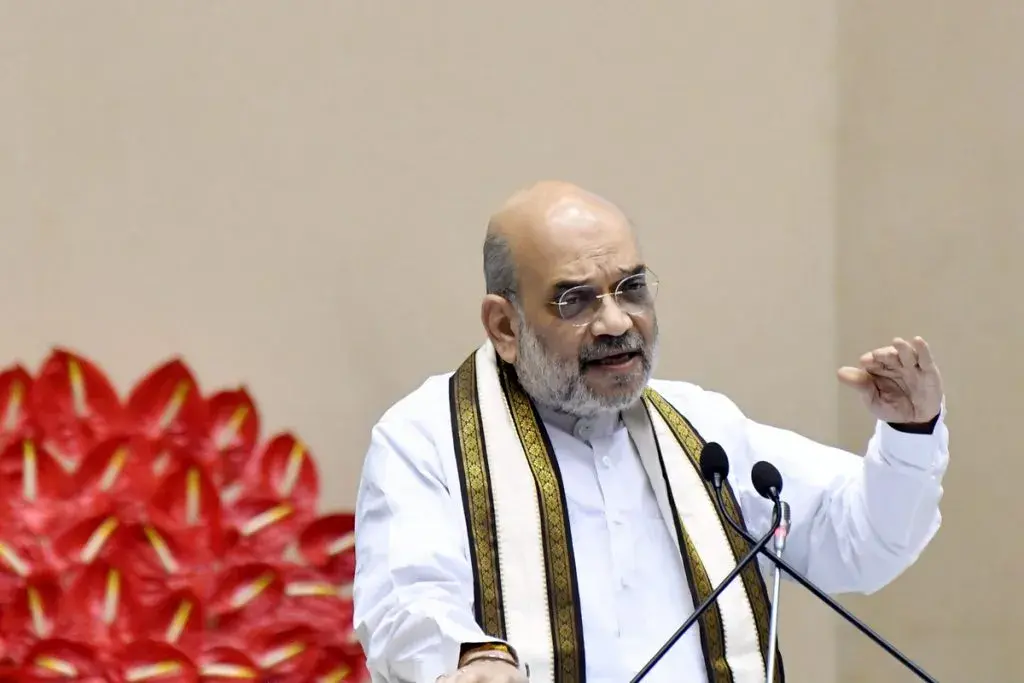
Union Home and Cooperation Minister Amit Shah has expressed confidence that India will emerge as the world’s third-largest economy by the end of next year. He made the statement while addressing a public gathering in his hometown Mansa, located in Gujarat’s Gandhinagar district, after inaugurating and laying foundation stones for development projects worth more than ₹267 crore. Highlighting the government’s long-term vision, Mr. Shah said India is steadily moving towards becoming a global leader across sectors by 2047. During the event, he referred to the Somnath Temple as a powerful symbol of India’s cultural identity and self-respect. He announced that the government will observe Somnath Swabhiman Parva throughout the year to highlight the temple’s thousand-year-old heritage and inspire future generations with its legacy. Speaking on sports development, Mr. Shah noted that Ahmedabad is fast emerging as an international sports destination, with efforts underway to bring the 2036 Olympic Games to the city. He encouraged young athletes in the region to make optimal use of the newly developed sports complex in Mansa. At a separate programme in Gandhinagar, the Home Minister underscored India’s remarkable progress in biotechnology. After inaugurating the BSL-4 Biocontainment Facility at the Gujarat Biotechnology Research Centre, he said India’s bio-economy has grown significantly—from 10 billion US dollars in 2014 to 166 billion US dollars by the end of 2024. Source: newsonair

India set to become world’s third-largest economy by next year: Amit Shah Read More »
Prasar Bharati Launches ‘Creator’s Corner’ to Promote India’s Creator Economy

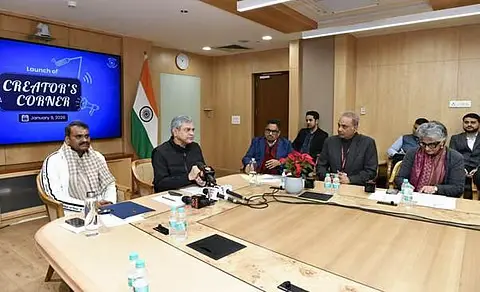
In a major step towards strengthening India’s growing creator economy, public broadcaster Prasar Bharati has announced the launch of a new 30-minute programme titled Creator’s Corner on DD News and its digital platforms. The show will air in prime time from Monday to Friday at 7 pm, with repeat telecasts at 9:30 am from Tuesday to Saturday. The initiative will showcase content created by digital creators, with individual segments ranging from two to ten minutes. Submissions will be selected through an application process and vetted by an independent panel to ensure quality and diversity across subjects. All creators and their channels will receive full on-screen credit for their work. Information and Broadcasting Minister Ashwini Vaishnaw described the move as a landmark reform for Prasar Bharati, calling it the first time content creators are being integrated into a national public broadcasting network under a structured revenue-sharing model. Under this model, 90 per cent of the revenue generated will go to the creators, while Prasar Bharati will retain the remaining 10 per cent. Minister of State for Information and Broadcasting L Murugan said the programme will provide a credible national platform for influencers and creators producing meaningful and high-quality content. Vaishnaw also stated that 2026 will mark a year of wide-ranging reforms for Prasar Bharati, with a shift towards modern programming styles aligned with technology, contemporary themes and the expectations of younger audiences. He further announced a complete restructuring of the Ministry of Information and Broadcasting, including the introduction of a new operating system aimed at making the ministry and its allied bodies more industry-focused, creator-friendly and technology-driven. The Creator’s Corner initiative was unveiled in the presence of Minister of State L Murugan, Information and Broadcasting Secretary Sanjay Jaju, Prasar Bharati CEO Gaurav Dwivedi, and other senior officials. Source: PTI

Prasar Bharati Launches ‘Creator’s Corner’ to Promote India’s Creator Economy Read More »

India Bears Second-Highest Global Economic Burden from Diabetes: Study

India is facing the world’s second-largest economic burden due to diabetes, estimated at USD 11.4 trillion, according to a new international study. The United States tops the list with costs of USD 16.5 trillion, followed by China at USD 11 trillion. The study, conducted by researchers from institutions including the International Institute for Applied Systems Analysis and the Vienna University of Economics and Business in Austria, assessed the economic impact of diabetes across 204 countries between 2020 and 2050. The findings have been published in the journal Nature Medicine. Globally, diabetes-related costs are estimated at nearly USD 10 trillion when excluding unpaid care provided by family members, accounting for about 0.2 per cent of the world’s annual GDP. However, when informal caregiving is included, the total economic burden surges to USD 152 trillion, or roughly 1.7 per cent of global GDP. Researchers noted that informal care alone contributes close to 90 per cent of the total economic burden, as people with diabetes live significantly longer with the condition than they face mortality risks. This extended care often forces family caregivers to reduce work hours or exit the labour market, adding to economic losses. In purchasing power terms, the study estimated diabetes-related costs at INT$ 1.6 trillion for India, INT$ 2.5 trillion for the United States, and INT$ 1.0 trillion for China. When losses from informal care are included, the figures rise sharply, with India’s burden reaching INT$ 11.4 trillion. For India and China, the high costs are largely driven by the sheer size of the diabetic population, while in the United States, higher treatment expenses and diversion of physical capital are the main contributors. The study also highlighted stark disparities between high- and low-income countries, noting that treatment costs form a much larger share of the burden in wealthier nations due to better access to medical care. The researchers stressed that diabetes poses a greater economic challenge globally than conditions such as cancer or Alzheimer’s disease. They emphasized that prevention through healthier lifestyles, including regular exercise and balanced diets, remains the most effective strategy to curb both health and economic impacts. Widespread screening, early diagnosis, and timely treatment were also identified as critical measures. According to earlier research published in The Lancet in November 2024, more than a quarter of the world’s diabetic population currently lives in India. Source: PTI

India Bears Second-Highest Global Economic Burden from Diabetes: Study Read More »

Punjab Government Launches ‘Mission Pragati’ to Provide Free Coaching for Competitive Exams

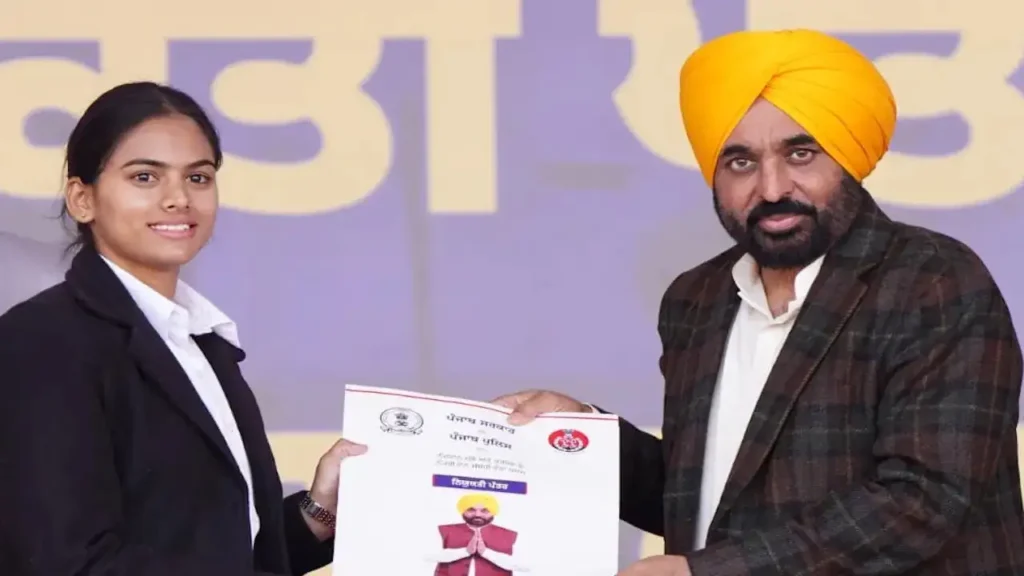
Punjab Chief Minister Bhagwant Singh Mann on Sunday announced the launch of Mission Pragati, a new state initiative aimed at equipping young aspirants with free academic and physical training for various competitive examinations. The programme is designed especially to support meritorious students from rural and economically weaker backgrounds who are unable to afford expensive private coaching. Speaking to students at the district library, the Chief Minister said that free coaching has already begun for examinations conducted by the Services Selection Board (SSB), as well as for recruitment in the police and armed forces. The first batch currently includes 40 enrolled students. Under Mission Pragati, candidates receive classroom instruction along with physical training conducted by experienced trainers from the Punjab Police, ensuring comprehensive preparation. Students are also granted free access to books and study resources by registering them as library members. Mann highlighted that the initiative utilises existing infrastructure, keeping costs minimal. He further explained that the programme follows a “youth helping youth” mentoring model, where guidance is provided by candidates who have themselves appeared in competitive exams. The initiative has garnered support from educationists, universities, police officials, athletes and students. Emphasising inclusivity, the Chief Minister said Mission Pragati is guided by the principle of “no one left behind” and aims to enhance youth participation in government services. Reaffirming the state’s broader education vision, Mann said Punjab’s reforms are focused on holistic youth development and transforming job seekers into future job creators. Source: PTI

Punjab Government Launches ‘Mission Pragati’ to Provide Free Coaching for Competitive Exams Read More »

Mahindra & Mahindra Announces HR Leadership Transition; Rohit Thakur to Succeed Ruzbeh Irani

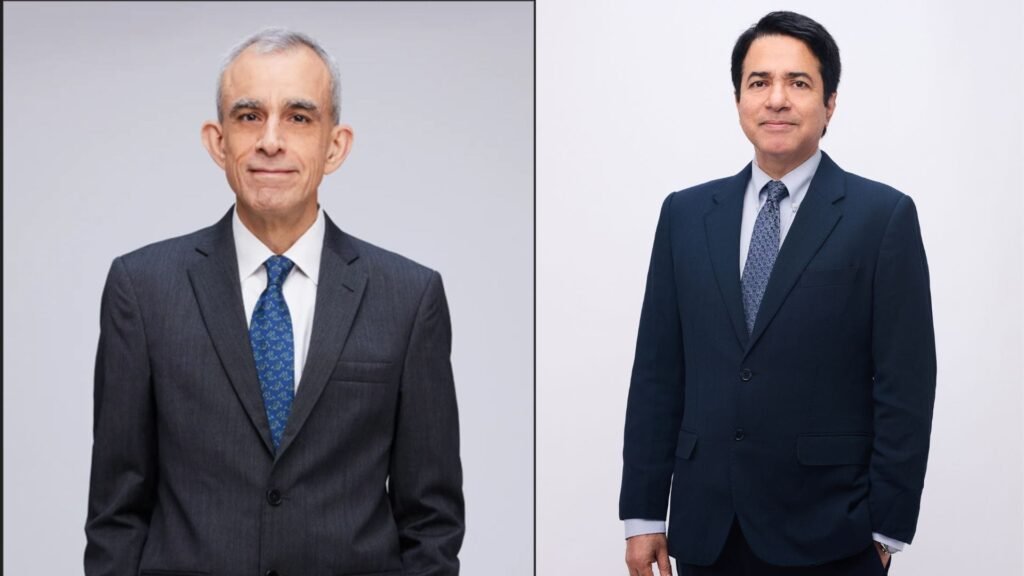
Mahindra & Mahindra on Friday revealed a significant leadership transition in its human resources function, announcing that Rohit Thakur will assume the role of Group Chief Human Resources Officer (CHRO) from 2 April 2026. He will succeed Ruzbeh Irani, who is set to retire after completing more than 19 years with the company. The change is part of Mahindra’s well-defined succession planning process to ensure continuity and stability in senior leadership. Irani, a key member of the Mahindra Group Executive Board, will step down on 1 April 2026 following his superannuation. The company acknowledged his nearly two decades of service, crediting him for his significant role in shaping the group’s HR strategy and people-centric culture. Following the announcement, Mahindra & Mahindra shares were trading at ₹3,714.55, down ₹9.60 or 0.26%, at around 9:35 am. Rohit Thakur, who currently serves as CHRO for Mahindra’s Auto and Farm sectors, brings with him wide-ranging global HR experience. His career includes senior HR leadership roles at Microsoft India and Accenture, where he handled large-scale talent strategies, operations and cultural transformation initiatives. Thakur has also worked with GE across multiple businesses in India and the United States, and has led HR functions at fast-growing startups such as Paytm and LEAD School. Academically, he holds a commerce degree from Shri Ram College of Commerce (SRCC), Delhi, and an MBA in Human Resources from XLRI, Jamshedpur. With Thakur’s appointment, Mahindra & Mahindra said it aims to further strengthen its focus on talent development, leadership continuity and organizational growth. Source: Economic Times

Mahindra & Mahindra Announces HR Leadership Transition; Rohit Thakur to Succeed Ruzbeh Irani Read More »

Two-Day 49th Annual Extravaganza Celebrated at Satluj Public School, Sector 4, Panchkula

Satluj Public School, Sector 4, Panchkula witnessed a vibrant celebration of talent, culture and national pride during its two-day 49th Annual Day Extravaganza held on the school premises. The event was organised under the theme “Satluj Pride 2025 – Nation Rising: The World Wakes up to the Glory of India” and showcased the creativity, confidence and discipline of students across various grades. The celebrations began on Day 1 with Ms. Alba Smeriglio, Deputy High Commissioner, British Deputy High Commission of the UK Embassy, Chandigarh, as the Chief Guest. She appreciated the students for their academic discipline, creativity and confident performances. The cultural programme opened with “Game Changers: The Women Who Made India Proud,” presented by students of Grade XI, highlighting the achievements of inspiring Indian women. This was followed by “Borders & Brotherhood: Divided by Politics, United by Love” by Grade IX students, which conveyed a strong message of harmony and shared humanity. The evening concluded with “Maha Kumbh: Myth, Belief, Reality,” enacted by Grade VIII students, offering a meaningful portrayal of India’s spiritual heritage. On Day 2, the Chief Guest was Mr. Sanjeev Kumar Jain, IPS, DGP Haryana Human Rights Commission, Government of Haryana. The programme featured a vibrant series of performances reflecting creativity, cultural diversity and moral values. Highlights included “Winter Wonder: A Christmas Tale of Values” by Grade V students, “Kantara: Roots, Rituals & Rise” by Grade VI, and “Global Beats 2025: The World in Rhythm” by Grade VII, celebrating tradition, unity and global harmony. Sharing his thoughts, Mr. Reekrit Serai, Managing Director, Satluj Public School, Sectors 2 and 4, Panchkula, and Satluj Group of Schools, said that the colourful line-up of performances was a visual treat for parents and guests. He congratulated the students who performed and those who were honoured, expressing pride in their achievements. The occasion was also graced by members of the school management, including Dr. Krit Serai, Co-Chair and Director-Principal, Sector 4; Ms. Madhurima Serai, Co-Principal, Sector 4; and Mrs. Radhika Panickar Serai, entrepreneur, publisher of Rumour Books India, philanthropist and recipient of the Nari Shakti Samaan by the Government of India for her exemplary contributions as an entrepreneur and educationist. The two-day annual extravaganza reflected Satluj Public School’s commitment to holistic education, cultural values and nurturing responsible global citizens. (Disclaimer: This report is generated from PRO services. ‘ArdorComm Media’ holds no responsibility for its content.)

Two-Day 49th Annual Extravaganza Celebrated at Satluj Public School, Sector 4, Panchkula Read More »

Dhurandhar Sets New Benchmark as Highest-Grossing Hindi Film in India

Aditya Dhar’s action-packed spy thriller Dhurandhar has rewritten Indian box office history by becoming the highest-grossing Hindi film ever in the domestic market. The makers announced that the film has surpassed Rs 831 crore net collections in India, claiming the top position among all Hindi-language releases to date. Led by Ranveer Singh, the film added Rs 5.70 crore net on Day 33 (Tuesday), taking its total India net earnings to Rs 831.40 crore. With this feat, Dhurandhar has edged past the previous record-holder, the Hindi version of Pushpa 2: The Rule, which had amassed Rs 830 crore. Confirming the milestone, the production team said in a statement that the film’s achievement marks a defining moment for Indian cinema, setting a new standard for box office success in the Hindi film industry. Before Dhurandhar, the record was held by Pushpa 2: The Rule (Hindi). Other major Hindi blockbusters include Shah Rukh Khan’s Jawan with Rs 643 crore and the horror-comedy ** Stree 2**, which earned Rs 627 crore in India. The film’s success has been driven by strong week-on-week performance. It opened with Rs 218 crore in its first week, followed by Rs 261.50 crore in week two. Week three brought in Rs 189.30 crore, while week four added Rs 115.70 crore. The film collected Rs 35.80 crore during its fifth weekend and has continued to maintain steady weekday numbers. Written and directed by Aditya Dhar, Dhurandhar is a high-intensity espionage drama inspired by real-life geopolitical and terror-related events, including the Kandahar hijacking, the 2001 Parliament attack, and the 26/11 Mumbai terror attacks. Much of the story unfolds in Lyari, Karachi, a region known for its history of gang violence and turf wars. The film has generated sharply divided opinions from critics and audiences alike. Produced by Aditya Dhar and Lokesh Dhar under B62 Studios, in association with Jio Studios led by Jyoti Deshpande, the film features an ensemble cast including Sanjay Dutt, Akshaye Khanna, Arjun Rampal, Sara Arjun, R. Madhavan, and Rakesh Bedi. Reacting to the achievement, Yash Raj Films congratulated the team on social media, calling Dhurandhar a landmark moment in Indian cinema and applauding Aditya Dhar and Jio Studios for delivering the highest-grossing Hindi film ever in a single language. Source: Economic Times

Dhurandhar Sets New Benchmark as Highest-Grossing Hindi Film in India Read More »

NMC Clears Path for For-Profit Firms to Establish Medical Colleges

The National Medical Commission (NMC) has officially revised its regulations to allow for-profit companies to set up medical colleges in India, marking a significant shift from the earlier framework that restricted such institutions to non-profit Section 8 companies. Announcing the change, NMC Chairman Abhijat Chandrakant Sheth said the decision was taken at a recent board meeting and removes the clause that limited eligibility to non-profit entities. The revised policy now enables both non-profit and for-profit organisations to establish medical colleges, particularly under the Public-Private Partnership (PPP) model. Speaking at a press briefing at Dr NTR University of Health Sciences in Vijayawada, Sheth said the move is intended to improve the utilisation of resources in medical education by encouraging collaboration between public authorities and private players. He added that PPP-based medical institutions are already functioning effectively in states such as Gujarat. Sheth noted that while the PPP model will be implemented at the discretion of state governments, hospitals operating under such arrangements will remain under state oversight. As a result, patients will continue to receive treatment either free of cost or at subsidised rates. To maintain academic and institutional standards, the NMC has developed its own accreditation framework and Standard Operating Procedures (SOPs). The commission’s broader objective, Sheth said, is to expand access to quality medical education for the general population while aligning with global benchmarks. Highlighting ongoing reforms, he said the NMC is continuously updating its policies to reflect evolving needs in healthcare education. As part of these efforts, clinical research has been made mandatory, with increased emphasis on artificial intelligence, digital healthcare, and emerging medical technologies to future-proof medical training in India. Source: PTI

NMC Clears Path for For-Profit Firms to Establish Medical Colleges Read More »

Weakened Body Clock Tied to Greater Dementia Risk, Study Finds

A new study indicates that disruptions in the body’s internal clock, or circadian rhythm, may significantly raise the risk of developing dementia. Researchers found that older adults with weaker and more irregular circadian patterns were more likely to be diagnosed with the condition over time. The study suggests that when daily activity rhythms peak later in the day—particularly after mid-afternoon rather than earlier hours—the risk of dementia increases sharply. Individuals whose activity levels peaked later were found to have about a 45 per cent higher likelihood of developing dementia compared to those with earlier peaks. According to Wendy Wang, the study’s lead author from the University of Texas Southwestern Medical Center, disrupted circadian rhythms may affect key biological processes. “Such disruptions can influence inflammation and sleep, potentially leading to increased buildup of amyloid plaques in the brain or reducing the brain’s ability to clear them,” she explained. Amyloid plaques are clusters of protein fragments commonly associated with Alzheimer’s disease and are known to damage brain cells, contributing to cognitive decline and dementia. The researchers examined data from more than 2,100 adults with an average age of 79, none of whom had dementia at the beginning of the study. Participants wore chest-mounted devices that tracked their rest and activity patterns for nearly two weeks on average. They were then monitored over a three-year period. During the follow-up, 176 participants were diagnosed with dementia. The findings, published in the journal Neurology, revealed that those with weaker circadian rhythms—marked by irregular sleep and activity cycles—had nearly two-and-a-half times the dementia risk compared to individuals with strong, stable rhythms. A well-regulated circadian rhythm typically aligns closely with the 24-hour day, helping maintain consistent sleep and activity schedules regardless of seasonal or routine changes. In contrast, weaker rhythms are more susceptible to disruptions from light exposure or schedule shifts, often resulting in fluctuating sleep patterns. The study also highlighted timing differences in daily activity. Participants whose peak activity occurred after 2:15 pm faced a significantly higher dementia risk compared to those whose activity peaked earlier in the afternoon. Researchers noted that a delayed activity peak may reflect a mismatch between the body’s internal clock and external environmental cues such as daylight and darkness. Wang added that while changes in circadian rhythms are a natural part of ageing, growing evidence suggests these disruptions may play a role in neurodegenerative diseases. “Our findings show that fragmented rhythms and delayed activity patterns are associated with a higher risk of dementia,” she said. The research underscores the potential importance of maintaining regular sleep-wake cycles and daily routines as people age, though further studies are needed to determine whether improving circadian health can help reduce dementia risk. Source: PTI

Weakened Body Clock Tied to Greater Dementia Risk, Study Finds Read More »

Wipro Tightens Hybrid Work Rules, Sets Minimum Office Hours

Wipro has revised its hybrid work framework in India, introducing stricter attendance requirements for employees. Under the updated policy, staff are now required to spend a minimum of six hours in the office on at least three days each week, marking a shift from the earlier flexible-hour approach. While the three-day office attendance rule has existed for some time, the new requirement specifies that the six hours must be completed between official “in” and “out” punches. The policy came into effect on January 1 and applies across Wipro’s India operations. The Bengaluru-based IT major employs around 234,000 people globally. Employees who fail to meet the weekly office attendance or hourly requirement may see deductions from their leave balance, according to multiple employees cited by The Economic Times. Spending less than six hours in the office on a mandated day could result in a half-day leave deduction, while repeated shortfalls may lead to more days being adjusted from available leave. Wipro has also curtailed its temporary remote work option. The allowance has been reduced to 12 days a year from the earlier 15 days. These days can be used for health-related needs, self-care, or caregiving responsibilities. In an internal communication announcing the changes, Wipro reiterated that hybrid work remains central to its future workplace strategy. The company said the revised policy aims to balance flexibility with improved collaboration and urged employees to adhere to the guidelines “in both letter and spirit.” The company clarified that the six-hour requirement refers only to time spent in the office. Total daily working hours remain unchanged at 9.5 hours, with employees expected to complete the remaining hours remotely on the same day. Wipro did not respond to media queries on the matter at the time of reporting. The move comes as India’s $283 billion IT services industry faces subdued growth, partly due to artificial intelligence reducing reliance on traditional manpower-heavy delivery models. Industry observers note that faster development cycles and compressed project timelines are prompting companies to push for greater in-person collaboration. “Software releases that once took years are now being rolled out in weeks,” said Guruprasad Srinivasan, Executive Director at staffing firm Quess Corp. “That kind of speed demands close coordination, which is often more effective in a physical office environment.” Other major IT firms have also tightened return-to-office norms. Tata Consultancy Services (TCS) has implemented a five-day work-from-office policy, linking variable pay to attendance levels, while Infosys mandates a minimum number of in-office days each month for junior and mid-level employees, backed by system-driven enforcement. Together, these measures signal a broader industry shift towards stricter hybrid and in-office work models as tech companies adapt to changing business and delivery realities. Source: Economic Times

Wipro Tightens Hybrid Work Rules, Sets Minimum Office Hours Read More »