ArdorComm Media Group

Saturday, April 11, 2026 9:41 PM

community

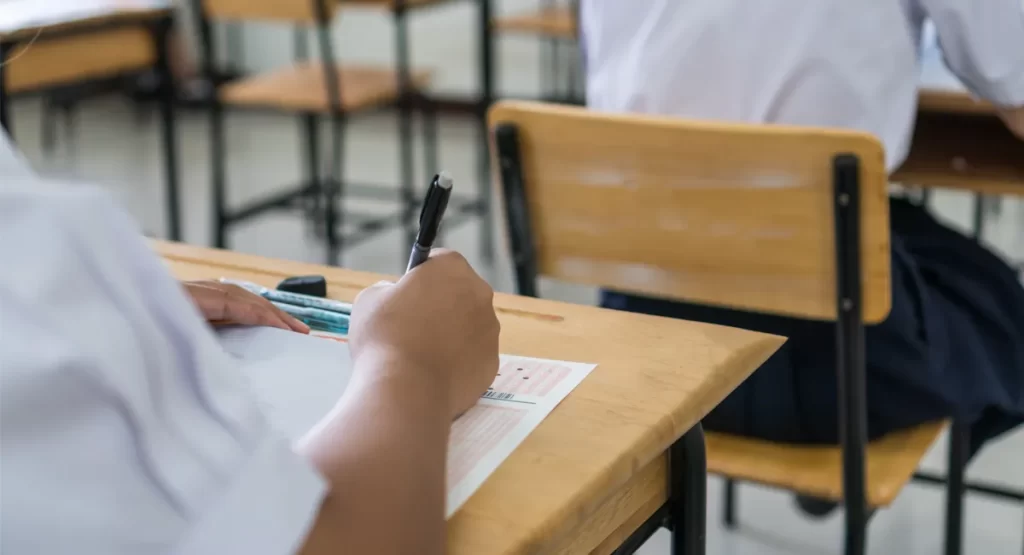
CBSE Makes First Board Exam Mandatory for Class 10 Under New Two-Exam System
The Central Board of Secondary Education (CBSE) has announced that appearing in the first board examination will be compulsory for all Class 10 students under the new two-exam format set to be implemented from 2026. The clarification comes after the board received requests from some students seeking permission to skip the first phase due to various reasons and instead appear only in the second examination. However, CBSE has firmly stated that all students must take the first board exam. CBSE Examination Controller Sanyam Bhardwaj said that students who do not appear in at least three subjects during the first examination will not be permitted to sit for the second phase. Such candidates will be placed in the “Essential Repeat” category and will be required to reappear for the board examinations in the following year’s main session, usually held in February. Students who clear the first examination will be allowed to improve their performance in up to three subjects in the second phase. These subjects include Science, Mathematics, Social Science, and languages. The introduction of the two-board-exam system from 2026 marks a significant step in CBSE’s ongoing examination reforms aimed at offering students flexibility while maintaining academic standards. Source: PTI

CBSE Makes First Board Exam Mandatory for Class 10 Under New Two-Exam System Read More »
India Hosts AI Impact Summit in New Delhi, Welcomes Global Leaders and Tech Titans

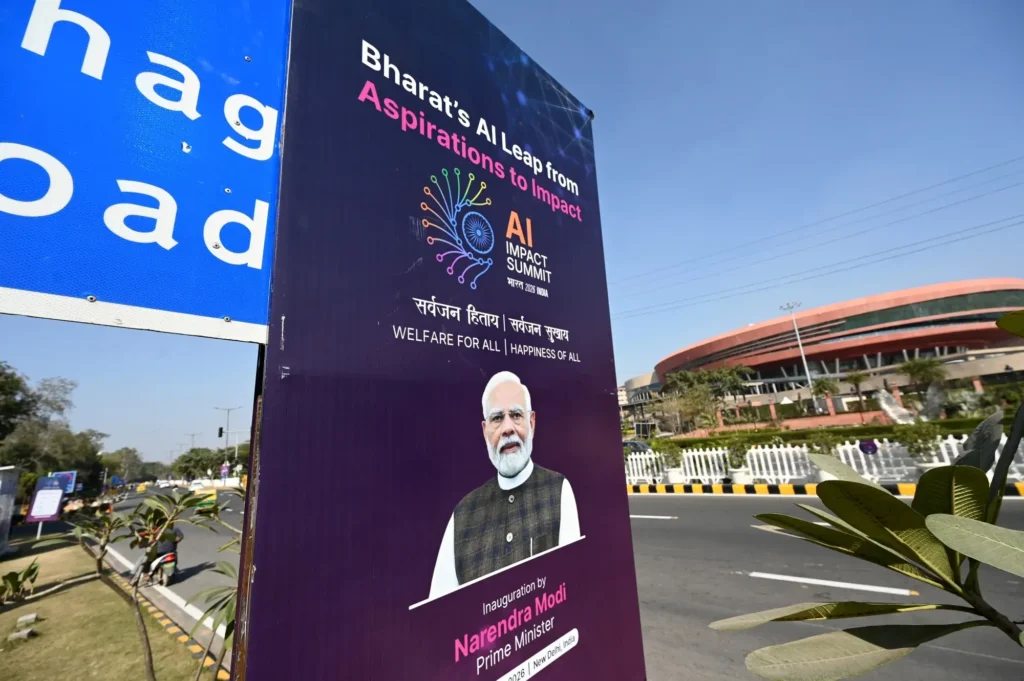
India has kicked off the five-day AI Impact Summit in New Delhi, bringing together world leaders, policymakers and top technology executives to deliberate on pressing issues such as job displacement, child safety, regulation and the future of artificial intelligence. Prime Minister Narendra Modi inaugurated the summit, describing it as a milestone in India’s rapid progress in science and technology. In a post on X, he said the event highlights both the nation’s technological advancement and the potential of its youth. The summit aims to chart a “shared roadmap for global AI governance and collaboration.” Organisers have billed this as the largest edition of the summit so far, with an expected 250,000 participants, including 20 heads of state and 45 ministerial delegations. Among the prominent leaders expected to attend are French President Emmanuel Macron and Brazilian President Luiz Inácio Lula da Silva. The event has also drawn major figures from the global technology industry, including Sundar Pichai of Google, Sam Altman of OpenAI, Cristiano Amon of Qualcomm, Brad Smith of Microsoft, and Yann LeCun, Executive Chairman of AMI Labs. However, the opening day was marred by criticism as attendees reported overcrowding, long queues and organisational confusion. According to delegates quoted by Reuters, unclear instructions and sudden security clearances ahead of high-level arrivals left many scrambling to retrieve belongings. Poor signage and limited seating further compounded the disarray, while some speakers reportedly awaited confirmation of their sessions. Despite early logistical challenges, the summit arrives at a pivotal moment for AI governance. As generative AI tools and advanced systems reshape industries from healthcare to defence and climate modelling, governments worldwide are grappling with how to balance innovation with safety and regulation. Previously hosted in France, the United Kingdom and South Korea, the summit has expanded from a narrowly focused safety forum into a broad-based platform addressing economic growth, ethics, sustainability and international cooperation. India, the world’s most populous country and one of the fastest-growing digital markets, sees the summit as an opportunity to position itself as a bridge between advanced economies and the Global South. Officials point to India’s experience in building large-scale digital public infrastructure—such as digital identity and payment systems—as a model for scaling AI solutions affordably and inclusively. Union Minister for Electronics and Information Technology Ashwini Vaishnaw said the vision is to ensure AI serves “inclusive growth and a sustainable future.” The summit revolves around three broad themes — “people, progress, planet” — and is expected to conclude with a nonbinding declaration outlining shared goals for AI development rather than a formal political agreement. Source: Aljazeera

India Hosts AI Impact Summit in New Delhi, Welcomes Global Leaders and Tech Titans Read More »

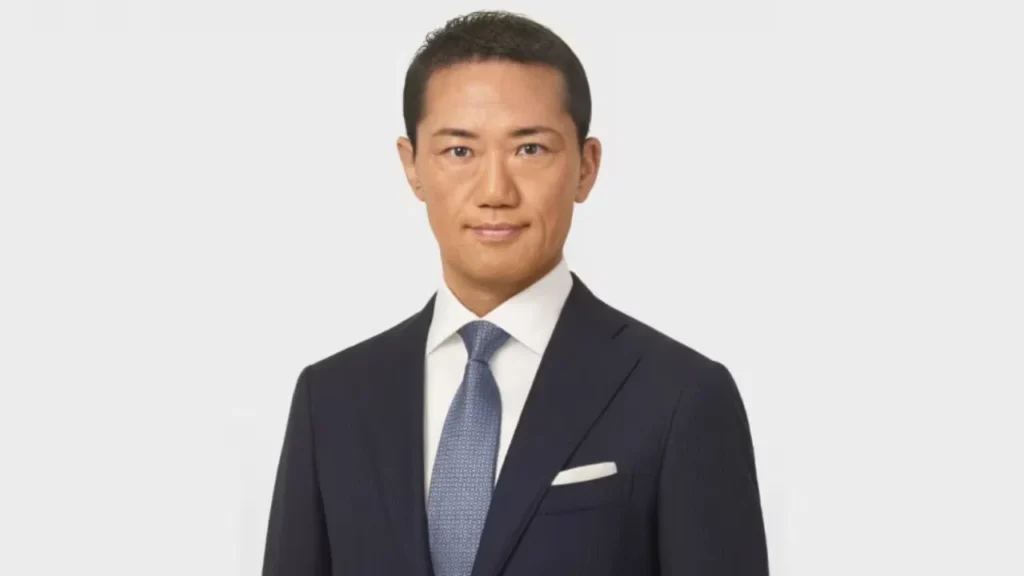
Dentsu Appoints Takeshi Sano as Global CEO Amid Record Loss and Strategic Overhaul

Japanese advertising major Dentsu Group has named Takeshi Sano as its next Global Chief Executive Officer, ushering in a major leadership transition as the company confronts significant financial headwinds. Sano will replace long-serving chief Hiroshi Igarashi, whose departure concludes a career spanning nearly four decades with the group. The change will become effective after the company’s 177th Ordinary General Meeting of Shareholders on March 27, 2026. From that date, Sano will assume the roles of Executive Officer, President and Global Chief Executive Officer. Igarashi, who joined the company in 1984, exits at a time when dentsu is seeking to strengthen its competitive edge and accelerate structural reforms. The leadership shake-up is part of a broader effort to streamline operations and reposition the organisation for long-term global growth. The management reshuffle also includes several senior-level appointments. Yoshimasa Watahiki will take on the roles of Executive Officer, Executive Vice President and Global Chief Corporate Affairs Officer of dentsu, alongside serving as Chief Operating Officer of dentsu Japan. Arinobu Soga will step down from his position as Executive Officer, Executive Vice President and Global Chief Governance Officer. Shigeki Endo, currently dentsu’s Global Chief Financial Officer, will be appointed Director, Executive Officer and Global Chief Financial Officer effective March 27. Endo joined the company as Global CFO Designate in July 2024 and formally assumed the CFO role in February 2025. His previous experience includes senior finance positions at ITOCHU, GE, BAT and Accenture Japan. The leadership overhaul follows a challenging financial year. For the year ended December 2025, dentsu posted a record consolidated net loss of 327.6 billion yen, primarily driven by a 310.1 billion yen impairment charge related to weak overseas operations. The net loss widened from 192.1 billion yen in the previous year, while operating losses increased to 289.2 billion yen from 124.9 billion yen. Sales, however, rose 1.7 per cent to 1,435.2 billion yen. In response to the results, the company announced it would not declare an annual dividend. Born in March 1970, Sano joined Dentsu Inc. in April 1992 and has held several senior leadership roles. He previously served as Managing Director of the Business Transformation Division in 2021 and became Chief Executive Officer of Business Transformation in 2023. Since January 2024, he has been Chief Executive Officer of dentsu Japan and Director, President and Chief Executive Officer of Dentsu Inc. Sano’s elevation places a transformation-focused executive at the helm during a critical period for the global advertising and marketing industry, which continues to face pressure from digital disruption, cost restructuring and underperforming international businesses. Investors and stakeholders will be closely watching whether the new leadership team can stabilise overseas operations and restore profitability. Source: peoplematters  

Dentsu Appoints Takeshi Sano as Global CEO Amid Record Loss and Strategic Overhaul Read More »

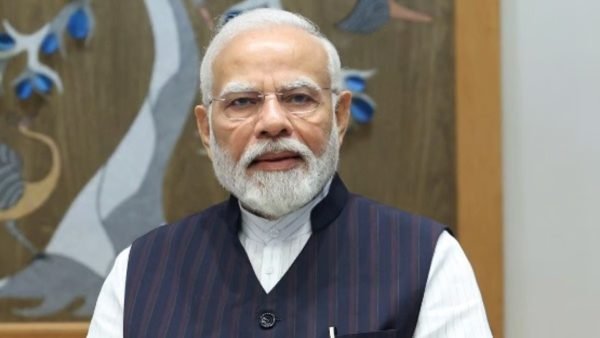
Narendra Modi Says India Must Remain Prepared to Tackle Security Challenges

Prime Minister Narendra Modi has asserted that India must remain constantly prepared to address evolving security challenges, emphasising the need for sustained defence modernisation as the country’s global role expands. In an interview with a news agency, Modi said the gains from a decade of defence reforms were clearly visible during Operation Sindoor, underscoring the importance of continued preparedness. He stressed that as India assumes greater responsibility on the world stage, it has a duty to upgrade its defence capabilities in line with contemporary realities. Highlighting the government’s commitment, the Prime Minister pointed to the allocation of ₹7.85 lakh crore for the defence sector in the Union Budget 2026–27. He noted that the outlay represents a 15 per cent increase over the previous year and constitutes the largest share of funds allocated to any ministry or department. Modi described the current Union Budget as a reflection of India’s aspiration to emerge as a developed nation. He said the Budget signals not a moment of compulsion but a declaration of readiness — a “we are ready” phase built on preparation and confidence. The Prime Minister also emphasised tax incentives announced in the Budget, stating that they are intended to boost investment, reduce the cost of setting up advanced infrastructure, and establish India as a globally competitive hub for data infrastructure. He invited global data players to consider India as a destination for hosting and expanding their digital operations. Outlining the roadmap for the next decade, Modi identified three core priorities: structural reforms, deeper innovation, and simpler governance. He asserted that the government’s “Reform Express” is delivering tangible benefits to citizens and accelerating economic transformation. He further highlighted the central role of women in achieving the vision of Viksit Bharat, stating that government initiatives are designed to empower women and enhance their participation in nation-building. On international trade, the Prime Minister said India’s political stability and predictability have restored investor confidence. He noted that strengthened manufacturing, services, and MSMEs have enabled the country to negotiate trade agreements from a position of strength. According to him, India’s Free Trade Agreements aim to expand market access for MSMEs across sectors such as textiles, leather, chemicals, handicrafts, and gems. Modi also criticised the previous UPA government, alleging that economic mismanagement had weakened India’s negotiating position in the past. He reiterated that reform remains a core commitment of his administration and has been pursued both in intent and execution. Calling the private sector a key driver of the next phase of economic transformation, the Prime Minister urged businesses to respond decisively. He encouraged companies to look beyond short-term margins and invest more aggressively in research and development, supply chains, quality enhancement, and long-term capacity building. Modi said the journey towards Viksit Bharat will depend on bold private-sector investment in innovation and global competitiveness. While acknowledging the progress made so far, he remarked that he is never fully satisfied, adding that public life requires constructive restlessness and a continuous drive to achieve more for the nation. Source: newsonair

Narendra Modi Says India Must Remain Prepared to Tackle Security Challenges Read More »

Physical Inactivity Linked to 13% of Heart Failure Cases Among Diabetics in India: Global Study

A global study has found that more than 13 per cent of heart failure cases among people living with diabetes in India may be attributed to physical inactivity, underscoring the growing health burden linked to sedentary lifestyles. The research, published in the Journal of Sport and Health Science, estimates that 9.6 per cent of coronary heart disease cases and 9.4 per cent of cardiovascular complications among diabetics in India are also associated with insufficient physical activity. On a global scale, researchers reported that nearly one in ten cases of macrovascular complications—conditions affecting large blood vessels—as well as diabetic retinopathy in individuals with diabetes can be traced to a lack of regular exercise. Lead author Jayne Feter from the Universidade Federal do Rio Grande do Sul said the findings challenge the perception that diabetes-related complications are unavoidable. According to her, a substantial proportion of these conditions could be prevented through realistic and sustained increases in physical activity. The World Health Organization recommends at least 150 minutes of moderate-to-vigorous physical activity per week. The study analysed data from over 2.3 million adults with diabetes across multiple global regions, including South Asia. Globally, physical inactivity was linked to over 10 per cent of stroke cases, 9.7 per cent of diabetic retinopathy cases, 7.3 per cent of heart failure cases, and roughly five to seven per cent of cardiovascular and coronary heart disease cases among diabetics. The researchers also observed that women and individuals with lower educational attainment face a disproportionately higher risk of complications related to physical inactivity, highlighting persistent social and gender inequities in health outcomes. India accounts for more than a quarter of the world’s diabetic population, according to a 2024 study published in The Lancet. Long-term elevated blood sugar levels can damage blood vessels and nerves, leading to serious complications that increasingly strain healthcare systems. The authors emphasised that integrating structured physical activity promotion into routine diabetes care and national strategies to combat noncommunicable diseases is essential. Co-author Natan Feter from the University of Southern California said policies must be adapted to local contexts and directly address social and gender disparities to effectively reduce hospitalisations, disability, and rising healthcare costs. Source: PTI

Physical Inactivity Linked to 13% of Heart Failure Cases Among Diabetics in India: Global Study Read More »

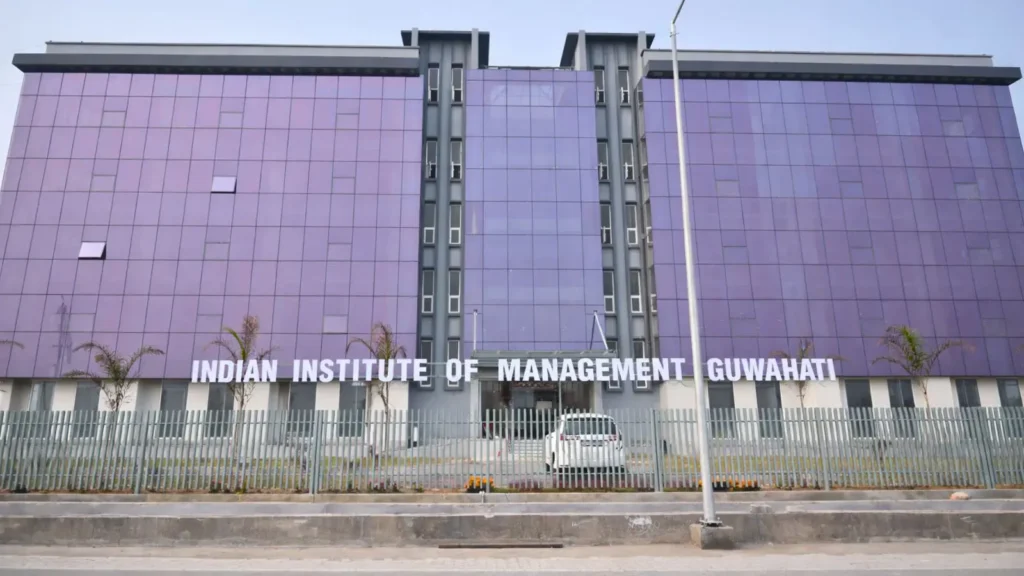
PM Modi Virtually Inaugurates IIM Guwahati; Rs 555 Crore Approved for Permanent Campus

Prime Minister Narendra Modi on Saturday virtually inaugurated the first academic session of the Indian Institute of Management Guwahati, marking a significant step in expanding management education in Assam and the Northeast. The institute has begun functioning from a temporary transit campus at Tech City in Bongora, spread across 6,410 square metres. It will later move to its permanent campus at Marabhita in Kamrup district near Palasbari, which will be developed over 76.83 hectares. The Union Cabinet has sanctioned Rs 555 crore for the establishment of the institute. The allocation will fund the temporary campus setup, construction of the permanent campus, and operational expenses for the first five years. With this, IIM Guwahati becomes the second IIM in the Northeast after Indian Institute of Management Shillong, and the 22nd across India. The Centre had approved the new IIM as part of efforts to broaden access to quality management education in underserved regions. Academic activities have commenced with the launch of an executive education programme curated by mentor institute Indian Institute of Management Ahmedabad. The inaugural batch includes Assam government officials, and the programme is aimed at strengthening leadership and administrative capabilities. IIM Ahmedabad will also oversee academic arrangements at the temporary campus. The regular MBA programme at IIM Guwahati is scheduled to begin from the 2026–27 academic session. In his address, the Prime Minister described the inauguration as a milestone for the Northeast, stating that the institute would enhance access to high-quality management education and help build academic and professional capacity in the region. The Ministry of Education said IIM Guwahati is envisioned as a future knowledge hub focused on holistic human resource development and is expected to attract students from across the country. Source: Indian Express

PM Modi Virtually Inaugurates IIM Guwahati; Rs 555 Crore Approved for Permanent Campus Read More »

AstraZeneca Secures CDSCO Approval for Expanded Use of Imfinzi in Endometrial Cancer Treatment

AstraZeneca Pharma India Ltd announced on Tuesday (February 10, 2026) that it has obtained approval from India’s drug regulator to market its cancer therapy, Durvalumab (brand name Imfinzi), for an additional indication. In a regulatory filing, the company stated that the Central Drugs Standard Control Organisation (CDSCO), under the Directorate General of Health Services, has granted permission to import, sell, and distribute Durvalumab solution for infusion in strengths of 120 mg/2.4 ml and 500 mg/10 ml for expanded therapeutic use. With this latest approval, Durvalumab can now be used in combination with chemotherapy drugs carboplatin and paclitaxel as a first-line treatment for adults diagnosed with primary advanced or recurrent endometrial cancer who are eligible for systemic therapy. Following combination treatment, the drug is also approved as a standalone maintenance therapy for patients with mismatch repair deficient (dMMR) endometrial cancer. The company noted that this regulatory clearance enables the commercial rollout of Imfinzi for the newly approved indication in India, subject to completion of other necessary statutory formalities. Source: PTI  

AstraZeneca Secures CDSCO Approval for Expanded Use of Imfinzi in Endometrial Cancer Treatment Read More »

Over 1,800 Industry Veterans Appointed as Professors of Practice Across 349 Institutions

In a significant push to align higher education with industry needs, more than 1,800 professionals from diverse sectors have joined universities and colleges across India as Professors of Practice (PoP). The Ministry of Education revealed that 1,841 experts have been appointed across 349 higher education institutions as part of reforms envisioned under the National Education Policy (NEP) 2020. Responding in writing to the Rajya Sabha, Union Minister of State for Education Sukanta Majumdar said the initiative is intended to deepen industry-academia engagement and promote hands-on, skill-oriented learning. He highlighted that the position of Professor of Practice is largely temporary and honorary in nature, enabling accomplished professionals to contribute to academic development and nation-building by sharing real-world expertise. Private universities accounted for the largest share of appointments with 715 PoP positions, followed by deemed-to-be universities with 699. State universities appointed 212 professionals, while central universities added 15. Colleges across the country contributed another 200 appointments. State-wise, Tamil Nadu leads with 395 Professors of Practice, followed by Maharashtra (193), Gujarat (179), Karnataka (170), and Uttar Pradesh (157). Several other states and Union Territories have also implemented the model, albeit on a smaller scale. What is a Professor of Practice? The Professor of Practice designation allows experienced industry and professional leaders to take up academic roles even if they do not hold conventional academic qualifications such as a PhD, which is otherwise mandatory for regular professor or associate professor positions. Appointments are typically for a term of up to three years, with a possible one-year extension in exceptional circumstances, capping the maximum tenure at four years. Institutions may allocate up to 10% of their sanctioned faculty positions to Professors of Practice. Eligible candidates must be distinguished professionals with at least 15 years of experience and notable contributions in fields such as science and technology, social sciences, media, armed forces, and other domains. To facilitate diverse participation, three categories of appointments have been introduced: industry-funded Professors of Practice, institution-funded positions supported by the higher education institution’s own resources, and honorary Professors of Practice. Source: Indian Express  

Over 1,800 Industry Veterans Appointed as Professors of Practice Across 349 Institutions Read More »

CBSE 2026 Board Exams: Digital Evaluation, Dual Class 10 Boards & Competency-Based Papers — What Students Must Know

The Central Board of Secondary Education (CBSE) has introduced sweeping reforms for the 2026 board examinations, affecting both Class 10 and Class 12 students. These updates focus on three major areas: alignment with the National Education Policy (NEP) 2020, the option of two board exams for Class 10, and the rollout of digital answer sheet evaluation for Class 12. Here’s a comprehensive look at what is changing and how it could impact students, parents, and schools. Digital Evaluation for Class 12: On-Screen Marking (OSM) Begins Starting with the 2026 board exams, CBSE will implement On-Screen Marking (OSM) for evaluating Class 12 answer sheets. This marks a significant shift from the traditional physical evaluation system to a fully digital process. However, Class 10 answer scripts will continue to be assessed through the conventional physical mode in 2026. CBSE conducts board examinations for approximately 46 lakh students across India and in 26 countries. With OSM, answer sheets will be scanned and uploaded digitally, allowing examiners to evaluate them online rather than travelling to designated marking centres. According to CBSE’s circular dated February 9, 2026, the digital evaluation system offers multiple benefits: Elimination of totalling and calculation errors Reduced manual handling through automated coordination Faster correction timelines Lower transportation and logistical costs Teachers can evaluate papers from their own schools Reduced need for post-result mark verification Decreased manpower requirements Broader participation of teachers, including those from overseas affiliated schools Environment-friendly paper management The move is expected to streamline the evaluation process and improve efficiency while reducing administrative burden. Two Board Exams for Class 10 from 2026 In another major reform, CBSE has confirmed that Class 10 students will have the option to appear for two board examinations starting in 2026. The announcement, made through a notification dated June 25, 2025, aligns with NEP 2020’s vision to reduce exam-related stress and shift away from high-stakes single-exam systems. While detailed implementation guidelines are being issued separately, the dual-exam system aims to: Ease performance pressure Provide flexibility within the same academic year Offer students a chance to improve scores without waiting for the next year This change is expected to create a more student-friendly assessment structure. Question Paper Pattern Overhauled: Competency Takes Centre Stage One of the most impactful changes for 2026 lies in the redesigned question paper format for both Class 10 and Class 12. As per Circular No. Acad-30/2024 (dated April 3, 2024), CBSE aligned its assessment structure with NEP 2020 to promote skill-based and application-oriented learning. Although the reform began in the 2024–25 academic session, the 2026 board batch will be among the first to complete an entire academic cycle under the revised format. New Exam Structure: 50% Competency-Based Questions Includes case studies, source-based questions, application-driven MCQs, and real-life context problems designed to test conceptual understanding rather than memorisation. 20% Objective (MCQ) Questions Select response-type questions aimed at evaluating clarity of concepts. 30% Constructed Response Questions Traditional short- and long-answer questions, now reduced in overall weightage. This marks a significant transition from the earlier model where long descriptive answers carried nearly half the marks. The emphasis now is on analytical thinking, problem-solving ability, and real-world application of knowledge. What This Means for Students The 2026 reforms collectively signal a transformation in CBSE’s examination philosophy — from memory-based testing to competency-driven evaluation. Students will need to focus more on understanding concepts deeply, practising case-based questions, and developing analytical skills. The introduction of digital evaluation may also lead to quicker result processing and greater transparency. With flexibility in Class 10 exams and modernised assessment for Class 12, CBSE is moving toward a system designed to reduce stress while strengthening learning outcomes. Source: Indian Express

CBSE 2026 Board Exams: Digital Evaluation, Dual Class 10 Boards & Competency-Based Papers — What Students Must Know Read More »

30 Crore Workers Likely to Join Nationwide Strike on February 12, Say Trade Unions

A coalition of 10 central trade unions has confirmed that a nationwide general strike scheduled for Thursday, February 12, will proceed as planned, with an estimated participation of nearly 30 crore workers across India. The joint platform had earlier announced a strike call on January 9, 2025, protesting what it described as the Centre’s “anti-worker, anti-farmer and pro-corporate” policies. Trade union leaders now claim that this upcoming agitation could witness even greater participation than previous nationwide protests. Speaking to the media, All India Trade Union Congress (AITUC) General Secretary Amarjeet Kaur said that not fewer than 30 crore workers are expected to take part in the February 12 strike. She pointed out that during the July 9, 2025 agitation, around 25 crore workers had joined the movement. According to Kaur, the strike is likely to impact nearly 600 districts across the country — an increase from approximately 550 districts that were affected during last year’s mobilisation. She attributed the anticipated turnout to extensive groundwork at district and block levels, along with backing from farmers’ groups and various federations. On the question of the strike’s effect in BJP-ruled states, Kaur stated that Odisha and Assam are expected to witness a complete shutdown, while significant disruptions are anticipated in several other states as well. In a joint statement, the trade union forum said the Samyukt Kisan Morcha has extended full support to the strike and related mobilisations. Agricultural workers’ unions are also actively participating, with particular emphasis on the restoration of the Mahatma Gandhi National Rural Employment Guarantee Act (MGNREGA). The unions claim that awareness drives and campaigns have been carried out nationwide across government offices, public and private sector establishments, industrial hubs, and rural and urban communities. Student and youth organisations have reportedly joined outreach efforts in multiple locations, while sections of the general public have expressed solidarity with the demands. Strike notices have been issued across most industries and sectors, and organisers describe preparations as comprehensive. Among their key demands are: Withdrawal of the four new labour codes and associated rules Scrapping of the Draft Seed Bill and the Electricity Amendment Bill Repeal of the Sustainable Harnessing and Advancement of Nuclear Energy for Transforming India (SHANTI) Act Restoration of MGNREGA Withdrawal of the Viksit Bharat – Guarantee for Rozgar and Ajeevika Mission (Gramin) Act, 2025 The joint forum comprises major trade unions including INTUC, AITUC, HMS, CITU, AIUTUC, TUCC, SEWA, AICCTU, LPF, and UTUC. Source: PTI

30 Crore Workers Likely to Join Nationwide Strike on February 12, Say Trade Unions Read More »