

ArdorComm Media Group

Wednesday, September 23, 2026 1:14 AM

Technology

India Has Nearly 20% of Global Semiconductor Design Workforce: IT Secretary
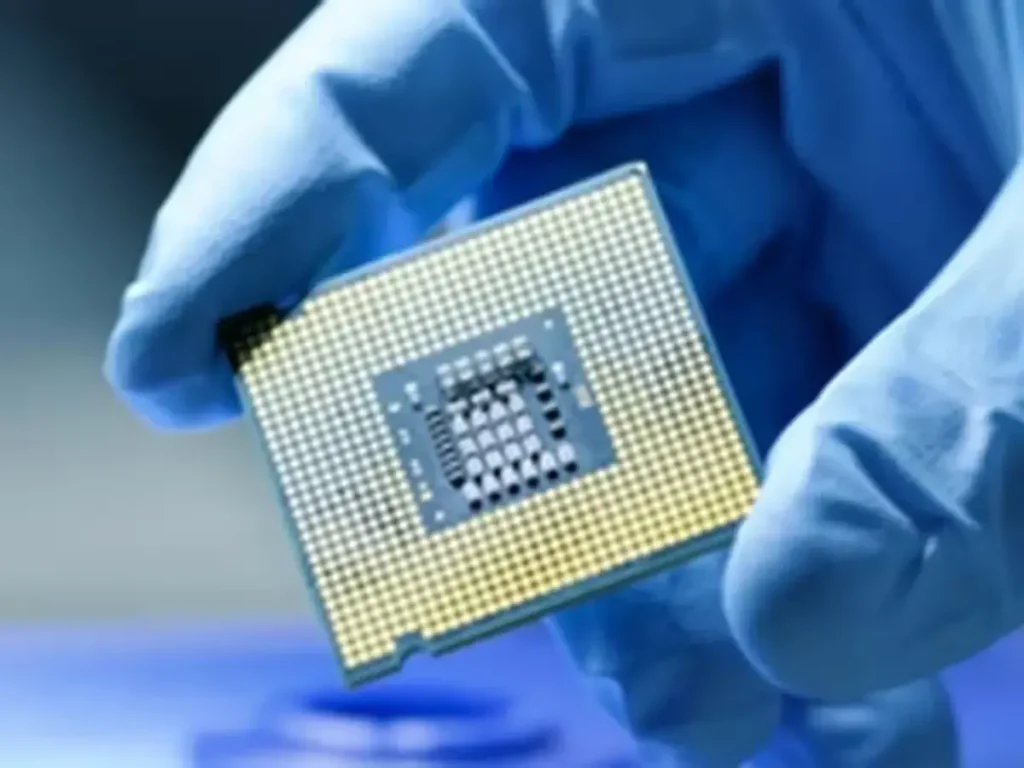
India now accounts for nearly one-fifth of the global semiconductor design workforce, reflecting the country’s growing role in the international chip ecosystem, IT Secretary S. Krishnan said on Saturday. Speaking to IANS on the sidelines of SEMICON India 2026, Krishnan said the government is placing strong emphasis on developing semiconductor talent and is currently implementing a programme aimed at training around 85,000 design engineers. He said skill development would remain a priority across the semiconductor value chain, with particular attention being given to manufacturing. According to Krishnan, India already has a substantial pool of skilled professionals in chip design, providing an important foundation for further growth in the sector. On investments and proposals presented at SEMICON India, Krishnan said the government would assess each proposal carefully before approving incentives, given the significant use of public funds. He noted that several major Indian and multinational companies are showing interest in investing in India’s semiconductor sector. The IT Secretary attributed this growing investor interest to confidence in India’s talent pool as well as the stability and support provided by government policies. He said the government would encourage companies seeking to establish or expand their semiconductor operations in the country and work closely with them. Meanwhile, SEMI India-IESA President Ashok Chandak said SEMICON India 2026 attracted 12,000 visitors on its opening day and 16,000 on the second day, with participation continuing to grow. Chandak highlighted significant interest from students and early-career engineers, saying the participation reflected a growing desire among young people to understand the semiconductor industry and explore opportunities in the sector. The event has also witnessed participation from several Asian countries, including Japan, South Korea, Taiwan, Singapore and Malaysia, along with visitors from the Philippines, Vietnam and Thailand. Chandak said the participation demonstrated interest among companies and industry stakeholders from these countries in collaborating with their Indian counterparts. Source: IANS

India Has Nearly 20% of Global Semiconductor Design Workforce: IT Secretary Read More »
India Reliable and Prepared to Meet New Global Manufacturing Challenges: PM Modi at SEMICON India 2026

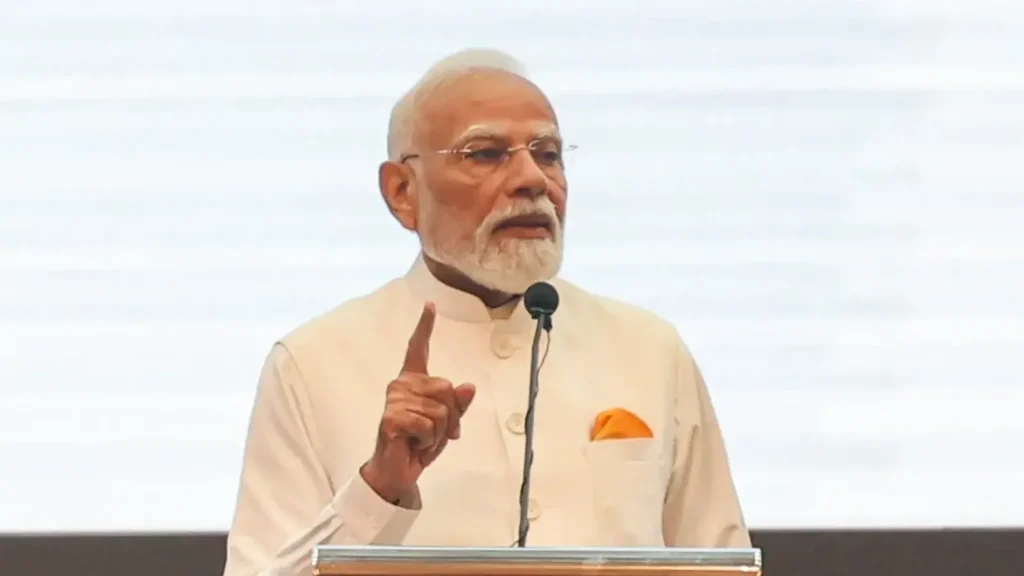
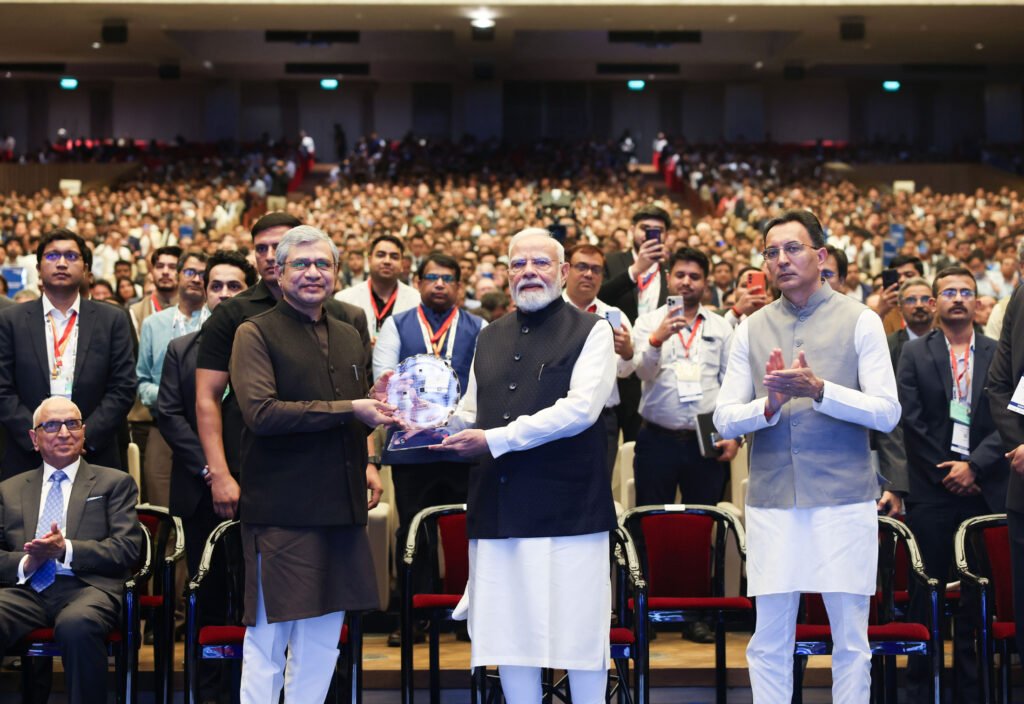
Prime Minister Narendra Modi has described India as a reliable and increasingly trusted destination for global manufacturing, saying the country is strengthening its capabilities to respond to emerging challenges in the global supply chain. Inaugurating SEMICON India 2026 at Yashobhoomi in New Delhi, Modi highlighted the rapidly expanding semiconductor ecosystem and the opportunities it is creating for investment, innovation and economic growth. He noted that the surge in artificial intelligence is changing semiconductor requirements, with greater emphasis now being placed not only on transistor size but also on system-level integration, memory placement and thermal management. The Prime Minister said India recorded economic growth of 7.8 per cent despite a challenging global environment, while Japan’s credit rating agency also upgraded the country’s sovereign rating. He said growing economic performance alongside increasing international confidence reflected India’s progress towards becoming a developed nation. Modi said the outlay under India Semiconductor Mission 2.0 has been increased to $13.5 billion from $8 billion under the first phase. He also highlighted the approval of 12 semiconductor manufacturing projects, adding that the next phase would further expand the country’s chip-making capabilities. Referring to the recently concluded BRICS Summit in New Delhi, Modi said the consensus adoption of the New Delhi Declaration demonstrated the growing global confidence in India’s leadership and its ability to bring countries together. The Prime Minister also called on Indian researchers and young technology professionals to contribute to the country’s advanced technology ecosystem. He urged industry leaders to strengthen research and development in India, saying closer collaboration between industry and young researchers could support both industrial growth and technological development. Union Electronics and IT Minister Ashwini Vaishnaw said India’s long-standing ambition to establish a semiconductor industry had gained momentum under the current government. He said Semicon 2.0 would focus on six key areas — semiconductor design, equipment and materials, memory, silicon fabrication, compound and logic fabrication, and research and development. Vaishnaw added that the government aims to support at least 200 startups and companies in designing chips in India for diverse semiconductor applications. SEMICON India 2026, being held under the theme “Silicon to Systems: Building the Ecosystem”, features more than 600 exhibitors, 300 international companies and delegations from over 50 countries. The event includes country pavilions from Japan, South Korea, Malaysia, the Netherlands, Singapore and Sweden, along with 12 state government pavilions and a dedicated Startup Pavilion. The conference and exhibition brings together companies, policymakers, investors, researchers, startups, academic institutions and students from across the global semiconductor and electronics value chain. Source: News on AIR  

India Reliable and Prepared to Meet New Global Manufacturing Challenges: PM Modi at SEMICON India 2026 Read More »

India-UK CETA to Boost Farmers, MSMEs and Skilled Professionals, Says PM Modi

Prime Minister Narendra Modi has described the implementation of the India-UK Comprehensive Economic and Trade Agreement (CETA) and the Agreement on Social Security as a landmark step in strengthening bilateral ties between the two countries. Sharing a social media post by Union Commerce and Industry Minister Piyush Goyal, the Prime Minister said the agreements, which came into force today, mark a significant milestone in the India-UK partnership. According to Mr. Modi, the CETA will provide fresh growth opportunities for farmers, entrepreneurs, and micro, small and medium enterprises (MSMEs) by expanding their access to the UK market. He added that the trade pact is expected to benefit several key sectors while strengthening cooperation in technology, professional services, and innovation. The Prime Minister also highlighted that the agreement will facilitate greater mobility for skilled Indian professionals, enabling them to explore more employment and business opportunities in the UK. Referring to the Agreement on Social Security, Mr. Modi said it will offer important support to Indian professionals working in the UK on temporary assignments. He noted that the pact will enhance the competitiveness of Indian businesses by reducing social security-related burdens for eligible workers. Emphasizing the broader significance of the agreements, the Prime Minister said they reflect the deep trust between the two democracies and their shared commitment to building a future-focused partnership anchored in trade, technology, investment, and innovation. He reaffirmed that India and the United Kingdom will continue to work together to promote shared economic growth and prosperity. Source: News on AIR

India-UK CETA to Boost Farmers, MSMEs and Skilled Professionals, Says PM Modi Read More »

Five Semiconductor Plants Expected to Be Operational in India by End of 2026: Ashwini Vaishnaw

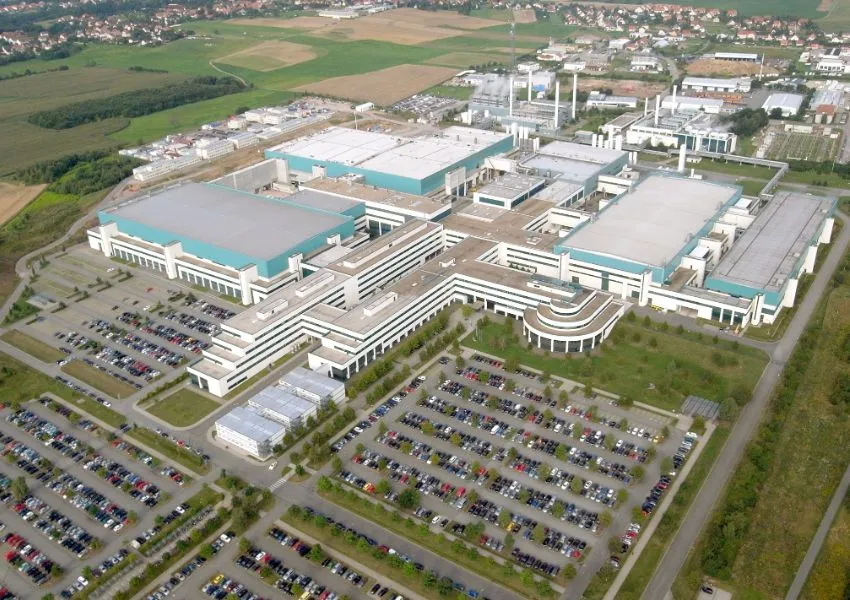
India is on track to have five semiconductor manufacturing plants operational by the end of 2026, Union Minister Ashwini Vaishnaw has said, marking a significant milestone in the country’s efforts to build a strong domestic semiconductor ecosystem. According to the minister, the Centre has approved 12 semiconductor projects, of which three facilities have already entered commercial production, while two more are expected to be inaugurated in the coming months. Prime Minister Narendra Modi had earlier inaugurated the country’s first and second semiconductor plants on February 28 and March 31, 2026, respectively. Vaishnaw noted that the commercial launch of the CG SEMI (OSAT) facility in Sanand, Gujarat, has further strengthened global confidence in India’s semiconductor manufacturing capabilities. He said the country is steadily building a world-class semiconductor ecosystem that will support India’s long-term economic and technological growth. The minister also praised the Gujarat government for its efficient execution, highlighting that the CG SEMI facility progressed from groundbreaking to commercial production in just 27 months. Beyond manufacturing, the plant has also generated employment opportunities for young women from states including Jharkhand, Chhattisgarh, Madhya Pradesh, Bihar, Jammu & Kashmir, Kerala, and Gujarat, many of whom received specialised semiconductor training in Malaysia. Vaishnaw added that as India’s semiconductor ecosystem expands, advanced training programmes are expected to become increasingly available within the country. Semiconductor products manufactured at the Sanand facility will cater to the automotive, two-wheeler, and industrial equipment sectors, while also being exported to markets such as Japan, the United States, and Europe, reinforcing India’s position in the global semiconductor supply chain. The CG SEMI project, launched in March 2024 with an investment exceeding ₹7,600 crore, has been developed in collaboration with Renesas Electronics of Japan, enabling access to advanced semiconductor technologies, manufacturing expertise, and global quality standards. Vaishnaw also highlighted the rapid growth of India’s electronics manufacturing industry, which is now valued at nearly ₹13 lakh crore and supports employment for over 25 lakh people. Source: IANS  

Five Semiconductor Plants Expected to Be Operational in India by End of 2026: Ashwini Vaishnaw Read More »

PM Modi Chairs Day-Long Conclave with NDA CMs, Focuses on Good Governance and Development Synergies

Ardorcomm news

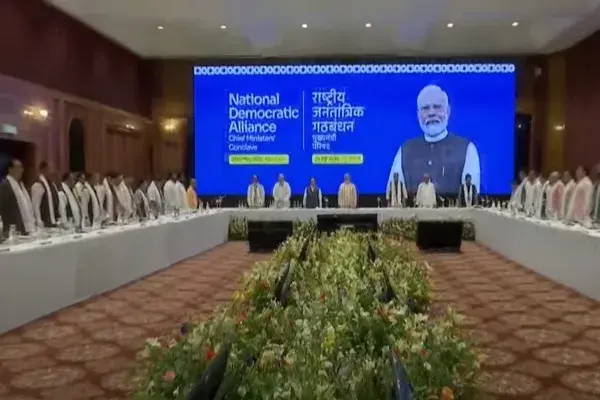
Prime Minister Narendra Modi chaired a comprehensive conclave in New Delhi, bringing together Chief Ministers and Deputy Chief Ministers from all 20 National Democratic Alliance (NDA)-governed states. The high-level meeting centred on strategies to accelerate development and ensure the effective delivery of governance through the “double-engine” model. Addressing the gathering, the Prime Minister stressed the importance of enhancing coordination and synergy across sectors such as healthcare, sanitation, agriculture, youth empowerment, and technology. He also encouraged states to intensify their efforts in delivering public services and creating impactful governance outcomes. In a post on social media, PM Modi highlighted the extensive discussions held during the conclave, which included sharing of successful models and initiatives from various states. These ranged from water conservation and grievance redressal mechanisms to administrative reforms, women empowerment, sports, and education. Organised by the BJP’s Good Governance Department, the conclave saw participation from 20 Chief Ministers and 18 Deputy Chief Ministers. Senior BJP leaders including Party President JP Nadda, Home Minister Amit Shah, and Defence Minister Rajnath Singh also took part in the day-long discussions. Speaking to the media after the meeting, BJP President JP Nadda stated that two key resolutions were adopted. The first praised the Indian armed forces for their bravery under Operation Sindoor, which targeted terror camps across the border. The second resolution reaffirmed the party’s stance on caste-based policies, clarifying that the BJP prioritises social integration and mainstreaming of backward communities without engaging in caste-based politics. The session also featured detailed presentations by the states showcasing their governance achievements. Additionally, leaders discussed preparations for major upcoming milestones, including the NDA government’s first anniversary on June 9, the 10th International Day of Yoga, and the 50th year since the declaration of the Emergency in 1975. The conclave reinforced the NDA’s collective commitment to good governance, innovation, and inclusive development across the nation. Source: newsonair  

PM Modi Chairs Day-Long Conclave with NDA CMs, Focuses on Good Governance and Development Synergies Read More »

I-STEM takes its efforts to boost Research Collaboration to Ladakh for the First Time

DELHI, 8th November 2024: I-STEM (Indian Science, Technology, and Engineering facilities Map), an initiative from the Office of Principal Scientific Adviser, Government of India, has taken its efforts to revolutionise research collaboration in India by enhancing industries and Startups’ accessibility to research facilities and labs to the Ladakh Region for the First Time. I-STEM conducted its flagship ‘Samavesha’ at the University of Ladakh on 5th November 2024 to create awareness of the I-STEM National Portal. The Samavesha Project connects industries, researchers and start-ups looking to avail advanced scientific equipment with an academic institution that has the requisite equipment. This saves the researchers, industry and start-ups the prohibitive capital expenditure of purchasing advanced equipment. At the National level, this prevents duplication of resources in the research institutions. Under the leadership of Prof. (Dr.) S.K. Mehta, Hon’ble Vice Chancellor, University of Ladakh, this was the first time the Samavesha event was being organized in North India, marking a significant milestone for boosting research in the region. This event, the sixth Samavesha event nationally, was intended to create awareness of the impact and accessibility of the I-STEM National Portal under the tagline ‘Linking Researchers and Resources.’ As a visionary platform, I-STEM is a comprehensive aggregator, connecting researchers to publicly funded laboratories and scientific equipment across India. Highlighting the need for such events in remote parts of the country, Dr. Harilal Bhaskar, Chief Operating Officer and National Coordinator, I-STEM, said, “The vision of I-STEM is to create a future where one million New-Age researchers, brimming with ideas, are seamlessly connected to a network of 10,000 cutting-edge labs across India. By 2024, I-STEM aims not only to connect individuals to equipment but also to ignite a collaborative ecosystem where start-ups, industries, and academia co-create the next wave of innovation.” Dr. Harilal Bhaskar added, “I-STEM looks forward to new institutions and researchers registering and participating in the event. Public users and research labs are encouraged to provide feedback during the event to inform future decisions about the I-STEM program.” Dr. Harilal Bhaskar also explained how the I-STEM portal can be a game-changer for academic researchers, startups, and industries alike, positioning I-STEM as one of the major Government-funded aggregator platforms transforming India’s R&D landscape. He emphasized that the event would enable participants to engage in knowledge-sharing, explore research opportunities, and access resources to drive advancements in the region. Key academic and administrative figures attended the workshop. They included Dr. Subrat Sharma, Dean of Research; Dr. Jigmet Yangchan, Chief Scientist and Head, MRI & CISIC; Dr. Mohd Hussain, Dean of Sciences and Coordinator, DST-PURSE; and Dr. Jigmet Dachen, DSW and I/C administration, University of Ladakh. Esteemed guests included Dr. Harilal Bhaskar, National Coordinator and Chief Operating Officer of I-STEM, and Mr. Narmdeshwar Pandey, Functional Manager at I-STEM. The program also saw active participation from faculty members and participants from various institutions. The School of Agricultural Science and Technology (Leh campus), Government Polytechnic College, Leh, and the Science Departments of the Leh and Kargil campuses of the University of Ladakh played significant roles in ensuring the event’s success.

I-STEM takes its efforts to boost Research Collaboration to Ladakh for the First Time Read More »

UK Set to Create 38,000 Jobs Following Record £63 Billion Investment

ArdorComm news

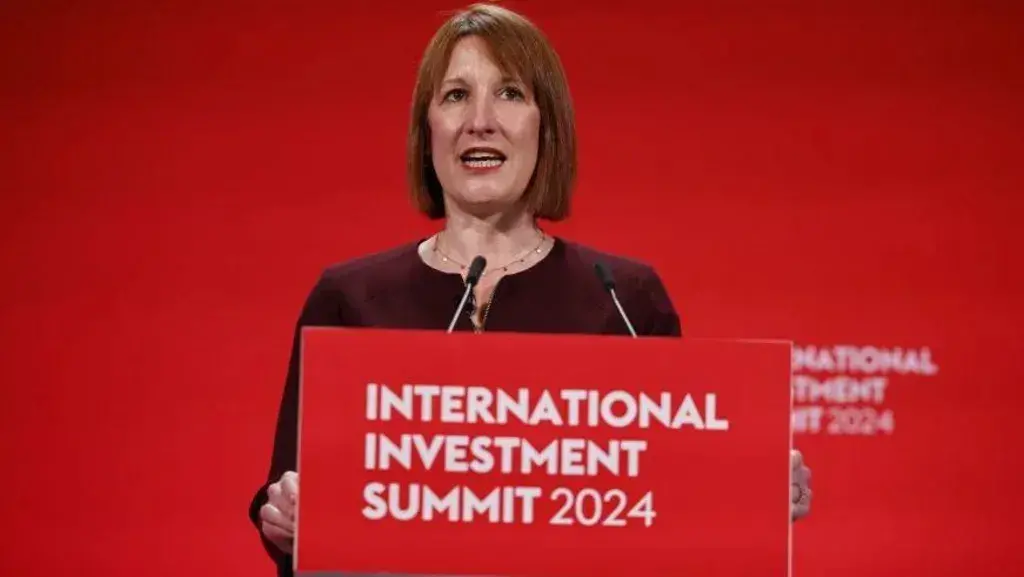
Nearly 38,000 jobs will be created across the UK following the announcement of a record-breaking £63 billion in investments around the International Investment Summit. This total more than doubles last year’s £29.5 billion commitment at the Global Investment Summit and will drive growth and innovation in key sectors like infrastructure and technology. Among today’s new announcements are investments from DP World, Associated British Ports (ABP), and Imperial College London, totalling over £1 billion. The UK’s stable governance has attracted tens of billions in new investments, reinforcing the government’s focus on delivering economic growth. These investments demonstrate global confidence in Britain as a prime investment destination, with a particular focus on areas such as artificial intelligence (AI), data centre expansion, and renewable energy. Tech Firms Invest £6.3 Billion in Data Centres Four major US-based tech firms have announced £6.3 billion investments in UK data centres, which are essential for enhancing AI capabilities. These data centres will power AI systems and store the vast amount of information generated, providing the infrastructure for future AI development and economic growth. Key Infrastructure Investments: ABP, Imperial College London ABP, the UK’s largest port operator, will invest over £200 million alongside Stena Line to develop a new freight ferry terminal at the Port of Immingham, creating around 900 jobs during construction and operation. Additionally, Imperial College London has announced a £150 million investment to expand its R&D campus in West London, contributing to the growing deep tech ecosystem and boosting job creation. Government’s Commitment to Economic Growth Business and Trade Secretary Jonathan Reynolds highlighted the UK’s leading position as an investment hub, stating: “The record-breaking investment total secured at today’s Summit marks a major vote of confidence in the UK and our stability dividend across industry and innovation.” Chancellor Rachel Reeves echoed this sentiment, emphasizing the impact of these investments on businesses across the UK, from large corporations to small enterprises, all contributing to job creation and economic prosperity. Other Major Investments Announced: Iberdrola: Doubling its UK investment to £24 billion, including £4 billion for the East Anglia 2 wind farm. Blackstone: £10 billion investment in Northumberland for Europe’s largest artificial data centre, creating 4,000 jobs. Amazon Web Services: £8 billion investment, supporting 14,000 jobs annually. CCUS Investors (Eni, BP, Equinor): Unlocking £8 billion for carbon capture clusters, creating 4,000 jobs. Orsted and Greenvolt: Offshore wind projects unlocking £8 billion (Orsted) and £2.5 billion (Greenvolt), creating thousands of jobs. These investments solidify the UK’s position as a global leader in innovation and economic growth, with the government’s Industrial Strategy providing further certainty for future global business ventures. Source : Gov.UK

UK Set to Create 38,000 Jobs Following Record £63 Billion Investment Read More »

Exploring the Ever-Evolving Landscape of Healthtech Innovations

Blog on Health

In recent years, Healthtech has emerged as a dynamic and rapidly evolving sector, captivating both consumers and investors alike. The onset of the COVID-19 pandemic catalyzed a surge in demand for innovative healthcare solutions, prompting the emergence of new technologies and startups aimed at revolutionizing the industry. As we navigate through this transformative period, let’s delve deeper into the world of Healthtech and explore the latest trends, opportunities, and innovations shaping the future of healthcare. Understanding Healthtech Healthtech encompasses a diverse range of technologies and solutions aimed at revolutionizing healthcare delivery, management, and outcomes. From digital health platforms and telemedicine services to AI-powered diagnostics and medical devices, Healthtech spans across various verticals, each with its unique set of challenges and opportunities. The Impact of COVID-19 The COVID-19 pandemic acted as a catalyst for innovation in the healthcare industry, driving unprecedented demand for virtual care solutions and remote monitoring technologies. Healthtech startups experienced a boom, with investors pouring capital into innovative ventures aimed at addressing the evolving needs of patients and healthcare providers. Emerging Opportunities Despite the recent slowdown in venture capital activity, certain segments within the Healthtech sector continue to thrive. Artificial Intelligence (AI) is one such area, with applications ranging from drug discovery to clinical documentation. AI-powered drug discovery, in particular, holds immense promise for accelerating the pace of pharmaceutical research and development, although challenges such as clinical trial timelines and costs remain. Another area of opportunity lies in the field of weight loss drugs, which has witnessed a surge in popularity and efficacy in recent years. With advancements in drug development and the potential to address a significant unmet need, weight loss drugs represent a transformative force in Healthtech, attracting attention from investors and entrepreneurs alike. Leading Healthtech Companies Several notable Healthtech companies have emerged as key players in the industry, leveraging innovative technologies to drive positive outcomes for patients and providers alike. From digital health platforms like Ro and PharmEasy to AI-driven solutions like Tempus and Freenome, these companies are at the forefront of innovation, reshaping the future of healthcare delivery. The Future of Healthtech As we look ahead, the future of Healthtech appears bright, albeit with challenges and uncertainties. While the overall venture capital landscape may experience fluctuations, the demand for innovative healthcare solutions remains strong. From addressing systemic challenges to improving patient outcomes and provider satisfaction, Healthtech holds the key to unlocking new possibilities in healthcare delivery and management. In conclusion, the Healthtech sector continues to evolve at a rapid pace, driven by innovation, collaboration, and a shared commitment to improving healthcare outcomes. As we navigate through this transformative period, the opportunities for growth and impact within the Healthtech space are boundless, promising a future where technology plays a central role in shaping the future of healthcare.

Exploring the Ever-Evolving Landscape of Healthtech Innovations Read More »

UP Education Department Introduces Question Banks for 25 Lakh Students in Classes 9 and 10

News on Education

In a groundbreaking initiative, the Uttar Pradesh Basic Education Department has developed question banks tailored for over 25 lakh students enrolled in grades 9 and 10 across more than 27,000 schools affiliated with the UP Board. These question banks are strategically designed to bolster students’ preparation for competitive examinations such as those for engineering and medical entrances. Collaborating with esteemed institutions including the National Council of Educational Research and Training (NCERT) in New Delhi, the State Institute of Science Education (SISE), and subject matter experts from select universities, colleges, and secondary schools, the UP education department has curated comprehensive question banks for science and mathematics subjects. Under the guidance of Vijay Kiran Anand, former State Project Director of Samagra Shiksha Abhiyan, the responsibility of developing these question banks was entrusted to the State Science Education Institute in Prayagraj. The science question bank for classes 9 and 10 encompasses 12 and 13 chapters respectively, with each chapter featuring approximately 70 questions spanning multiple formats including multiple choice, very short, short, and long-answer questions. Similarly, the mathematics question bank for the same classes comprises 12 and 14 chapters respectively, with a total of approximately 912 and 1,064 questions. Additionally, sample questions are provided to generate interest and facilitate effective practice. The questions in these banks are meticulously crafted to reinforce fundamental scientific and mathematical concepts among students, enabling them to grasp and apply these concepts with confidence. These question banks, developed based on the NCERT syllabus, have been forwarded by SISE-Prayagraj to the State Council of Educational Research and Training (SCERT) in Lucknow. They are anticipated to be made available to students shortly. Traditionally, only question banks prepared and published by private publishers have been accessible in the market. The introduction of these official question banks by the UP education department signifies a significant step towards providing students with structured and reliable resources to enhance their exam preparation and academic performance. By offering ample practice opportunities aligned with teaching-learning objectives, these question banks aim to empower students to excel in their examinations. They are poised to serve as invaluable tools in clarifying concepts, strengthening subject comprehension, and fostering academic success among students.

UP Education Department Introduces Question Banks for 25 Lakh Students in Classes 9 and 10 Read More »

Anand Kumar to Launch Online Educational Platform for Underprivileged Students

News on Education

Super 30 founder and mathematician Anand Kumar has announced plans to launch a new online educational platform aimed at providing access to quality education for economically disadvantaged students in India. Speaking at the 2024 Kellogg India Business Conference on the theme “Reimagining India: Shaping the Global Economic Landscape,” organized by the Kellogg School of Management, Northwestern University, Kumar emphasized the need to leverage technology to reach more students. Kumar highlighted the transformative impact of Super 30 in empowering underprivileged students to change their lives through education. He expressed his vision to expand on this initiative by launching an online educational platform, aiming to extend the benefits of education to the doorsteps of economically disadvantaged students. Reflecting on the lessons learned from the COVID-19 pandemic, Kumar stressed the importance of adapting to adversity and utilizing technology to engage with students, even in challenging circumstances. He emphasized the untapped potential of talented individuals from impoverished backgrounds and underscored the importance of providing them with opportunities to excel. Kumar reiterated his commitment to ensuring that every underprivileged student has access to quality education, regardless of their socioeconomic background. Kumar emphasized the societal responsibility to utilize technology for the greater good, ensuring that educational opportunities reach those who need them the most. He urged for collective efforts to expand the talent pool and contribute to the prosperity of society and the betterment of humanity. In conclusion, Kumar shared a message of perseverance and determination, encouraging individuals to pursue their goals with dedication and hard work, emphasizing that success is achievable with persistence and effort.  

Anand Kumar to Launch Online Educational Platform for Underprivileged Students Read More »