ArdorComm Media Group

Thursday, February 26, 2026 11:37 AM

Author name: admin

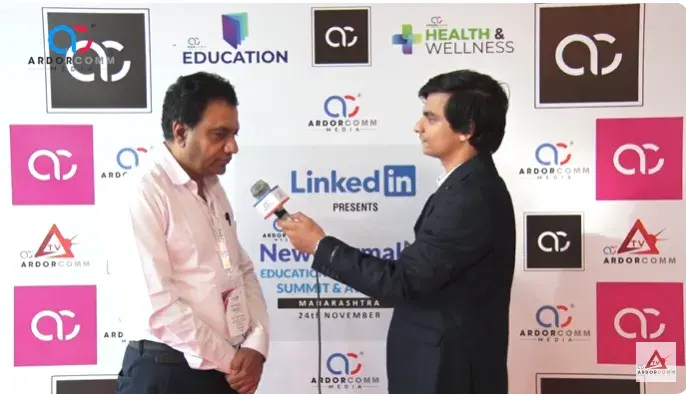
Prof. (Dr.) Rajendra Sinha, Vice Chancellor, Sandip University, Emphasizes on implementation of NEP 2020
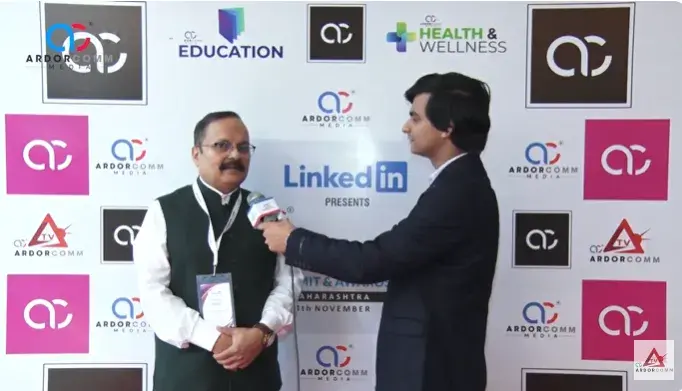
“In today’s scenario practical learning is far more important than theoretical learning,” said Prof. (Dr.) Rajendra Sinha, Vice Chancellor, Sandip University in an interview at “ArdorComm New Normal- Education Leadership Summit & Awards 2023” held in Pune, Maharashtra on 24th November 2023. How is Sandip University implementing the New Education Policy, and what progress has been made in the process? The implementation of the New Education Policy at Sandip University is marked by a commitment to innovative teaching and learning methodologies. The university has embraced research-based learning, personalized learning, and project-based learning to meet the contemporary need for practical education over theoretical knowledge. Recognizing the significance of practical learning in today’s scenario, the institution is actively engaging in collaborations with other countries. This international exchange program involves sharing teachers and students to facilitate the mutual learning of diverse teaching techniques. The emphasis on personalized learning is particularly noteworthy, ensuring that teachers understand the ‘what,’ ‘when,’ and ‘why’ of their instruction, while students can gauge their comprehension effectively. What was the overall takeaway from this event? The event organized by ArdorComm has proven to be a valuable platform for Sandip University, providing a conducive environment for in-depth discussions on the future of education. The creation of multiple panels and a structured setup facilitated the exchange of diverse views, suggestions, and ideas. This collaborative space allowed participants to delve into the possibilities and challenges of evolving educational paradigms, contributing to the collective growth of the academic community. Any testimony for the ArdorComm Media? Extending wishes and appreciation to the organizing committee of ArdorComm Media, I express gratitude for orchestrating such a wonderful event. The seamless organization and execution of the event not only provided an enriching experience but also created a platform for meaningful discussions and networking. Best wishes for the continued success of ArdorComm Media in fostering educational dialogues and advancements in the future.
Prof. (Dr.) Rajendra Sinha, Vice Chancellor, Sandip University, Emphasizes on implementation of NEP 2020 Read More »

Dr. V. V. Ravi Kumar, Deputy Director- Academics, Symbiosis Institute of Business Management, Pune, Expresses his views on correlation of AI and NEP

“The correlation between AI and the New Education Policy is a key focus at Symbiosis Institute of Business Management,” said Dr. V. V. Ravi Kumar, Deputy Director- Academics, Symbiosis Institute of Business Management, Pune in an interview at “ArdorComm New Normal- Education Leadership Summit & Awards 2023” held in Pune, Maharashtra on 24th November 2023. How is Symbiosis Institute of Business Management implementing the New Education Policy? At Symbiosis Institute of Business Management, the implementation of the New Education Policy (NEP) is a progressive endeavour. The first step involves the establishment of the Academic Bank of Credit (ABC), where all students are registered. This innovative approach allows students in business management, for example, to pursue courses outside their core discipline, such as music, with the assurance of receiving credits for their efforts. The institute is actively exploring interdisciplinary avenues to ensure that students do not feel restricted, fostering a more holistic and flexible learning environment. How do you see AI and New Education Policy correlating and making the upcoming workforce market-ready? The correlation between AI and the New Education Policy is a key focus at Symbiosis Institute of Business Management. Through the Academic Bank of Credit (ABC), students can seamlessly integrate AI courses into their MBA curriculum, facilitating the transfer of credits. Regarding workforce readiness, the institute acknowledges that a significant portion of its postgraduate students already comes with industry experience, solving a part of the readiness challenge. However, the emphasis remains on providing these students with a finishing touch and an extra edge, aiming not just for industry readiness but for producing industry leaders. What’s your takeaway from today’s event? A: Today’s event presented a compelling blend of technology companies and education leaders, fostering synergy between these two critical sectors. Engaging in conversations with technology leaders revealed numerous opportunities for education institutions to adopt new approaches and technologies. The event’s innovative format created a space for dialogue that could potentially lead to impactful collaborations and advancements in the field of education. ArdorComm media is celebrating its second anniversary; any message you wish to share? Congratulations to ArdorComm Media on its second anniversary! As evident from your rapid expansion and notable achievements, it’s clear that you are making significant strides. I encourage you to explore additional formats, such as closed round tables, to engage industry and education leaders further. This approach can deepen your impact and contribute to meaningful discussions within the sector. Best wishes for continued success and growth in the years to come.

Dr. V. V. Ravi Kumar, Deputy Director- Academics, Symbiosis Institute of Business Management, Pune, Expresses his views on correlation of AI and NEP Read More »

ZEE Entertainment Shares Rebound After Initial Plunge on Director’s Exit Ahead of AGM

ZEE Entertainment Enterprises Ltd (ZEE) witnessed a brief setback as its shares tumbled by 9% during Thursday’s trading session following the unexpected exit of non-executive non-independent director Adesh Kumar Gupta from the board. However, the stock demonstrated resilience, recovering most of its losses as the session progressed. Gupta, who served as a crucial member of the audit committee and chairman of the risk management and stakeholders relationship committees, cited personal reasons and commitments for his departure ahead of the upcoming annual general meeting (AGM). The initial market reaction led to a decline of 8.79%, with the stock hitting a low of Rs 284.10 on the BSE. In his resignation letter, Gupta expressed regret for being unable to continue as a director due to personal reasons and commitments. He withdrew his re-appointment at the AGM but extended his best wishes for the company’s success, particularly emphasizing the completion of the pending merger with Sony. ZEE Entertainment responded by confirming Gupta’s exit from key committees after the AGM. The company’s 41st AGM is scheduled for Saturday, December 16, at 4:00 pm (IST). ZEE has announced that the AGM will be conducted through video conferencing and other audio-visual means, adhering to circulars issued by the Ministry of Corporate Affairs and the Securities and Exchange Board of India. Investors, initially concerned about the sudden exit, regained confidence as the trading session progressed, reflecting the market’s anticipation of a smooth AGM and positive outcomes for the pending merger with Sony.

ZEE Entertainment Shares Rebound After Initial Plunge on Director’s Exit Ahead of AGM Read More »

Uttar Pradesh Government Issues Guidelines for Education Service Selection Commission

The recruitment process for teachers and instructors in the state, the Uttar Pradesh government, under the leadership of Chief Minister Yogi Adityanath, has issued a comprehensive notification outlining the rules for the Uttar Pradesh Education Service Selection Commission (UPESSC). According to an official release, the guidelines stipulate that candidates invited for interviews, following the written examination, must be awarded a minimum of 40% marks. However, the maximum marks permissible for the interview stage are capped at 90%. The UPESSC will oversee the recruitment of instructors in basic, secondary, and higher education, as well as vocational education, and teachers in aided minority colleges across the state. The Examination Committee will determine the number of candidates to be interviewed in a day and the overall number of boards to be conducted daily, based on the needs of the recruitment process. Moreover, the number of candidates called for interviews will range from 3 to 5 times the number of vacancies, as deemed appropriate by the Commission. For positions requiring interviews, a merit list will be released by combining the marks obtained in the written examination and the interview. In cases where only a written exam is conducted, a merit list will be prepared based on the written exam marks alone. In instances where candidates have equal merits, preference will be given to the marks obtained in the written exam, followed by interview scores. If parity persists, eligibility percentages such as JRF, NET, PhD, and postgraduate scores will be considered. Additionally, in the event of identical scores across all criteria, priority will be given to the candidate with higher age. The release also outlines a meticulous process for candidate replacements, should the initially selected candidate be unable to assume the post. The selected candidate, upon explaining the reasons for non-acceptance, will submit their application to the Director, who will then recommend an adjustment to the Commission. The Commission will subsequently hold the institution or appointing authority accountable for any discrepancies in the requisition process. This move by the Uttar Pradesh government is anticipated to bring transparency and efficiency to the teacher and instructor recruitment process, ensuring that the most qualified and suitable candidates are selected for these crucial roles in the education sector.

Uttar Pradesh Government Issues Guidelines for Education Service Selection Commission Read More »

Madras High Court Rules: Reservation Policy Inapplicable to Government Law Officers

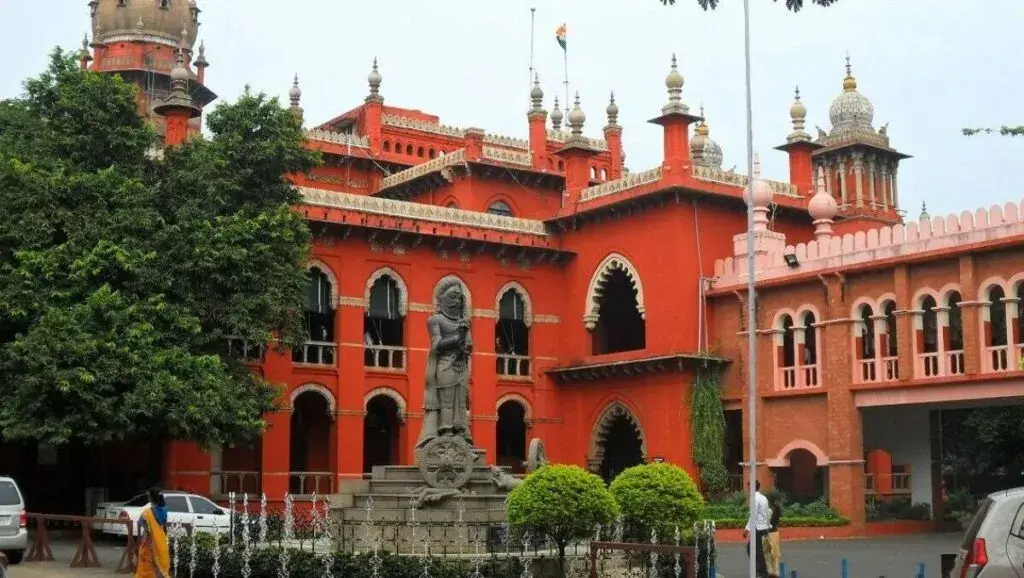
The Madras High Court has ruled that the reservation policy mandated under Article 16(4) of the Constitution does not apply to law officers engaged by the government. The court emphasized that law officers, appointed by the government, do not hold civil posts, and hence, the relationship between them and the government is not that of a master and servant. A Bench comprising Chief Justice SV Gangapurwala and Justice D Bharatha Chakravarthy highlighted the government’s duty to appoint the most competent and meritorious lawyers for legal representation. The court asserted that, as the law officers do not hold civil posts, Article 16(4) of the Constitution, which deals with reservations, is not applicable to such appointments. The judgment underscored the importance of merit as the sole criterion for selecting law officers. The ruling came in response to a Public Interest Litigation (PIL) filed in 2017 by Thol Thirumavalavan, a local political leader, seeking reservation for women, Scheduled Caste (SC), and Scheduled Tribe (ST) communities in the appointment of law officers in the Madras High Court and subordinate courts in Tamil Nadu. The court dismissed the PIL, stating that the government’s duty to protect public interest obligates it to engage the most proficient and capable individuals, making merit the primary consideration in such appointments. The court also rejected arguments based on government orders and office memoranda advocating reservation for contractual employees, emphasizing that such provisions apply to individuals in the employment of the government, which does not include law officers. The verdict highlights the unique nature of the relationship between the government and law officers, grounded in trust and confidence, and asserts that the selection process for law officers is transparent and not arbitrary.

Madras High Court Rules: Reservation Policy Inapplicable to Government Law Officers Read More »

Deepti Gaur Mukerjee Takes the Helm as CEO of National Health Authority

news on health

The National Health Authority (NHA) has officially appointed Deepti Gaur Mukerjee as its new Chief Executive Officer (CEO). The announcement was made on Wednesday, marking the beginning of a new era for the apex body responsible for overseeing the implementation of the government’s flagship health initiatives. Deepti Gaur Mukerjee, a 1993 batch Indian Administrative Service (IAS) officer from the Madhya Pradesh cadre, brings a wealth of experience and expertise to her new role. The NHA took to social media, particularly Twitter, to share the news with the public. The official NHA Twitter account posted, “We are delighted to extend the warmest welcome to Smt. Deepti Gaur Mukerjee, IAS as CEO, [MP:93], NHA,” NHA tweeted.” We are delighted to extend the warmest welcome to Smt. Deepti Gaur Mukerjee, IAS [MP:93] as CEO, NHA. — National Health Authority (NHA) (@AyushmanNHA) December 13, 2023 Mukerjee takes over the reins from Dr. Ram Sewak Sharma, who stepped down earlier this year after completing his tenure on January 31, 2023. Dr. Sharma had been appointed as the CEO of the NHA in February 2021. During his tenure, the NHA played a crucial role in implementing key healthcare initiatives, including the Ayushman Bharat Pradhan Mantri Yojana (AB PM-JAY), a flagship health insurance scheme, and the Ayushman Bharat Digital Mission (ABDM), aimed at integrating digital health infrastructure across India. The appointment of Deepti Gaur Mukerjee is expected to bring fresh perspectives and strategic leadership to the NHA as it continues its mission to enhance healthcare accessibility and affordability for all citizens. As the nation grapples with ongoing healthcare challenges, Mukerjee’s role becomes pivotal in steering the NHA towards achieving its objectives and contributing to the overall improvement of India’s healthcare landscape. The healthcare community and the public eagerly await the impact of Mukerjee’s leadership on the nation’s health policies and initiatives.

Deepti Gaur Mukerjee Takes the Helm as CEO of National Health Authority Read More »

CBSE Board Exam Date Sheet 2024 Unveiled: Classes 10th and 12th Exams Begin on February 15

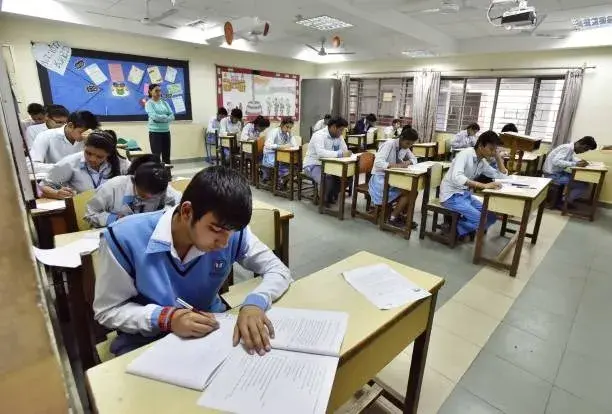
The Central Board of Secondary Education (CBSE) has officially released the date sheets for the upcoming Class 10 and Class 12 board exams scheduled for 2024. The announcement comes approximately 55 days ahead of the commencement of the exams, providing students with ample time to formulate effective study strategies. The date sheets are available online on the official CBSE website, cbse.gov.in. In a departure from the 2023 schedule, where the date sheets were released in December, the Class 10 and 12 exams for 2024 are set to kick off on February 15. The last day of exams for Class 10 is slated for March 11, while Class 12 exams will conclude on April 2. Exam timings remain consistent with the previous year, with papers being conducted in a single shift from 10:30 am to 1:30 pm. For Class 12, the first day of exams features four subjects: Kokborok, capital market operations, physical activity trainer, and entrepreneurship. Key subjects in the Class 12 timetable include Hindi, English, Chemistry, Geography, Physics, Mathematics, and others, with the final exam scheduled for April 2. Class 10 students will begin their exams on February 21 with Hindi and conclude on March 11 with Mathematics. The timetable includes English, Science, Social Science, and Mathematics, providing a comprehensive assessment of the students’ knowledge. Students are advised to strictly adhere to the date sheets that have been distributed. The CBSE date sheets provide a structured plan for preparation, allowing students to effectively organize their study schedules. Further updates and important exam information can be found on the official CBSE website.

CBSE Board Exam Date Sheet 2024 Unveiled: Classes 10th and 12th Exams Begin on February 15 Read More »

BJP Leadership Shuffle: Bhajan Lal Sharma, Mohan Yadav, and Vishnu Deo Sai Take Charge as Chief Ministers in Rajasthan, Madhya Pradesh, and Chhattisgarh

News on Government

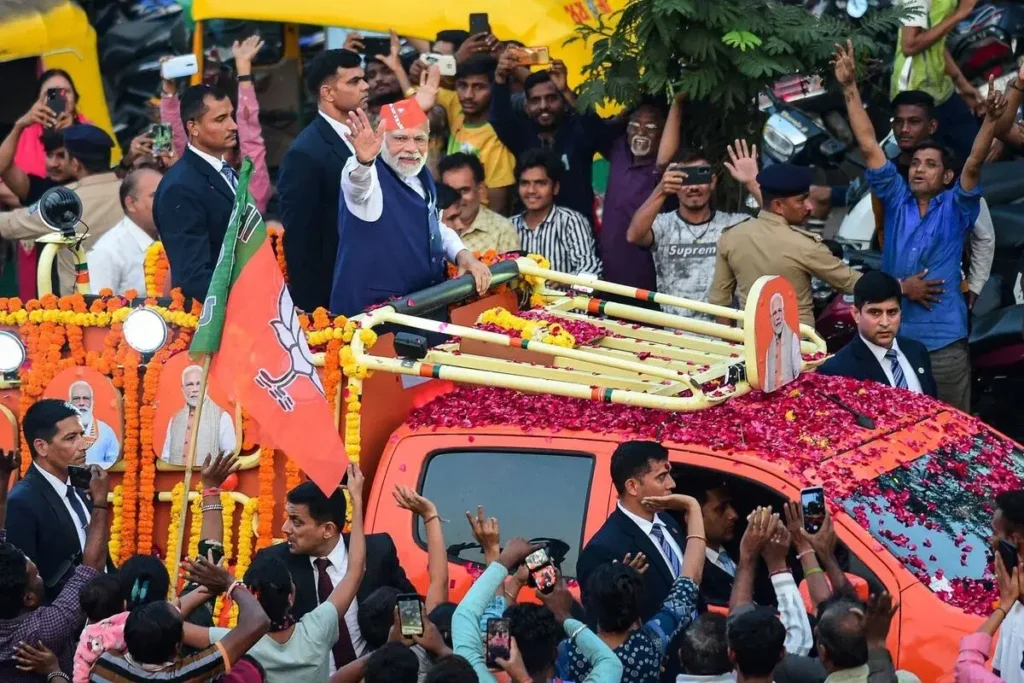
The Bharatiya Janata Party (BJP) officially announced Bhajan Lal Sharma as the new Chief Minister of Rajasthan, following a conclusive BJP Legislature Party meeting held in Jaipur yesterday. The meeting, which commenced at 4 pm, saw the presence of all 115 BJP MLAs at the party office, marking a crucial moment in Rajasthan’s political landscape. The selection process was overseen by Defence Minister Rajnath Singh, Rajya Sabha member Saroj Pandey, and BJP National General Secretary Vinod Tawde, appointed as observers by the BJP to ensure a smooth and transparent selection of the Rajasthan Chief Minister. The saffron party emerged victorious in the Rajasthan Assembly polls on December 3, securing a clear majority and displacing the Congress party. Notably, the BJP’s strategy in selecting chief ministers has taken an interesting turn in states like Chhattisgarh and Madhya Pradesh, where the party also claimed victory. In Chhattisgarh, tribal leader Vishnu Deo Sai was chosen, while in Madhya Pradesh, Mohan Yadav, the party’s OBC face and former education minister, secured the chief ministerial position. Both choices surprised many as the BJP opted for fresh faces over seasoned leaders. Mohan Yadav, a three-time MLA from Madhya Pradesh’s Ujjain South, is set to take the oath as the chief minister at Bhopal’s Lal Parade Ground. In Chhattisgarh, Vishnu Deo Sai, a four-time Lok Sabha MP and three-time state BJP chief, will be sworn in as the CM at the Science College ground in Raipur. In Madhya Pradesh, Rajendra Shukla and Jagdish Devda are expected to be sworn in as deputies of Mohan Yadav. However, in Chhattisgarh, the BJP is yet to make an official announcement regarding the deputy CMs. Speculations suggest that Arun Sao and Vijay Sharma might assume these roles alongside Sai. The swearing-in ceremonies in Bhopal and Raipur are anticipated to witness the presence of political heavyweights, including Prime Minister Narendra Modi, Union Home Minister Amit Shah, and Uttar Pradesh Chief Minister Yogi Adityanath. The BJP’s choices for chief ministers in these states reflect a strategic shift, opting for fresh and dynamic leadership over experienced veterans.

BJP Leadership Shuffle: Bhajan Lal Sharma, Mohan Yadav, and Vishnu Deo Sai Take Charge as Chief Ministers in Rajasthan, Madhya Pradesh, and Chhattisgarh Read More »

Max Healthcare Institute Expands Footprint with Rs 940 Crore Acquisition of Starlit Medical Centre

Max Healthcare Institute (MHIL) has taken a significant step towards broadening its presence in Tier I and II cities by finalizing the acquisition of Starlit Medical Centre. The transaction, facilitated through MHIL’s subsidiary, Crosslay Remedies, comes with an enterprise value of Rs 940 crore. Currently managing 17 healthcare facilities across Delhi-NCR, Haryana, Punjab, Uttarakhand, and Maharashtra, Max Healthcare operates with 3,533 beds. With the inclusion of Starlit Medical Centre, the total bed count is expected to reach approximately 4,083 beds. MHIL has ambitious plans for the financial year 2023-24, intending to add 300 beds, with a broader vision of surpassing 4,000 additional beds in the next four years. Starlit Medical Centre, through a business transfer agreement, has acquired the 550-bed Sahara Hospital in Lucknow. The tertiary care facility, spanning 27 acres in Gomti Nagar, holds accreditations from the National Accreditation Board for Testing and Calibration Laboratories (NABL) and the National Accreditation Board for Hospitals & Healthcare Providers (NABH). The facility offers a spectrum of healthcare services, encompassing gastroenterology, neurology, surgery, cardiology, pulmonology, and diagnostics. Max Healthcare’s strategic acquisition in Lucknow marks its entry into the city, where it plans to introduce medical programs such as oncology and organ transplants while reinforcing existing programs in orthopedics, cardiac sciences, neurosciences, and renal sciences. Abhay Soi, Chairman and Managing Director of Max Healthcare Institute, expressed excitement about the acquisition, aligning with the institute’s strategy to establish a presence in developed healthcare ecosystems of new Tier I/II cities. Through this venture, Max Healthcare aims to provide quality healthcare to the people of Uttar Pradesh. The acquisition encompasses a 17-storey building, and the hospital, currently serving around 200,000 patients annually, boasts a revenue run rate of Rs 200 crore for the fiscal year 2023-24.

Max Healthcare Institute Expands Footprint with Rs 940 Crore Acquisition of Starlit Medical Centre Read More »

Government Mandates 100% Jute Packaging for Food Grains and 20% for Sugar

Indian government has given its nod for the mandatory packaging of 100% of food grains and 20% of sugar in diversified jute bags for the Jute Year 2023-24. This decision aligns with the government’s commitment to the Aatmanirbhar Bharat (Self-Reliant India) initiative. The reservation norms outlined in the proposal aim to safeguard the interests of domestic raw jute production and jute packaging material within India. By enforcing these norms, the government seeks to enhance self-reliance in line with the Aatmanirbhar Bharat vision. Approximately 65% of the raw jute produced in the country was consumed for packaging purposes in the previous fiscal year (2022-23). The implementation of the Jute Packaging Materials (JPM) Act is expected to provide relief to 4 lakh workers employed in jute mills and ancillary units, supporting the livelihoods of around 40 lakh farm families. Additionally, the move is anticipated to contribute to environmental conservation, given that jute is a natural, biodegradable, renewable, and reusable fiber, meeting essential sustainability criteria. The Jute industry holds a vital position in India’s national economy, particularly in the Eastern Region, including West Bengal, Bihar, Odisha, Assam, Tripura, Meghalaya, Andhra Pradesh, and Telangana. The industry plays a crucial role in providing direct employment to 4 lakh workers and supporting 40 lakh farmers through the reservations norms established under the JPM Act of 1987. Jute Sacking Bags constitute 75% of the total production of the Jute Industry, with 85% of these bags supplied to the Food Corporation of India (FCI) and State Procurement Agencies (SPAs). The remaining portion is either exported or sold directly. The government’s annual purchase of Jute sacking bags, valued at approximately Rs. 12,000 crore, ensures a guaranteed market for Jute farmers and workers. With an average production of about 30 lakh bales (9 lakh MT) of Jute Sacking Bags, the government is committed to the complete off-take of the production to protect the interests of Jute farmers, workers, and stakeholders in the Jute Industry.

Government Mandates 100% Jute Packaging for Food Grains and 20% for Sugar Read More »