ArdorComm Media Group

Friday, April 24, 2026 9:00 AM

Author name: admin

Sony Confirms Termination of $10 Billion Merger Deal with Zee Entertainment, Legal Battle Looms

Sony Corporation officially announced on Monday the termination of its proposed $10 billion mega-merger deal with Zee Entertainment, marking the collapse of the ambitious alliance that aimed to create India’s largest entertainment company. The agreement was intended to provide substantial financial prowess, positioning the unified entity to compete with global streaming giants like Netflix Inc. and Amazon.com Inc., as well as local conglomerates such as Reliance Industries Ltd, currently exploring potential partnerships with Disney. The termination notice served by Sony brings an abrupt end to the negotiations, which had been anticipated as Sony Group Corp signaled its hesitancy to extend the discussions beyond the originally agreed-upon deadline. The termination follows a report on January 21 by ET (Economic Times) indicating that Sony was unlikely to prolong the good faith negotiations with Zee Entertainment Enterprises Ltd. (ZEEL). Zee Entertainment, in response to Sony’s move, expressed its intention to take legal action against the Japanese conglomerate, setting the stage for a potential legal battle between the two entities. The fallout from the failed merger deal adds a layer of complexity to the media landscape, with Zee Entertainment now reassessing its strategic options. In a prior development, Zee had requested Sony to extend the merger deadline from December 21, 2023, citing the need for more time. The merger deal, initially inked on December 22, 2021, faced hurdles and uncertainties, ultimately leading to its termination. The termination of the Sony-Zee merger deal raises questions about the future trajectory of both companies in the highly competitive Indian entertainment market. Industry observers are closely watching the aftermath of this high-profile breakdown and its potential implications for the broader media and entertainment landscape in India.

Sony Confirms Termination of $10 Billion Merger Deal with Zee Entertainment, Legal Battle Looms Read More »

Byju’s Seeks Fresh Funds, Slashes Valuation by 90% to Tackle Financial Woes

Indian education giant Byju’s is reportedly planning to raise funds through a share issuance next month, seeking over $100 million from existing investors. The catch, however, is that the valuation of the once $22 billion startup will plummet by more than 90%, now placing the company at less than $2 billion. Sources familiar with the matter revealed that Byju’s founder, Byju Raveendran, will partake in the share sale to maintain his stake in the company. The move comes as Byju’s grapples with financial challenges, planning to utilize the proceeds to settle outstanding payments to vendors and stabilize its operations. Byju’s had previously attained a valuation of $22 billion during its funding round in late 2022, marking a significant decline in its perceived value. The company has been navigating a cash crunch for several months and is concurrently engaged in a legal dispute with creditors over a missed interest payment on a $1.2 billion term loan. In a bid to alleviate financial pressures, Byju’s is set to sell its US-based kids’ digital reading platform for approximately $400 million. The spokesperson for the company has declined to comment on the recent developments. Post the share sale, Byju’s aims to refocus on its core business and intensify efforts in the realm of generative artificial intelligence for hyper-personalized learning. Backed by prominent investors like the Chan Zuckerberg Initiative, General Atlantic, and Prosus NV, Byju’s had previously embarked on a global acquisition spree before encountering the challenges of a tech funding downturn. Noteworthy participants in the upcoming share sale include existing shareholders, such as the Chan Zuckerberg Initiative, General Atlantic, and Prosus NV. Byju’s endeavors to rebuild its business amid the financial restructuring, emphasizing innovation in education technology. The company’s proactive measures highlight the resilience of Byju’s leadership in adapting to market dynamics while ensuring a sustainable future for the prominent education technology firm.

Byju’s Seeks Fresh Funds, Slashes Valuation by 90% to Tackle Financial Woes Read More »

Closing the Women’s Health Gap: A $1 Trillion Opportunity for Global Well-being

Blog on Health

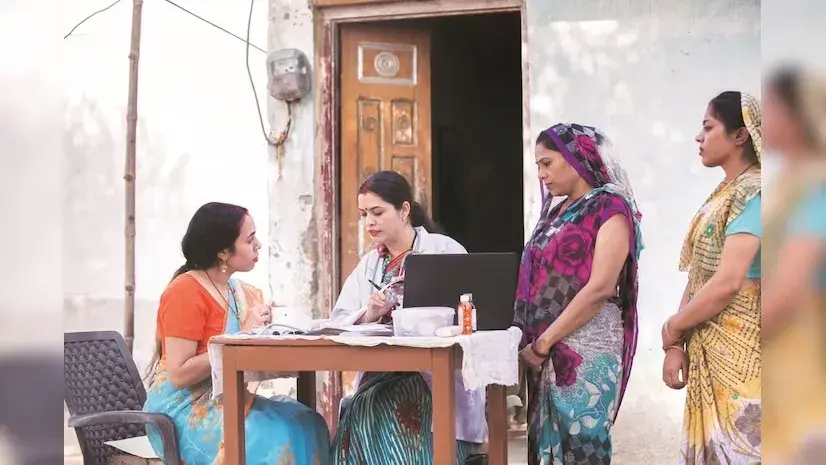
In a study by the McKinsey Health Institute in collaboration with the World Economic Forum (WEF), the report titled “Closing the women’s health gap: A $1 trillion opportunity to improve lives and economies” sheds light on the profound impact of gender disparities in healthcare on both individual well-being and global economic prosperity. The study, focused on addressing the health gap between men and women, reveals startling statistics that demand urgent attention and action. Key Findings: Unraveling the Women’s Health Gap The report brings to light the alarming fact that while women tend to live longer than men, they spend 25 percent more of their lives grappling with poor health. This health disparity translates into a staggering 75 million years of life lost annually due to illnesses or premature death among women. The study identifies key areas contributing to the women’s health gap: Health Conditions Affecting Both Genders: 95 percent of the health burden on women is attributed to conditions affecting both men and women, such as sexual and reproductive health, maternal and child health, and endometriosis. Prevalence of Conditions in Women: 56 percent of the health burden on women arises from conditions that are either more prevalent or manifest differently in women. The Case of India: A $22 Billion Opportunity In the context of India, the study highlights that closing the gender gap in healthcare could lead to a substantial economic boost. The report estimates that India’s GDP could rise by at least $22 billion by addressing the health disparities between men and women. The top health conditions contributing to this potential GDP impact include premenstrual syndrome, gynecological diseases, migraine, depressive disorders, and anxiety disorders. Global Root Causes: Science, Care Delivery, Investment, and Data The report identifies four primary global root causes contributing to the women’s health gap: Science: Historically, the study of human biology has predominantly focused on the male body, leading to less effective treatments for women. Over 50 percent of interventions with sex-disaggregated research are found to be less effective for women than men. Care Delivery: Women often face barriers to care, diagnostic delays, and suboptimal treatment due to healthcare systems designed and run predominantly by men. Investment: There has been lower investment in women’s health conditions relative to their prevalence, perpetuating limited scientific understanding and data on women’s bodies. Data: Health burdens for women are systematically underestimated, with incomplete datasets that exclude or undervalue crucial conditions affecting women. Closing the Gap: A Trillion-Dollar Opportunity The report emphasizes the potential economic and societal benefits of addressing the women’s health gap: Economic Growth: For every $1 invested in women’s health, the projection is nearly $3 in economic growth. Global Impact: Closing the health gap could add 7 more days of healthy living for each woman annually, contribute at least $1 trillion to the global economy by 2040, and generate an impact equivalent to 137 million women accessing full-time positions. Reduced Health Burden: Addressing the gaps in women’s health could reduce the time women spend in poor health by almost two-thirds, positively impacting 3.9 billion women. Strategies for Change To achieve health equity and foster economic growth, the report suggests a comprehensive strategy involving various stakeholders: Invest in Research: Prioritize women-centric research to fill knowledge and data gaps in women-specific conditions. Data Collection: Systematically collect and analyze sex-, ethnicity-, and gender-specific data for accurate representation of women’s health burden. Enhance Access: Improve access to gender-specific care, from prevention to diagnosis and treatment. Financing Models: Incentivize new financing models to support women’s health initiatives. Business Policies: Establish business policies that actively support women’s health. Raise Awareness: Promote awareness and advocacy to draw attention to the women’s health gap. By prioritizing women’s health in research, care, and investment, societies can unlock immense economic potential while ensuring a healthier

Closing the Women’s Health Gap: A $1 Trillion Opportunity for Global Well-being Read More »

Survivors of Russian Plane Crash in Afghanistan in ‘Good Health,’ Taliban Reports

Taliban administration announced that four survivors of a charter plane crash in northern Afghanistan are in “good health.” The incident involved a plane en route to Moscow, and while the survivors appear to be in stable condition, the bodies of two passengers killed in the crash are being transported to the Afghan capital. Russian aviation authorities reported on Sunday that the plane, carrying six individuals, disappeared from radar screens over Afghanistan on Saturday night. Afghan police received reports of a crash in the mountainous Badakhshan province. Taliban spokesperson Zabihullah Mujahid stated, “Four people from the crashed plane in Badakhshan were transferred to Kabul, the medical and rescue teams of the Ministry of Aviation and the Ministry of Defence have provided them with first aid.” Video footage released by Mujahid’s office showed the survivors disembarking from a helicopter accompanied by Taliban officials. The footage revealed visible injuries on some survivors, with one individual displaying bloodstains on his clothes. An unnamed Taliban official in the video affirmed the good health of the survivors, expressing gratitude for finding the crash site. The bodies of the deceased passengers have been moved to Fayzabad, a northern provincial city, and are en route to Kabul. According to Russian state-run TASS news agency, the crashed flight had conducted a private medical evacuation from Thailand’s Pattaya, a popular destination for Russian tourists, to Moscow. Approximately 25 minutes before disappearing from radar screens, the pilot reportedly issued a warning about low fuel and indicated an attempt to land in Tajikistan, as reported by the Russian news outlet SHOT.

Survivors of Russian Plane Crash in Afghanistan in ‘Good Health,’ Taliban Reports Read More »

India Witnesses Third COVID-19 Wave, Officials Confirm JN.1 Variant Impact

As India grapples with the ongoing challenges posed by the COVID-19 pandemic, official sources have confirmed the emergence of the JN.1 variant. However, reassuringly, the available data suggests that this variant is not causing an exponential rise in new cases, nor is it associated with a surge in hospitalizations and mortality rates. India has experienced three distinct waves of COVID-19, with the most significant impact observed during the Delta wave in April-June 2021. At its peak, the country reported a staggering 4,14,188 (4.14 lakh) new cases and 3,915 deaths on May 7, 2021. The latest data indicates that the JN.1 variant is not leading to a scenario similar to the Delta wave peak. This information comes as a relief amid concerns about the potential impact of new variants on the country’s healthcare system. Since the onset of the pandemic in early 2020, India has witnessed more than 4.50 crore people contracting the virus, with over 5.30 lakh fatalities recorded over the course of about four years. This underscores the persisting challenges and the need for ongoing efforts to combat the spread of the virus and mitigate its impact on public health. As the situation continues to evolve, health authorities are closely monitoring the spread and characteristics of the JN.1 variant. The confirmation that the variant is not currently associated with a severe increase in cases provides valuable insights for public health strategies.

India Witnesses Third COVID-19 Wave, Officials Confirm JN.1 Variant Impact Read More »

Alarming Rise in Out-of-School Children across Pakistan Sparks Concerns

The News International reports that as of the academic year 2021-22, Pakistan is grappling with a staggering 26.2 million out-of-school children, indicating a persistent challenge in achieving universal education. The data underscores that 39 percent of children in the school-going age group are currently not enrolled, raising concerns about the nation’s educational landscape. Balochistan emerges as a cause for heightened concern, as it leads with a startling 65 percent of children out of school, while Islamabad Capital Territory reports the lowest percentage. Among the major provinces, Khyber Pakhtunkhwa performs relatively better with a 30 percent out-of-school rate. Despite a slight decrease in the percentage of out-of-school children from 44 percent in 2016-17 to 39 percent in 2021-22, the absolute number has surged from 22.02 million to 26.21 million during the same period. This surge is primarily attributed to the population growth rate outpacing the decrease in out-of-school children. The report further reveals a disconcerting scenario at the higher secondary level, with a projected 60 percent of children expected to be out of school in the current academic year. Additionally, the analysis indicates out-of-school rates of 44 percent, 30 percent, and 36 percent at high, middle, and primary levels, respectively. Highlighting the urgent need for targeted interventions, the data shows that a significant portion of the out-of-school children, totaling 10.77 million, are at the primary level. Economic disparities also play a crucial role in limiting educational access, with children from the poorest quintile facing the highest disadvantage across all education levels. This revelation underscores the need for comprehensive efforts to address these challenges and ensure education for all in Pakistan.

Alarming Rise in Out-of-School Children across Pakistan Sparks Concerns Read More »

SolarEdge Technologies Announces 16% Workforce Reduction Amidst Strategic Operational Adjustments

In a strategic move to streamline operations and cut operating costs, SolarEdge Technologies announced on Sunday that it will be implementing a significant workforce reduction, affecting approximately 16% of its global workforce, or roughly 900 employees. This decision comes on the heels of the firm’s recent strategic shifts, including the discontinuation of manufacturing operations in Mexico, a reduction in manufacturing capacity in China, and the termination of light commercial vehicle e-mobility activity. CEO Zvi Lando explained the rationale behind the tough decision, stating, “We have made a very difficult, but necessary decision to implement a workforce reduction and other cost-cutting measures in order to align our cost structure with the rapidly changing market dynamics.” The renewable energy company had previously adjusted its fourth-quarter revenue expectations in November, citing weak demand for its solar inverters. The solar industry, particularly in Europe, has experienced a slowdown over the past year due to excess inventories and weakening demand. In the United States, factors such as higher interest rates and a metering reform in California, the country’s largest solar market, have contributed to lower demand for solar products. SolarEdge’s strategic measures reflect the company’s proactive response to the evolving dynamics of the solar market, aiming to position itself effectively in the face of challenges. The announcement underscores the broader trends and challenges within the renewable energy sector, as companies navigate market shifts and seek to optimize their operations in a rapidly changing environment.

SolarEdge Technologies Announces 16% Workforce Reduction Amidst Strategic Operational Adjustments Read More »

Punjab Government Proposes ₹3,000 Crore Action Plan for Samagra Shiksha Program

The Punjab government has presented a comprehensive ₹3,000-crore action plan under the Samagra Shiksha program. This flagship centrally sponsored initiative for school education aims to address various facets, including quality education, access and retention, and vocational education. The proposed budget spans the financial years 2024-25 and 2025-26, with an annual allocation of ₹1,476 crore for each year. This marks a commendable 14% increase compared to the current year’s budget. The Samagra Shiksha program operates on a joint funding model, with the central and state governments contributing on a 60:40 sharing basis, emphasizing their commitment to transforming the education landscape. Outlined in the action plan are specific allocations for key areas of focus. An earmarked ₹503 crore is dedicated to initiatives and interventions related to quality education, emphasizing the importance of an enriched learning experience. Additionally, ₹225 crore has been allocated for measures addressing access and retention, ensuring that more students can benefit from an inclusive education system. Another significant chunk of ₹188 crore is set aside for the promotion and implementation of vocational education, equipping students with practical skills for the future. The proposed initiatives include the construction of new classrooms and toilets, improved drinking water facilities, the promotion of commerce and science education, teacher training, digital initiatives, strengthening school libraries, and the installation of solar panels. Furthermore, the plan envisions introducing vocational education in all high and senior secondary schools, reflecting a forward-looking approach to skill development. The Samagra Shiksha Project Approval Board, led by Union school education and literacy secretary Sanjay Kumar, will review the budget proposals in the upcoming month. The central government’s share of ₹886 crore, coupled with the state government’s commitment of ₹590 crore, underscores the collaborative effort to create a robust educational framework.

Punjab Government Proposes ₹3,000 Crore Action Plan for Samagra Shiksha Program Read More »

Sony Board to Decide on $10-Billion Merger with Zee Entertainment Amid Leadership Dispute

Sony Group has convened a board meeting on January 19 to determine the fate of the proposed $10-billion merger with Zee Entertainment Enterprises. The decision, expected to be communicated to the Tokyo Stock Exchange next week, may indicate a potential discontinuation of the merger plan. The key point of contention revolves around the leadership of the merged entity, particularly the role of Punit Goenka, Zee’s current CEO and son of its founder Subhash Chandra. Despite the 2021 agreement designating Goenka as the CEO of the merged company, Sony has shifted its stance and is reluctant to have him lead the entity. This change is exacerbated by an ongoing regulatory investigation, with the Securities and Exchange Board of India (SEBI) alleging deceptive practices by Zee, including false claims about loan recovery and misuse of positions by Chandra and Goenka. The protracted stalemate over leadership has raised concerns within Sony about proceeding with the deal. Even after Goenka’s voluntary decision to relinquish the CEO position following the merger, uncertainties persist. Zee Entertainment’s request to extend the deadline for completing the deal, originally set for December 21, 2023, indicates unresolved issues, including the leadership role of Goenka, requiring additional time for negotiations. Insiders at Sony suggest that even if Goenka agrees to step down, meticulous scrutiny of condition precedent pacts and financial adjustments must occur before finalizing the merger. Zee’s financial performance has seen a significant decline since the merger announcement, with net profit plummeting from Rs 956 crore in FY22 to Rs 48 crore in FY23. The outcome of the board meeting carries significant implications for the future of the merger, as insiders indicate that for the deal to progress, Goenka may need to step down on the day the new merged company is established. The decision will shed light on whether Sony and Zee can overcome the leadership dispute and move forward with the high-profile merger.

Sony Board to Decide on $10-Billion Merger with Zee Entertainment Amid Leadership Dispute Read More »

Government Announces 3.5% Stake Disinvestment in NHPC, Stock Dips 4%

In a strategic move, the government has unveiled plans to disinvest a 3.5% stake in NHPC (National Hydroelectric Power Corporation) through an offer for sale (OFS), causing a notable dip in the company’s stock value. The floor price for the OFS has been set at Rs 66 per share, and this development has triggered a 4.33% decline in NHPC shares during Thursday’s trade on January 18. As of 9:26 a.m., NHPC shares were down by Rs 3.16, trading at Rs 69.9 apiece on the Bombay Stock Exchange (BSE). The market capitalization of NHPC at the same time was recorded at Rs 70,214.79 crore. Investors and market analysts are closely monitoring the situation, evaluating the potential impact of the government’s disinvestment decision on NHPC’s market dynamics. NHPC, a prominent public sector power company, plays a crucial role in the country’s power generation landscape. The government’s move to divest a portion of its stake in the company is part of its broader disinvestment strategy, aiming to optimize resources and streamline the public sector. Market experts suggest that while disinvestments can unlock value for the government, the immediate market response indicates investor caution. The floor price set for the OFS will be a key factor influencing investor sentiment and determining the success of the disinvestment plan. As the news of the government’s decision spreads, market participants are likely to closely watch NHPC’s performance, analyzing the potential implications for the energy sector and the broader stock market. The development adds an element of uncertainty to NHPC’s short-term outlook, creating a dynamic situation in the financial landscape.

Government Announces 3.5% Stake Disinvestment in NHPC, Stock Dips 4% Read More »