ArdorComm Media Group

Wednesday, May 20, 2026 8:58 AM

Author name: admin

Prof. (Dr.) Raghuvir Singh, Vice Chancellor, Teerthanker Mahaveer University, Moradabad, Highlights on NEP implementation

“We have implemented NEP in totality whether it’s the Academic Bank of Credits, multi-entry and multi-exit, four-year undergraduate programs, or the Indian knowledge system, every aspect of the NEP has been implemented in our university,” says Prof. (Dr.) Raghuvir Singh, Vice Chancellor, Teerthanker Mahaveer University, Moradabad, in an Interview with Pratik Ghosh, Content Writer, ArdorComm Media Group at the ‘New Normal – Education Leadership Summit & Awards 2023’ #ELSANewDelhi #ELSAGurugram How are you feeling to witness the New Normal Education Leadership Summit and Awards in Delhi? I find this event to be wonderfully organized, with excellent speakers and relevant topics. The chosen topics are quite wide and pertinent to the current context. Everyone can learn from these discussions and take these insights back to their universities for the improvement of education. How are you implementing NEP in your university? We have implemented NEP in totality whether it’s the Academic Bank of Credits, multi-entry and multi-exit, four-year undergraduate programs, or the Indian knowledge system, every aspect of the NEP has been implemented in our university. We’ve been following these guidelines since the NEP was introduced by the Indian government. Our state government is also actively monitoring our progress, and we provide updates to them on our implementation. The theme of our event is “India Vision 2030.” What, according to you, should be the vision for the education sector going forward? In my opinion, universities should emphasize thinking skills over psychomotor skills. Teaching tools and techniques change rapidly, and universities can’t always keep up with these changes. Therefore, it’s crucial to focus on transferable skills, which are the fundamentals. Transferable skills enable students to learn job-specific skills on their own. Competency-building should be the primary focus to enable students to excel in their careers and social lives. How does this kind of forum benefit the education sector, where education leaders, industry experts, and government officials come together? This type of forum is an excellent way to bring together different stakeholders in the education ecosystem – regulators, education leaders, and industry experts. For years, these three entities have operated in isolation, and there have been limited platforms for them to interact and share their perspectives. Forums like this create a space for meaningful dialogue, allowing each group to understand the expectations and needs of the others, ultimately benefiting the education sector as a whole. Any message for the ArdorComm Media Group on its 2nd anniversary? Congratulations on completing two years! ArdorComm Media has done a wonderful job during this time. I hope you continue to flourish and contribute to the nation’s educational growth. Your efforts will undoubtedly help the nation progress towards becoming a developed nation.

Prof. (Dr.) Raghuvir Singh, Vice Chancellor, Teerthanker Mahaveer University, Moradabad, Highlights on NEP implementation Read More »

UGC issues draft Institutional Development Plan for HEIs

The University Grants Commission (UGC) has released a draft plan for the development of Higher Education Institutions (HEIs), outlining strategies such as private sector collaboration for funding, faculty evaluation based on rankings, and the establishment of a supportive “emotional infrastructure.” The main goal of these guidelines, according to UGC Chief M Jagadesh Kumar, is to assist universities and colleges in achieving academic, administrative, and financial self-reliance. Under the updated guidelines, HEIs are now required to identify and prioritize various funding sources to enhance their financial infrastructure. These sources include government grants, alumni contributions, partnerships with private sector entities, and fundraising campaigns. Furthermore, HEIs must devise sustainable revenue models that draw from multiple avenues. These encompass student tuition fees, government grants, subsidies, earnings from research projects in collaboration with both government and private sector entities, as well as endowments. The revised draft emphasizes that for a well-established HEI, each funding source should ideally contribute a similar percentage to the overall revenue. The proportion may vary based on the institution’s size. To boost revenue, HEIs are advised to expand their undergraduate programs to attract more students. The draft also introduces the concept of faculty ranking, primarily centered on research-focused Academic Performance Indicators (API) scores. This ranking system aims to incentivize faculty members by offering additional benefits. The guidelines suggest that implementing this ranking system through university policy can lead to increased motivation among faculty. As a result, faculty members will strive for excellence to improve their annual rankings, potentially reducing the need for excessive oversight.

UGC issues draft Institutional Development Plan for HEIs Read More »

Bharatiya Nyaya Sanhita Bill, 2023: Sedition Clause to be Repealed, Focus on Unity and Integrity

A significant legislative shift is underway as Union Minister Amit Shah introduced the Bharatiya Nyaya Sanhita, 2023, in the Lok Sabha. This transformative bill seeks to replace the existing Indian Penal Code (IPC) and notably abolishes the contentious Section 124A, commonly known as the sedition clause. Instead, the new bill introduces Section 150, redefining the approach towards actions that endanger India’s sovereignty, unity, and integrity. Section 124A, the sedition provision in the IPC, criminalizes efforts to foster hatred or disaffection towards the lawful government using words, signs, or other means. The revamped Section 150 addresses acts that intentionally incite secession, armed rebellion, subversive activities, or separatist sentiments. It also encompasses electronic communication and financial involvement, underscoring the gravity of such actions. Under Section 151 of the bill, engagement in warfare against a foreign state at peace with India, or abetting such warfare, is penalized with imprisonment for life or a term up to seven years, accompanied by fines. Amit Shah’s legislative agenda encompasses not only the Bharatiya Nyaya Sanhita but also replacements for the Code of Criminal Procedure (CrPC) and the Indian Evidence Act. Speaking in the Lok Sabha, he emphasized that these reforms mark a departure from laws established during British colonial rule, ushering in a new era for the country’s criminal justice system. The comprehensive bills address critical issues, including mob lynching through a new penal code, stringent measures against child rape, expedited prosecution of civil servants, and the ability to try fugitives like Dawood Ibrahim in absentia. As the bills proceed, they will undergo thorough examination by a Parliamentary panel, signifying a significant stride towards modernizing India’s legal framework.

Bharatiya Nyaya Sanhita Bill, 2023: Sedition Clause to be Repealed, Focus on Unity and Integrity Read More »

Kunwar Shekhar Vijendra, Chancellor, Shobhit University, Shares Insights on Education and Vision for India’s Future

“We had been Vishwa Guru, we have to be Vishwa Guru, and we will be Vishwa Guru,” says Kunwar Shekhar Vijendra, Chancellor, Shobhit University in an Interview with Pratik Ghosh, Content Writer, ArdorComm Media Group at the ‘New Normal – Education Leadership Summit & Awards 2023’ #ELSANewDelhi #ELSAGurugram How are you feeling to witness the New Normal Education Leadership Summit and Awards in Delhi? It’s wonderful. I must congratulate the organization for the second anniversary as well. Very successful indeed. And this New Normal, actually, this term started during COVID. But today’s New Normal is that people should come together and collaboratively we should start doing a lot of things. And I am happy that Chandan and his team are doing a wonderful job. I was really impressed to see a very diversified audience of speakers, and especially meeting the Honourable Education Minister from Nagaland who is a celebrity on social media. Otherwise also, he’s trying to put Nagaland on the main map of education in the country. So, I congratulate everybody who is associated, and I wish this organization a lot of success. It’s good to see them in Delhi, looking forward to many more such opportunities. Kindly highlight some important initiatives which you are taking in Shobhit University. The main thing today, if we look at, is what is happening in the educational ecosystem in the country. As I was mentioning during my address also, the new education policy has come, and in the last three years, we are trying to reach to the last man. ‘Antyodaya’ the word I used and I’m using it again that up to the last man, education has to be there, holistic development of the youth has to be there, integration with the industry has to be there, and the skill sets have to be changed so that the industry and academy alliance is there. And this is all that in our university is happening, entrepreneurship, skill development, a lot of startups, research, innovation, what not. And I’m really happy that throughout the country, the same thing is happening again and again, and these platforms they gave us a reason to disseminate what is happening and to learn from our peers. According to you, what should be the vision of India for the education sector? The vision has already been set. We had been Vishwa Guru, we have to be Vishwa Guru, and we will be Vishwa Guru. Any message for ArdorComm Media? Keep up the same spirit. Do what you are doing. You are doing really good.

Kunwar Shekhar Vijendra, Chancellor, Shobhit University, Shares Insights on Education and Vision for India’s Future Read More »

Prof. (Dr.) Arun Garg, Vice Chancellor, MVN University, Palwal, Highlights the Importance of Industry-Academia Outreach

“There are a lot of industry-university interactions which are taking place in the learning process,” says Prof. (Dr.) Arun Garg, Vice Chancellor, MVN University, Palwal in an Interview with Pratik Ghosh, Content Writer, ArdorComm Media Group at the ‘New Normal – Education Leadership Summit & Awards 2023’ #ELSANewDelhi #ELSAGurugram How are you feeling to witness the New Normal Education Leadership Summit and Awards in Delhi? It’s a very wonderful program which you have conducted and it’s all wonderful learning from different panellists and different speakers on how we can improve upon higher education, how we can adopt new technology, how we can interact or collaborate. These are the things which the new normal is about, and which are the different new skills. How we can upskill our teachers as well as upskill our students, and how we can make our students industry-oriented or globally placed professionals. What’s your take on the industry and academia outreaches which are taking place in your university? Any such initiative which is being taken in your university? Yeah, there are a lot of industry-university interactions which are taking place in the learning process. We have Bansal Classes who are themselves coming up and teaching the students with the updated skills which are required by IBM and Samsung. Then we have a few other industries, pharmaceutical industries. Recently, today only, we had an initial talk with Amrita Hospital for our physiotherapy and pharmacy classes. So, the thing which is very new to this area of pharmaceutical science is how to reduce the cost of medication to the patient and how to be more effective. There are a lot of medication errors and a lot of other things. So, we are going to work together with Amrita Hospital, which is going to be one of the biggest hospitals coming up in Faridabad. How important is skill development for students in this present situation? It is very important to have the skills in your respective domain, which is very important. Especially in case of computer science, the skills are being updated every five years or maybe three years. But in all other health sciences and other professions, you need to be updated with computer science, communication, and also the various platforms which are available for upskilling yourself. LinkedIn has several courses, Coursera has several courses. These courses are to be taken up by the students or maybe by working professionals for getting upskilled. As you can see in these kinds of forums where we bring in the education leaders, the ed-tech leaders, as well as the government, how does this kind of forum benefit the education sector? When we interact with all these learning platforms and other education players, we learn from each other. That’s what we discussed in this platform, Interactive learning. So, it’s a great platform for us to interact with the big players as well as with the small and come to know what is happening in this particular feature in the education industry here. So, it’s a great learning from this education summit.

Prof. (Dr.) Arun Garg, Vice Chancellor, MVN University, Palwal, Highlights the Importance of Industry-Academia Outreach Read More »

Editors Guild Raises Concern Over Press Bill’s Implications on Media Freedom and Calls for Review

The Editors Guild of India has expressed deep apprehension regarding certain “stringent authorities” granted by the Press and Registration of Periodicals Bill. These authorities empower the government to conduct more invasive and arbitrary oversight into the operations of newspapers and magazines. In an official statement, the Guild has called for the Press and Registration of Periodicals (PRP) Bill, intended to replace the Press and Registration of Books Act of 1867, to be submitted to a Parliamentary Select Committee. The Guild has cited concerns over the increased powers of the Press Registrar, new limitations on citizens’ ability to publish periodicals, the continuation of authority to enter news publication premises, the ambiguity present in many provisions, and the potential negative implications on press freedom arising from the authority to establish rules. The Guild has communicated its worries about the Bill to Prime Minister Narendra Modi, Lok Sabha Speaker Om Birla, Rajya Sabha Chairman Jagdeep Dhankhar, political party leaders, and Information and Broadcasting Minister Anurag Thakur. Given the broad and discretionary utilization of laws like the Unlawful Activities (Prevention) Act (UAPA) – which defines terms like “terrorist act” and “unlawful activity” – as well as other criminal statutes like sedition against journalists and media entities to stifle freedom of speech, the Guild finds the introduction of these new provisions disconcerting. It is concerned that such provisions could be misused to hinder the right to publish news publications for individuals critical of governing bodies. The Guild asserts that solely the Press Registrar should possess relevant authority for the purpose of this Act, and no other government entity should be endowed with any powers pertaining to periodical registration. Emphasizing that the legal framework should be more respectful of press freedom and should refrain from granting extensive powers to regulatory bodies to arbitrarily interfere with or shut down the press, the Guild underscores that the primary focus of the Registrar and the PRP should remain on “registration” rather than “regulation”. The PRP Bill was introduced in the Rajya Sabha on August 1 and was passed two days later.

Editors Guild Raises Concern Over Press Bill’s Implications on Media Freedom and Calls for Review Read More »

Mosquito Control Drone Project in Delhi Faces Setback, Dengue and Malaria Cases Surge

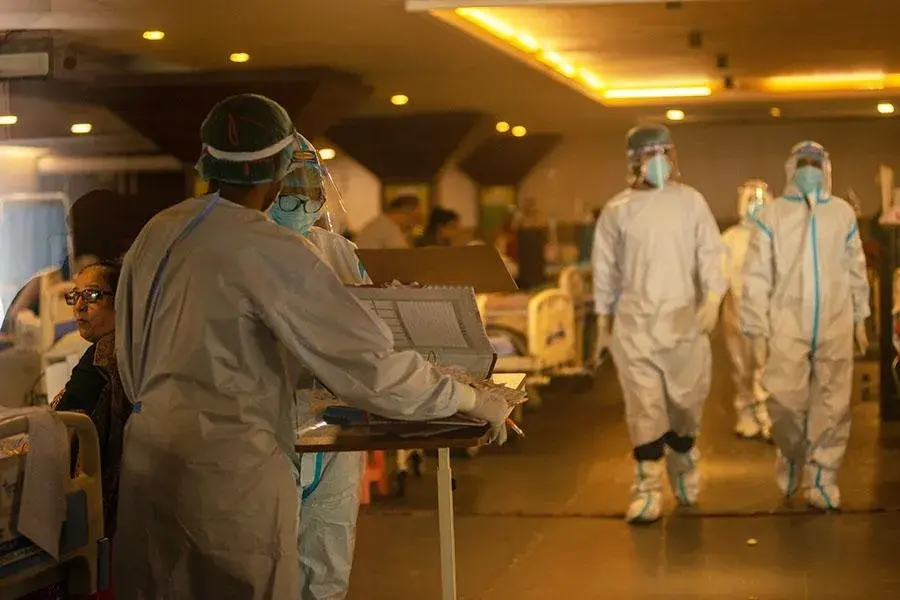
The initiative by the Municipal Corporation of Delhi (MCD) to utilize drones for mosquito fogging in areas prone to breeding these insects has faced delays despite a trial run conducted last week. According to a recent report from the MCD released on Monday, there were 105 new cases reported last week up until Saturday, whereas the entire month of July had seen 121 cases. The drone project was temporarily suspended due to safety concerns leading up to Independence Day, as stated by an official. The official further explained that all preparations have been made for the drone initiative, and the plan is to kick off the operation after August 15th. Each drone is capable of carrying 30 liters of insecticide, which would enable the targeted spraying of hard-to-reach areas like lakes, canals, and riverfront vicinity. The focus of this effort is to combat mosquito breeding in such areas. A notable trial run took place on August 1st, where the public health department employed a drone to spray anti-larvae mixture in the Usmanpur region. This trial aimed to address areas with a high concentration of dengue cases reported during the previous week. The cumulative count of dengue cases in the city has reached 348 so far, as opposed to 174 cases in 2022, 22 cases in 2021, 35 cases in 2020, and 47 cases in 2019. The situation underscores the concern, especially given the previous year’s total of 75 cases in the entirety of August, 72 cases in 2021, and 47 cases in 2020. Authorities noted that mosquito breeding has been exacerbated in outer Delhi regions due to waterlogging. The official emphasized that community support is crucial to effectively address this issue and urged everyone to prevent waterlogging in their surroundings and terraces. Moreover, instances of malaria have seen a significant rise, with a total count of 85 cases compared to 35 cases in 2022, 24 cases in 2021, and 45 cases in 2020. Thirteen malaria cases were recorded in the past week alone, as per the official. However, the occurrence of chikungunya has been relatively low, with only one case reported last week and a total of 15 cases, contrasting with nine cases in 2022 and 13 cases in 2021. To combat the spread of vector-borne diseases, the MCD has launched a comprehensive campaign. This initiative involves training and deploying a specialized workforce, including Asha workers, safai karamcharis (sanitation workers), and nullah beldars (drainage workers). These efforts will complement the work of 3,000 domestic breeding checkers. Each ward will now have a dedicated team of three nullah beldars and three safai karamcharis who are trained to identify and eliminate potential breeding grounds for disease-carrying vectors, the official stated.

Mosquito Control Drone Project in Delhi Faces Setback, Dengue and Malaria Cases Surge Read More »

Dr. R D Patidar, Vice Chancellor, OP Jindal University, Raigarh, Highlights the Importance of Skill Development

“Today we are shifting from rote-based learning to actually experiential learning, which is more about deeper understanding, clearing the concepts, and processes of the students or the learners,” says Dr. R D Patidar, Vice Chancellor, OP Jindal University, Raigarh in an Interview with Pratik Ghosh, Content Writer, ArdorComm Media Group at the ‘New Normal – Education Leadership Summit & Awards 2023’ #ELSANewDelhi #ELSAGurugram How are you feeling to witness the New Normal Education Leadership Summit and Awards in Delhi? It’s good, really a good platform where all the academicians and industry leaders are here to share their knowledge and thoughts on the New Normal, especially the new National Education Policy. So, this is really a very good platform. How are you implementing technology in your University? We are implementing technology in many ways. OP Jindal University, Raigarh, is a university of Steel technology, and we are using technology for the teaching-learning process. We are using technology for all other activities of the university, and the ultimate purpose is to make the students industry-ready by designing industry curriculum and involving industry experts with the support of technology. What’s your take on skill development? Skill development is the most important part of today’s education, especially the new National Education Policy. They provide more flexibility and freedom, and also holistic development in education to develop the skills of the students, to make them talented, or we can say, to make them employable. So, today we are shifting from rote-based learning to actually experiential learning, which is more about deeper understanding, clearing the concepts, and processes of the students or the learners. So, that’s really very important. In these kinds of forums where we bring in education leaders, the EdTech players, as well as the government, how does this kind of forum benefit the education sector at large? Such kind of events are really very important for all the educational institutions in general, and the technical institutions or higher education institutions in particular, where we can interact with each other, share the issues, challenges, and it is the right platform to discuss the issues faced by various institutions and come to resolve them and provide quality education to the youth of the nation. Any message for ArdorComm Media Group on its 2nd anniversary? I congratulate ArdorComm Media and the entire team for such an excellent program organized in a very short span of time. I also congratulate ArdorComm Media for all their achievements despite being a young organization. So, I congratulate you and the entire team.

Dr. R D Patidar, Vice Chancellor, OP Jindal University, Raigarh, Highlights the Importance of Skill Development Read More »

Dr. Sunil Rai, Chancellor of UPES, Dehradun, Shares Insights on Education and Skill Development

“I think this century is going to be the century of skills. Degrees, certificates, and all will have no meaning, it will be basically skills,” says Dr. Sunil Rai, Chancellor of UPES, Dehradun in an Interview with Pratik Ghosh, Content Writer, ArdorComm Media Group at the ‘New Normal – Education Leadership Summit & Awards 2023’ #ELSANewDelhi #ELSAGurugram How are you feeling to witness the New Normal Education Leadership Summit and Awards in Delhi? It’s a wonderfully organized event. Many congratulations to Chandan and all of you, the entire team. And many congratulations for completing two years since inception. It’s a wonderful event, very high quality, and good exchange of thoughts. What according to you, does the word “New Normal” mean? To look at life itself in a new manner, because everything is changing. Everybody is talking about these fast changes. So, this New Normal is not a static situation. This New Normal will keep changing. At today’s rate, it may change every five years, and after five years, it will change every two years, and then maybe every month. So, New Normal is a new way of life, which is a normal way of life. What’s your take on skill development for the 21st-century workforce? I think this century is going to be the century of skills. Degrees, certificates, and all will have no meaning, it will be basically skills. People will not be hired for time, but they will be hired for skills. When I say not be hired for time, today we are hired for time, nine to five one has to come to office and work, so I go and work with my skills in my own office. Tomorrow, it will be that there will be 30 people who will be talking to me, and I will be hired for my skills. So, doing this kind of analysis, it is one Sunil Rai who knows it. So, company A will call me two to three, company B will call me four to five. So, it will be skills. Skills are the way to go. How are you implementing technology or integrating technology in your University? Yeah, so basically, we always keep having the right portfolio mix of technology, which is what I mentioned in my panel also. There will always be a change that is required to your existing portfolio. So, we have our own LMS’s, our own means. We’ve got Blackboard and then there are other tools that we use for attendance, for monitoring, for student life cycle. What we do is either we change the components every about 20 to 30 percent every year, or we change even the software or the complete paradigm every three years. So, I think this is the kind of things working now, but going forward, we will have to see. So, we have to keep looking at what is working, what is not working, keep changing, keep changing in a way that you can digest it. As you can see in these kinds of forums where we bring in education leaders, industry experts, as well as the government, how does this kind of forum benefit the education sector? It definitely benefits all. My suggestion, in particular is that, because you are a media company, I think with this, there has been a phenomenal learning which has come out in today’s and will come out tomorrow as you are doing schools. There should be a complete kind of declaration or a kind of statement which should come out after this effort, and it should remain there next year. So, there could be some 20, 30, or 15 points that we should all as educators and as a society look at. These 15 things to be done next third iteration. You must check those 15, how many of them have worked and how many have not worked. I think then it will have a phenomenal impact. But it’s a very good learning when you listen to different, different thoughts. Any message for ArdorComm Media Group on its 2nd anniversary? You’re doing very well. I mean, in two years, you have made a mark and you are doing extremely well. But I think where you can stand out is basically come up with focused suggestions and monitor them. You have your portals for each of these kinds of things, teaching-learning, administration, accreditations, rankings, benefit to society. So, all these verticals and then there could be some suggestions that are being made and they should remain there on the portal so that you’re reminded of it again and again and so you make your own contributions. You are already doing it very well. I wish you all the best going into your third year.

Dr. Sunil Rai, Chancellor of UPES, Dehradun, Shares Insights on Education and Skill Development Read More »

Indian Government Approves Research Parks at IISc Bangalore and 8 IITs to Foster Science and Technology Collaboration

The Government of India has approved the establishment of research parks at Indian Institute of Science (IISc) Bangalore and eight Indian Institutes of Technology (IITs) as part of an initiative to foster scientific and technological advancements. The primary aim of these research parks is to bolster the research ecosystem and promote collaboration between academia and industry, according to an official announcement. Apart from IISc Bangalore, the research parks will be set up at IIT Madras, IIT Bombay, IIT Kharagpur, IIT Kanpur, IIT Delhi, IIT Guwahati, IIT Hyderabad, and IIT Gandhinagar. As stated by the government, the research parks at IIT Madras, IIT Kharagpur, and IIT Delhi are currently in operation, while the others are nearing completion in their final stages. The objectives of these Research Parks encompass forging research partnerships with leading industries, facilitating student entrepreneurship and incubation, establishing strong ties between academia and industry, enhancing industry’s involvement in academic programs through close collaboration, and expanding the reach of academic content to the industrial sector. Typically, these Research Parks are established within higher education institutions across the country, as highlighted in the press release from the Press Information Bureau (PIB).

Indian Government Approves Research Parks at IISc Bangalore and 8 IITs to Foster Science and Technology Collaboration Read More »