ArdorComm Media Group

Sunday, April 12, 2026 9:12 AM

Author name: admin

The Future of Entertainment: Trends and Technologies Shaping the Media Industry

Blog on MEA

The entertainment industry has always been one of the most dynamic and exciting industries in the world. From movies to music, television to gaming, entertainment is an essential part of our lives. However, in recent years, the industry has undergone a significant transformation. Technological advancements and changes in consumer behaviour have disrupted traditional models, and new trends and technologies are emerging. As we move towards the future, it is essential to understand the trends and technologies that will shape the entertainment industry. In this blog, we will explore the future of entertainment, highlighting the key trends and technologies that are driving change and shaping the industry. Whether you are a consumer or a business owner, understanding these trends will be critical in staying ahead of the curve and thriving in the entertainment industry of the future. Streaming services will continue to dominate Streaming services have already disrupted the traditional cable and broadcast television industry, and this trend is likely to continue in the coming years. According to a recent report by PwC, streaming services are expected to surpass traditional television as the largest segment of the entertainment and media industry by 2024. The popularity of streaming services is due in part to their convenience and affordability. Consumers can access a wide range of content on-demand, without having to pay for cable or satellite television subscriptions. As a result, traditional television networks are struggling to retain viewers and are being forced to adapt to changing consumer preferences. Social media will become more integrated into entertainment Social media has already had a significant impact on the entertainment industry, with many celebrities using platforms like Instagram and TikTok to engage with their fans. In the future, social media is likely to become even more integrated into the entertainment industry. For example, we may see more social media influencers and celebrities collaborating with streaming services to create original content. Social media platforms may also start to offer their own content, creating a new competitor in the industry. Virtual reality will transform the way we consume entertainment Virtual reality (VR) technology has been around for some time, but it has yet to reach its full potential in the entertainment industry. In the future, VR is likely to transform the way we consume entertainment, offering immersive experiences that are more engaging than traditional media. VR technology could be used to create fully immersive gaming experiences, allowing players to feel like they are truly part of the game world. It could also be used to create virtual concerts and events, allowing people to attend from the comfort of their own homes. Personalization will become even more important Consumers today expect personalized experiences in all aspects of their lives, including entertainment. Streaming services like Netflix and Amazon Prime already offer personalized recommendations based on viewing history, and this trend is likely to continue in the future. In the future, we may see even more personalized experiences, with streaming services offering tailored content based on individual preferences and interests. This could include personalized advertising, with ads targeted specifically to individual consumers based on their preferences and habits. Artificial intelligence will play a larger role in content creation Artificial intelligence (AI) is already being used in the media and entertainment industry, with AI algorithms used to analyse data and make content recommendations. In the future, AI is likely to play an even larger role in content creation. For example, AI could be used to generate personalized news stories based on individual interests and preferences. It could also be used to create music and video content, allowing for more efficient and cost-effective content creation. Conclusion The media and entertainment industry is undergoing a major transformation, driven by changes in technology and consumer behaviour. Streaming services are expected to continue to dominate the industry, while social media and virtual reality are likely to become even more integrated into entertainment. Personalization and artificial intelligence will also play a larger role in content creation and delivery. As the industry continues to evolve, it will be important for media and entertainment companies to stay ahead of the curve and embrace new technologies and trends. By doing so, they can continue to engage consumers and deliver innovative, engaging content that resonates with audiences. The author, Pratik Ghosh is associated with ArdorComm Media  

The Future of Entertainment: Trends and Technologies Shaping the Media Industry Read More »

IIT Roorkee is accepting applications for its SPARK internship program

The SPARK internship program 2023 is the Indian Institute of Technology Roorkee’s (IIT Roorkee) yearly flagship program. IIT Roorkee will provide UG students from all around India an internship opportunity as part of the SPARK internship program. Interns will get a stipend of Rs 2500 per week for 6–8 weeks. The selected intern will work with professors from 26 academic departments and centres on research projects. This year, the Mehta Family School of Data Science and Artificial Intelligence will also provide internship opportunities. 25 UG and 10 PG internships are offered specifically for students from Institutes within 200 km of IIT Roorkee under SPARK as part of the celebration of 175 years since the establishment of IIT Roorkee. The UG internship’s maximum duration is six weeks, whereas the PG internship’s maximum duration is six months. The deadline to submit an application for an internship has been set for March 31, according to IIT Roorkee. Selected students can begin their internships in the second week of May 2023 after the results are announced in the second week of April. Visit the SPARK website for additional information on the program and the application procedure. IIT Roorkee began offering institute-funded and project-funded summer internships under the SPARK program in 2018. In 2022, the SPARK program received more than 15000 applications, of which more than 120 offers were made. The SPARK summer internship program of IIT Roorkee seeks to provide this experience to all interns chosen following a rigorous competition among the best minds, according to Prof. K.K. Pant, Director of IIT Roorkee. “We hope this internship program will change the life and mindset of some of the chosen minds of our country and create enthusiasm towards their field of study,” he said.

IIT Roorkee is accepting applications for its SPARK internship program Read More »

Air India launches the second phase of its VR scheme

For its general cadre employees, office staff, and unskilled workers, Air India, which was acquired by the Tata group in January 2022, has announced a second round of voluntary retirement schemes (VRS). Employees must be older than 40 and have at least five years of continuous service to be eligible for the offer. At the moment, Air India employs about 11,000 people, both flying and non-flying personnel. 2,100 of these workers are qualified to take advantage of the voluntary retirement offer. This is the second phase of the VRS scheme; the first phase, which covered the categories of cabin crew, clerical workers, and unskilled workers, was adopted in June 2022. The voluntary retirement offer was then accepted by around 1,500 employees, or 43% of those who qualified. According to Air India’s top human resources officer, Suresh Dutt Tripathi, requests from workers to offer the additional benefit of voluntary retirement to other permanent employees have been received. As a result, the airline has opted to start the second phase of the VRS scheme. Employees will get an ex gratia amount as a one-time benefit if they apply for voluntary retirement before April 30. The ex gratia payment will be increased by Rs 1,000,000 for those who submit their applications by March 31. The Vihaan.AI transformation plan, which Air India launched in September 2022, intends to accomplish a number of objectives over a five-year period. The plan’s goal is to place Air India on a course for consistent development, financial success, and market leadership. Air India permitted its voluntarily retired cabin crew employees to extend their tenure till January of the next year as of November last year in response to a shortage of cabin crew.

Air India launches the second phase of its VR scheme Read More »

Union Health Ministry approaches CERT-In over an attempt to hack its website

The Indian Computer Emergency Response Team (CERT-In), which is part of the Ministry of Electronics and Information Technology, has been requested by the Union Health Ministry to investigate a reported attempt to hack into its website, allegedly by a Russian hacker group. According to CloudSEK’s cyber security experts, the Russian hacker group “Phoenix” targeted the website and was able to gain access to the ministry’s Health Management Information System portal, which contains information on all the hospitals in India as well as their staff members and doctors. “We have sought details and asked the CERT-In to look into the alleged hacking of the health ministry’s website. They will submit a report,” an official source told PTI. CERT-In provides prevention and response services to governmental bodies and private organisations. It is the nation’s nodal agency for handling computer security issues. The group stated that the attack is “a consequence of India’s agreement over the oil price cap and sanctions of G20 over the Russia-Ukraine war,” according to a report by CloudSEK. The G7-approved price cap on Russian oil was the driving force behind this target, according to CloudSEK, which also explained that Indian authorities decided not to violate the sanctions against the Russian Federation. This decision led to numerous polls on Russian hacktivist Phoenix’s Telegram channel asking the followers for their votes, according to the statement. Phoenix, according to CloudSEK, has been operating since January 2022, is well-known for its phishing attacks, and has previously targeted hospitals in Japan and the UK, a US-based healthcare provider for the US military, and the website of the Spanish Foreign Ministry, among others.

Union Health Ministry approaches CERT-In over an attempt to hack its website Read More »

Electronics manufacturing will generate over 10 lakh employment by 2025-26, according to minister

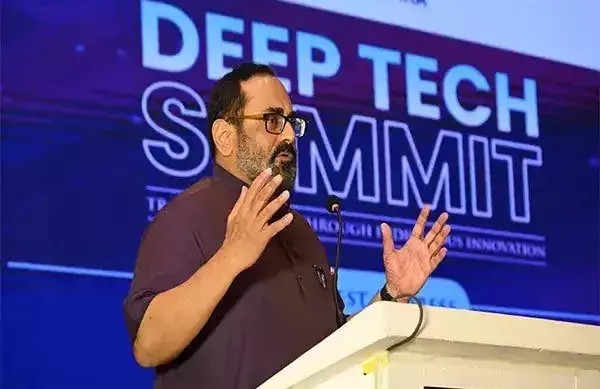
According to Minister of State for Electronics and IT Rajeev Chandrasekhar, the government aims to increase the capacity for manufacturing electronics to Rs 24 lakh crore by 2025–26, which will also help generate over 10 lakh employment. Addressing at a gathering in Bengaluru, the minister said the country is presently at an inflection point – the most exciting age in its history – and the present generation of students is the luckiest generation in the independent India’s history. According to an official statement, the Narendra Modi government’s goal is to boost electronics manufacturing capacity to Rs 24 lakh crore by 2025–26, which will also help to create over 10 lakh jobs. He stated that there are more than 90,000 startups, including 110 unicorns, in which young Indians are playing a key part. According to the minister, at least 15 lakh young Indians from Karnataka would receive training in future-ready skills that are relevant to the industry. Rajeev Chandrasekhar stated the day is marked as “Spoorti Dina” or Inspiration Day, and that the occasion could not be more suited to discuss opportunities in IndiaTechade with students. Rajeev Chandrasekhar was remembering the well-known Kannada actor Puneeth Rajkumar, or “Appu,” on his birthday. Chandrasekhar responded to a question on the Silicon Valley Bank crisis and the Indian government’s role in easing startup entrepreneurs’ problems by saying, “The Indian banking system is much more resilient and stronger in comparison to any other country’s banking system. Startups should therefore opt for Indian banks as their preferred banking partners.”

Electronics manufacturing will generate over 10 lakh employment by 2025-26, according to minister Read More »

E-Governance in India: Progress, Challenges, and the Road Ahead

Blog on Gov

E-governance in India has come a long way since the launch of the National e-Governance Plan (NeGP) in 2006. The plan aimed to leverage information and communication technologies (ICT) to improve the delivery of government services and make them more accessible to citizens. Since then, India has made significant progress in digitizing various services, but there are still challenges that need to be addressed to fully realize the potential of e-governance. In this blog, we will discuss the progress made in e-governance in India, the challenges that remain, and the road ahead. Progress in E-Governance in India India’s e-governance journey started with the launch of the NeGP, which identified 27 Mission Mode Projects (MMPs) to be implemented in different domains. The projects aimed to digitize various services, such as land records, tax payments, and passport applications, among others. The NeGP also established a common infrastructure for e-governance, including the State Wide Area Network (SWAN), Common Service Centres (CSCs), and the National Knowledge Network (NKN). One of the most successful e-governance initiatives in India is the Digital India program, launched in 2015. The program aims to transform India into a digitally empowered society and economy by leveraging technology to improve connectivity, digital infrastructure, and digital literacy. The program has three main pillars – Digital Infrastructure, Digital Services, and Digital Literacy. Under the program, the government has launched several initiatives, such as the BharatNet project, which aims to provide high-speed internet connectivity to all Gram Panchayats (village councils) in India. Another important e-governance initiative in India is the Aadhaar program, which provides a unique identification number to every Indian resident. The program has been instrumental in streamlining the delivery of various government services, including welfare benefits, tax payments, and bank accounts. However, the program has also faced criticism over privacy concerns and the use of biometric data. Challenges in E-Governance in India Despite the progress made, e-governance in India still faces several challenges. One of the biggest challenges is the digital divide, with many citizens still lacking access to basic digital infrastructure and digital literacy. According to a report by the Internet and Mobile Association of India (IAMAI), only 50% of India’s population has access to the internet. This lack of access hinders the adoption of e-governance services, particularly in rural areas. Another challenge is the issue of interoperability, or the ability of different e-governance systems to work together seamlessly. Currently, many e-governance systems in India operate in silos, making it difficult for citizens to access different services through a single portal. This lack of integration also hinders the sharing of data between different government agencies, which can lead to inefficiencies and duplication of efforts. The Road Ahead To fully realize the potential of e-governance in India, several steps need to be taken. One of the most critical steps is to address the issue of the digital divide. This can be achieved by expanding digital infrastructure, particularly in rural areas, and promoting digital literacy among citizens. The government can also leverage public-private partnerships to bridge the digital divide and ensure that all citizens have access to e-governance services. Another important step is to promote interoperability between different e-governance systems. This can be achieved by developing common standards and protocols that enable different systems to communicate with each other seamlessly. The government can also encourage the adoption of open standards and open-source software, which can promote interoperability and reduce costs. Conclusion In conclusion, e-governance in India has made significant progress in recent years, but there are still challenges that need to be addressed. The government must continue to invest in digital infrastructure, promote digital literacy, and promote interoperability between different e-governance systems. By doing so, India can fully realize the potential of e-governance and transform its governance system to better serve its citizens. The author, Pratik Ghosh is associated with ArdorComm Media      

E-Governance in India: Progress, Challenges, and the Road Ahead Read More »

Goa govt is planning to build a cancer institute in the state and is in discussions with Tata Memorial Hospital

In addition to opening a specialised cancer outpatient department at Goa Medical College starting next month, the Goa government is planning to build a cancer institute in the state so that residents won’t have to leave for treatment elsewhere, according to health minister Vishwajit Rane. The minister met with representatives from Mumbai’s Tata Memorial Hospital on Thursday in Panaji to talk about how to establish a facility to treat cancer patients in the state. After the meeting, he tweeted, “With rising cancer cases in the state of Goa, we are working unabatedly to build a ‘State Cancer Institute’ so that citizens of Goa do not have to travel outside the state to seek treatment.” He stated in another tweet, “Tata Memorial Hospital provides world-class cancer treatment services and facilities. We intend to have a tripartite agreement between the Government of India, the Government of Goa and Tata Memorial Hospital, similar to the Assam model envisioned by Hon PM Shri @narendramodi.” According to Rane, Tata Memorial will offer all technical assistance in the fields of services, human resources, training, and research. “We shall be starting a pilot from 15th April 2023 where a dedicated cancer OPD will be started at GMC (Goa Medical College). I have given the necessary instructions to Dean of @GoaGmc and Health Secretary in this regard to ensure this is operational on 15th April,” he tweeted.

Goa govt is planning to build a cancer institute in the state and is in discussions with Tata Memorial Hospital Read More »

Indian universities might set up offshore campuses in Vietnam, Thailand, African and Gulf nations: UGC Chairperson

According to UGC Chairperson M Jagadesh Kumar, African and Gulf nations, Thailand, and Vietnam are among the potential destinations for Indian universities to establish their offshore campuses. In a month, the regulations for the same will be announced. In an interview with PTI, Kumar stated that a number of countries are stepping forward to offer infrastructure to Indian universities looking to establish campuses abroad, and the University Grants Commission (UGC) will assist the institutions in selecting the countries where they can do so. “We have in India huge university ecosystem. There are outstanding universities, both in central government, state government funded and private universities. We want to encourage these varsities to set up their campuses abroad. Some countries where they are coming forward to provide the infrastructure to our universities to set up their campus.” “We have countries where we have large Indian diaspora who want our campuses to come and provide education,” he said. Kumar said, “several African countries,” when asked about the nations that have showed interest in welcoming Indian universities. “There is huge potential for setting up campuses in African countries. Thailand, Vietnam and few Gulf countries… there is immense interest and the opportunities are immense too. It is just that we have not had any enabling regulations so far,” he added. The Middle-East and South Asian countries have been requesting to establish their campuses at a number of Indian Institutes of Technology (IITs). IIT Madras is looking into opportunities in Sri Lanka, Nepal, and Tanzania, while IIT Delhi is considering opening a campus in the United Arab Emirates. Moreover, IIT campuses are planned for Egypt, Thailand, Malaysia, and the UK. “IITs are known as institutions of national importance, they function under IIT Council. It has its own rules and regulations under which they can set up their own campuses. Already some IITs are working on that,” he said. Last month, the UGC stated that foreign universities would be able to establish campuses in India for the first time and revealed draft regulations that would allow these universities to manage their admissions policies, fee schedule, and fee repatriation. According to Kumar, the final norms, which will take into account the views from stakeholders, would also be released in a month. Because of the potential benefits to our students, this UGC regulation to allow campuses of foreign educational institutions in India is widely discussed in our country. A finalisation of the rules is now taking place. “We also had discussions with various foreign universities delegations which have visited UGC, we have put draft for feedback and have received very good feedback. In another month or so, we will be able to release the final regulations,” he said. When the ministries of external affairs and home affairs issued no objection certificates, the UGC amended its regulations in 2021 to permit Institutes of Eminence to establish campuses abroad. Source: PTI

Indian universities might set up offshore campuses in Vietnam, Thailand, African and Gulf nations: UGC Chairperson Read More »

Fintech startup CLXNS plans to employ over 700 people

By the end of the first quarter of FY 2023–24, CLXNS, a digital-first debt resolution platform, expects to have hired over 700 employees. Almost 160 people work with the company at the moment, about 125 of them started in April 2022. The finance startup’s workforce will increase to more than 800 workers as a result of the new recruitment. CLXNS plans to hire people in a variety of fields, including marketing, data analytics, and product, engineering, and design. According to a statement, it is eager to hire mid-level talent with technology skills as well as seasoned professionals for critical leadership roles. The future-looking objective of CLXNS is to develop scalable, digital-first debt resolution systems with high levels of compliance and governance, with the aid of the recently hired employees and the company’s clear focus on investing extensively in its tech capabilities. “The current market scenario is unstable, but we strongly feel that there is no right or wrong time for hiring talent,” stated Manavjeet Singh, MD & CEO of CLXNS. “We believe India’s credit growth story has just started and is guaranteed to see a massive boom. And therefore, we foresee an enormous growth in ethical debt resolution opportunities,” he added. “At CLXNS, our sole aim is to build a scalable, digital-first debt resolution company. Simultaneously, we wish to emerge as a talent powerhouse in the industry with expertise in tech capabilities. We are confident that with the new talent addition, we will be able to reach one step closer to our goals of expanding our footprints pan India and serving our customers better,” he stated.

Fintech startup CLXNS plans to employ over 700 people Read More »

Zee Entertainment is set to repay IndusInd $10 million to wrap up the Sony deal

According to a report from the news agency Bloomberg on Thursday, Zee Entertainment Enterprises Ltd (ZEEL) has probably agreed to pay back dues owed to IndusInd Bank Ltd. in order to end the insolvency procedures that have been brought against it and move closer to concluding a merger with a Sony Group unit to establish a $10 billion media conglomerate. According to the report, dues of over Rs 837 million may be paid as soon as this Friday, and the Mumbai-based bank has agreed to withdraw its insolvency case against the media company after the debt is repaid. According to Karan Taurani of Elara Capital, the NCLT merger approval might not come until after the cases have been settled or resolved at NCLT. The Indian Performing Rights Society (IPRS) recently settled the companies’ claims after calling off their NCLT case. IPRS filed a petition with the NCLT’s insolvency tribunal against ZEEL in early January, alleging a default of Rs 211.41 crore. According to him, IDBI and IndusInd Bank both have outstanding claims totalling around Rs 150 crore. “We believe expedition on the settlement will work favourably for the Zee-Sony merger as valuations are compelling in the range of 7-10x fwd PER for the merged entity (7x excluding Zee5 and Sony Liv losses),” Taurani stated. The issue relates to a default of Rs 89 crore by Siti Networks, the multisystem operator arm of the Essel Group, which was claimed by IndusInd Bank and for which ZEEL was a guarantor. The insolvency proceedings against ZEEL were initially put on hold by the National Company Law Appellate Tribunal (NCLAT) earlier on February 24. Punit Goenka, the managing director and chief executive of ZEEL, filed a petition, and the appellate tribunal granted it. It then sent letters to IndusInd Bank and the interim resolution professional, requesting a response within two weeks. IndusInd Bank’s plea to initiate insolvency proceedings was accepted by the Mumbai bench of the National Company Law Tribunal (NCLT) on February 22. After suspending the board, it had also appointed an interim resolution professional. The NCLAT order provided ZEEL with a significant reprieve as it merges with rival, Culver Max Entertainment, formerly known as Sony Pictures Networks India, to establish the country’s largest media empire. The company has obtained the necessary shareholder, creditor, bourse, and CCI approvals, and is awaiting final approval from NCLT.

Zee Entertainment is set to repay IndusInd $10 million to wrap up the Sony deal Read More »