ArdorComm Media Group

Saturday, April 11, 2026 5:40 PM

Author name: admin

Budget Highlights 2023: Significant changes to the income tax; Railways and Capex get massive boost

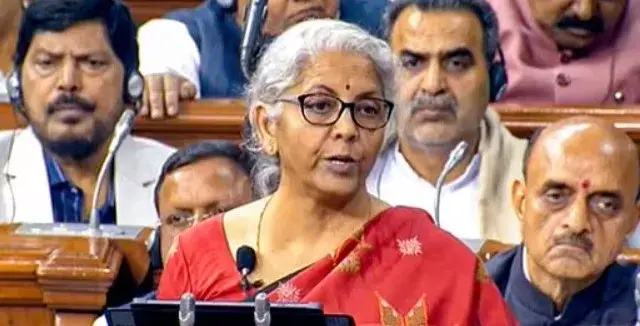
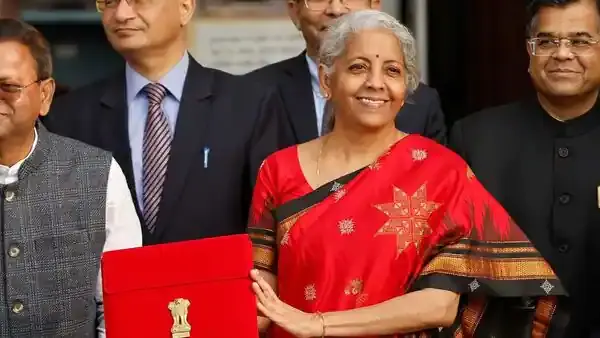
Nirmala Sitharaman, the finance minister, began the presentation of the last full budget of the Modi government with the statement “This is the first Budget of Amrit Kaal.” According to the FM, the Indian economy is recognized as a bright spot worldwide. India’s growth in the current fiscal year was the highest among major economies at 7%. Sitharaman stated in her budget address that the Indian economy is on the right track and is poised for a bright future. She said that the Budget adopts the following seven priorities. They complement each other and act as the ‘Saptarishi’ guiding us through the Amrit Kaal. 1) Inclusive Development 2) Reaching the Last Mile 3) Infrastructure and Investment 4) Unleashing the Potential 5) Green Growth 6) Youth Power 7) Financial Sector The per capita income has climbed to Rs 1.97 lakh. During the same period, India’s GDP increased from 10th to 5th largest in the world, according to Sitharaman’s speech during the Union Budget. The introduction of Budget 2023 coincides with the crippling slowdown and potential recession that affect the world’s major advanced economies. For the first time ever, Indian Railways has received a capital outlay of Rs. 2.40 lakh crore. According to Sitharaman, this is the railways’ highest capital outlay. Nirmala Sitharaman, disclosed a significant increase in capital expenditure. The amount allocated for capital expenditures has increased by 33% to Rs 10 lakh crore in the Union Budget. This equates to 3.3% of the GDP. The FM also disclosed a significant expansion of the PM Awaas Yojana. Sithraman mentioned the continuance of the food security programme for another year in her statement on the budget. She also announced actions for agri startups, fisheries, and launched a programme for primitive, vulnerable tribal groups. Major announcements for Income Tax payers: No changes in the old tax regime New tax regime to become the default tax regime No tax on income up to Rs 7.5 lakh a year in new tax regime Govt proposes to reduce highest surcharge rate from 37% to 25% in new tax regime New slabs under new tax regimes Rs 0-3 lakhs: Nil Rs 3-6 lakhs: 5% Rs 6-9 lakhs: 10% Rs 9-12 lakhs: 15% Rs 12-15 lakhs: 20% Rs Over 15 lakhs: 30% Govt proposes to cap deductions from capital gains on investments in residential houses to Rs 10 crore An individual with annual income of Rs 9 lakh will have to pay only Rs 45,000 in taxes: FM Sitharaman Income of Rs 15 lakh will fetch Rs 1.5 lakh tax, down from Rs 1.87 lakh A Rs 50,000 standard deduction to taxpayers has been introduced under the new regime Payment received from Agniveer Corpus Fund by Agniveers to be exempted For online games, govt proposes to provide for TDS and taxability on net winnings at the time of withdrawal or at the end of fiscal Fully imported luxury cars and EVs to cost more as govt raises custom duty from 60% to 70% in Budget. Tax exemption on leave encashment on retirement of non-government salaried employees hiked to Rs 25 lakh from Rs 3 lakh  

Budget Highlights 2023: Significant changes to the income tax; Railways and Capex get massive boost Read More »

Union Budget 2023: Education Ministry receives the highest allocation ever of 1.12 lakh crore

The Union Budget 2023–24 was presented to the parliament on February 1 by Finance Minister Nirmala Sitharaman. According to budget documents, the centre has allotted a whopping Rs. 1,12,898.97 crore to the Ministry of Education for the upcoming fiscal year. This is the highest budget allocation ever given to the ministry. The Higher Education Department has been given a budget of Rs. 44,094.62 crore while the School Education Department has an allocation of Rs. 68,804.85 crore. For the financial year 2022–2023, the Education Ministry received a budgetary allocation of Rs. 1,04,277.72 crore. In engineering institutes, 100 labs will be set up for the development of apps using 5G services. Apps like Smart Classrooms, Precision Farming, Intelligent & Transports Systems, and others will be covered in these laboratories, among others. Nirmala Sitharaman stated that up to 38,000 teachers and support staff will be recruited over the course of the next three years for the 740 Eklavya Model Residential Schools that will serve 3.5 lakh tribal students. To empower youth and help them in realising their dreams…PMKVY 4.0 will be launched, adding 30 skill India international centres across states, to train lacks of youths over the course of the next three years. The minister of finance, stated that the National Child Trust, Children’s Book Trust, and other sources should be encouraged to provide and replenish non-curricular titles in regional languages and English to these libraries. She also suggested collaborating with NGOs that support literacy. Facilities at a few ICMR labs will be made accessible for faculty members from public and private medical colleges and private sector research teams to conduct research in an effort to promote collaborative research and innovation. Three centres of excellence in artificial intelligence will be established in top institutions. In the fields of health, agriculture, and sustainable cities, top industry leaders will collaborate to perform multidisciplinary research, create cutting-edge technologies, and find scalable solutions to issues. FM Sitharaman has announced the establishment of 157 new nursing colleges in core areas. A National Digital Library for children and adolescents will be established to make it easier to access important books from different regions, languages, genres, and educational levels. According to FM Sitharaman, states would be urged to create libraries for them at the panchayat and ward levels as well as infrastructure for accessing the National Digital Library’s resources. Innovative pedagogy, continuous professional development, curriculum transition, and ICT implementation are all expected to be used in teacher training programmes. According to FM Sitharaman, the district’s educational and training facilities would be transformed into vibrant institutes of excellence.  

Union Budget 2023: Education Ministry receives the highest allocation ever of 1.12 lakh crore Read More »

Expectations of the Education Leaders from the Union Budget 2023

Blog on Edu

By Pratik Ghosh The Union Budget 2023 is going to be presented by the Finance Minister, Nirmala Sitharaman on February 1. There is a lot of expectations and anticipations for this budget across the nation. Moreover its going to be the last full budget of the present government before 2024 elections. Here’s an insight on what the education leaders are expecting from this year’s Budget. Kanak Gupta, Group Director, Seth M.R. Jaipuria Schools shares his expectations from the budget especially on the education sector by saying, “I’ve always believed that it would take a very strong-willed finance minister to have 6% of GDP for education. The objective of quality education is to increase the pace of sustainable economic development of the nation. Generally, education is linked with the professional career of the students. For quality of education to be enhanced, there is spending required in the Budget towards upskilling of educators, beyond the mandatory usage of technology tools. Perhaps INR 1200 Crores needs to be earmarked for this. Even to meet the requirements as laid out in the NEP2020, there is infrastructure required. Quality higher education can be imparted only if the appropriate changes are made in curriculum, pedagogy and assessment of school education. Many of the education institutes have already introduced outcome-based education system. These require processes, systems and training. For sustainability and growth, there are investments required, and we hope at least doubling of the investment promised for education over the last year, as we are coming into mainstream and hybrid learning after two years. Education services are burdened with taxation and ease needs to be provided there with reduction of GST, or gaining input credit. I am a strong believer that the future of the country is knowledge-led, technology-enabled, with more and more communication in vernacular languages. I am hoping for allocation of INR 50,000 crores to promote R&D to spur innovation, and efforts to make available all documents in major Indian languages is desired. I am hoping for greater collaborations of Government with private players, focus on governance, and ease of running that will be beneficial to the sector.” Dr. Manjula Pooja Shroff, MD, Kalorex Group says, “Since education is a key development sector, we have huge expectations from the upcoming budget. It should address the core aspects of education with a view to enhance quality of learning, improve teacher professional skills, build robust infrastructure, and promote skill development. Today, education systems continue to face challenges on how to effectively support learning in the current context and overall student development in an increasingly challenging world. We urge the government to focus on expanding access to education and technology, particularly in rural and underserved areas. India’s education sector needs higher budget allocation for the segment, special tax incentives, and enabling a conducive environment for digital learning. The announcement of new schemes to promote teacher upskilling, effective implementation of NEP 2020, and achieving its objectives will also go a long way in ensuring quality and affordable education across the country. Multiple policy reforms are required from an education and up-skilling perspective to achieve this vision. GST exemption on the supply of goods (including TVs/tablets for digital education, currently @28% GST) and services (used for teaching and learning applications and content, currently @18% GST) to educational institutions and intermediaries can reduce the overall cost that is currently passed on to schools and parents. This will make goods and services for education more affordable, and will foster the implementation of NEP across the country. GST exemption on printing of school textbooks will make these books more affordable for low-income parents. The budget allocation towards the education sector was only 2.6 per cent of the total funding, with Rs 40828.35 crore set aside for higher education, while a fund of Rs 63449.37 was granted for school education, It should be increased as the school education is pillar of the nation. By law, educational institutions are not public entities and cannot operate solely for profit-making. They are not allowed to have large surpluses, as they are not intended to generate profit for shareholders or owners. Allow Public investment in education sector with better opportunity to reduce tax burden and growth for India for better qualities. Through these nationally and making them centrally available to institutions will go a long way in transforming the education ecosystem and making international learning resources accessible. The current National Education Policy (NEP) of India recognises the role of education in the country’s economic growth. It is a progressive and visionary policy for building a sustainable higher education ecosystem in India. Government should envisage a framework that promotes the collaboration of startups with government agencies. Dr. Niyati Chitkara, Director, Chitkara International School, Chandigarh & Panchkula shares her views by saying, “Education plays a paramount role in a country’s development and growth. For the same, the National Education Policy 2020 (NEP 2020) was framed to overhaul education system and it is being followed in our country rigorously. A country’s higher literacy rate leads to a lower unemployment rate and greater GDP growth. Therefore, the allocation towards educational sector under Union Budget 2023 is being awaited with bated breath. Listed hereunder are the expectations from the said budget- Increased allocation of funds towards education to enhance its development and quality. Reforms for improving the overall education system, making it more accessible and inclusive. Emphasis on the integration of technology and digital education for better delivery of education. Support for research and innovation in the field of education. Policies for teacher training and development to ensure a highly skilled workforce. Adequate provisions for infrastructure development in educational institutions. Introduction of tax incentives for companies that invest in education-related CSR activities. Reduction in GST on education services to democratize education and increase reach among students, especially those who cannot afford quality education. Focus on bridging the gap between urban and rural education by providing support to disadvantaged students. Increase in budget allocation for vocational training programs to bridge the skills gap


Expectations of the Education Leaders from the Union Budget 2023 Read More »

India’s electronic exports will surpass Rs 1.28 lakh crore in the upcoming fiscal year

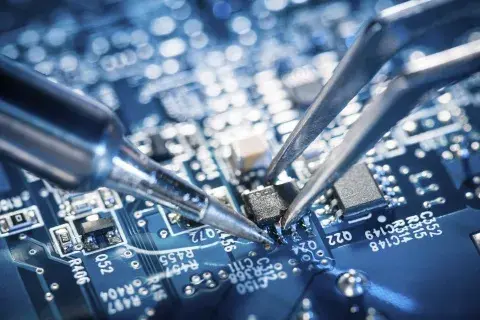
According to Rajeev Chandrasekhar, Minister of State for Electronics and IT, India’s export of electronics could reach Rs. 1.28 lakh crore in the upcoming fiscal year. In an interview with a news agency, he stated that the government would strengthen the manufacturing ecosystem by introducing a new production-linked incentive scheme for companies that produce IT devices, hearing aids, and other wearables. To promote the production of electronic components and critical modules other than semiconductors, the industry body for manufacturers of electronic components, ELCINA, has asked for $10 billion (about Rs 80,000 crore) over an eight-year period. The Scheme for Promotion of Manufacturing of Electronic Components and Semiconductors (SPECS) has been requested to be extended for an additional four years with an increased investment of Rs 16,000 crore in the Union Budget for 2023–2024. With a targeted output of USD 24 billion (about Rs 1.95 lakh crore), ELCINA believes that the enhanced PLI will draw investments totalling around Rs 64,000 crore. Semiconductors are the only component that is not included in this production. The industry body has also asked for the reintroduction of income tax deductions for investments made in R&D. Additionally, a PLI scheme with an emphasis on domestic electronics manufacturing services companies has been requested. In order to promote domestic manufacturing, the India Electronics and Semiconductor Association (IESA) has asked the government to change the PLI scheme into a design-led manufacturing programme and impose a 10% import duty on any imported electronics equipment and assembled printed circuit boards (PCB).

India’s electronic exports will surpass Rs 1.28 lakh crore in the upcoming fiscal year Read More »

Shah Rukh Khan is ready to do ‘Pathaan 2’ looking at the box office success of Pathaan 

Pathaan, the film starring Shah Rukh Khan, is a true “blockbuster,” since it continues bringing in revenue day after day. It is clear from the number of footfalls and collections the movie theatres around the world are seeing that fans aren’t pleased with seeing the movie just once. After earning Rs 60 crore on its fifth day of release (Sunday), the action movie was eying to be one of the all-time greatest first-Monday collections. The movie made Rs 25 crore nett on its sixth day in theatres, according to a Box Office India report. The movie has now earned over Rs 295 crore in domestic ticket sales. Pathaan would easily surpass the milestone of Rs 300 crore in domestic box office revenue by the conclusion of its seventh day in theatres. Baahubali 2: The Conclusion, which made Rs. 40.25 cr. on its first Monday, tops the list of the Hindi-language films with the highest Monday earnings. Tiger Zinda Hai (Rs. 36.54 crore), Housefull 4 (Rs. 34.56 crore), Krrish (Rs. 33.41 crore), and Bajrangi Bhaijaan (Rs 27.05 cr) are the films that come after it. After the pandemic, KGF: Chapter 2 (Hindi) earned more than Rs 25 crore at the box office on its first Monday. Pathaan reportedly made $25.40 million (Rs. 207 crore) at the overseas box office, according to a report from Bollywood Hungama. On Sunday, the movie’s worldwide gross surpassed Rs 500 crore. On Monday, Shah Rukh Khan and the Pathaan cast—which also included Deepika Padukone and John Abraham—finally spoke with the media and shared in the success of their movie. At the press conference, SRK spoke with the reporters in attendance and expressed his feelings about how “terrible” it is when his films fail. He also praised Siddharth Anand, the director of the movie, for providing him and his family “happiness” with Pathaan. “This is a big day for us, my family. We haven’t experienced this happiness in a while. Whenever he (Siddharth Anand) wants me to do Pathaan 2, I’ll do it,” he said. The makers of the Kartik Aaryan and Kriti Sanon movie Shehzada have decided to move the release date of their movie due to Pathaan’s box office success. Instead of February 11, the film will now be released in theatres on February 17.

Shah Rukh Khan is ready to do ‘Pathaan 2’ looking at the box office success of Pathaan  Read More »

Prof Amit Jain, President (Vice Chancellor), Amity University, Jaipur emphasizes on industry engagement initiatives

Prof Amit Jain

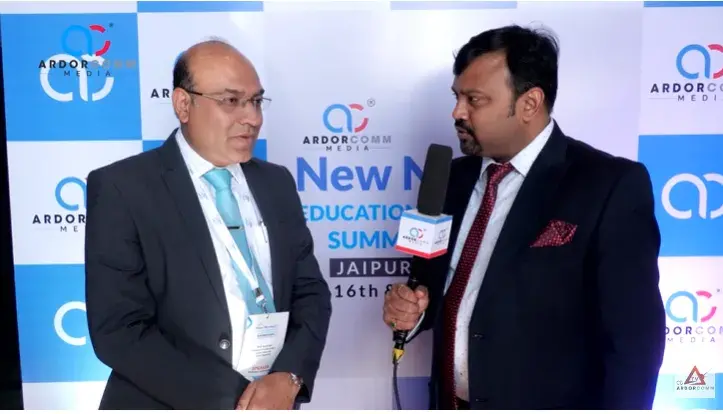
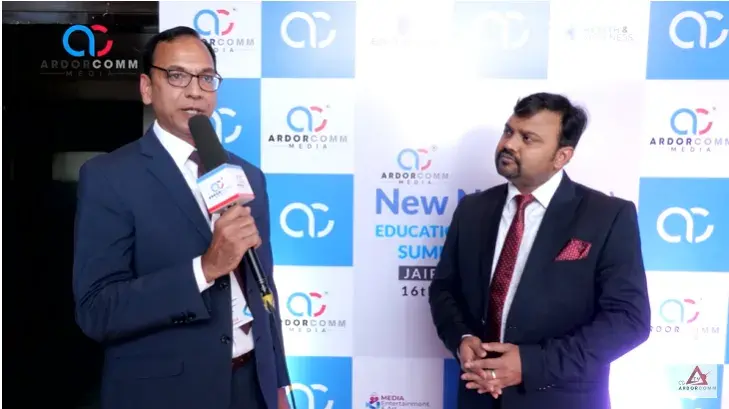
“This industry advisory board meets every six months to review our curriculum, to review our pedagogy, to give us feedback on the types of program we should introduce,” says Prof Amit Jain, President (Vice Chancellor), Amity University, Jaipur in an interview with Chandan Anand, CEO & Group Editor, ArdorComm Media Group at the ‘ArdorComm New Normal – Education Leadership Summit & Awards 2022’ #ELSAJaipur #ELSARajasthan I would like to understand more about your University, what they are doing in Jaipur, Rajasthan? In Amit University, Rajasthan we have a beautiful 150-acre campus and we are offering more than 65 programs so anything that you can think of in terms of management, architecture, design, law, fashion we have everything under our umbrella, we have 200 plus faculty members. How has the traditional education got transformed into digital education, until what level it is implemented in your universities? We believe in technology adoption and in terms of our curriculum and programs also we were the first one to introduce a cyber security program, we were the first one to introduce MBA with a full specialization in digital marketing. We have our specializations in AI, machine learning, clouds in our Btech programs. So, we always believe in remaining at the forefront of the technology and utilize the best advantage. What are the initiatives which is been taken in your University for industry engagements? For every school or every program, we have our industry advisory board and the composition is very interesting the board is chaired by a senior industry person not the academic director the director happens to be the co-chair. There is an alumni as member of that board who is already in the industry and there are a couple of members from the industry and this industry advisory board meets every six months to review our curriculum, to review our pedagogy, to give us feedback on the types of program we should introduce and the kind of programs that I talked about in terms of cyber security, data science, AI-ML, digital marketing, most of these programs were result of feedback from the industry. We have gathered at the event New Normal Education Leadership Summit what does the word new normal for you stands? I must congratulate ArdorComm for organizing this because you are redefining lot of things and you are redefining this new normal in education. As I can see many edutech companies are here because these companies are the backbone of modern education now, because the new normal definitely will be a blended approach towards learning which is independent of time, location, space constraints and more a demand driven education rather than a supply driven education. I’m a professor of marketing and we believe in sense and respond philosophy and I believe new normal talks about sensing what the market needs and then responding to it through your programs, through your courses and curriculum. What should be an outcome of forums like this where we have the technology partners, academia, industry leaders and even the government representation, how does certain program help the community? Definitely these kinds of deliberations are very important to chart out a way to visualize the future and to create a roadmap for all of us who are the stakeholders in the education system be it the media companies, be it the education service providers, be it technology platforms we all have to come together in this new normal and then only we will be able to deliver full satisfaction to the students. ArdorComm Media Group is a media startup and it has been one and a half years of successful existence, any message or advice would you like to give to ArdorComm Media Group? Good wishes to you Chandan ji and Ashish ji for this wonderful initiative and I’m sure your company will grow by leaps and bounds and you’ve done a good job by bringing all these stakeholders together in form of this particular ELSA Summit, congratulations and best wishes to you.  

Prof Amit Jain, President (Vice Chancellor), Amity University, Jaipur emphasizes on industry engagement initiatives Read More »

Prof Dr. Arvind Kumar Agrawal, President (Vice Chancellor), Nirwan University, Rajasthan shares his views on the term new normal

Prof Dr. Arvind Kumar Agrawal

“New normal is a challenge and we have to devise ways to improve further and further and to perfect it because this is just beginning,” says Prof Dr. Arvind Kumar Agrawal, President (Vice Chancellor), Nirwan University, Rajasthan in an interview with Chandan Anand, CEO & Group Editor, ArdorComm Media Group at the ‘ArdorComm New Normal – Education Leadership Summit & Awards 2022’ #ELSAJaipur #ELSARajasthan What are the takeaways of this event for you? Well before I talk about it I would like to introduce my colleague Dr. N.D. Jasuja, he’s our Dean, Professor and Joint Register. Yes, I would say that the takeaway from this whole event is first of all I came to know a lot many companies, edtech companies which I was not aware of and also, I could explore opportunities where I could help my students my faculty and my universities curriculum development using these company’s software’s and their expertise. Secondly, I could also communicate with my fellow participants who are from other academic assignments in different universities either as Vice Chancellor or as Pro Vice Chancellor or as a senior officials or academicians of other universities and we could exchange notes on what new experiments they are doing and what we are doing and that was a very fruitful interaction I enjoyed a lot and I think it would help us developing a synergy to move forward. Dr. Jasuja, would also like to hear from you what was your take away from this forum? First, I must congratulate to you for organizing such an important event and in fact a few days back UGC has issued one notification to have credit based revised framework in which they have also encouraged to have industrial linkage and this whole program is based on the linkage of Industry 4.0 futuristic education. So, I must appreciate your initiative and you should go ahead for this and interact with more universities to have collaboration and motivate students to place them in good industry. What weightage would you give to skills when it comes to in comparison to the conventional courses? See, when I attended today’s panel prominent dignitaries clearly indicated that earlier education was transferring the information only it was to provide the information to the students. Nowadays, it is not like education we can provide information along with skilling, if we upskill our students they will definitely get independent and placed in a good industry. Dr. Arvind, any initiative which under your leadership has been taking care to include more of the industry visits or the industry exposure for your students? We are collaborating for example with banks with other Industries, we have already made a move. Since this University is very new it’s a nascent University so it will take some time but I’m sure and now we have come to know about your initiatives so I am quite hopeful that very soon we would join hands together and we would find you in our campus and we would do something together to contribute to the cause of higher education and also to help students and faculty. As we have all gathered for New Normal Education Leadership Summit and Awards what does the word new normal for you stands? Well this is a challenge it’s not just a new normal it’s a challenge, it’s a challenge in the world which has taken a shape after COVID 19. So, it’s basically fusion of ICT that is internet-based communication technology, information technology and education because these two years have been very tough for our students for parents and for teachers. So, this new technology how it can blend and help students’ institutions and parents because after all our nation will stop if education stops and it will it will be really disastrous. So, new normal is a challenge and we have to devise ways to improve further and further and to perfect it because this is just beginning. As a media start-up we have seen many leaps and bounds from pandemic till now any message or any advice would you like to give to other ArdorComm Media Group? I would simply say that be focused and move ahead, you are doing wonderful work the only thing I would say just please try to add some humane touch which is very much needed between teacher and taught relationship to inculcate in the cultural values of academics among our students through your media company and wherever and in whatever form you can contribute. I wish you good luck.  

Prof Dr. Arvind Kumar Agrawal, President (Vice Chancellor), Nirwan University, Rajasthan shares his views on the term new normal Read More »

Prof Dr. Pramod K Raghav, President, Jayoti Vidyapeeth Women’s University, Jaipur speaks about the USP of their university

Prof Dr. Pramod K Raghav

“Our University is mobile free, mobiles are not allowed to the students so the students are more human interactive,” says Prof Dr. Pramod K Raghav, President, Jayoti Vidyapeeth Women’s University, Jaipur in an interview with Chandan Anand, CEO & Group Editor, ArdorComm Media Group at the ‘ArdorComm New Normal – Education Leadership Summit & Awards 2022’ #ELSAJaipur #ELSARajasthan We welcome you at today’s event, would like to know more about your university? I am Prof Dr. Pramod K Raghav currently I am President in charge of Jayoti Vidyapeeth Women’s University, Jaipur. It is nations first private State Women’s University with full-fledged status of a Private State Women’s University. The university is especially established for empowering the woman through education and the mission of the university is Community Development, currently University is having more than 130 programs specifically for the girls for the women’s and it is in medical field as well as in non-medical field. The idea is here to bring up the deprived sector of the country, the women’s through the education. Except this the university has several other specialties also, the safety is at the top priority and second the most important which we call the USP is a mobile-free, our University is mobile free, mobiles are not allowed to the students so the students are more human interactive, they have the time to spare and focus on the studies but they are not lagging behind, they are still well connected with the world through the internet and we have the internet surveillance also. So, it’s a university and it is scattering the need of entire nation it not only for the Rajasthan so that’s how this University is imparting and enhancing the quality of education and serving this special sector. I would also like to add that our PhD programs and distance education are open for both male as well as female. The University was founded by nations first youngest founder of the University late Dr Panckaj Garg sir and currently the university is headed by Mr Vedant Garg who is the advisor and CEO of the University along with a team of very experienced professionals. When it comes to add an edtech player in your organization what are the top two three factors when you select an organization the edtech player or a startup for enrolling any services or any product in your university? One thing is sure that without EdTech without the addition of technology we are not going to go anywhere. So, it is an important part and when we are selecting an organization we are looking that the campus must be paper free most of the facilities must be digital for example we are in service sector actually, if we talk about the private universities so a student must be facilitated and the students are nowadays digital friendly. So, it is very important that all the aspects right from getting leads up to the distribution of the degrees it all must be the digital. Lot of options are there, universities are changing themselves and they have to change because we are competing with the global universities the countries are now open for the foreign players for the foreign universities so we have to enhance our level and digitization is the top most choice for those global universities and only then they can align with us or we can partner with them. So, that’s how I look it for it is a must. What is the outcome of certain forum, what is the takeaway from this event for you? Actually, we had two covid waves and such type of forums as ArdorComm is bringing the academic leaders at forefront and these academic leaders, these academicians are the one who are in a driving phase of these universities who are putting their implementation of the vision of their founders, their sponsoring bodies. It’s very good and to bring them up front to give them an opportunity to share their views to disseminate whatever they have learned in the past and in today’s scenario if you see it is very important that these private universities they must use each other’s qualities, each other’s expertise and there is no harm in doing that will enhance the level of education and the group like ArdorComm Media, I really congratulate you and will definitely add that it is a good event and such type of events should be organized in future also bring these academic leaders let them share their views, let them disseminate what they have learned and that’s the way these private universities they’ll be collaborating one day with each other. Any message would you like to give to ArdorComm Media Group? My message is that keep on doing such types of events and keep on bringing these academic leaders because mainly academic leaders they gather in the academic conferences or in the seminars or in the symposia but this is the first type of event I am seeing where you have focused on the academicians those who are leaders in their field so keep it up and keep doing it, thank you.  

Prof Dr. Pramod K Raghav, President, Jayoti Vidyapeeth Women’s University, Jaipur speaks about the USP of their university Read More »

Air India employees had salary deduction for failing to vacate staff quarters

Employees in Vasant Vihar in Delhi and the Air India Colony in Mumbai who haven’t moved out of the home provided by the company have started having pay deducted from their salaries. The employees said that their December salaries had been significantly reduced, anywhere from 15,000 to 90,000 rupees. Last Friday marked the airline’s one-year of being privatised, but many of its employees who live in the airline’s staff quarters in Mumbai and Delhi had to accept severe pay cuts and hefty rising rents. Due to this, deductions have been made from the salaries of the employees who haven’t left their flats as of August 2022 and will keep happening until they do. They will also be required to pay a 10 lakh rupee additional penalty on top of the standard deductions. A letter informing Air India personnel living in the Air India Colonies in Kalina in Mumbai and Vasant Vihar in Delhi that a fine of 15 lakh and 10 lakh rupees, respectively, will be withdrawn from their pay and other benefits was sent, according to ANI. The employees of Air India claim that although the government gave the Tatas control of Air India, the colony was left out of the agreement. Due to higher establishment and living costs in Mumbai, which is regarded as the nation’s financial capital, employees there will see larger pay reductions than those in Delhi. In a letter written to Air India last year, the Ministry of Civil Aviation (MoCA) stated that individuals who don’t leave their accommodations will have to pay double the market rate for rent each month in addition to the fine. In a letter dated September 29, 2021, it was stated that anyone found residing in company accommodation without permission from August 1, 2022 until the date of vacating the housing would be subject to a penalty fee equal to the sum of normal occupancy charges and double the market rent. The penal rent will be deducted from the employee’s income and other due payments.

Air India employees had salary deduction for failing to vacate staff quarters Read More »

IIT Hyderabad launches new course, BTech in Computational Engineering

Indian Institute of Technology (IIT) Hyderabad recently launched the nation’s first BTech degree in computational engineering. With a BTech in Computational Engineering, graduates will receive interdisciplinary training that will enable them to become experts in cutting-edge numerical methods and algorithms, modelling and simulation of engineering systems and processes, high-performance computing, process control and optimization, data analytics, and machine learning. The four-year, interdisciplinary undergraduate programme is evenly divided into eight, six-month semesters. Students will get in-depth education in mathematical methods, numerical approaches, the creation of mathematical models, computer simulations, optimization, high-performance computing, data analytics, and machine learning during the first five semesters. In order to pursue more specialised knowledge in the final three semesters, students will have a selection of electives to choose from. Advanced manufacturing, structural design, process engineering, materials design, chip design, and biomedical engineering are just a few examples of the courses offered as electives. Admission to the BTech in Computational Engineering programme at IIT Hyderabad is based on IIT-JEE (Joint Entrance Exam), just like it is for all other BTech programmes there. Candidates must have advanced scores and have successfully completed class 12 (or an equivalent) from an accredited state or central board. With the exception of the BTech 2022 Batch, students who fall under the general, EWS, and OBC categories are required to pay Rs 1 lakh per semester. Students who fall under the SC/ST or PH categories are completely exempted from paying fees. In addition to tuition expenses, there are other costs including welfare funds, hostel, and mess fees. Students who fall under the SC/ST or PH categories are not excluded from these additional fees. Benefits of a BTech in Computational Engineering include: expertise in numerical algorithms and methods, a strong foundation in scientific computing, system design and simulation, fluency in computing tools and techniques, and Industry 4.0 readiness.

IIT Hyderabad launches new course, BTech in Computational Engineering Read More »