

ArdorComm Media Group

Friday, April 10, 2026 9:55 AM

Author name: admin

5G service will take education system to next level: PM Modi

According to Prime Minister Narendra Modi, the 5G telecom service will advance the nation’s educational system beyond “smart facilities, smart classrooms, and smart teachings” by utilising the most recent technological advancements. Additionally, he said that the New Education Policy (NEP) will free the nation from its “slave mentality” toward the English language. The Mission Schools of Excellence programme of the Gujarat government had just been unveiled in Adalaj town, Gandhinagar district, when the prime minister made his remarks. He emphasised that even though English is merely a language used for communication, it is still thought to be a sign of intellectualism. By constructing brand-new classrooms, smart classrooms, computer laboratories, and generally upgrading the infrastructure of schools in the state, the Mission will assist Gujarat in bolstering its educational infrastructure. “Recently-launched 5G service will go beyond smart facilities, smart classrooms, and smart teachings. It will take our education system to the next level,” the Prime Minister said. With the aid of the 5G service, he said, students may now experiment with virtual reality, the Internet of Things, and other cutting-edge technology in their classrooms. The PM also pushed for the use of regional languages to ensure that individuals who find English difficult are not left behind. “Earlier, knowledge of the English language was considered a criterion of being intellectual. In reality, the English language is just a medium of communication. This language barrier was a hindrance. Many young talents from villages could not become doctors and engineers because they were not well-versed in English,” he said. Young people now have the choice to pursue studies in different languages, according to the prime minister. “We aim to ensure that children of poor parents become doctors and engineers even if they are not educated in English (medium). We want to ensure that no one is left behind due to the lack of the English language,” PM Modi said, adding the “New Education Policy of the Centre will pull the country out from this slave mentality surrounding the English language”. Source: PTI

5G service will take education system to next level: PM Modi Read More »
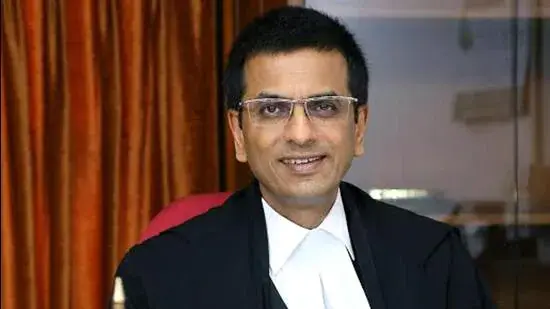
Justice D.Y. Chandrachud appointed as the 50th CJI, to take oath on Nov 9

Justice Dhanajaya Yeshwant Chandrachud was appointed on Monday by President Droupadi Murmu to serve as India’s 50th Chief Justice. As of November 8, Justice Chandrachud will succeed Chief Justice U U Lalit. According to a government notification, “In exercise of the powers conferred by clause (2) of Article 124 of the Constitution of India, the President is pleased to appoint Dr Justice Dhananjaya Yeshwant Chandrachud, Judge of the Supreme Court, to be the Chief Justice of India with effect from 9 November, 2022.” On November 10, 2024, Justice Chandrachud is set to retire. With a two-year term, this will be the CJI’s longest tenure in almost ten years. Justice Chandrachud, a law graduate of Delhi University, earned his LLM and his Doctor of Juridical Science from Harvard Law School. In June 1998, the Bombay High Court designated him a senior advocate. He practised law at both the Supreme Court and the Bombay High Court. From 1998 till his appointment as a judge of the Bombay High Court on March 29, 2000, he worked as Additional Solicitor General. Additionally, he oversaw the Maharashtra Judicial Academy. On October 31, 2013, Justice Chandrachud was named Chief Justice of the Allahabad High Court. On May 13, 2016, he was named a Supreme Court judge. He authored significant decisions during his time in the SC, including the precedent-setting Constitution Bench decisions decriminalising homosexuality, decriminalising adultery, and recognising privacy as a basic right, among others. He had led a group that had travelled in many areas to ease the suffering that people had experienced during the Covid-19 issue, referring to the devastating second wave of the pandemic as a “national crisis” last year. Justice Chandrachud was recently one of the two SC Collegium judges who opposed to the “circulation” approach used to get opinions from its members over the appointment of judges to the top court. Justice Chandrachud is the son of Justice Y V Chandrachud, the Chief Justice of India with the longest tenure (he served from February 22, 1978, to July 11, 1985).

Justice D.Y. Chandrachud appointed as the 50th CJI, to take oath on Nov 9 Read More »

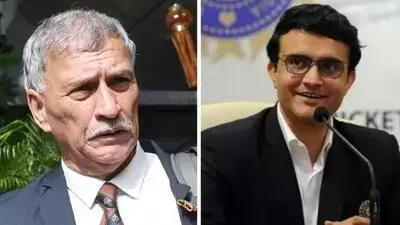
Roger Binny has been appointed as the 36th president of the BCCI to replace Sourav Ganguly

Roger Binny, a former star of the Indian cricket team and a part of the 1983 World Cup-winning team, was appointed as the 36th president of the Board of Control for Cricket in India (BCCI) on October 18. The appointment of Binny, who will take over for former India captain Sourav Ganguly, was made public at the BCCI AGM in Mumbai. The 67-year-old former star of the Indian cricket team was the sole person to submit a nomination for the position of BCCI president. All of the upcoming office-bearers are expected to be elected without opposition, thus aside from Binny, the polls were merely a formality. According to a BCCI statement, the following individuals were chosen to serve as the organization’s new office bearers: (a) President: Mr. Roger Binny (b) Vice President: Mr. Rajeev Shukla (c) Secretary: Mr. Jay Shah (d) Joint Secretary: Mr. Devajit Saikia (e) Treasurer: Mr. Ashish Shelar. Binny said, “One representative of the General Body was elected in the Apex Council of the BCCI: (a) Mr. MKJ Majumdar. Two representatives in the Indian Premier League Governing Council were elected: (a) Mr. Arun Singh Dhumal; and (b) Mr. Avishek Dalmiya, ” Binny served as the president of the Karnataka State Cricket Association during his latest stint, and he had previously been a senior selection committee member while Sandeep Patil was the chairman.

Roger Binny has been appointed as the 36th president of the BCCI to replace Sourav Ganguly Read More »

District administration of Jaipur is preparing to combat different vector-borne diseases

Jaipur district collector Prakash Rajpurohit gave all officials the go-ahead to ensure that enough provisions were made for the effective prevention and control of dengue, chikungunya, and other seasonal infections due to escalating dengue concerns in the state. According to a press release from the district collector’s office, “Besides making adequate arrangement, the district collector has ordered to improve the progress of work under the chief minister’s free medicine scheme.”  On Monday, the district health committee was being addressed by the collector in the collectorate auditorium. He also stated during the conference that all primary health centres in the district should have better basic amenities, and that all primary health centres should have timely medication distribution. Ghee raid: Early on Monday, a team organised by the district government raided a few dhabas on Ajmer Road in Jaipur as part of “The War Campaign for Shuddh.” Officials have seized two well-known brands of ghee. 549 kg of fake ghee in total were seized, and the suspects were charged under the Security Standards Act. Source: Economic Times

District administration of Jaipur is preparing to combat different vector-borne diseases Read More »

12% wage increment for staff of PSU general insurance companies

For employees of four public sector general insurance companies effective from August 2017, the Finance Ministry has announced an average 12% pay increase. A gazette notification dated October 14, 2022 stated, “This Scheme may be called the General Insurance (Rationalisation of Pay Scales and other Conditions of Service of Officers) Amendment Scheme, 2022,” It added that officials and workers will receive arrears for five years and that this wage revision would take effect on August 1, 2017, and that it would apply to people who had worked for these companies. It further stated that the subsequent revision, which is scheduled in August 2022, will take the form of variable pay based on both the employer’s and the employee’s performance. The imposition of remuneration linked to employee performance and corporate performance is not well received by the unions. “We are having strong reservations against the way the wage revision has been done after the wait of 64 months. Linking wages with performance seems to be illogical as we employees undertake so many government schemes,” General Insurance Employees’ All India Association (GIEAIA) general secretary Trilok Singh said. He added that state-owned insurance company employees, not those from the private sector, are what make all government programmes successful, thus there is no equal playing field for public sector insurance companies. Data from year to year show that the private sector has lagged, he continued. Singh emphasised that although unions are not opposed to reforms, they should be implemented with consideration for the public sector structure of these companies. The General Insurance Business (Nationalisation) Amendment Act, which was announced by the government last year, will enable it to reduce its ownership of state-owned general insurers to below 51%. An official source estimated that the combined wage bill for New India Assurance, National Insurance, Oriental Insurance, and United India Insurance will be close to Rs 8,000 crore due to the 12% raise plus five years of arrears. Every five years, wages are revised for public sector banks and insurance firms. The following pay raise for insurance company employees is scheduled to begin in August 2022. Source: PTI

12% wage increment for staff of PSU general insurance companies Read More »

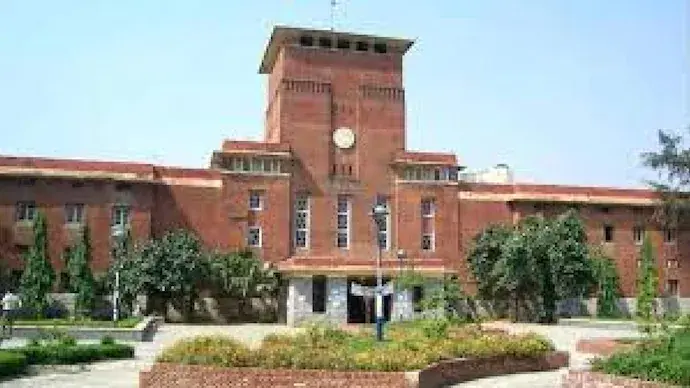
Delhi University’s ‘centenary chance examination’ for college dropouts begins

The “centenary chance examination” for college dropouts to finish their courses at Delhi University (DU) began on Sunday. D S Rawat, the dean of examinations at DU, said the tests are being held in two shifts and that so far, attendance has been “good.” Due to DU’s year-long centenary celebrations, which began on May 1, the dropouts have been given this one chance. “The centenary chance examination has begun. All the arrangements were made carefully and the exams are being conducted smoothly,” Rawat said. On the exam day, more than 1,850 students are expected to show up. For the examinations, more than 8,560 candidates had submitted applications. On Sunday, the exams would be given in two shifts. Both the Faculty of Arts and the Faculty of Sciences are conducting the exams. There will be 18 papers up for assessment in each shift, according to Rawat. The maximum number of papers for examinations administered annually is four, and the maximum number of papers for tests administered semester by semester is eight. It won’t be used for internal evaluation; instead, it will be used for a theory and practical examination. The exams will take place between October 16 and November 9. The DU had previously announced in May that students who left college in their final year could sign up for this one opportunity to take the exam and finish their course. The university will conduct further exams in March of the next year. Source: PTI

Delhi University’s ‘centenary chance examination’ for college dropouts begins Read More »

Adani Data Networks receives a unified licence for full fledge telecom services

Adani Data Network is now permitted to offer all telecom services in the nation due to the granting of a unified licence for access services. After buying spectrum in a recent auction, Adani Group entered the telecom industry. An official source reported that “Adani Data Networks has been granted UL (AS).” In the most recent 5G spectrum auction, Adani Data Networks Ltd (ADNL), a division of Adani Enterprises Ltd, obtained the right to use 400MHz of spectrum in the 26GHz millimetre wave band for Rs 212 crore over a period of 20 years. The Adani Group has previously stated that it intended to use the airwaves for both its data centres and the super app it is developing to help industries ranging from gas retail to ports and electricity distribution to airports. According to a statement from the company, “The newly-acquired 5G spectrum is expected to help create a unified digital platform that will accelerate the pace and scale of the Adani group’s digitisation of its core infrastructure, primary industry and B2C business portfolio.”

Adani Data Networks receives a unified licence for full fledge telecom services Read More »

IISC retains top rank, JSS Academy & Shoolini University achieves second position among Indian institutes in the THE World University rankings 2023

IISc retains its position as the top Indian institution in the 2023 THE World University rankings In the most recent round of Times Higher Education (THE) rankings, which the majority of Indian Institutes of Technology (IITs) have boycotted for the third year in a row due to concerns about transparency, the Indian Institute of Science (IISc) has maintained its top spot among Indian institutions. The IISc is ranked in the range of 251-300, making it the top Indian institution overall. According to a statement released by THE, the University of Oxford has emerged as the top institution globally among 1,799 universities from 104 countries. The Shoolini University of Biotechnology and Management Sciences (351-400 overall), which debuted in the rankings, has grabbed the second position among Indian institutions. In the universities category of the National Institutional Ranking Framework (NIRF) 2022, the Himachal Pradesh-based private university is ranked 96th. However, JSS Academy of Higher Education and Research, another private university based in Karnataka, and Shoolini University share the same spot among Indian institutions. Algappa University, a public university in Tamil Nadu, placed third in India (401-500). IIT Ropar received the second place in the Indian category last year, but it has dropped to sixth place this year and to the 501-600 band globally from the 351-400 band last year. The parameters used to rate the institutions include teaching (30%), research (30%), citations (30%), international outlook (7.5%), and industry outcome (2.5 percent). A “reputational survey” has 15 percent weight in both teaching and research. Over 121 million citations from over 15.5 million research publications were analysed for this year’s ranking, which also includes survey responses from 40,000 experts worldwide. JSS Academy of Higher Education and Research, Shoolini University of Biotechnology and Management Sciences, and Alagappa University rounded out the top three Indian institutions.

IISC retains top rank, JSS Academy & Shoolini University achieves second position among Indian institutes in the THE World University rankings 2023 Read More »

Moonlighting will not be accepted at TCS

Tata Consultancy Services (TCS) views moonlighting as unethical. The activity is against the company’s core beliefs and culture. So far, no staff member has been expelled for it. However, it has been made clear to staff members that the company will not accept moonlighting. According to Rajesh Gopinath, CEO of TCS, the Company’s stance on moonlighting is expressly specified in the employment contract. Moonlighting is reportedly considered a “ethical issue” that goes against TCS’s core values and culture by Milind Lakkad, the company’s chief human resources officer, according to a report by Mint. Earlier, organisations like Wipro, Infosys, and IBM have stated their displeasure of the practise. Wipro fired 300 employees who were found to be moonlighting and “violating integrity” in September, making it clear that it would not allow such conduct within the company. Working a second job while still employed by one company is known as moonlighting. Swiggy made news for its permissive approach on staff moonlighting as long as the relevant supervisors were aware of it and had given their approval. While there isn’t a legislation in India specifically prohibiting “moonlighting,” there are regulations that control or place limitations on dual employment to a certain extent. IT companies worry about moonlighting because they think it could reduce staff productivity and jeopardise the confidentiality of customer data.

Moonlighting will not be accepted at TCS Read More »

Nasal spray trial for AstraZeneca’s COVID vaccine suffers setback

The COVID-19 shot, which Oxford University researchers and AstraZeneca Plc jointly developed, suffered a setback on Tuesday when first tests on humans did not yield the anticipated protection levels. In the trial, which was in the first of usually three phases of clinical testing, only a small percentage of individuals experienced an antibody response in the respiratory mucous membranes, according to a statement released on Tuesday by the University of Oxford. Additionally, the blood immune response was less strong than the one from a vaccine shot in the arm. Nasal spray vaccines against the coronavirus have received a lot of attention from researchers around the world because the approach is thought to have the potential to prevent infection as well as disease because it may elicit an immune response directly in the airways, where the virus enters the body. The procedure would also be less painful and more controllable than injections. Products that are administered via the airways have previously received regulatory approval in China and India. The COVID-19 nasal spray vaccine from Bharat Biotech was approved by the Indian Health Minister last month, and the inhaled COVID-19 vaccine from CanSino Biologics Inc. was given emergency permission by China’s drug regulator last month. While the results of Bharat’s trial have not yet been released, CanSino claims that studies show that their vaccine, administered using a nebulizer device, can develop robust immunity to successfully contain the infection. Twelve volunteers who had previously completed a conventional two-dose immunisation course by injection were also enrolled in the British trial together with 30 previously unvaccinated people. According to Sandy Douglas, main investigator of the experiment at Oxford University’s Jenner Institute, “The nasal spray did not perform as well in this study as we had hoped.” “We believe that delivery of vaccines to the nose and lungs remains a promising approach, but this study suggests there are likely to be challenged in making nasal sprays a reliable option,” she continued. According to the statement, no significant adverse events or safety issues were reported throughout the trial, which was funded by AstraZeneca.  

Nasal spray trial for AstraZeneca’s COVID vaccine suffers setback Read More »