ArdorComm Media Group

Tuesday, June 30, 2026 3:30 PM

Author name: admin

Ayushman Bharat Block Health Melas conduct around 6 lakh diabetes screenings in a week

In a week, 6.75 lakh hypertension screenings, 6.11 lakh diabetes screenings, 2.05 lakh cataract screenings, and over 1.76 lakh teleconsultations were conducted at Ayushman Bharat block-level health melas, according to the Union Health Ministry. In a week, more than 27.31 lakh people visited 3,204 block health melas in 33 states and UTs, according to the report. Over 3.66 lakh ABHA (Ayushman Bharat Health Account) IDs were issued across India, with the highest number of 56,321 in Maharashtra, while over 1.17 lakh Pradhan Mantri Jan Arogya Yojna (PMJAY) golden cards were created, predominantly in Karnataka (22,091). According to the government, 1,009 Block Health Melas held blood donation camps and 519 had organ donation registration. From April 16 to 22, the Ministry of Health, in conjunction with states and union territories, will commemorate the fourth anniversary of Ayushman Bharat Health and Wellness Centres (AB-HWCs) as part of the Azadi ka Amrit Mahotsav. The Block Health Melas began on April 18 across 33 Indian states and union territories. These health melas are attracting thousands of individuals to get quality healthcare, as well as necessary drugs and diagnostic services, according to the statement. They provide as a platform for health education, wellness lifestyle information, and other healthcare services aimed at early disease diagnosis and treatment. The melas will run until the end of April, according to the statement. The Union Health Minister, Health Ministers of States and UTs, MPs, MLAs, senior officials of the Union Health Ministry, Principal Health Secretaries/Health Secretaries of States/UTs, senior officials of the state Health department, representatives, and local dignitaries are also visiting AB-HWCs to raise public awareness about the importance of AB-HWCs in providing affordable and accessible healthcare. Source: PTI

Ayushman Bharat Block Health Melas conduct around 6 lakh diabetes screenings in a week Read More »

CM Yogi Adityanath draws plan to ensure doorstep delivery of governance

Another significant decision aimed at enhancing service delivery in remote towns came on Tuesday, when the chief minister urged the group of ministers to prepare to offer governance at the doorstep. In the coming days, people living in remote locations may get the opportunity to host cabinet ministers for lunch, as Yogi has directed that officials contact directly with state residents and spend time with them to obtain feedback on the government’s performance and unmet expectations. On the basis of feedback from poor families at the bottom of the pyramid, the policy will be framed or adjusted. To ensure the success of the programme, the council of ministers has been divided into 18 groups, each led by a cabinet minister. The teams will be dispersed across the 18 divisional commissionerates. A total of 53 ministers, including the chief minister, make up the Council of Ministers. Before the next assembly session is called, the first round must be finished. The team will be required to spend three days in each division and at least 24 hours in each district. They will collect feedback from residents, elected representatives, party organisations, and affiliated outfits during their visit. During their stay, the ministers will examine the work done and milestones accomplished by their own department in the division. “Visiting some villages is a must and a major portion of the tour will be spent with the village population. Ministers will find out if benefits of welfare schemes are reaching them with complete transparency or not. Their expectations will be noted down, and a report will be prepared,” said a personal staff member of one the ministers who has been deputed in western UP. Lunch or refreshments would be served to the ministers in slums or at the home of a Dalit family. The report will be presented to the office of the chief minister for further action. Source: TNN

CM Yogi Adityanath draws plan to ensure doorstep delivery of governance Read More »

CBSE Boards: Class 10 and 12 term 2 exam began today; check guidelines here

The Central Board of Secondary Education (CBSE) has started the Class 10 and 12 term 2 exams from today, 26 April. For Class 10 students, the exam began with Painting, Rai, Gurung, Sherpa, Tamang, and Thai papers while for Class 12 students, it commenced with the Entrepreneurship, and Beauty and Wellness papers. The CBSE Class 10 and 12 papers began at 10:30 a.m. and ended at 12:30 p.m., according to the schedule. CBSE described exam preparations and the roles of functionaries in a live webinar on Monday. Students who missed either the term 1 or term 2 exams will receive a grade based on their performance (in one of them), according to the Board. Even if a student has missed one or both of the two-term exams, they will calculate and release the results for Class 10 and 12. In the wake of the COVID-19 concern, CBSE has made all necessary preparations to ensure that the examination runs smoothly. Exam Guidelines for CBSE Term 2: Students are advised to carry their CBSE term 2 admit card to the exam venue. Students can enter the examination hall at 10 am. No student will be allowed to enter the hall after the stipulated time. Candidates are requested to carry their own hand sanitiser in transparent bottles. It is mandatory for all students to wear masks. Students will also have to follow social distancing norms. Keeping the heatwave conditions in mind, students are directed to be properly hydrated. They can carry a bottle of water along with them Before appearing for the exam, 15 minutes of reading time has been allotted to the students More than 35 lakh students are appearing for the term 2 board exams this year. According to an NDTV report, Class 10 CBSE term 2 exams will be held in 7,406 centres throughout the country, while Class 12 exams will be conducted in 6,720 centres.

CBSE Boards: Class 10 and 12 term 2 exam began today; check guidelines here Read More »

Instagram released a guide to assist students manage exam stress

Instagram has released a guide to assist students adjust to the new environment of offline classes following two years of the Covid pandemic. The purpose of this guidance is to assist students with readjusting to offline school, preparing for in-person exams, and managing exam stress, particularly for students taking board exams in classes 10 and 12. Fortis National Mental Health Program, Fortis Healthcare, Sangath’s It’s Ok To Talk initiative, and Instagram collaborated on the guide, titled “Readapt and Readjust: Back to the Classroom.” Students will discover how to manage study and exam priorities, as well as learning strategies to cope with associated stressors and study techniques to boost focus, in this handbook. In addition, this course will provide relaxing techniques for immediate relief as well as crucial self-care practises for long-term mental health management. This guide includes advice and recommendations on a variety of issues, including ‘putting your best foot forward,’ ‘readapting and readjusting,’ prioritising and task setting, study environment and time management, and much more. In recognition of the importance of time management, Instagram has introduced a new feature called ‘Take a Break,’ which allows users to make more informed decisions about how they spend their time. People who have been scrolling for a specific amount of time will see the feature.

Instagram released a guide to assist students manage exam stress Read More »

SuperBot announces 300% hike in talent pool this fiscal

SuperBot, an intelligent, AI-powered voice assistant SaaS startup, has announced a 300 percent increase in staff. It’s on the lookout for people to work in marketing and sales, operations, technology, customer success, and HR. The majority of the new hires will be situated in Gurugram, the company’s headquarters. The Company plans to increase its staff to 200 by the end of the fiscal year 2022-23, from its existing workforce of 55. SuperBot plans to onboard 20% of new candidates for senior level positions in addition to the hiring push. Half of the remaining positions will be for mid-level positions, and 30% will be for entry-level positions. This addition of new talent to the workforce, according to Sarvagya Mishra, co-founder and director of SuperBot (PinnacleWorks), “will bring new skill sets to the table. We understand that the market is very challenging for talented professionals right now, and this may actually be an opportunity to acquire skilled manpower, which will strengthen the Company’s backbone for a longer run”. The brand is offering its employees the freedom to explore the profiles they want to thrive in, thanks to an employee-first approach and an open culture policy. Regular appreciations and acknowledgements have been driving the working atmosphere at SuperBot, along with flexible scheduling and leave policies. The Company ensures that everyone has the opportunity to discuss what they believe should be changed or added to make it the best place to work in the industry by using a reverse feedback method. SuperBot, an AI-powered voice agent technology that was founded in 2012, has been an enabler for a variety of industries, including education, BFSI, healthcare, and so on.

SuperBot announces 300% hike in talent pool this fiscal Read More »

What is Metaverse and how will it impact the future workspaces?

The much-anticipated next generation of the Internet, the metaverse, is the latest buzzword in the IT world. It’s a combination of virtual reality (VR), augmented reality (AR), online gaming, social media, and cryptocurrency that promises to deliver an interconnected virtual experience that re-imagines how we engage online in the future. Immersive technology has advanced significantly in recent years. VR environments are becoming more feature-rich, while emerging AR and holographic technologies are seamlessly blending the digital and physical worlds. These technologies are being used by an increasing number of companies, and they will continue to gain traction across industry verticals and around the world. Booming of New Technology The term “metaverse” refers to a virtual environment enhanced by upcoming immersive technologies such as extended reality (a mix of VR, AR, and MR), non-fungible tokens (NFTs), cryptocurrencies, artificial intelligence (AI), Internet of Things (IoT), and more. It isn’t, however, a brand-new concept. Immersive technologies had already been developed, but their use was limited to internet-based video games and social media in order to improve the quality and immersion of virtual reality environments. The work culture has shifted dramatically in the last two years, with remote and hybrid workspaces becoming the new standard. Metaverse technologies will be used to improve job productivity, provide interactive learning environments, and facilitate virtual reality home tours, among other things. Many businesses are already developing best-in-class Proofs-of-Concept and top-notch development abilities. The Future of Work and the Metaverse The internet and other work-from-home technology helped us stay resilient and preserved business continuity as the COVID-19 pandemic swept industries and devastated economies. Many businesses, such as education, retail, conferencing, and event management, have become technologically intensive. While social separation was in effect, the most evident and fundamental shift that the world witnessed was how people communicated. Physical meetings, conferences, and events came to a halt, with the majority of individuals opting for online video conferencing systems. One of the growing issues in the remote and hybrid work environment is keeping employees interested on online video conferencing platforms for lengthy periods of time. Keeping a large group of people fascinated and engaged on small displays when on virtual calls becomes a difficult task. However, not everyone enjoys appearing on camera. It’s tough to grasp the extent to which each virtual call participant is involved. In addition, practically everyone who used virtual tools during this era will agree that their online meeting times overlapped on certain days or that they did not have enough time to finish the chat. People also complained about screen fatigue and other ailments as a result of spending long periods of time online. These are some of the reasons why businesses are interested in metaverse-based solutions. But how is it different in the metaverse, you might wonder? Work in an Immersive Setting In a world of virtual work, the metaverse promises to deliver new degrees of social interaction, mobility, and collaboration. Metaverse will further revolutionise these industries by introducing virtual reality (VR) wearables that allow people to explore and purchase services through immersive visualisation (without leaving the premise of their homes). Furthermore, computer-generated holography technology is progressing quickly and will soon replace the need for VR headsets, either through the use of virtual viewing windows that create holographic displays from computer images or through the deployment of specially designed holographic pods that project people and images into actual space at events or meetings. Meta is developing haptic (touch) gloves that allow users to interact with 3-D virtual objects and feel sensations such as movement, texture, and pressure. Meta has been in the news for their comprehensive metaverse-centric business ambitions. Technology is removing certain traditional features of the workplace, such as team cooperation, learning and development, and company culture, resulting in the formation of new working patterns.  

What is Metaverse and how will it impact the future workspaces? Read More »

AYUSH doctors to be trained in primary trauma care

For the first time in the country, AYUSH doctors will receive training in primary trauma treatment. The Union AYUSH ministry and the city-based NGO Lifeline Foundation signed an MoU in this regard. The programme, which is being carried out in collaboration with the AYUSH ministry, aims to train 4,000 doctors across the country. Gujarat, Rajasthan, and Madhya Pradesh will be the first states to implement the programme. In Gujarat, there will be 2,000 AYUSH doctors. The project’s Memorandum of Understanding was signed in Gandhinagar on the first day of the Global AYUSH Investment and Innovation Summit 2022. The training would be delivered in modules approved by Rashtriya Ayurved Vidyapeeth, the ministry’s central office in New Delhi. Dr. Subroto Das, the founder trustee of Lifeline Foundation and a Padma Shri awardee, said the effort was part of Prime Minister Narendra Modi’s vision to mainstream AYUSH doctors and address unnecessary deaths from all sorts of trauma. He went on to say that this will be the first-of-its-kind upskilling aimed at lowering trauma-related mortality by incorporating training for AYUSH doctors. According to Das, India has more than 7.7 lakh AYUSH doctors. “Already pilot projects to train 500 doctors have been completed in Vadodara, Vapi, Godhra, Lunawada, Modasa and rural areas of Saurashtra. Rural areas have been targeted because they are mostly bereft of trauma care facilities and are unable to address the Golden Hour. This is where AYUSH doctors can make a difference since they have a good presence and acceptability in the rural communities,” said Das. Airway management, haemorrhage control and suturing, IV access and hydration management, cervical spine stabilisation, CPR, and cardiac arrest are among the low-cost procedures covered in the 8-hour session. Trauma surgeons, orthopaedic surgeons, general surgeons, emergency physicians, and ICU physicians will give the training. The objective is to do impact studies on a regular basis, change the modules as needed, scale it nationally with the AYUSH ministry’s help, and then institutionalise these skill developments as part of training. Lifeline Foundation established India’s first CPR project in addition to its much-lauded highway rescue effort. The Vadodara Municipal Corporation became the country’s first civic body to be fully trained in high-quality first aid and CPR. Source: Economic Times  

AYUSH doctors to be trained in primary trauma care Read More »

Maharashtra’s education minister urged ICSE board to relax the vaccine mandate for board exams.

Varsha Gaikwad, Maharashtra’s school education minister, has urged the Council for Indian School Certificate Examinations (CISCE) to offer an urgent clarification on the vaccine mandate for board exams beginning April 25. “Some students for the ICSE board have reached out to me regarding an advisory, dated January 4, 2022, issued by the CISCE, mandating Covid vaccination for all those appearing for the board exam. Some schools are citing it to say that unvaccinated students will not be permitted to sit for exams. This despite the Centre’s affidavit in the Supreme Court that vaccines are not mandatory,” Gaikwad tweeted, adding that her office had already contacted the CISCE. “The said mandate was issued in January,” Francis Joseph, President of the School Leaders Network, who has reached out to the CISCE on behalf of the Minister, said. Until a new advisory is published, schools will continue to follow the existing one. As a result, schools began giving their students instructions. Then some parents came to the Minister’s office to express their concerns.” “While vaccines are a lifesaver against Covid, not allowing unvaccinated students to take exams will be discriminatory,” Minister added. I would therefore urge the CISCE to issue an urgent clarification in this regard.”

Maharashtra’s education minister urged ICSE board to relax the vaccine mandate for board exams. Read More »

Air India employees refuse to leave their quarters

Despite getting an eviction notice, Air India employees refuse to leave their company-provided housing, claiming that they intend to stay in their flats till retirement unless alternate arrangements are made. Employees who were dissatisfied with the government’s attempt to force them to surrender their flats staged a protest march. The Mumbai International Airport of the Adani Group issued the eviction notice (MIAL). Hundreds of Air India employees, including engineers, ground staff, and other professionals, were required to vacate 1600 staff quarters in Kalina when the company was privatised. Air India gave these employees six months to vacate their houses, which were handed to them in lieu of a house rent allowance and are conveniently placed near the airport, in 2021. Despite the infamous Mumbai traffic snarls and severe rains during the monsoons, the staffs are only able to make it to the airport on time for duty because of the close proximity to the airport. During the lockdown, the help and cooperation of these personnel located near the airport was also crucial, since they were the ones working with cargo aircraft bringing medications and protective equipment both within and outside the country. The initial lease on these quarters expired over 30 years ago and has not been renewed since then, making them nearly seven decades old. The land on which they were constructed is owned by the Maharashtra government and was leased to the Airports Authority of India (AAI). It was then leased to MIAL, which is now a subsidiary of the Adani Group.

Air India employees refuse to leave their quarters Read More »

AICTE, IPA sign MoU to introduce plumbing education in engineering, architecture institutions

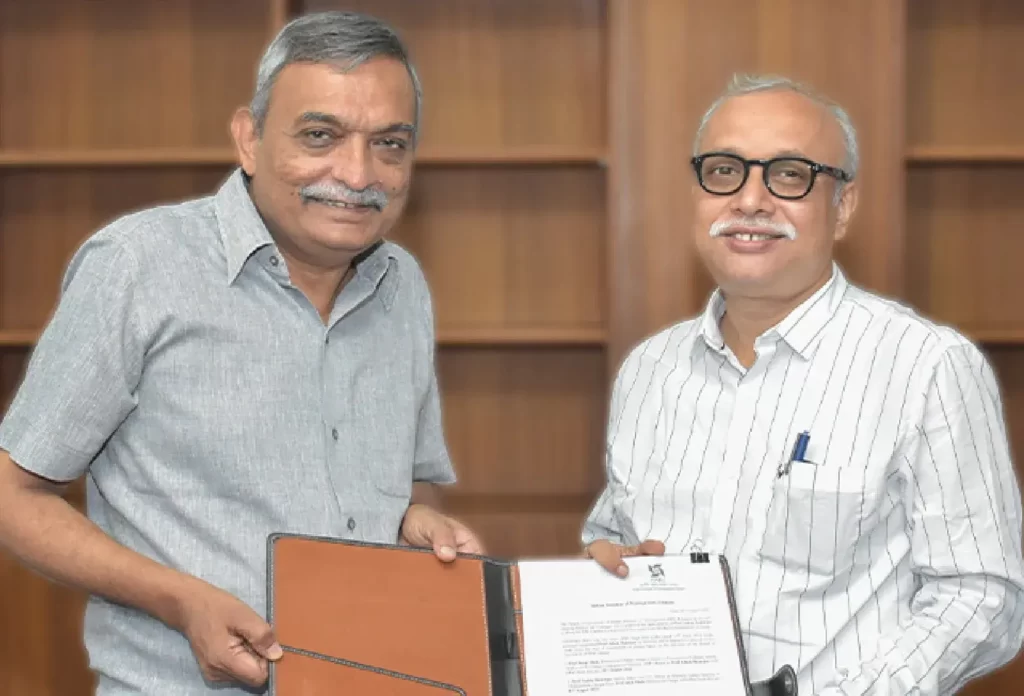
The All India Council of Technical Education (AICTE) and the Indian Plumbing Association (IPA) have inked an agreement to introduce a plumbing course in engineering and architecture institutes across India, according to officials. The MoU was signed by AICTE Chairman Anil D Sahasrabudhe and IPA National President Gurmit Singh Arora. Students majoring in engineering, architecture, or interior design, as well as graduates with a “major” degree in civil, environmental, or mechanical engineering, architecture, or interior design, will be eligible to take a four-credit course in “Plumbing” (Water and Sanitation) according to the agreement. Plumbing is a strongly felt requirement in engineering and architecture courses since plumbing is linked to a building’s health. At the signing of the MoU, AICTE Chairman said, “The IPA and the AICTE have collaborated to create a 50-hour plumbing course that would be 80 percent theory and 20 percent practical.” All educational institutions accredited by the technical education regulation should offer a plumbing (water and sanitation) programme to educate students for careers in the sector, according to the IPA and AICTE. IPA will train institutional faculty to administer the plumbing course through AICTE’s faculty development programmes. “This is a tremendous opportunity for all stakeholders in the plumbing industry because plumbing will become more organised and structured as a result,” said Arora. “One of IPA’s goals is to educate and instruct engineers, architects, and students in these fields on the characteristics of excellent and proper plumbing techniques.”

AICTE, IPA sign MoU to introduce plumbing education in engineering, architecture institutions Read More »