

ArdorComm Media Group

Thursday, April 23, 2026 6:40 PM

Author name: admin

CBSE Board Exams 2026: Special Exam Provisions for Class 10 & 12 Students in Sports and Olympiads

ardorcomm news

The Central Board of Secondary Education (CBSE) has announced special examination provisions for Class 10 and 12 students who represent India in national or international sports competitions or participate in international Olympiads. This initiative ensures that students do not have to compromise between academic exams and prestigious global events. According to a circular released on September 15, the Board has outlined detailed rules, conditions, and deadlines for schools, students, and parents. CBSE has been working in line with the government’s focus on promoting sports and co-curricular excellence. After introducing this special exam facility for sports students in 2018 and extending it to Olympiad participants in 2020, the Board is now offering structured flexibility under the 2026 exam schedule. CBSE highlighted that such measures not only support students’ ambitions but also nurture qualities like fitness, discipline, teamwork, and dedication. Class 10 Provisions From 2026, Class 10 will follow a two-cycle exam pattern—the first in February and the second in May. Students engaged in recognised sports or Olympiads will only be allowed to appear in the second cycle (May 2026). No separate exams will be held after the February cycle. Candidates must still be included in the List of Candidates (LOC) for the main exams. For compartment exams, schedules in February/March 2026 will apply. Class 12 Provisions For Class 12, the existing policy remains unchanged. If a Board exam clashes with an eligible sports or Olympiad event, CBSE will reconduct the exam after the main cycle ends. Eligibility and Restrictions Only events approved by SAI (Sports Authority of India), BCCI (Board of Control for Cricket in India), and HBCSE (Homi Bhabha Centre for Science Education) are recognised. Exemptions will not apply to training or selection camps, internal tests, or project submissions. Attendance relaxation will remain within the existing Board limits. All applications must be supported by an official certificate of participation from the concerned nodal authority. CBSE also clarified that: Special exams will not be available for supplementary papers. No provision will be made for practicals or project work, as these can be rescheduled internally by schools. Schools must avoid false claims, as they will result in cancellation of the application.  SOPs and Timeline As per the Standard Operating Procedures (SOPs), students must submit applications via their schools along with a certificate of participation and school recommendations. Schools need to forward the documents to the CBSE Regional Office by December 15. Approvals will be communicated by December 30, and rescheduled exams will be conducted within 15 days of the main Board exams. Guidelines for Schools CBSE has directed schools to: Inform students and parents clearly about these provisions. Submit internal assessment marks within the given timelines. Ensure fair evaluation of sports and Olympiad participants. Process LOC submissions and certification accurately.  The Board emphasized that school heads and authorised organisations must issue certificates only for students who genuinely qualify under these provisions. Source: Indian Express

CBSE Board Exams 2026: Special Exam Provisions for Class 10 & 12 Students in Sports and Olympiads Read More »

PM Modi: ‘Bharatiya Model’ Driving Vision of Viksit Bharat 2047

ardorcomm news

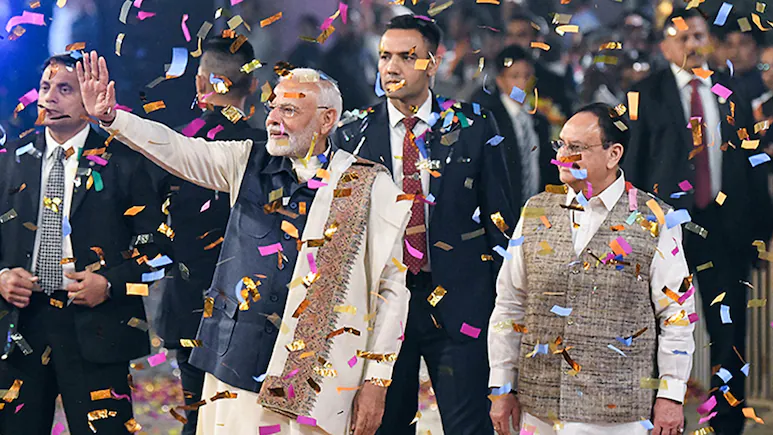
Prime Minister Narendra Modi on Tuesday endorsed an article by Union Minister Mansukh Mandaviya, which underlined how the philosophy of “Sabka Saath, Sabka Vikas, Sabka Vishwas, Sabka Prayas” is shaping India’s development journey. Mandaviya’s piece described how governance reforms have transformed lives — electricity is now a basic facility rather than a luxury, welfare schemes are delivered directly to beneficiaries, and infrastructure planning is powered by digital platforms. Sharing the article on X, PM Modi said, “This Bharatiya Model, first tested in Gujarat and later implemented nationwide, has carried governance to the grassroots, ensuring promises translate into delivery. It is paving the way for Viksit Bharat by 2047.” In another post, PM Modi hailed Indian chess star Vaishali Rameshbabu for defending her FIDE Women’s Grand Swiss title in Samarkand, Uzbekistan. The victory also secured her a spot in the 2026 FIDE Women’s Candidates Tournament. Calling her success an “outstanding accomplishment,” the Prime Minister lauded Vaishali’s dedication and wished her success in upcoming challenges. Vaishali scored 8 points in 11 rounds, edging past Kateryna Lagno on tie-breaks to claim the crown. With this, she became the third Indian woman to qualify for next year’s Candidates tournament, joining Divya Deshmukh and Koneru Humpy. The achievement adds to a landmark year for Indian women’s chess. For Vaishali, it also marks a strong comeback after recent setbacks, including modest results in events like the Chennai Grand Masters Challengers, Norway Chess Women’s Tournament, Women’s Grand Prix (Austria & Pune), and the Tata Steel Women’s Challengers. Source: DD News Photo Credit: PTI

PM Modi: ‘Bharatiya Model’ Driving Vision of Viksit Bharat 2047 Read More »

Parliament Panel Seeks Legal, Tech Framework to Combat AI-Driven Fake News

ardorcomm news

A parliamentary panel has urged the government to put in place robust legal and technological mechanisms to track, identify, and penalize those responsible for spreading AI-generated fake news. In its draft report, the Standing Committee on Communications and Information Technology — chaired by BJP MP Nishikant Dubey — emphasized the need for a balanced use of Artificial Intelligence. While AI is being applied to detect misinformation, the report cautioned that the same technology can also generate and amplify it. The report has been submitted to Lok Sabha Speaker Om Birla and will be tabled in the upcoming session. The committee has recommended stronger coordination between the Ministry of Information and Broadcasting, the Ministry of Electronics and Information Technology (MeitY), and other concerned departments. Among its proposals are exploring licensing requirements for AI content creators and introducing mandatory labelling for AI-generated text, videos, and images. It also highlighted ongoing government-backed projects such as deep learning-based speech detection systems and software tools designed to identify deepfake videos and images. The MeitY has already set up a nine-member panel to study deepfake-related challenges. While ministries have cautioned that AI in its current state cannot independently fact-check complex issues, the committee suggested using AI as a first filter to flag suspicious content, followed by human verification. Calling fake news a “serious threat” to democracy and public order, the panel urged amendments in penal laws, higher fines, and greater accountability. It also suggested mandating fact-checking units and internal ombudsmen in all media organizations, while stressing that such measures should be built through consensus among stakeholders. Although committee recommendations are not binding, they often guide government policy due to their bipartisan weight. Source: PTI

Parliament Panel Seeks Legal, Tech Framework to Combat AI-Driven Fake News Read More »

Chronic Disease Deaths Rising in India, Women Face Higher Risk: Lancet Report

ardorcomm news

India has recorded a troubling rise in deaths from chronic illnesses such as heart disease, diabetes, and cancer, with women disproportionately affected, according to a new global analysis published in The Lancet. The study, led by researchers at Imperial College London in collaboration with the World Health Organization (WHO), assessed the probability of dying from non-communicable diseases (NCDs) before the age of 80 across 185 countries. Findings show that while 4 out of 5 countries witnessed a decline in premature mortality linked to chronic conditions between 2010 and 2019, India — along with Papua New Guinea — bucked the trend, reporting increases for both men and women. Alarmingly, Indian women experienced a steeper rise in risk compared to men. “Heart disease and diabetes were major contributors to India’s increase in deaths from chronic illnesses,” the researchers noted. By contrast, nations such as China, Egypt, Nigeria, Russia, and Brazil reported reductions in NCD-related mortality for both sexes. Globally, declines in deaths from cancers and cardiovascular conditions were offset by increases in fatalities caused by dementia, alcohol use disorders, and pancreatic and liver cancers. The findings are significant in the context of the UN’s Sustainable Development Goal to reduce premature mortality from NCDs by one-third by 2030. Researchers warn that without urgent investment and targeted interventions, India risks falling further behind in tackling its chronic disease burden. The report comes just ahead of the UN General Assembly’s high-level meeting on September 25, where world leaders will revisit global strategies to prevent and control NCDs, as well as promote mental health and well-being. Source: PTI Photo Credit: iStock  

Chronic Disease Deaths Rising in India, Women Face Higher Risk: Lancet Report Read More »

India Will Need 2 Lakh Skilled Professionals to Manage EV Charging Stations by 2030

ardorcomm news

Tata Power on Tuesday launched Mumbai’s first premium MegaCharger hub near the airport, adding to its growing network of over 1,000 charging points in the city. Built in partnership with Tata Passenger Electric Mobility, the hub is equipped with eight high-speed DC chargers and 16 bays, aimed at reducing wait times for private EV owners and fleet operators. But as India’s charging infrastructure expands rapidly, a looming skill shortage threatens to slow the pace of adoption. A joint whitepaper by The Energy and Resources Institute (TERI) and Mercedes-Benz Research and Development India (MBRDI) estimates that the country will require between 1–2 lakh trained professionals by 2030 to operate and maintain charging stations. The report underlined the vital role of Charge Point Operators (CPOs) in India’s EV transition while pointing out key challenges—limited hands-on training, lack of standardised modules, and a shortage of qualified trainers who understand both technical and operational needs. India’s public charging points have already surged from just 25 in 2015 to nearly 30,000 by August 2025. However, to achieve the government’s 1:40 charger-to-EV ratio, the country must install nearly 4 lakh chargers annually through this decade. Experts argue that this scale-up will be impossible without simultaneously building human capital. Anshuman Divyanshu, CEO of Exicom’s EV Supply Equipment division, said the skill demand today goes beyond basic electrical expertise and now spans high-voltage systems, connectivity, and software. “Fast, reliable charging infrastructure is the cornerstone of India’s EV journey. But success will depend as much on skilled manpower as on the megawatts of hardware deployed,” he said. He stressed that Exicom has invested in structured training, noting that talent readiness is lagging behind infrastructure rollout. Similarly, Akshay Shekhar, CEO of Kazam, highlighted the uneven picture outside metros. While finding electricians through ITIs is not difficult, specialised EV training remains scarce. “Tasks like earthing are often skipped, SOPs aren’t followed consistently, and technicians in smaller cities lack exposure to proper standards and tools,” he said. Even so, Shekhar pointed to a strong willingness to learn. Kazam has already trained over 500 technicians in tier-2 and tier-3 cities, many of whom are now actively supporting the sector. “With the right certification and structured skilling, this workforce can truly become the backbone of India’s EV expansion,” he added. The TERI-MBRDI study also cautioned that most Industrial Training Institutes (ITIs) still do not offer EV-specific courses, leaving CPOs dependent on in-house training. It flagged gaps in diagnostics, digital integration, and safety standards as possible barriers to sustaining infrastructure growth. By 2030, India’s EV ecosystem is projected to generate 1 crore direct jobs and 5 crore indirect jobs, but experts warn that under-skilled manpower could become a bigger bottleneck than under-investment in infrastructure. Kunal Khattar, founding partner of AdvantEdge, suggested that the staggered rollout of charging stations will give time to build manpower capacity. He added that technology will likely lower operational costs by enabling unmanned facilities, while petrol pumps could play a significant role in scaling up. “They already have manpower on site and can add charge points as demand rises, without additional staffing costs,” he said. Source: Economic Times

India Will Need 2 Lakh Skilled Professionals to Manage EV Charging Stations by 2030 Read More »

AIIMS Delhi Installs da Vinci Robot to Train Students in Robotic Surgery

ardorcomm news

All India Institute of Medical Sciences (AIIMS), New Delhi, has taken another step forward in surgical education by setting up a da Vinci Surgical Robot at its Skills, e-Learning and Telemedicine (SET) facility. The cutting-edge system, provided by Intuitive Surgicals under a memorandum of understanding, will be used exclusively for training purposes. According to the institute, AIIMS Delhi has now become the only medical institution in the country with two dedicated training robots. Alongside the newly installed da Vinci robot, the facility already houses a Hugo training robot, supplied earlier by Medtronic. The SET facility, already popular among AIIMS trainees, faculty, and medical professionals from other institutions, provides access to simulators and manikins in a stress-free learning environment. With the addition of the da Vinci robot, the centre will further expand opportunities for medical students, residents, nurses, and surgeons to gain hands-on experience in robotic-assisted surgery across specialities such as urology, gynaecology, general surgery, oncology, and head and neck surgery. AIIMS Director Dr. M. Srinivas highlighted that robotic surgery training, which previously required surgeons to travel abroad at significant personal cost, is now available within the country. “This centre will help improve surgical precision, reduce recovery times, and elevate the standard of patient care nationwide,” he said. Echoing the sentiment, Rohitt Mahajan, Vice President and General Manager of Intuitive India, assured complete support to ensure the effective use of the new system. Dr. Amlesh Seth, Professor and Head of Urology at AIIMS, described robotic-assisted surgery as a game-changer in modern healthcare. “This training centre will enable our senior surgeons to mentor the next generation of robotic surgeons. It also offers residents early exposure to advanced techniques, helping them build confidence and prioritise patient safety before stepping into independent practice,” he added. The collaboration is expected to accelerate the adoption of robotic-assisted surgeries in India, positioning AIIMS Delhi as a hub for innovation and excellence in surgical training. Source: PTI

AIIMS Delhi Installs da Vinci Robot to Train Students in Robotic Surgery Read More »

Microsoft to enforce three-day office work policy from 2026

ardorcomm news

Microsoft has announced that starting next year, employees will be required to work from office at least three days a week, marking a significant shift in its post-pandemic work policy. In a blog post on Tuesday, Amy Coleman, Microsoft’s Chief People Officer, detailed that the new hybrid work mandate will be introduced in three phases. The rollout will begin with staff based near the company’s Redmond, Washington headquarters, before extending to other U.S. locations and international offices. By February 2026, employees residing within 50 miles of the Redmond campus will need to be onsite for a minimum of three days each week. Timelines for other U.S. offices will follow, while planning for international employees is expected to commence next year. The move aligns Microsoft with other major tech companies, including Amazon, that are scaling back remote work flexibility and urging employees to return to office spaces. The pandemic had initially accelerated the widespread adoption of work-from-home policies across the industry, but firms are now reassessing their long-term workplace strategies. Source: Reuters  

Microsoft to enforce three-day office work policy from 2026 Read More »

Pradhan discusses expansion of Indian schools in UAE, inaugurates Atal Incubation Centre at IIT Delhi-Abu Dhabi

ardorcomm news

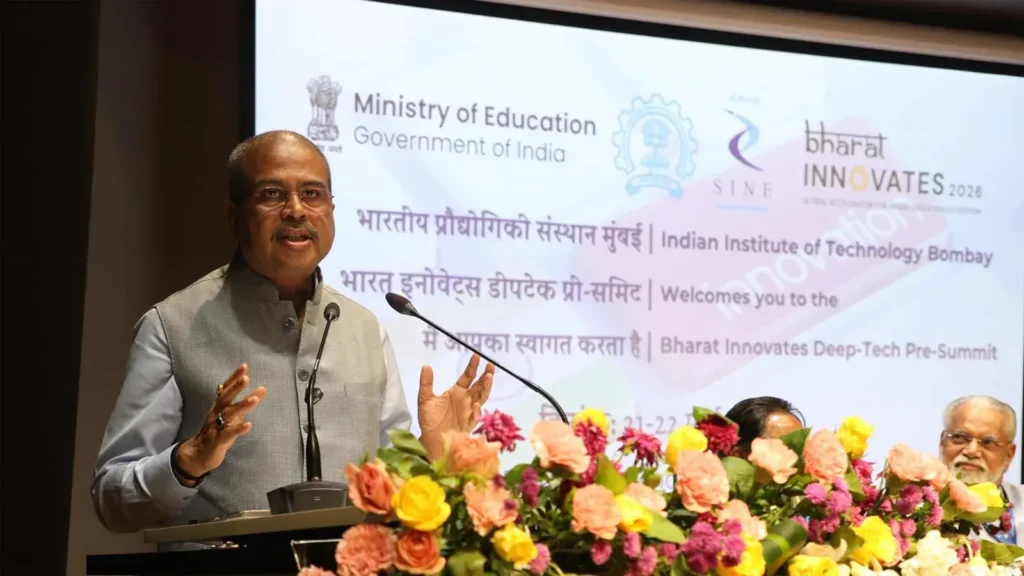
Union Education Minister Dharmendra Pradhan, during his two-day official visit to the United Arab Emirates, met Sara Musallam, Chairperson of the Abu Dhabi Department of Education and Knowledge. The discussions centred on strengthening educational collaboration between the two countries, including the establishment of more Indian curriculum-based schools in the UAE to cater to the growing Indian community. Pradhan also visited the Abu Dhabi campus of IIT Delhi, where he inaugurated the Atal Incubation Centre (AIC)—the first such facility hosted by an Indian institution abroad. The AIC is envisioned to nurture joint start-ups and research-led enterprises involving innovators from both India and the UAE, with a focus on deep tech, artificial intelligence, clean energy, healthcare, and other areas of mutual interest. It will also provide Indian start-ups with a gateway to Middle Eastern markets. Highlighting the legacy of IIT Delhi, Pradhan noted that the Abu Dhabi campus has grown remarkably from a concept into a full-fledged institution, symbolising the India-UAE knowledge partnership. He also launched B.Tech and Ph.D programmes in Chemical Engineering and Energy & Sustainability at the campus, expressing confidence in the students’ potential to set new benchmarks in global innovation and prosperity. Pradhan shared insights on the success of Atal Tinkering Labs in India and discussed the possibility of introducing Atal Innovation Labs in Indian schools across the UAE. The talks also explored opportunities for two-way student exchanges starting from the school level, further strengthening academic and cultural ties. As part of his UAE visit, the minister is scheduled to inaugurate the Dubai campus of IIM Ahmedabad and hold meetings with leaders, policymakers, academicians, and institutional representatives from both nations to broaden cooperation in education, innovation, and skill development. Source: PTI Image Credit: x.com/iitdelhi

Pradhan discusses expansion of Indian schools in UAE, inaugurates Atal Incubation Centre at IIT Delhi-Abu Dhabi Read More »

India’s Economy Holds Steady Despite Global Trade Pressures: SBI Capital Report

ardorcomm news

India’s economy continues to demonstrate robust resilience amid global trade headwinds and fiscal strains, supported by strong domestic demand and government expenditure, according to a new report by SBI Capital Markets. The study highlighted that while protectionist tariff policies — particularly from the United States — have become a major global challenge, India managed to remain relatively shielded in the first quarter, achieving an impressive GDP growth of 7.8%. The report pointed to ongoing structural reforms as a key factor driving momentum. A streamlined Goods and Services Tax (GST) framework is expected to inject around ₹50,000 crore into the economy, further boosting consumption. However, Indian exporters are increasingly under strain due to retaliatory tariffs from trade partners, with some duties reaching 50%. Notably, a 25% levy linked to Russian crude purchases has heightened cost pressures and disrupted trade flows. On the currency front, despite a softer U.S. dollar, the Indian rupee depreciated nearly 5% year-on-year, hitting record lows. The Reserve Bank of India has limited its interventions, opting instead to allow the weaker currency to support exports while conserving forex reserves. Externally, while capital inflows remain tepid, the current account deficit is viewed as manageable despite sluggish merchandise exports. The analysis also contrasted India’s fiscal situation with that of advanced economies. Rising debt burdens in countries such as the U.S. and U.K. are steepening bond yield curves, while in India, higher state government borrowing continues to exert pressure on long-term yields. Adding to the global backdrop, weaker U.S. employment data has heightened expectations of an imminent Federal Reserve rate cut in its upcoming policy review, the report noted. Source: IANS Photo Credit: iStock  

India’s Economy Holds Steady Despite Global Trade Pressures: SBI Capital Report Read More »

Extreme Heat Could Put 2026 World Cup at Risk, Warns Report

ardorcomm news

A new study has raised serious concerns about the impact of climate change on the upcoming 2026 FIFA World Cup in North America, warning that extreme weather conditions could pose unprecedented challenges for players, fans, and organisers. The report, “Pitches in Peril” — compiled by Football for the Future, Common Goal, and Jupiter Intelligence — reveals that 10 out of the 16 host venues are at very high risk of extreme heat stress during the tournament. By 2050, nearly 90% of these stadiums will require significant adaptation to cope with soaring temperatures, while a third could face severe water shortages. Researchers also extended their analysis to future World Cup sites in 2030 and 2034, while drawing attention to grassroots football pitches worldwide, including those once used by global stars like Juan Mata, Mo Salah, and William Troost-Ekong. Mata, reflecting on Spain’s devastating floods in Valencia last year, said: “Football has always united people, but now it also reminds us of what we stand to lose.” Recent competitions already highlight the risks. At this year’s FIFA Club World Cup in the U.S., players described conditions as unbearable, with extreme heat and storms forcing FIFA to implement emergency measures such as shaded benches, misting fans, and additional cooling breaks. According to the study, 14 of the 16 stadiums across the U.S., Canada, and Mexico already exceed safe-play thresholds for multiple hazards — including extreme heat, heavy rainfall, and flooding. Thirteen stadiums experience summer days breaching FIFA’s drinks-break benchmark of 32°C Wet-Bulb Globe Temperature (WBGT), while cities like Dallas and Houston endure WBGT readings of 35°C or higher for weeks at a stretch — a level scientists deem the upper limit of human adaptability. Though some venues, like those in Dallas and Houston, will rely on stadium roofs to mitigate heat, experts stress that climate risks extend far beyond elite facilities. For instance, Mo Salah’s childhood pitch in Egypt could see over a month of unplayable conditions annually, while Troost-Ekong’s hometown ground in Nigeria may face nearly year-round extreme heat by mid-century. Piers Forster, director of the Priestley Centre for Climate Futures, cautioned: “Without drastic measures, like moving major tournaments to cooler months or regions, the risks will only escalate.” The 96-page report calls on the football industry to commit to net-zero emissions by 2040, publish robust decarbonisation strategies, and establish adaptation funds. It also highlights that 91% of fans surveyed across the host nations want the 2026 edition — the biggest in World Cup history — to serve as a benchmark for sustainability. Yet, despite those hopes, another analysis by Scientists for Global Responsibility, the Environmental Defense Fund, and the Sport for Climate Action Network warns that the 2026 tournament, with 48 nations and 104 matches across three countries, is on track to become the most climate-damaging World Cup ever. Source: Reuters

Extreme Heat Could Put 2026 World Cup at Risk, Warns Report Read More »