ArdorComm Media Group

Wednesday, February 18, 2026 4:50 AM

Author name: admin

IIM Lucknow launches blended MBA (bMBA) Program for Mid-Career Leaders

The newly launched degree program will combine live online classes with immersive on-campus modules The inaugural batch of the program will commence on 25th September 2025   LUCKNOW, 11th July 2024: Indian Institute of Management Lucknow has announced the launch of its Blended Master of Business Administration (bMBA) program, designed specifically for working professionals and entrepreneurs aiming to accelerate their career growth. This two-year program will empower the working professionals with advanced management knowledge, strategic thinking, and leadership capabilities, delivered through an adaptable learning module designed to fit into their professional schedules. The “blended” format of the program will combine online and in-person modules, offering participants the flexibility to learn remotely while benefiting from immersive campus interactions that enrich their learning experience. Divided into six terms, the program will offer a mix of compulsory foundational courses in the first year and elective courses in the second year. The elective courses will include Strategy, Finance, Marketing, ITS, Operations and Supply chain management, and HR, aligned with IIM Lucknow’s flagship post graduate program. Additionally, a Capstone project will also be a part of the curriculum to provide participants with a hands-on opportunity to apply classroom learning to real-world challenges. Interested candidates are encouraged to apply early and ensure they meet all the eligibility requirements.   Application open date: 11th July 2025 Application close date: 18th August 2025 Online Interviews: 1st to 3rd September 2025 Program starts: 25th September 2025 For more information and application submission, applicants can visit office website: https://www.iiml.ac.in/programmes/bmba Speaking about the program, Prof. M. P. Gupta, Director, IIM Lucknow, said, “In today’s dynamic and fast-paced world, where time is scarce and ambitions are limitless, many accomplished professionals and entrepreneurs without a formal MBA often find themselves constrained in realising their full potential. Recognising their aspirations, IIM Lucknow is proud to launch its Blended MBA Programme, thoughtfully designed to empower them with advanced managerial knowledge and leadership capabilities, enabling accelerated career progression. I hereby invite professionals to embark on this transformative journey with us towards shaping a better tomorrow.”  Why choose IIM Lucknow’s bMBA program? With the credo “Lead Smarter: Anytime, Anywhere through flexible, future-ready learning,” the key features of this program include:   Modular and integrated structure, designed to balance academic rigor with professional commitments Application-oriented learning, ensuring direct workplace relevance Training in emerging tools, technologies, and managerial frameworks Focus on developing ethical, responsible leaders in the Indian and global context Ability to learn continuously, a crucial trait for long-term leadership success To ensure best learning experience, the program will offer a unique combination of online and on-campus learning. Participants of the program will benefit from the virtual live sessions, combined with the immersive experience of in-person interactions at IIM Lucknow’s fully equipped campus. State-of-the-art lecture halls and digital platforms will enable a seamless and interactive learning environment. Additionally, case-based teaching, hands-on exercises on various software, project work, and group discussions will encourage both knowledge acquisition and development of practical skills in communication, collaboration, and problem-solving.   Speaking about the importance of launching bMBA program, Prof. Sanjay Singh, Dean (Programme), IIM Lucknow, said, “I am delighted to announce the launch of our Blended MBA Programme – a future-ready offering designed to empower working professionals and entrepreneurs. The programme blends academic rigor with flexibility, allowing participants to learn from IIM Lucknow’s world-class faculty through live online classes and immersive campus modules. This innovative initiative reaffirms our commitment to making high-quality management education accessible, adaptable, and aligned with the dynamic needs of today’s business leaders. We look forward to welcoming a diverse cohort, including professionals from India and neighbouring countries such as Nepal, Bhutan, and Sri Lanka, to this unique learning journey at IIM Lucknow.”  Eligibility criteria and Admission Process Reflecting IIM Lucknow’s commitment to nurturing leaders who can navigate complexity with agility and foresight, the program is designed for ambitious professionals and entrepreneurs seeking to enhance their leadership and managerial capabilities. The eligibility requirements include:   Minimum of three years of full-time work experience after graduation Candidate must be at least 24 years old Minimum of 15 years of formal education (10 + 2 + 3 or 4 system) Minimum 50% aggregate marks or equivalent CGPA. Additionally, candidates with any one of the following qualifications are also eligible to apply for the program:   Chartered Accountant (CA) from ICAI Company Secretary (CS) from ICSI Cost and Management Accountant (ICWA/CMA) from ICAI Foreign degree equivalents must be recognised by AIU (Association of Indian Universities) Candidate shortlisting will be done by the Institute based on their academic profile, test scores, and work experience. This will be followed by an online interview of the shortlisted candidates for final selection. (Disclaimer:This report is generated from PRO services. ‘ArdorComm Media’ holds no responsibility for its content.)

IIM Lucknow launches blended MBA (bMBA) Program for Mid-Career Leaders Read More »

IIT Guwahati Celebrates 27th Convocation with 2093 Graduating Students

The graduating class includes 1005 Undergraduate, 818 Postgraduate and 270 PhD students 4 Gold Medals and 16 Silver Medals were awarded to the top-performing students In its 31 years of excellence, 24,700+ students have graduated from IIT Guwahati  GUWAHATI, 13th July 2025: A total of 2093 of Indian Institute of Technology Guwahati received their degrees in various disciplines today during the 27th Convocation Ceremony. The graduating students include: 1005 Tech. and B.Des. students 556Tech. and M.Des. students 270 PhD & Dual (Masters + PhD) students 172 Sc. students 51 A. students 18 MS (Research) students 21 MBA students The event marked the graduation of 22 students from the inaugural B.Tech. batch of the Mehta School of Data Science and Artificial Intelligence. Sreehari C., B.Tech. in Computer Science and Engineering, achieved the top score in the entire Undergraduate batch and was awarded the President of India Gold Medal. Abhishek Gautam, B.Tech. in Engineering Physics received the Dr. Shankar Dayal Sharma Gold Medal. Additionally, Anubhav, M. Tech. in Mechanical Engineering, was awarded the Governor of Assam PG Gold Medal, while Souraja Kundu, B.Tech. in Electronics and Communication Engineering. was awarded the Governor of Assam UG Gold Medal. The Institute also awarded 16 students with Institute Silver medals for their remarkable academic performance. The Convocation Video can be viewed through the following livestream link – YouTube Link: https://www.youtube.com/live/qTaTW2vW8Jc Dr. Rajendra Singh, D. Houser Banks Professor of Electrical and Computer Engineering, Clemson University, graced the occasion as the Chief Guest, alongside Shri J. D. Patil, President, Indian National Academy of Engineering, who attended as the Guest of Honor. Dr. S. K. Srivastava, Acting Chairman, Board of Governors, IIT Guwahati, presided over the event, while Prof. Devendra Jalihal, Director, IIT Guwahati, presented the Convocation report. During his address, Prof. Devendra Jalihal, Director, IIT Guwahati, said, “On the national and global front, IIT Guwahati has retained the 7th position among the best engineering institutions of the country, 9th position in ‘Overall’ and 10th position in ‘Research’ categories in the ‘India Rankings 2024’ declared by the National Institutional Ranking Framework (NIRF). In QS Rankings 2026, the Institute has secured 42nd rank globally in the Research Citations per Faculty category and 334th position in the World University Rankings 2026.” He further said, “With the aim of strengthening and expanding the educational and research landscape, the Institute has signed more than 17 Memorandum of Understanding in research, education, innovation, and societal impact. Additionally, in its effort to take research ‘from lab to life,’ the Institute successfully completed five technology transfers during the reporting year. Aligned with the National Education Policy 2020, IIT Guwahati is set to launch a new hybrid M.Tech. program in Flood and Water Resources Management starting August 2025.” Prof. Jalihal concluded the Director’s report by expressing his heartfelt congratulations to all the graduates and expressing his confidence in each student to excel in life. Delivering the Convocation address, Chief Guest Dr. Rajendra Singh, congratulated the graduating class and said, “Your parents have shaped you into a distinct diamond, and your teachers have polished you to shine. As you step into the real world, ask yourself, ‘how will your work impact the masses?’ India has given a new perspective to the world across sectors and is poised for greater growth. With world-leading digital infrastructure and unmatched potential, it is your responsibility to contribute to building a Viksit Bharat.” He further said, “Each one of you has some unique ability which no one else has. For personal and professional growth, it is important for you to identify this strength. Think critically, solve problems methodically, and communicate complex ideas effectively. Stay curious, be open to learning from failure, and stay driven by a desire to make a difference in the world. Bharat was great in past centuries, and I am confident that your collective contributions will make Bharat great again in this century.” During his address, Guest of Honor, Shri J. D. Patil, said, “For the graduating class, today is the day when you start applying your academic learning in the real world. Institutes like IIT Guwahati contribute to grooming talent capable of leading the country toward the collective goal of Viksit Bharat. What makes one succeed and sustain growth is the ability to start doing things a little differently. Engineers have key roles in technological developments of the nation, be it for national security, or any other stream of progress. As you move ahead, always seek opportunities to contribute more, not just through your work, but through leadership, innovation, and service to the nation.” IIT Guwahati draws talented students from all over the country for its undergraduate, postgraduate, and doctoral programs, with an increasing number of international students. Over its 31-year history, IIT Guwahati has seen over 24,700 graduates. During his address, Dr. S. K. Srivastava, Acting Chairman, Board of Governors, IIT Guwahati, emphasised the importance of adopting an innovative approach in a fast-paced world. He highlighted IIT Guwahati’s noteworthy contributions to national development through collaborations with various state and central government bodies. He urged the graduating class to pursue their academic and professional journeys by making responsible choices guided by wisdom. During the reporting year, the Institute has received 338 Consultancy and 22 Sponsored Research projects. On promoting entrepreneurial activities, in the previous year, IIT Guwahati has incubated over 60 startups across diverse sectors such as healthcare, agritech, defence, clean technology, and fintech, among others. The Institute has also launched pioneering initiatives including North East Innovators’ Catalyst Program, SPARSH, the Startup Seminar Series, and the AquaTech Innovators Hackathon, to strengthen the broader entrepreneurial ecosystem in the Northeast. Aligned with the National Education Policy 2020, the Institute has launched new age academic programs such as BS in Biomedical Science and Engineering, and BSc (Hons.) in Data Science and Artificial Intelligence, catering to fresh graduates, working professionals, and international learners. With its progress in academics, research, innovation, technology transfers, and global collaborations, IIT Guwahati is on its path to being recognised as one of the world’s top universities.  

IIT Guwahati Celebrates 27th Convocation with 2093 Graduating Students Read More »

TCS Q1 FY26: Attrition Rises Slightly to 13.8%, Net Profit Grows 6.7% YoY

Tata Consultancy Services (TCS), India’s largest IT services company, reported a modest uptick in employee attrition during the first quarter of the financial year 2025–26. According to a regulatory filing on Thursday, the attrition rate for Q1 stood at 13.8%, up from 13.3% in the March quarter and 13% in the preceding December quarter. As of June 30, 2025, the company’s total workforce had grown to 613,069 employees, reflecting a year-on-year increase of 6,071 from the 607,979 reported at the end of March. Highlighting the company’s focus on skill enhancement, Milind Lakkad, Chief Human Resources Officer at TCS, stated, “Talent development remains central to our strategy. This quarter, our associates dedicated 15 million hours to upskilling, particularly in emerging technologies. We now have over 114,000 employees proficient in advanced AI capabilities.” The IT major also opened the earnings season for the June quarter by posting a 6.7% year-on-year rise in consolidated net profit, reaching ₹12,819 crore, compared to ₹12,105 crore in the same quarter last year. Revenue from operations witnessed a 1.3% increase, totaling ₹63,437 crore, up from ₹62,613 crore in Q1 FY25. Employee benefit expenses climbed 3.6% year-on-year to ₹37,715 crore, while the company’s overall expenses rose 1.6% to ₹48,118 crore. TCS also announced an interim dividend of ₹11 per share. The record date for eligibility is set for July 16, 2025, with dividend payouts scheduled by August 4, 2025. Source: Economic Times

TCS Q1 FY26: Attrition Rises Slightly to 13.8%, Net Profit Grows 6.7% YoY Read More »

India Nears Completion of Phase-3 Trials for Indigenous Dengue Vaccine: ICMR

India is on the cusp of a major public health milestone, with nearly 8,000 out of a targeted 10,000 participants already enrolled in Phase-3 clinical trials of the country’s first homegrown dengue vaccine, as per the Indian Council of Medical Research (ICMR). Dr. Manoj Murhekar, Director of ICMR’s National Institute of Epidemiology in Chennai, confirmed the progress in an interaction with The Hindu. The large-scale trials, which are being conducted at 20 different centres across the country, are testing the efficacy of DengiAll, a tetravalent vaccine developed by Panacea Biotec. This formulation aims to provide protection against all four known dengue virus serotypes that co-circulate in various parts of India. “An effective vaccine must be able to offer strong immunity against all four strains,” Dr. Murhekar emphasized. The ICMR is the primary funder of the project, with Panacea Biotec offering partial financial and technical support. Once vaccinated, participants will be monitored for a period of two years at locations including Delhi, Hyderabad, Pune, and Chennai. Currently, there is no approved vaccine or antiviral treatment for dengue in India, despite the disease being a recurring and widespread health issue. India remains among the top 30 countries most affected by dengue, according to the World Health Organization (WHO). By the end of 2023, over 129 countries had reported cases of dengue globally. The candidate vaccine, DengiAll, is derived from the TV003/TV005 tetravalent strain originally created by the U.S.-based National Institutes of Health. Panacea Biotec is one of three Indian firms granted access to the strain and has advanced furthest in the development process. The company completed early-stage (Phase-1 and 2) trials in 2018–19, which delivered encouraging results. It also holds a process patent for its unique formulation. The Union Health Ministry highlighted that the first participant in the Phase-3 trial received a dose at Pandit Bhagwat Dayal Sharma Post Graduate Institute of Medical Sciences in Rohtak last year. Dengue poses a significant health threat in India. Although 75–80% of infections are asymptomatic, individuals can still spread the virus via Aedes mosquito bites. Among symptomatic cases—comprising about 20–25%—children face an elevated risk of severe outcomes, including hospitalization and death. In adults, the disease can escalate into life-threatening conditions such as dengue hemorrhagic fever and dengue shock syndrome. The challenge of controlling the virus is compounded by the presence of four distinct serotypes, each offering limited cross-immunity, making repeated infections common. With the success of this trial, India could soon have its first domestically developed and licensed dengue vaccine, marking a crucial step forward in the country’s fight against vector-borne diseases. Source: The Hindu  

India Nears Completion of Phase-3 Trials for Indigenous Dengue Vaccine: ICMR Read More »

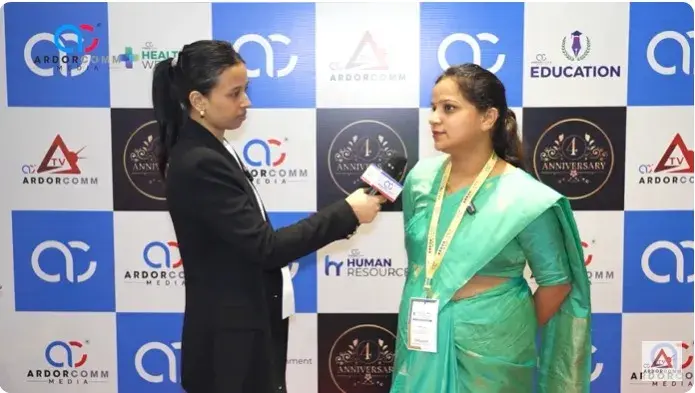
ArdorComm – Education Leadership Summit & Awards 2025 held at Seyfert Sarovar Premiere on 11th July 2025, in Dehradun, Uttarakhand 

The picturesque city of Dehradun, famously known as the ‘School Capital of India,’ played host to a landmark event that brought together the brightest minds and change-makers from the education ecosystem. On 11th July 2025, ArdorComm Media Group successfully organised the ‘Education Leadership Summit & Awards 2025’ in Dehradun, Uttarakhand, under the theme: “Empowering Uttarakhand in Digital Era: Expanding boundaries of Education, Skill and Employability.” This high-impact gathering was a testament to Uttarakhand’s evolving identity as an education hub, with major cities like Roorkee, Haridwar, Haldwani, Kashipur, and Pantnagar emerging as centres of academic excellence. The summit highlighted how education, alongside tourism and agriculture, is significantly contributing to the state’s economic and social development. A Day of Ideas, Inspiration & Impact The day-long summit featured over six high-energy panel sessions and welcomed more than 50 distinguished speakers, including government dignitaries, academic leaders, edtech innovators, industry experts, and entrepreneurs. It served as a dynamic platform for powerful discussions, forward-thinking insights, and collaborative strategies focused on preparing India’s education system for a digitally-driven and rapidly evolving future. The event witnessed enthusiastic participation from across the educational spectrum—ranging from K-12 schools to universities, engineering institutes to B-schools, preschools to edtech startups. In total, it brought together over 70 school education leaders, 100 higher education experts, 25 edtech and startup founders, 10 government officials, and 200+ delegates, making it a truly inclusive and impactful gathering. Support from Esteemed Government Leaders of Uttarakhand We are deeply honoured and grateful for the support and encouraging messages received from esteemed government leaders for the ArdorComm Education Leadership Summit & Awards 2025, Dehradun. The inspiring words from Shri Pushkar Singh Dhami, Hon’ble Chief Minister of Uttarakhand, and Dr. Dhan Singh Rawat, Hon’ble Minister of Education, Health & Cooperative, have added immense value to the summit’s vision. We also extend our heartfelt thanks to Dr. Ranjit Kumar Sinha, IAS, Secretary, Higher & Technical Education, Government of Uttarakhand, for his thoughtful message. The support of Shri Saurabh Bahuguna, Hon’ble Minister of Skill Development & Employment, further strengthened the summit’s focus on aligning education with employability and skill development. Their collective encouragement reflects the government’s strong commitment to transforming Uttarakhand into a digitally empowered, education-driven state. Industry Leaders and Keynote Speakers The Inaugural Session of the ArdorComm Education Leadership Summit & Awards 2025, Dehradun, set the tone for the day with the theme “Empowering Uttarakhand in the Digital Era: Expanding Boundaries of Education, Skill and Employability.” The session began with a warm welcome address by Kumar Chandan Anand, Founder, CEO & Group Editor of ArdorComm Media Group, who highlighted the summit’s vision of bridging education, technology, and employability. The event was graced by C. Ravi Shankar, IAS, Secretary, Skill Development & Employment Department, Government of Uttarakhand, as the Guest of Honour, who shared valuable insights on the state’s evolving skilling ecosystem. The session also featured engaging addresses by distinguished Guest Speakers – Dr. Sunil Rai, President, UPES, Dehradun, and Gagan Agrawal, Head – Academic Partnerships (North & Central India), IBM Career Education – both of whom emphasized the critical need for industry-academia collaboration and future-ready learning models to empower Uttarakhand’s youth in a tech-driven world. The first panel discussion, titled “Decoding NEP 2020: Driving India’s Education towards an Inclusive, Equitable, and Holistic Approach,” featured an esteemed panel of speakers including Prof. Manoj Kumar Panda, Director, Women Institute of Technology, Dehradun (Session Moderator); Dr. Prahlad Singh, Director, Shivalik College of Engineering, Dehradun; Prof. (Dr.) V. K. Banga, Director, Govind Ballabh Pant Institute of Engineering and Technology, Pauri Garhwal; Kritika Mansingh, Headmistress, The TonsBridge School, Dehradun; Dr. Nidhi Nijhawan, Founder-Director, Offspring International School, Delhi; and Lalit Rautela, Managing Director, Pioneers Academy Jaspur, Kashipur. The second panel discussion, titled “Collaboration, Creativity & Compassion: Redefining Learning in the Era of Disruption,” featured a distinguished group of education leaders including Dr. Dillip Kumar Panda, Headmaster, SelaQui International School, Dehradun (Session Moderator); Arvind Mahajan, Chairman & MD, Spring Dales English School, Kathua; Raman Koushal, Headmaster, Tula’s International School, Dehradun; Cdr Monika Pande, Principal, Doon Global School, Dehradun; Anurag Singh, Director, Samar Study Group of Schools, Kashipur; and Rekha Negi, Director & Owner, Lakshya Public School, Dehradun. The third panel discussion, titled “Smart Skills, Smarter Workforce: Educating for an AI-Powered & Tech-Driven World,” featured a dynamic lineup of speakers including Arti Dwivedi, Account Manager – North, Education & Government, Adobe (Session Moderator); Dr. Sunil Rai, President, UPES, Dehradun; Dr. D. B. Singh, Vice Chancellor, Haridwar University, Roorkee; Prof. (Dr.) Himanshu Aeran, Vice Chancellor, Ras Bihari Bose Subharti University, Dehradun; Prof. (Dr.) Shankar Ramamoorthy, Vice Chancellor, Jigyasa University, Dehradun; and Prof. Rajesh Bahuguna, Pro Vice Chancellor, Uttaranchal University, Dehradun. The fourth panel, titled “Lifelong Learning in the Digital Era: Building a Continuous Upskilling Culture,” brought together experts including Siddhartth Singh, Director, Meritto (Session Moderator); Prof. (Dr.) Satyendra Mittal, Pro Vice Chancellor, University of Patanjali, Haridwar; Prof. (Dr.) P.S. Rana, Pro Vice Chancellor, Bhagwant Global University Kotdwar, Pauri Garhwal; Prof. (Dr.) Bhagwan Nautiyal, Vice Chancellor, Smt. Manjira Devi University, Uttarkashi; Prof. Dr. Bodhisatva Acharya, Registrar, Maharaja Agrasen Himalayan Garhwal University, Pauri Garhwal; and Dr. Manmohan Gupta, Dean-Academics, Subharti University. The fifth panel, titled “Empowering Future Talent: Skills, Tech & Workforce Readiness in a Digital Age,” featured an expert group including Prof. (Dr.) Manish Shrivastav, Director, Quantum School of Business, Roorkee (Session Moderator); Prof. (Dr.) J. Kumar, Vice-Chancellor, Sardar Bhagwan Singh University, Dehradun; Bhupinder Singh Arora, Co-Founder & CEO, BFIT Group of Institutions & Guru Nanak College, Dehradun; Dr. Krishna Prakash Sharma, Vice President, B.S. Negi Mahila Pravidhik Prashikshan Sansthan, Dehradun; and Prof. (Dr.) Yograj Singh, Director, Shriram Institute of Management & Technology, Kashipur. Industry Speeches The Industry Speech titled “Changing Higher Education Landscape in India with AI and Quantum” was delivered by Gagan Agrawal, Head – Academic Partnerships (North & Central India), IBM Career Education, who shared valuable insights on how emerging technologies like artificial intelligence and quantum computing are transforming higher education in India. The second Industry Speech, titled “From Credentials to Careers, Powered by Blockchain & AI,”

ArdorComm – Education Leadership Summit & Awards 2025 held at Seyfert Sarovar Premiere on 11th July 2025, in Dehradun, Uttarakhand  Read More »

India May Face Over 1.6 Million Gastric Cancer Cases, Global Study Warns

A new international study published in Nature Medicine has sounded the alarm over a possible surge in gastric cancer cases, predicting that more than 15 million individuals born between 2008 and 2017 could develop the disease globally during their lifetime. India is projected to bear a significant burden, second only to China, with an estimated 1.6 million cases if current prevention efforts remain unchanged. The research, led by the International Agency for Research on Cancer (IARC), the cancer research wing of the World Health Organization, used global cancer incidence data from GLOBOCAN 2022 along with UN demographic forecasts. It found that nearly two-thirds of future gastric cancer cases will likely emerge in Asia, with India and China alone expected to contribute about 6.5 million new diagnoses. A key finding of the study highlights that 76% of these cases could be linked to Helicobacter pylori—a widespread and chronic bacterial infection of the stomach that significantly increases cancer risk. Despite being preventable and treatable, H. pylori remains a major health challenge in many countries. Gastric cancer is currently the fifth most deadly cancer worldwide. The study also points to an anticipated six-fold rise in cases across sub-Saharan Africa, where the current incidence is relatively low. Experts behind the research are urging governments to invest in large-scale preventive measures—especially in screening and treatment programs targeting H. pylori. They stress that such interventions could slash future cancer cases by as much as 75%. The researchers warn that an ageing global population, along with rising cancer rates in younger people, could undo recent progress in cancer control if swift action is not taken. The findings reinforce the urgent need for countries, particularly in Asia, to enhance public health strategies focusing on early diagnosis, education, and bacterial eradication to curb the looming threat of gastric cancer. Source: CNBCTV18

India May Face Over 1.6 Million Gastric Cancer Cases, Global Study Warns Read More »

YouTube to Tighten Monetization Rules Amid Rising Concerns Over AI-Generated ‘Slop’ Content

YouTube is set to roll out stricter guidelines aimed at curbing monetization of inauthentic, repetitive, or mass-produced videos — a move largely prompted by the surge in AI-generated content flooding the platform. Effective July 15, YouTube will update its YouTube Partner Program (YPP) monetization policies, offering clearer definitions of what qualifies as “authentic” content and what doesn’t. While the precise wording of the policy update has yet to be published, YouTube’s Help Center now emphasizes that the platform has always required creators to post original content to be eligible for earnings. The upcoming changes, according to YouTube’s Head of Editorial & Creator Liaison Rene Ritchie, are intended to clarify rather than overhaul policy. In a recent video message, Ritchie reassured creators that widely accepted formats such as reaction videos or content that includes reused clips won’t be affected. He called the update a “minor” revision to existing rules, specifically targeting mass-produced, low-value content that viewers often flag as spam. However, the broader context paints a more urgent picture. As generative AI tools become more accessible, platforms like YouTube have seen an influx of low-effort, AI-generated videos. These range from automated voiceovers layered on stock images or video snippets, to full AI-generated true crime series and even fabricated news updates that have gained millions of views. Some AI-based music channels boast massive followings, despite questions about originality and authenticity. One notable example includes an AI-generated crime series that went viral, later revealed by 404 Media to be entirely machine-made. Even YouTube CEO Neal Mohan was recently featured in a deepfake scam, underlining how pervasive — and potentially harmful — this technology has become. Though YouTube insists the July update is a clarification rather than a policy shift, the underlying motive is clear: prevent the platform from being overrun by AI-created “slop” that could undermine its integrity and trust with viewers. By implementing these revised guidelines, YouTube aims to draw a firm line against inauthentic content, making it easier to deny monetization and, if necessary, remove offending creators from the Partner Program altogether. As AI tools continue to evolve, platforms like YouTube are being forced to adapt quickly — ensuring that content quality and originality remain at the core of their ecosystems. Source: TechCrunch

YouTube to Tighten Monetization Rules Amid Rising Concerns Over AI-Generated ‘Slop’ Content Read More »

NCERT and Canva Partner to Offer Free Digital Certification Courses for Indian Educators

In a move aimed at empowering educators with 21st-century teaching skills, the National Council of Educational Research and Training (NCERT) has entered into a strategic partnership with Canva, a global visual communication platform. The collaboration will roll out three self-paced, online certification courses for school teachers across India—completely free of charge. These courses, designed to enhance digital fluency, creative instruction, and collaborative teaching practices, will be hosted on DIKSHA, the Ministry of Education’s flagship digital learning platform. To ensure inclusivity, they will also be televised via PM eVidya’s DTH channels, making the training accessible even in areas with limited or no internet access. The programme will be offered in multiple Indian languages to promote nationwide participation. Teachers participating in the training will explore Canva for Education’s features to create interactive lesson plans, visually engaging presentations, infographics, and a variety of educational content. The programme also includes exposure to collaborative pedagogies and artificial intelligence (AI) tools that can elevate classroom learning. Successful participants will receive joint certification from NCERT and Canva. As per the MoU, Canva will provide complimentary access to its educational suite and contribute to developing customized instructional resources. Meanwhile, NCERT will ensure the content aligns with India’s national curriculum framework and is tailored for regional relevance. This initiative supports the goals outlined in the National Education Policy (NEP) 2020, particularly around visual learning, critical thinking, and design-centric pedagogy. Teachers will also receive guidance on leveraging AI tools to boost classroom engagement and optimize lesson delivery. With over 500 integrated educational tools and apps—including games, translation aids, worksheets, and subject-specific infographics—Canva for Education is positioned as a comprehensive platform for modern teaching. Its AI-powered features simplify content creation, enabling teachers to plan and execute lessons more efficiently. Canva’s statement highlighted that its education arm saw remarkable growth in 2024, onboarding over 25 million students and teachers globally, with its total education community surpassing 100 million users. Teacher usage on the platform surged by 50%, while student engagement more than doubled, fueled by tools like Dream Lab that empower educators to create customized visual content. This collaboration marks a significant step towards digital empowerment in Indian classrooms, equipping teachers with the tools and training to thrive in a technology-integrated learning environment. Source: Indian Express

NCERT and Canva Partner to Offer Free Digital Certification Courses for Indian Educators Read More »

NITI Aayog Unveils 2023–24 Edition of North Eastern Region District SDG Index

NITI Aayog, in collaboration with the Ministry of Development of North Eastern Region (MoDoNER) and technical partner UNDP, has released the second edition of the North Eastern Region (NER) District Sustainable Development Goals (SDG) Index for 2023–24. This comprehensive report evaluates the progress of 121 districts across all eight northeastern states in achieving the United Nations’ Sustainable Development Goals. This updated index builds on the foundation set by the inaugural edition published in August 2021. It offers a data-centric approach to monitoring district-level performance across economic, social, and environmental dimensions. The tool is intended to guide policymakers in implementing targeted, evidence-based interventions to drive sustainable growth. The report was officially launched by NITI Aayog Vice Chairman Suman Bery, CEO B.V.R. Subrahmanyam, MoDoNER Secretary Chanchal Kumar, and UNDP India Resident Representative Dr. Angela Lusigi. Among the districts, Hnahthial in Mizoram ranked highest with a composite score of 81.43, while Longding in Arunachal Pradesh came in at the bottom with a score of 58.71. Notably, all districts in Mizoram, Sikkim, and Tripura qualified as “Front Runners” (with scores ranging from 65 to 99). No districts fell into the “Achiever” category (a perfect score of 100) or the “Aspirant” category (scores below 50). Sikkim stood out for its uniformity in development, with only a 5.5-point variation between its highest and lowest scoring districts—indicating balanced growth. Tripura also demonstrated stable intra-state performance. During the launch event, Vice Chairman Bery emphasized the strategic importance of achieving the SDGs by 2030 as a stepping stone toward India’s long-term vision of Viksit Bharat @2047. CEO Subrahmanyam referred to the Northeast as the “Ashta Lakshmi” of India, underlining its developmental significance. MoDoNER Secretary Chanchal Kumar noted the index’s usefulness in identifying developmental shortfalls and guiding targeted action, while UNDP’s Dr. Lusigi underscored the urgency of converting data insights into tangible outcomes. The NER District SDG Index 2023–24 serves as a vital policy instrument for promoting inclusive, region-specific development. It empowers administrators and stakeholders to make informed decisions, allocate resources strategically, and accelerate sustainable progress in India’s northeastern frontier. Source: DD News

NITI Aayog Unveils 2023–24 Edition of North Eastern Region District SDG Index Read More »

Planned C-Sections May Increase Childhood Leukaemia Risk, Study Finds

A recent study from Sweden suggests that babies delivered through planned caesarean sections may face a higher risk of developing leukaemia—specifically acute lymphoblastic leukaemia (ALL)—compared to those born via emergency C-sections or vaginal delivery. The study, conducted by researchers at Karolinska Institutet and published in The International Journal of Cancer, analysed health data from nearly 2.5 million children born between 1982–1989 and 1999–2015, using Sweden’s Medical Birth Register. Of the total births, around 375,000 (15.5%) were delivered through C-sections. Among these, 1,495 children were later diagnosed with leukaemia. The researchers found that children born via C-section had a 7% higher risk of developing acute lymphoblastic leukaemia compared to those born vaginally. Notably, when comparing types of C-sections, those delivered by planned (elective) C-section faced a 21% increased risk of ALL than those born through emergency C-sections. One possible explanation, the study suggests, lies in the differing levels of exposure to beneficial bacteria and birth stress. Emergency C-sections typically occur after the onset of labour, and if the amniotic sac has ruptured, the baby is partially exposed to vaginal microbes and the physical stress of labour—factors that might positively influence immune development. Planned C-sections, on the other hand, are often scheduled before labour begins, limiting such exposure. Lead researcher Christina-Evmorfia Kampitsi emphasized that the findings shouldn’t cause undue concern for mothers who require medically necessary C-sections. However, she noted that the results support existing research indicating that planned C-sections may also be linked to increased risks of asthma, allergies, and type 1 diabetes in children. “These insights strengthen the case for carefully evaluating the necessity of non-medically indicated planned caesarean deliveries,” Kampitsi said. The study contributes to a growing body of evidence exploring how early-life exposures—especially those related to birth methods—may influence long-term health outcomes, including the development of childhood cancers such as acute lymphoblastic leukaemia. Source: PTI

Planned C-Sections May Increase Childhood Leukaemia Risk, Study Finds Read More »