ArdorComm Media Group

Saturday, March 14, 2026 11:06 PM

Education Community

Health Minister Mansukh Mandaviya suggests a medical education model for India

The Union Health Minister, Mansukh Mandaviya, urged everyone to develop an education system modelled on India on Thursday. While addressing with the heads of 150 private medical schools around the country, he remarked, “Let us create the India model of medical education that defines paradigm of accessible, affordable, credible and quality education.” The minister spent around three hours listening to the comments, recommendations, insights, and questions from representatives of these medical institutions, the health ministry said in a statement. Representatives discussed and offered proposals for NEET PG, NeXT, admissions, faculty retirement age, journal articles, bonds for rural posting, district residency programme, etc. during the interaction. We can only create an ecosystem with “Samvaad” where the government and other stakeholders in medical education advance in a setting of consent and consultation. One of the key pillars in this is a robust medical education sector, he noted. Mandaviya urged the private medical institutions to move forward in a spirit of partnership in order to jointly develop a robust and energising medical education industry in the country. Let’s develop the “India Model” of medical education, he remarked, which establishes a standard for easily accessible, relatively affordable, reliable, and high-quality medical education. He made mention of the recent “Heal in India” and “Heal by India” initiatives, saying that “India envisions to lead in the global arena on the strength of its medical sector not only to meet the domestic requirements but also meet the global demand of highly skilled and trained manpower, and quality medical and healthcare and wellness services.” The minister expressed concern about medical institutions that had become “merely businesses to the exclusion of “sewa bhaav” deeply embedded in the Indian ethos,” according to the official statement.

Health Minister Mansukh Mandaviya suggests a medical education model for India Read More »

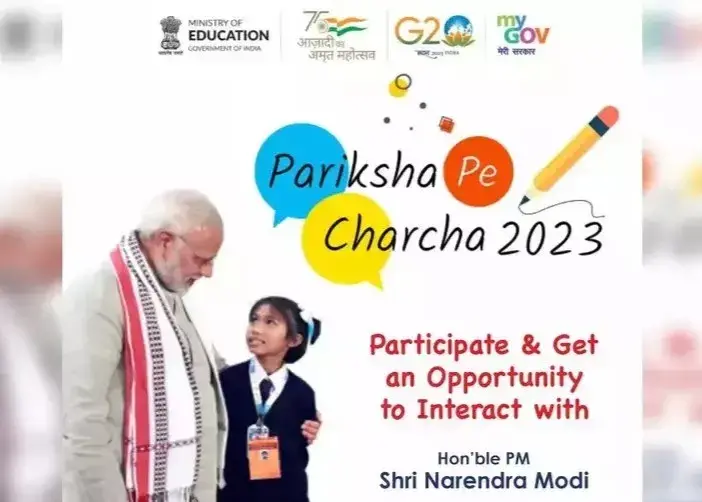
PM Modi’s Pariksha Pe Charcha program to be held on January 27

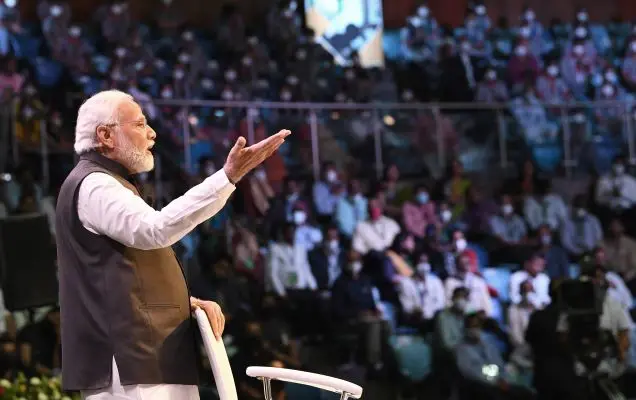
The Ministry of Education said on Tuesday that the annual Pariksha Pe Charcha event, during which Prime Minister Narendra Modi speaks with students about how to manage exam stress, will take place on January 27 at Delhi’s Talkatora Stadium. The event was first held in 2018, and this will be its sixth edition. Due to the pandemic, Pariksha Pe Charcha was conducted online in a town hall format in 2021. A select number of students, teachers, and parents get to interact with the PM live in addition to it being streamed live through television and social media platforms. They are selected via an online creative writing competition, the topics of which are shared to schools around the nation. This time, “know your freedom fighters,” “our culture is our pride,” “my startup dream,” “education for skilling,” and “future educational challenges” have been picked as the themes. In comparison to PPC-2022, which had around 15.7 lakh participants, PPC-2023 has about 38.80 lakh participants (students- 31.24 lakh, teachers – 5.60 lakh, parents – 1.95 lakh). Parents from 50 nations, teachers from 51 countries, and students from over 150 countries have enrolled for PPC-2023, according to a statement from the ministry.

PM Modi’s Pariksha Pe Charcha program to be held on January 27 Read More »

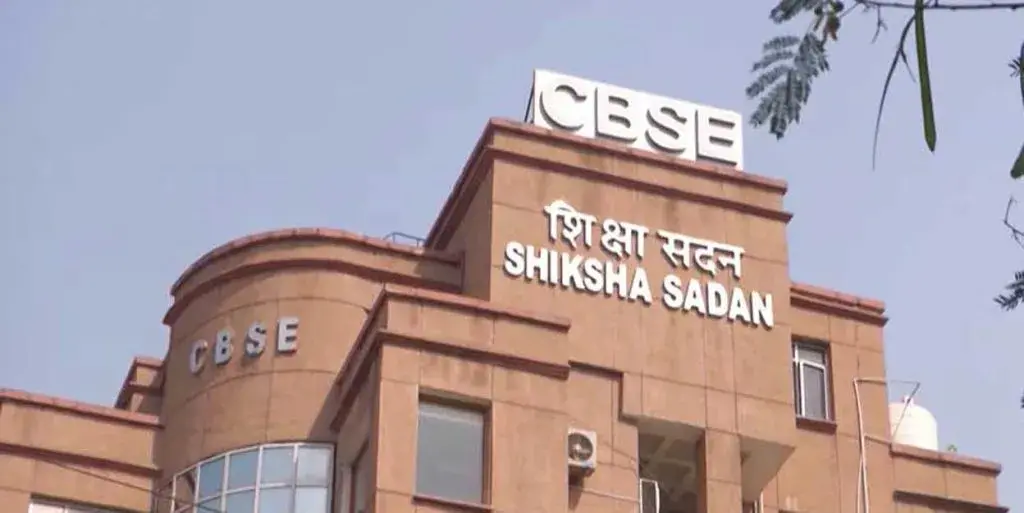
Practical exams for the CBSE Board Examination 2023 began today

Exams for classes 10 and 12 have started today at the Central Board of Secondary Education (CBSE). The exams are scheduled to end on February 14. In nearly 28000 schools nationwide and in 26 other countries, these exams are being conducted. The board will designate external examiner to conduct the class 12 exam. It is possible for one examiner to be assigned to more than one school. An internal invigilator designated by the school will be present with class 10 students. The CBSE has advised schools to schedule their practicals appropriately because the JEE (Main) January session would also take place during this time. For the practical exams, the CBSE has not released a schedule. With the needs of the students and the time slots available with the external examiner in mind, schools are free to set their own schedule for practical exams. The school has been given the go-ahead to communicate with the external examiners and adjust the schedule if necessary. The schools must promptly release all external examiners so that they can finish their other assignments. The schools must promptly release all external examiners so that they can finish their other assignments. Students should make sure they are present for practical exams because they won’t be rescheduled, according to a notification from CBSE. The practical marks are simultaneously posted on “Pariksha Sangam.” The schedule for the Class X and XII final exams for 2023 was issued on Thursday by the Central Board of Secondary Education (CBSE). The dates for the 2023 CBSE Class X and XII board exams are February 15 to April 5. The exam for Class X will end on March 21. The board announced the dates for the final exams and noted that enough time had been given between each subject and that other factors, such as competitive entrance exams, had also been considered in selecting the dates. The examination will begin at 10.30 am. The date sheets are available for download on the CBSE’s official website at cbse.gov.in and cbse.nic.in for students taking the board exam in 2023. According to reports, more than 34 lakh students have enrolled for the CBSE Class X and XII board exams this time.

Practical exams for the CBSE Board Examination 2023 began today Read More »

Ministry of Education invites you to take part in a digital survey for the National Curriculum Framework

The Digital Survey for National Curriculum Framework (DiSaNC) has received a call for participation from the Ministry of Education. The development of the curriculum framework has been suggested by the National Education Policy (NEP) 2020 in four areas: school education, early childhood care and education (ECCE), teacher education, and adult education. The Education Ministry urged the public to take part and provide ideas to the NCF survey in a social media post that read: “The Digital Survey for National Curriculum (DiSaNC) aims to collect suggestions and feedback from the public at large. This will help in the formulation of National Curriculum Framework (NCF).” It added, “The DiSaNC Survey is available in 23 languages.” What should be the focus of learning for children between the ages of three and eight? What subjects should be taught to children in Classes three to five? What subject areas do children need to study in Classes six to eight? These and additional questions are included in the DiSaNC survey. The Digital Survey for National Curriculum includes questions about what society expects from school education, what values children need to inculcate during their schooling, and what language a child should study in school starting in Class 1. The survey asks for suggestions on how to improve the dignity of teachers and what role they should play in the overall development of students.

Ministry of Education invites you to take part in a digital survey for the National Curriculum Framework Read More »

Odisha’s hockey history will be included in NCERT textbooks, according to the education minister

According to Union Education Minister Dharmendra Pradhan, the NCERT textbooks will cover Odisha’s history with hockey and its two times serving as host to the Hockey World Cup. After attending an all-party meeting, Pradhan spoke to the media and urged that the Men’s Hockey World Cup, which will be held in Odisha from January 13–29, be used to promote the art, heritage, and traditions of that state at the greatest possible level. The tournament will take place in Birsa Munda Stadium in Rourkela and Bhubaneswar’s Kalinga Stadium. The state government’s decision to invite all schools and institutions in the nation to the Hockey World Cup was also praised by the minister. By 2036, when Odisha celebrates its 100th foundation day, “we should work together to ensure that as many as 100 Olympians emerge from Odisha,” Pradhan said on Thursday. “This time, 7 Odisha players went to play in the Olympics,” he remarked. There’s a chance that India may host the Olympics in 2036, the year the state celebrates its 100th foundation day, Pradhan added. The Men’s Hockey World Cup will be held for the fifteenth time this year. The mega tournament is being hosted by Hockey India for the second time; the previous time was in 2018 and was won by Belgium. Source: PTI

Odisha’s hockey history will be included in NCERT textbooks, according to the education minister Read More »

MP government to fund engineering, medical students’ college fees if they achieve 75% in Class 12: CM

Shivraj Singh Chouhan, the chief minister of Madhya Pradesh, has announced that the state government will now reward class 12 students with financial rewards in their undergraduate degree if they score more than 75%. According to the state chief minister’s announcement, the state government would now cover the engineering and/or medical college fees of students who get more than 75% in their class 12 exams. “I already give laptops to students who scored more than 75% in their 12th standard exams. Now, I will also bear the fees of medical college, engineering college, IIT and law college,” he was quoted by ANI. This scholarship/financial reward announcement comes just a few days after the National Testing Agency (NTA) reinstated the class 12 performance criterion of 75% for qualifying for JEE Main 2023. Admissions to BE / BTech / BArch / BPlanning courses at NITs, IIITs, and CFTIs “will be based on All India Rank subject to the condition that the candidate should have secured at least 75% marks in the Class 12 examination conducted by the respective Boards,” according to an NTA brochure. According to ANI, the CM also said that the state government has planned to build playgrounds in 110 villages. His government has also created 10 lakh new government jobs, which he says are being filled.

MP government to fund engineering, medical students’ college fees if they achieve 75% in Class 12: CM Read More »

ISRO and MSDE collaborate on technical training at National Skill Training Institutes

In Bangalore, Mumbai, and Trivandrum, the Ministry of Skill Development and Entrepreneurship (MSDE) has collaborated with the ISRO Technical Training Programme. The training programme was officially launched on 15th December 2022 at the National Skill Training Institute (NSTI) in Bengaluru. This programme intends to provide a formal framework for short-term courses to provide training to ISRO technical employees with the goal of boosting their capacity and developing their skills in accordance with the country’s space industry’s newest trends and requirements. Over the next five years, more than 4000 ISRO technical professionals will be trained in the programme at different NSTIs located across India. The course ‘Industrial Hydraulic and Controls’ on hydraulics will begin the training at NSTI Bengaluru. This course covers fluid power systems, the difference between hydraulics and pneumatics, basic hydraulic laws, hydraulic system components, hydraulic symbols, flow control valve, pressure regulation, pressure-controlled valves, hydraulic accumulators, and practical demonstrations. The programme will begin with ‘Industrial Automation’ at NST Mumbai and ‘Software Development’ at NSTI Trivandrum. The course will last five days and will train 20 trainees in each NSTI.

ISRO and MSDE collaborate on technical training at National Skill Training Institutes Read More »

Govt allocates Rs 1037.90 crore to New India Literacy Programme for next five years

The government has allocated a total of Rs 1037.90 crore for the five-year New India Literacy Programme (NILP). The centrally sponsored initiative, which will be implemented over a five-year period from 2022-23 to 2026-27, was announced in February of this year. The Foundational Literacy and Numeracy component of the programme intends to reach 5 crore learners over the course of five years. “The total financial outlay of NILP for five years (FYs 2022-23 to 2026-27) is Rs 1037.90 crore, out of which Rs 700 crore is Central share and Rs 337.90 crore is state share. The Central and state shares are in the ratio of 60:40 for all states other than North Eastern Region (NER) and Himalayan states where the sharing pattern between the Centre and the State is in the ratio of 90:10,” said Annpurna Devi, minister of state for education, in a written reply to the Lok Sabha. According to the education ministry, the major challenge that the government is currently facing in implementing the NILP scheme is the opening and mapping of all bank accounts of Single Nodal Agencies (SNAs) and Implementing Agencies (IAs) in all states with Public Financial Management System (PFMS). The funds will be transferred via PFMS and state treasuries. As a result, it is a need for the release of funds under the updated procedure standards of the finance ministry. The difficulty comes because this is the first year of implementation, according to Annpurna Devi. According to the ministry, all states and UTs have been made aware of the initiative through a communication dated March 11, 2022, along with a plan for its implementation. Because the NILP began in the current fiscal year 2022-23, funds allocated or used for the programme during the previous three years are no longer applicable, it stated. During the current financial year, 2022-23, states and UTs would get more than Rs 208 crore (Rs 208.96,42,893) for the New India Literacy Programme. The government stated that the scheme intends to educate non-literates above the age of 15 with foundational literacy, numeracy, and critical life skills in order to give continuing education opportunities. The ministry replaced the term “adult education” with “education for all” in February because the former did not include anyone above the age of 15.

Govt allocates Rs 1037.90 crore to New India Literacy Programme for next five years Read More »

No shortage of teachers, principals in KVs across country: Education Ministry

The Lok Sabha was informed on Monday that there is no lack of principals and teachers in Kendriya Vidyalayas across the country. According to the Ministry of Education, the Kendriya Vidyalaya Sangathan (KVS), an autonomous body that operates KVs across the country, has carried out a rationalisation effort to ensure the availability of an adequate number of regular teachers in the school. Annapurna Devi, Union Minister of State for Education, provided the information in a written reply in Lok Sabha. “There is no such shortage of principals and teachers as teachers are regularly engaged on contractual basis pending regular recruitment, for which advertisement has been issued recently. Also, KVS has carried out a rationalisation exercise for ensuring availability of adequate number of regular teachers in the school,” she said. Responding to a question about whether there was no scheme for career progression or a transfer policy, which resulted in many employees spending five to seven years at distant locations and complaining of “policy paralysis,” Devi stated that there are notified schemes for career progression and transfer guidelines for all categories of employees in KVS. “There is no policy paralysis and KVS has been actively making special efforts to address learning loss arising from the pandemic. Such learning recovery measures, depending on the requirements of the students include remedial measures taken to address the problem and difficult areas of each student, extra classes, assigning expert teachers for personalised attention, parental engagement, use of technology and specific instructional material and worksheet and workbooks to address the specific learning requirements of students,” Devi stated. The Minister also denied that some principals were bitter and frustrated, and alleged that there was “employee unrest” because some of them were forced to work double shifts.  “No such matter has been reported,” she stated. Source: PTI

No shortage of teachers, principals in KVs across country: Education Ministry Read More »

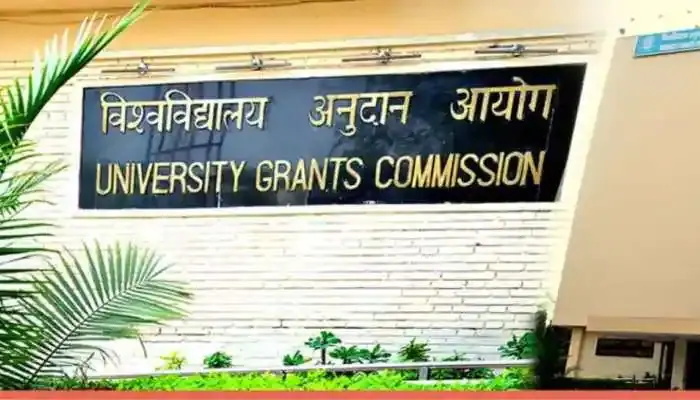
UGC new draft guidelines: UG ‘honours’ degree only after four years, not three

According to the draft guidelines issued by the University Grants Commission (UGC), students would be able to obtain an undergraduate “honours” degree after completing four years rather than three. On Monday, the draft ‘curriculum and credit framework for four-year undergraduate programmes’ prepared in compliance with National Education Policy is expected to be notified. “Students will be able to get a UG degree in three years on completion of 120 credits (measured through the number of academic hours) and a UG honours degree in four years on completion of 160 credits. “If they wish to go for a research specialisation, they will have to undertake a research project in their four-year course. This will get them an Honours degree with research specialisation,” the draft read. “Students who have already enrolled and are pursuing a three-year UG programme as per the existing Choice Based Credit System (CBCS) are eligible to pursue a four-year undergraduate programme. The university may provide bridge courses (including online) to enable them to transition to the extended programme,” it noted. Students currently receive an honours degree after completing three years of undergraduate studies. The Four Year Undergraduate Programme (FYUP) also provides students with several entry and exit points. If they leave before three years, they will be allowed to return within three years of their leave and must complete their degree within a seven-year term. According to the document, the FYUP curriculum should include major and minor stream courses, courses from other disciplines, language courses, skill courses, and a set of courses on environmental education, understanding India, digital and technical solutions, health and wellness, yoga education, and sports and fitness. Students can choose to continue with their present major or change their major at the end of the second semester. Students will also have the option of pursuing a UG with a single or double major. “A student has to secure a minimum of 50 per cent credits from the major discipline for the 3-year/4-year UG degree to be awarded a single major,” the document stated. Source: PTI

UGC new draft guidelines: UG ‘honours’ degree only after four years, not three Read More »