ArdorComm Media Group

Tuesday, April 14, 2026 5:56 PM

community

Chitkara University Researchers Develop a Microwave-Assisted Sustainable Technology for High-Purity Silica Gel Production from Rice Straw
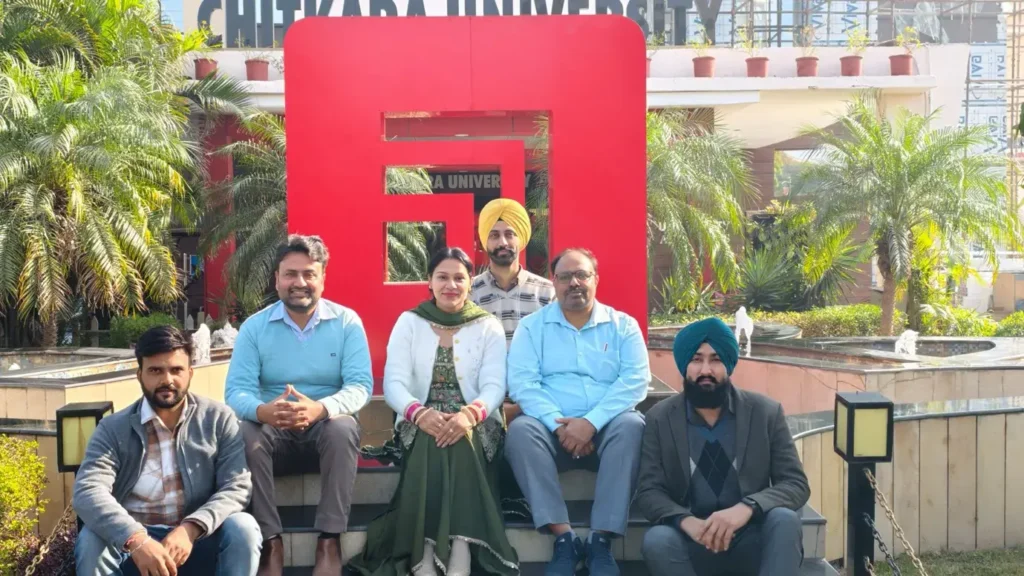
Chitkara University Research and Innovation Network (CURIN) at Chitkara University has developed an innovative, sustainable, and energy-efficient microwave-assisted technology for synthesizing high-purity silica gel from rice straw, a high-ash agricultural residue that has long posed environmental and economic challenges. The process is supported by an indigenously developed semi-automated system and follows a zero-waste, circular-economy approach, offering a viable alternative to conventional silica extraction techniques. Rice straw and similar crop residues are produced in large quantities across northern India and other agrarian regions. Owing to their high silica content, strong lignin binding, low bulk density, and high ash fraction, these residues are difficult to utilize effectively. They are unsuitable for animal feed, problematic for energy generation due to silica deposition on boiler surfaces, and are therefore often disposed of through open-field burning. This practice contributes significantly to air pollution, greenhouse gas emissions, soil degradation, and public health concerns. Conventional methods of extracting silica from such biomass are typically slow, energy-intensive, and cost-prohibitive, limiting their practical application. To address these challenges, the research team developed a microwave-assisted chemical extraction and synthesis route that utilizes both the thermal and non-thermal effects of microwave energy to catalyze chemical reactions. This approach significantly reduces processing time, enhances mass transfer, and improves overall energy efficiency compared to traditional heating methods. The patented process enables efficient extraction of silica from rice straw ash and its subsequent conversion into high-purity silica gel, while being compatible with semi-automated operation and decentralized deployment. The synthesized silica gel exhibits excellent material characteristics and is suitable for a wide range of applications, including use as a desiccant, catalyst support, humidity control medium, and chromatographic stationary phase. The process has been rigorously validated through scientific and technical studies, including Fourier Transform Infrared Spectroscopy for functional group analysis, proximate analysis for biomass characterization, spectroscopic and microscopic techniques for structural and morphological assessment, and thermogravimetric and physical performance analyses to evaluate thermal stability and material integrity. These studies confirm the chemical purity, structural consistency, and functional reliability of the produced silica gel. Preliminary assessments indicate strong potential for economic viability and large-scale commercialization. Detailed economic feasibility studies are currently underway to optimize process parameters, determine the most suitable scale of operation, and finalize the commercial design of the technology. In parallel, life-cycle assessment studies are planned to evaluate environmental impacts and explore opportunities for carbon credit generation. The technology is expected to transform the crop-waste market by creating value from agricultural residues, enabling micro-entrepreneurship in rural areas, strengthening local supply chains, and reducing dependence on imported silica products. This innovation contributes significantly to global sustainable development by supporting affordable and clean energy through efficient biomass utilization, promoting decent work and economic growth via rural entrepreneurship, advancing industry, innovation, and infrastructure through indigenous and scalable technology, and fostering sustainable cities and communities by reducing air pollution from crop residue burning. It further encourages responsible consumption and production through a zero-waste, waste-to-wealth model, strengthens climate action by lowering greenhouse gas emissions and enabling carbon credit pathways, and supports life on land by reducing soil degradation and land pollution associated with improper biomass disposal. With continued efforts toward scale-up, commercialization, and policy integration, this microwave-assisted silica gel synthesis technology represents a significant advancement in sustainable materials research and agricultural waste valorization. The innovation reinforces Chitkara University’s commitment to impactful research, environmental stewardship, and inclusive economic development, positioning the institution as a key contributor to national and global sustainability initiatives. (Disclaimer: This report is generated from PRO services. ‘ArdorComm Media’ holds no responsibility for its content.)

Chitkara University Researchers Develop a Microwave-Assisted Sustainable Technology for High-Purity Silica Gel Production from Rice Straw Read More »

India Adds Over 77,000 Medical Seats in Six Years to Strengthen Healthcare Workforce

India has significantly expanded its medical education capacity over the past six years, adding 48,563 undergraduate (MBBS) seats and 29,080 postgraduate (MD/MS) seats between the 2020–21 and 2025–26 academic years, the Ministry of Health and Family Welfare informed the Rajya Sabha. In a written response to an unstarred question, Minister of State for Health and Family Welfare Anupriya Patel said the expansion was carried out based on recommendations from the National Medical Commission (NMC), with a focus on addressing doctor shortages, particularly in underserved and remote regions. Data presented in Parliament shows a consistent year-on-year rise in MBBS seats, beginning with 2,963 additions in 2020–21. This was followed by 8,790 seats in 2021–22, 7,398 in 2022–23, 9,652 in 2023–24, and 8,641 in 2024–25. The largest annual increase came in 2025–26, with 11,119 new MBBS seats, taking the six-year total to 48,563. Postgraduate medical education also witnessed steady growth. PG seats increased by 4,983 in 2020–21 and 4,705 in 2021–22, before adding 2,874 seats in 2022–23. The momentum picked up again with 4,713 seats in 2023–24 and 4,186 in 2024–25. The highest single-year rise of 7,619 PG seats was recorded in 2025–26, bringing the cumulative increase to 29,080 seats. In addition, the Centre has approved the creation of 10,023 more medical seats under centrally sponsored schemes in government medical colleges between 2025–26 and 2028–29, further boosting capacity. The ministry said the expanded intake has contributed to improving the doctor-to-population ratio across several states, including Rajasthan, while also making medical education more accessible to Indian students and reducing the need to study abroad.   To address concerns over quality, the government noted that the NMC has implemented robust regulatory measures, such as the Minimum Standards Requirements, Graduate Medical Education Regulations 2023, Maintenance of Standards of Medical Education Regulations 2023, and the Competency-Based Medical Education Curriculum Guidelines 2024, to ensure academic and clinical standards are maintained despite rapid expansion. Source: Indian Express  

India Adds Over 77,000 Medical Seats in Six Years to Strengthen Healthcare Workforce Read More »

Nestlé India Names Nitu Bhushan as New Head of Human Resources

Nestlé India has announced the appointment of Nitu Bhushan as its new Head of Human Resources, effective March 2, 2026. The decision was disclosed in a regulatory filing to the BSE dated December 10. Bhushan joins from Pernod Ricard, where she served as Chief Human Resources Officer. At 47, Bhushan brings more than 22 years of cross-industry HR experience, having worked across FMCG, pharmaceuticals, banking, and technology sectors. She holds a Master’s degree in Personnel Management and a Bachelor’s degree in Engineering (Electronics & Telecommunication). Over the course of her career, she has held senior HR roles at organisations such as Pernod Ricard India, Accenture, Asian Paints, HSBC Bank, Mondelez International, and Abbott. Bhushan will succeed Anurag Patnaik, who has decided to step down from the company effective December 31, 2025. Patnaik, a Nestlé India veteran of over two decades, was appointed Head of HR in February 2021 after joining the company as a management trainee in 2005. Her appointment comes amid a broader leadership transition at Nestlé India, with several senior-level changes planned over the next 15 months across finance, technical, and legal functions. Recently, the company announced that Chief Financial Officer Svetlana Boldina will relinquish her role on January 31, 2026, to take up a new assignment within a Nestlé group entity. Her successor is yet to be named. In the technical function, Executive Director Satish Srinivasan is set to retire on May 31, 2026. He will be succeeded by Jagdeep Singh Marahar as Whole-Time Director, effective June 1, 2026, who will also take charge as Head of Technical. Marahar, currently Managing Director of Nestlé R&D Centre India, has nearly three decades of experience with the company and holds advanced qualifications in food technology and agriculture. The legal and strategy verticals are also witnessing leadership exits. Venkateswaran T.S., General Counsel and Head of Legal & Compliance, will retire after more than 30 years in corporate legal leadership, while Sanjay Bahadur, Executive Vice President and Head of Group Strategy and Business Development, retired in November. Nestlé India said all proposed leadership changes will be placed before the Board of Directors for approval, based on recommendations from the Nomination and Remuneration Committee. The company has outlined extended transition timelines to ensure smooth succession and business continuity. Industry analysts view these changes as part of a strategic realignment as the company navigates evolving market conditions, regulatory pressures, and digital transformation in the FMCG sector. The leadership reshuffle also follows Nestlé SA’s recent announcement of a global restructuring plan that includes cutting 16,000 jobs over two years under its new CEO, Philipp Navratil, to sharpen focus on higher-margin products. Source: Financial Times

Nestlé India Names Nitu Bhushan as New Head of Human Resources Read More »

DGCA’s Tariff Monitoring Unit to be reinforced to curb high airfares, government says

The Union government has announced plans to further strengthen the Tariff Monitoring Unit under the Directorate General of Civil Aviation (DGCA) to keep a close watch on airfares, Civil Aviation Minister Ram Mohan Naidu informed the Rajya Sabha. Responding to supplementary questions during Question Hour, the Minister said that fare monitoring has been expanded beyond domestic routes and now includes international sectors as well. He added that the Ministry intervenes whenever there are indications of a sharp or unreasonable rise in ticket prices. Referring to the recent IndiGo disruption that led to widespread flight cancellations, Mr. Naidu said the government stepped in to cap fares to ensure prices remained reasonable and within reach of passengers. He also highlighted that passengers have been empowered through a tariff monitoring feature on the Air Sewa portal. If travellers believe fares are excessively high, they can upload screenshots of ticket prices on the portal, following which the Ministry will take up the matter with the concerned airline. The Minister noted that airfare surges are largely a result of the deregulated nature of the aviation sector, where prices tend to increase when demand significantly outstrips supply. Source: newsonair

DGCA’s Tariff Monitoring Unit to be reinforced to curb high airfares, government says Read More »

BCCI still not a national sports federation, Mandaviya tells Lok Sabha

The Board of Control for Cricket in India (BCCI) is not recognised as a National Sports Federation (NSF), Union Sports Minister Mansukh Mandaviya informed the Lok Sabha on Monday, reaffirming a long-standing position that is likely to change after the National Sports Governance Act is fully implemented next year. Responding to a question from Trinamool Congress MP Mala Roy, who sought clarity on whether the government plans to step in to oversee major sports bodies such as the BCCI and the financially strained All India Football Federation (AIFF), Mandaviya said NSFs are autonomous, voluntary organisations expected to adhere to sound governance practices. He clarified that the BCCI has so far remained outside the NSF framework because it does not depend on government funding. However, once the new law comes into force, the BCCI will be required to register as an NSF, as cricket has been included in the Olympics and is scheduled to feature in the 2028 Los Angeles Games in the T20 format. Passed in August, the National Sports Governance Act provides for the creation of a National Sports Board (NSB), which will introduce stricter accountability norms. Under the new system, all NSFs must secure NSB recognition to be eligible for central government funding. Addressing concerns related to transparency, Mandaviya noted that the government has eased provisions related to the Right to Information (RTI) Act. Only sports bodies that receive government grants or assistance will fall under the RTI framework, offering relief to the BCCI, which has consistently opposed RTI coverage. The minister also told the House that NSFs receiving annual grants exceeding ₹1 crore are subject to audits by the Comptroller and Auditor General (CAG) of India. Source: PTI

BCCI still not a national sports federation, Mandaviya tells Lok Sabha Read More »

Indo-German Research Finds Strong Link Between Gut Imbalance and Memory Decline

A joint Indo-German research team has uncovered a clear biological pathway connecting imbalances in gut bacteria to memory loss, learning difficulties, and cognitive decline, according to a statement released by Cochin University of Science and Technology (CUSAT). The findings, published in the latest edition of the peer-reviewed journal BMC Biology, show that disturbances in the gut microbiome—often caused by prolonged antibiotic use or poor dietary habits—can trigger systemic inflammation that ultimately disrupts brain circuits responsible for memory and cognition. The study was conducted under a collaborative programme supported by India’s Department of Science and Technology (DST) and the German Academic Exchange Service (DAAD). The research team was led by Baby Chakrapani PS of CUSAT’s Centre of Excellence in Neurodegeneration and Brain Health (CENABH) and Centre for Neuroscience, along with Prof Martin Korte from the Technical University of Braunschweig and the Helmholtz Centre for Infection Research (HZI), Germany. The work formed part of doctoral research by scholar Krishnapriya under Chakrapani’s supervision. Researchers focused on antibiotic-induced gut dysbiosis, a condition marked by an imbalance in gut microbes, and examined how it affects bodily systems beyond the digestive tract. They found that disrupted gut bacteria initiate inflammatory and oxidative processes that weaken the gut barrier. These signals then travel to the brain, altering its immune environment. According to Chakrapani, the inflammation originating in the gut does not remain localised. Instead, it influences the brain’s immune cells, known as microglia. These cells normally help maintain brain health by clearing debris and selectively pruning weak synapses. However, under prolonged inflammatory stress linked to gut dysbiosis, microglia become overactive. Prof Korte explained that this overactivation causes microglia to eliminate not just weak synaptic connections but also healthy ones that are essential for learning and memory. This excessive synaptic pruning was associated with measurable impairments in memory and learning tasks. The researchers noted that gut dysbiosis is becoming increasingly common due to widespread antibiotic use, highly processed diets, chronic stress, and inadequate sleep—all of which reduce microbial diversity in the gut. Emphasising the broader implications of the findings, Korte said gut health should not be viewed solely in terms of digestion, as it also plays a crucial role in maintaining cognitive health. CUSAT said the study opens up potential intervention strategies, including careful antibiotic use, targeted probiotics, and balanced nutrition, to help protect both gut and brain function. Chakrapani added that the research represents an important step toward understanding the complex gut–brain connection. The team plans to explore whether restoring gut microbial balance can reverse cognitive impairments and whether similar mechanisms contribute to neurodegenerative diseases. Source: PTI

Indo-German Research Finds Strong Link Between Gut Imbalance and Memory Decline Read More »

Gujarat CM Disburses ₹370 Crore in Scholarships to Over 13 Lakh Students via DBT

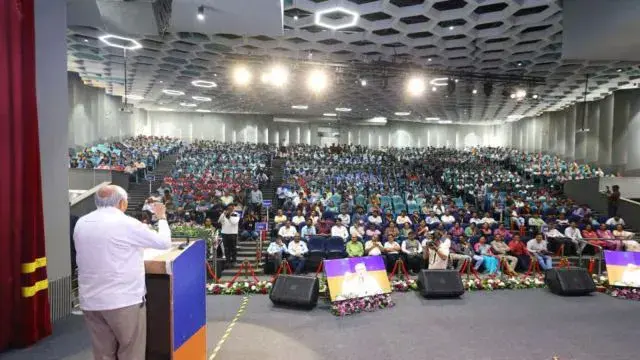
Gujarat Chief Minister Bhupendra Patel announced the transfer of more than ₹370 crore in scholarship assistance to over 13 lakh students through Direct Benefit Transfer (DBT) in Gandhinagar. The financial support was provided under four key state education schemes—Namo Lakshmi Yojana, Namo Saraswati Vigyan Sadhana Yojana, Mukhyamantri Gyan Sadhana Merit Scholarship Yojana, and Mukhyamantri Gyan Setu Merit Scholarship Yojana. The event was attended by Deputy Chief Minister Harsh Sanghavi, Education Minister Pradyuman Vaja, and Minister of State for Education Rivabaa Jadeja. Addressing the gathering, Chief Minister Patel highlighted the significant progress Gujarat’s education sector has made over the last two-and-a-half decades under the leadership of Prime Minister Narendra Modi. He said the vision of providing uninterrupted access to education from kindergarten to postgraduate level is steadily being realised. Special emphasis, he added, has been placed on girls’ education through initiatives like Namo Lakshmi Yojana and Namo Saraswati Vigyan Sadhana Yojana, aimed at ensuring continued participation of girls in secondary and higher secondary education. Recalling Prime Minister Modi’s tenure as Gujarat Chief Minister from 2001, Patel said his hands-on efforts—such as personally visiting villages to promote girls’ education and auctioning gifts received during his tenure to fund educational initiatives—set new standards nationwide. These efforts, combined with programmes like Shala Praveshotsav and Kanya Kelavani Mahotsav, helped reduce the girls’ dropout rate from 37 percent to less than two percent. The Chief Minister also outlined the expansion of educational infrastructure in the state. Village schools offering science streams have increased to 2,834, while the number of colleges has grown from 775 in 2001 to over 3,200 today. Engineering colleges have risen from 139 to 288, and medical seats have expanded from 1,175 to more than 7,000. Additionally, over 24,000 girls pursuing medical education have benefited from the Mukhyamantri Kanya Kelavani Nidhi Yojana. Deputy Chief Minister Harsh Sanghavi said the ₹370 crore disbursed on the day forms part of a larger commitment, with the state having provided more than ₹1,332 crore in assistance to over 13.5 lakh students so far. Congratulating the Chief Minister on completing three years of his second term, he praised his people-centric leadership and strong focus on education. Sanghavi noted that the Namo Saraswati Vigyan Sadhana Yojana was launched to ensure that financial constraints do not prevent students from opting for the science stream, especially as Gujarat continues to attract major industrial investments. Education Minister Pradyuman Vaja stated that Gujarat’s investment in education is aimed at building a strong foundation for a Viksit Gujarat and a Viksit Bharat. He said these schemes are opening new opportunities and aspirations for students across the state. Sharing scheme-wise details, he said the Namo Lakshmi Yojana has so far disbursed ₹1,033 crore to 10.49 lakh girls, leading to a 73 percent increase in attendance and a 13.59 percent rise in enrolment in Class 12. Under the Namo Saraswati Vigyan Sadhana Yojana, ₹151.84 crore has been provided to 1.5 lakh students, resulting in a 6.34 percent increase in science stream enrolment. The Mukhyamantri Gyan Sadhana Merit Scholarship Yojana has extended ₹86.14 crore to 50,000 students, while the Mukhyamantri Gyan Setu Merit Scholarship Yojana has provided ₹61.27 crore to 60,000 students, promoting merit-based and quality education. Minister of State for Education Rivabaa Jadeja described the programme as a landmark moment, reaffirming that education remains the most effective tool for social transformation. She said the state government is committed to ensuring quality education, strengthening infrastructure, promoting girls’ education, reducing dropout rates, and supporting the holistic development of students to prepare them for a brighter future. Source: PTI

Gujarat CM Disburses ₹370 Crore in Scholarships to Over 13 Lakh Students via DBT Read More »

Music Tourism Surges as Over 5.6 Lakh Indians Travel for Concerts in 2025: Report

India is no longer just consuming entertainment — it’s packing its bags for it. According to BookMyShow’s Throwback 2025 report, music tourism witnessed an exceptional upswing this year, with more than 5.6 lakh Indians travelling across cities to attend concerts. This surge created booming micro-economies around each event, driving business for airlines, hotels, cabs and local eateries. Premium live experiences also saw a major leap, with attendance nearly doubling in 2025. Fans increasingly favoured VIP zones, elevated viewing decks and curated hospitality, signalling a clear shift toward experience-driven entertainment. Several state governments helped fuel this rise. BookMyShow inked MoUs with tourism departments in Assam, Telangana, Gujarat and Delhi to attract global artists, improve event infrastructure and generate local employment—cementing live entertainment as a growing economic contributor. Live events on the rise Overall, live entertainment consumption grew by 17%, with more than 34,000 events—from concerts and comedy shows to cultural festivals—held nationwide. Tier-2 cities like Visakhapatnam, Vadodara, Indore, Shillong and Rajkot recorded explosive triple-digit growth, highlighting a widespread appetite for diverse experiences. Notably, solo attendance soared, with 1.8 million people choosing to enjoy events on their own. Cinema continues to unite India Despite the live-event boom, cinema retained its position as India’s favourite collective pastime. Regional films strengthened their presence, while nostalgia re-runs brought 58 lakh viewers back to theatres. Hyderabad shone as the re-release hub, with Interstellar leading the revival wave after selling out multiple runs. The Dussehra weekend delivered the highest footfall of 2025 with 6.8 million tickets sold. Kantara: A Legend Chapter–1 became the year’s biggest repeat-watch title, drawing more than 6 lakh returning fans. Meanwhile, Coolie topped advance bookings with 2.4 million pre-sold tickets. BookMyShow notes that 2025 marked a year of deliberate engagement—Indians didn’t just watch entertainment; they pursued it, travelled for it and made it a part of their weekly lifestyle. Source: Economic Times

Music Tourism Surges as Over 5.6 Lakh Indians Travel for Concerts in 2025: Report Read More »

Licences of 176 Retailers, 39 Wholesalers Cancelled in Maharashtra Over Substandard Medicines

Maharashtra has taken strong action against the sale of poor-quality drugs, cancelling the licences of 176 retail pharmacies and 39 wholesalers over the past year, State Food and Drug Administration (FDA) Minister Narhari Zirwal informed the Assembly on December 10, 2025. Responding in writing to a question raised by BJP MLA Amit Satam and others, Zirwal stated that the FDA had launched a special crackdown, during which samples of cough syrups and other medicines were collected and sent for testing. Inspections were carried out at 136 retail outlets and 93 wholesalers, with show-cause notices issued before the licence cancellations. Zirwal revealed that fake cough syrups were detected during an FDA drive in October 2024. Doctors and pharmacists were instructed not to prescribe or dispense medicines containing propranolol. Of the 36 samples tested across Mumbai, Thane, Pune, Aurangabad and Nagpur, 34 failed quality checks, including drugs used for hypertension, diabetes, tuberculosis, heart ailments and blood purification. Six samples of a particular paediatric cough syrup brand were also flagged for poor quality. The Minister said some medicines had altered or mixed components and were sold under new names, with fake or substandard batches even reaching government hospitals through unauthorised suppliers. A shortage of personnel contributed to weaker oversight, as 176 drug inspector posts remain vacant. Maharashtra currently has testing labs in Mumbai, Nagpur and Pune. Zirwal added that 109 inspector positions will be filled through the Maharashtra Public Service Commission, and efforts are underway to upgrade laboratories in Nashik and Pune. Source: PTI Photo Credit: Getty Images/iStockphoto

Licences of 176 Retailers, 39 Wholesalers Cancelled in Maharashtra Over Substandard Medicines Read More »

Australia Enforces World’s First Social Media Ban for Under-16s

Australia has officially become the first country in the world to ban social media access for children and teenagers under 16. Under the new legislation, major platforms — including Instagram, Facebook, Threads, X, Snapchat, TikTok, YouTube, Reddit, Twitch and Kick — must prevent users below the age threshold from accessing their services. While parents and minors won’t face penalties for violations, tech companies risk fines of up to 32 million dollars if they fail to comply. The government says the move is aimed at shielding young people from harmful online content, but critics warn it may unintentionally push vulnerable teens toward unsafe, unregulated digital spaces. The decision has sparked debate across Australia, drawing concern from tech giants and free-speech advocates, even as many parents and child-safety organisations have welcomed the policy. Prime Minister Anthony Albanese had first signalled plans for an age-based restriction last September. Source: newsonair  

Australia Enforces World’s First Social Media Ban for Under-16s Read More »