ArdorComm Media Group

Sunday, August 2, 2026 5:57 AM

community

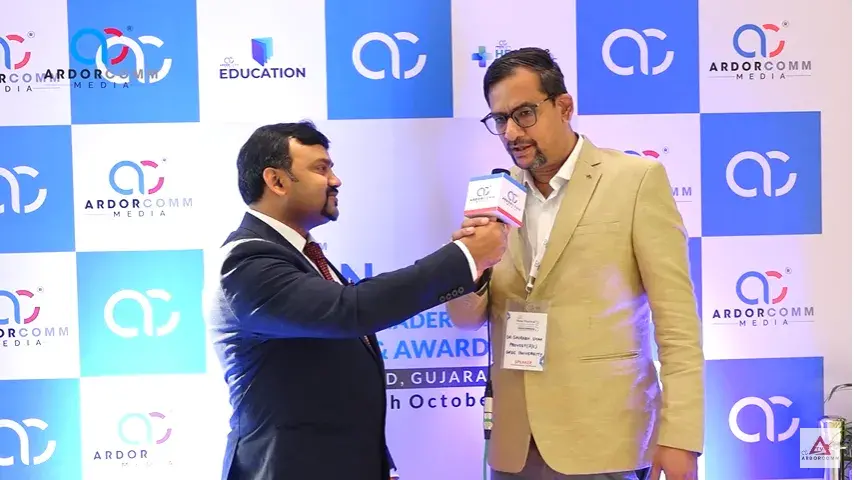
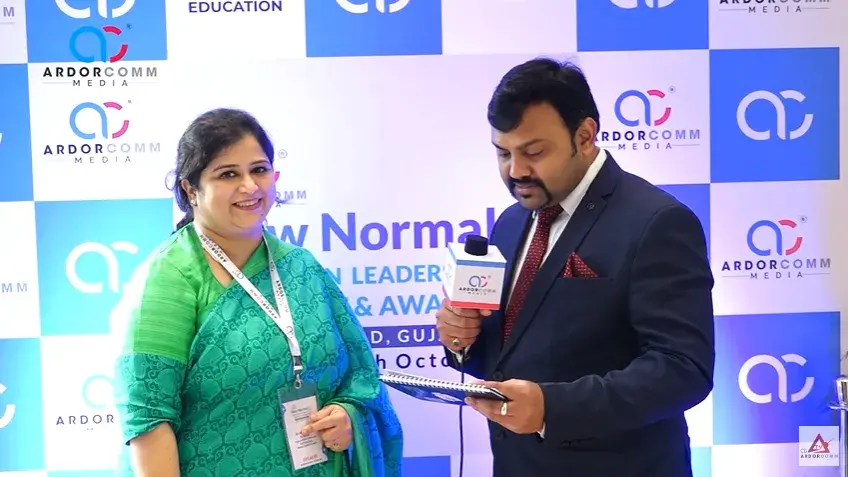
Dr. Saurabh Shah, Provost (I/C) & Dean, School of Technology, GSFC University, Vadodara tells what is new normal according to hm

“Time has come where we need to evolve, adapt the technology,” says Dr. Saurabh Shah, Provost (I/C) & Dean, School of Technology, GSFC University, Vadodara in an interview with Chandan Anand, Founding Editor, ArdorComm Media Group at the ‘ArdorComm New Normal – Education Leadership Summit & Awards 2022’ #ELSAGujarat #ELSAAhmedabad We welcome you in today’s forum, what are your takeaway from this? Thanks for the opportunity given and first of all please accept my heartiest congratulations for hosting such a grand event where it was a wonderful platform for all the leaders to share their experience and in spite being young but the way it was organized it’s commendable and it’s very apt like you talk about New Normal technology interventions and it’s a great opportunity for Ed Tech and Senior leaders to collaborate so it was wonderful experience. In fact a lot of learning and takeaways and you deserve many congratulations thank you. As the event name is New Normal Education Leadership Summit and Awards, according to you what does the word New Normal stands for? Now New Normal is not the buzzword, time has come where we need to evolve, adapt the technology. In fact, we need to evolve new ecosystem where education is re-envisioned and we need to add up new strategies. In fact, many edtech companies are coming up and the way knowledge is delivered is also the entire definition is changed so we see a lot of transformation in the education system and in coming years you will see entirely different education system. So, all are working very hard even we are very keen and surely it will come out with flying colours where learners are at centre and I see a lot of value out of all these initiatives.

Dr. Saurabh Shah, Provost (I/C) & Dean, School of Technology, GSFC University, Vadodara tells what is new normal according to hm Read More »

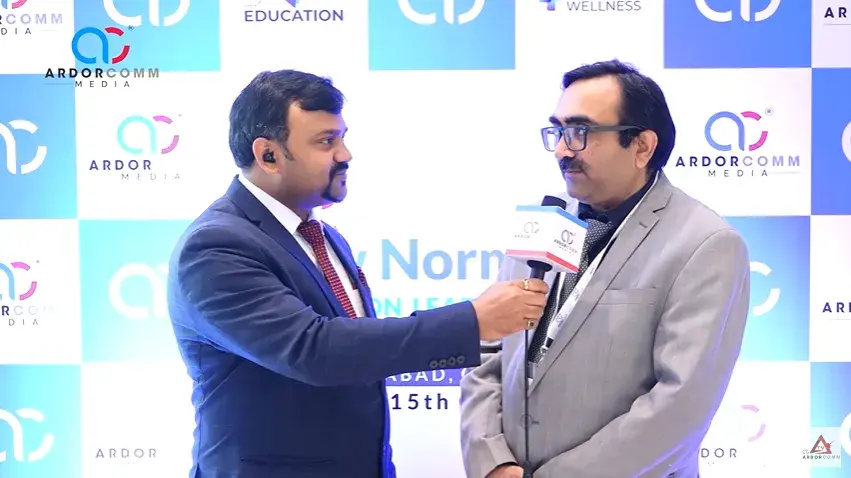
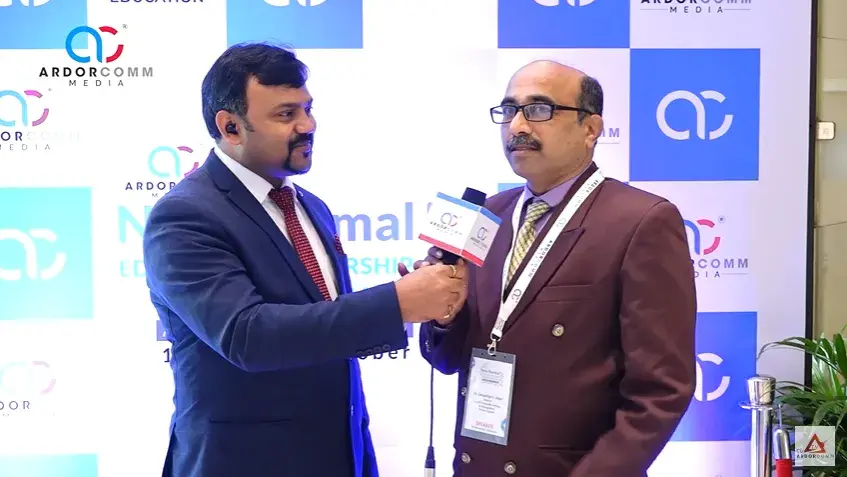
Dr. Parag Sanghani, Provost, P. P. Savani University, Surat emphasizes on the implementation of NEP

“We are investing heavily now on to the training of our teachers because that’s what the key success factors for implementing NEP 2020,” says Dr. Parag Sanghani, Provost, P. P. Savani University, Surat in an interview with Chandan Anand, Founding Editor, ArdorComm Media Group at the ‘ArdorComm New Normal – Education Leadership Summit & Awards 2022’ #ELSAGujarat #ELSAAhmedabad As we are aware that a very beautiful policy by Ministry has come to us in 2020, what is the way forward and initiative from your University under your leadership how are we going to implement it? We have done lot of them, you know initiatives on that like one of the initiatives called Gujjalish where Gujarati and English combined for our diploma programs we have started on that. We are trying to have a language studies different language we have introduced with our universities minor and major specialization has been introduced so many things. We have started a blended learning also, we are the initial few universities from the Gujarat who as part of digital India movement and we have digitized all our examination records and the certificates and we are on the Digi Locker or a national Digital Library so all these has been started and we will now having more pace with the commitment of creating awareness among the stakeholders that’s the parents and students and we are investing heavily now on to the training of our teachers because that’s what the key success factors for implementing NEP 2020. What is your five-year plan going further post pandemics? Post pandemic the New Normal is Blended so we are moving towards that and we are trying to see that how we will able to integrate the various online resources into our curriculums. We try to involve the edtech companies in our education deliveries and we try to enhance the quality of our education and that’s how we will try to improve our rankings, our overall contributions in terms of research and everything to the society so that’s what our plan. As we are aware that the event name today is New Normal Education Leadership Summit and Award, what is the word new normal stands for you? New normal means new thinking, new preparations a new way of delivering the educations and adapting the changing environment quickly to deliver the academic excellence for the betterment of the society and betterment of our country. When we see the kind of gathering which we have today the representation from the government sector from the private sector and even the corporate and edtech companies, how does certain forums help as overall education community? See education it means debating and deliberating so this kind of events, became a catalyst for the deliberations and coming out with the new ideas understanding what the other colleagues are doing in their fields which we generally not do in our normal course so my compliment for organizing these events and it’s a wonderful event.  

Dr. Parag Sanghani, Provost, P. P. Savani University, Surat emphasizes on the implementation of NEP Read More »

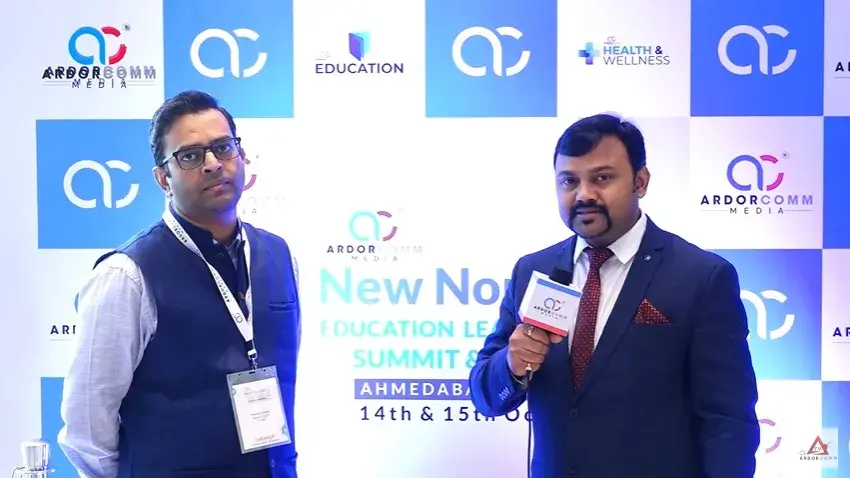
Hemant Sahal, Founder & CEO, CollPoll highlights the technology services that they offer

“CollPoll is a digital campus platform the goal is anything and everything that happens physically in the campus needs to be supported by a digital environment as well,” says Hemant Sahal, Founder & CEO, CollPoll in an interview with Chandan Anand, Founding Editor, ArdorComm Media Group at the ‘ArdorComm New Normal – Education Leadership Summit & Awards 2022’ #ELSAGujarat #ELSAAhmedabad Would you like to highlight some of your case studies or any achievement or milestone pre-pandemic and post pandemic which you have achieved? Yeah so covid did help in establishing the value of technology to higher education institutions but there are also other factors that were driving technology adoption things like the competition has been rising the complexity, for example new education policy brings some reforms which are well awaited but with those reforms also come the complexity change. So, I think the complexity, compliance and then the covid came so technology became a key enabler and a facilitator in higher education. At CollPoll we were prepared for it and we were been working on the platform and the technology for a while and we have the insights, so we scaled up very aggressively. We almost grew by 10 times on terms of the number of Institutions we are working in the last two years. We work with some of the best institutions as well as we work with institutions in the city, in rural areas tier 3 cities. So, you work with a very eclectic set of Institutions and we’re very happy to see the response from education institutions. Would you highlight the services which you offer in CollPoll? So, CollPoll is a digital campus platform the goal is anything and everything that happens physically in the campus needs to be supported by a digital environment as well. So, whether it is an administrative activity which typically we call as ERP or is it a learning activity which you call as Learning Management systems or any workflows in the campus like a student needs a permission from the parent to get out of the campus or a faculty has a problem in the Wi-Fi or the IT. So, we automate thousand plus workflows with the platform and finally we also have a campus engagement platform which helps different stakeholders come together and interact and engage. There are many questions in your mind for any academicians or an educator when they try to finalize any of the edtech players to enroll in their kitty, what are the few pointers which an institution should think before enrolling the major technology partner? So, see it totally depends first of all on what is the institution’s vision and aspirations. Technology can only play a role when you are very clear as an institution what are your goals what are your aspirations right so I think institutions need to sit down and first define what their vision and aspirations are that’s number one. Second, they need to be very clear what are their budgets and then take it because most institutions make a mistake of having a lens of cost when they look at technology rather than a lens of return on investment. So, that mindset change of looking at the returns rather than the cost is very important because you might spend 100 rupees and get a return of like 150 but if you invest let’s say a thousand rupee and you’re getting a return of 10,000 then it’s far better to invest thousand and get the return on Ten Thousand. So, that’s a change so we do spend a lot of time helping our partner institutions get more aware of how they can look at technology in the long term. So, you’re not just looking down at your feet you’re actually looking far beyond. If you make wrong technology decisions then within a year or two you realize oh it was wrong to all the investment and time that has gone gets wasted and that’s where I think we help institutions in saying be clear about your vision your aspirations be clear about your budgets and then you take a phase wise decision on the technology that you want to take. Would you like to share your five years plan? For us see the 5 years plan is very simple, straight forward, we keep our ears and eyes open and we want to continue to have engagement and interactions with our partner institutions to understand what are the top requirements, how can technology play a better role in improving learning outcomes in improving student success, in improving research output, in bringing an efficiency in administration and whatever are the new opportunities that come our way we want to continue to solve them with technology so that’s the goal. As you know the event name which we are branding is a New Normal Education Leadership Summit and Awards, what is the word New Normal for you stands for? So, I think this is a perpetual process that new normal keeps changing so the one thing that we all have to keep in our mind is that education especially higher education is going through extremely fast-paced transformation. So, the New Normal will keep changing, there is no point defining the New Normal what is very important is to keep your ears, eyes open. Stay true to yourself and be very cognizant of what’s happening and be clear that there is never going to be a permanent New Normal and the New Normal will keep changing and you also need to be that agile and flexible to keep evolving with it. I am proud to share that we successfully celebrated our one years of existence and we celebrated recently our first anniversary, so any message would you like to give for ArdorComm Media Group? Congratulations Chandan and it’s always tough to you know start up and build an organization and I’ve been looking at ArdorComm and I am very inspired that from where you


Hemant Sahal, Founder & CEO, CollPoll highlights the technology services that they offer Read More »

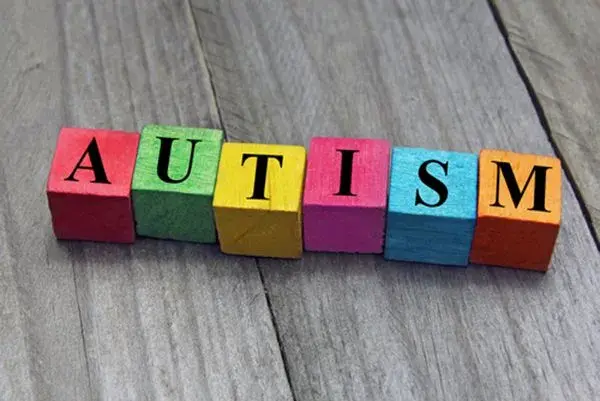
Researchers have discovered why autistic people avoid eye contact

Article on Health

People with autism spectrum disorder (ASD) find it challenging to make eye contact with others in everyday situations. The difficulty of simultaneously scanning the brains of two people has prevented scientists from studying the neurological basis of live social interaction involving eye contact in ASD, despite the fact that eye contact is an essential component of everyday interactions. However, Yale researchers have pinpointed particular brain regions in the dorsal parietal region of the brain connected to the social symptomatology of autism utilising cutting-edge technology that enables imaging of two individuals while they are in live and natural situations. According to the study, these brain responses to live face and eye contact may serve as a diagnostic for the diagnosis of ASD and a gauge of how effectively autism treatments are working. The study’s results were released in the PLOS ONE journal. Joy Hirsch, co-corresponding author and the Elizabeth Mears and House Jameson Professor of Psychiatry, Comparative Medicine, and Neuroscience at Yale, said, “Our brains are hungry for information about other people, and we need to understand how these social mechanisms operate in the context of a real and interactive world in both typically developed individuals as well as individuals with ASD.” Using functional near-infrared spectroscopy, a non-invasive optical neuroimaging technique, the Yale team, led by Hirsch and James McPartland, Harris Professor at the Yale Child Study Center, examined brain activity during brief social interactions between pairs of adults, each of whom included a typical participant and one with ASD. Both individuals wore caps with numerous sensors that both transmitted light into the brain and captured changes in light signals with data on brain activity during face-to-face and other types of eye contact. The researchers discovered that persons with ASD displayed considerably less dorsal parietal cortex activity during eye contact than participants without ASD. Additionally, the less activity in this area of the brain was seen, the more severe the overall social symptoms of ASD as determined by ADOS (Autism Diagnostic Observation Schedule, 2nd Edition) scores. During genuine eye-to-eye contact but not while looking at a video face, neural activity in these regions was synchronised between normal participants. The absence of this expected increase in neural connectivity in ASD is consistent with the challenges faced in social interactions. We now know more about the neurological underpinnings of typical social interactions as well as the neurobiology of autism and social differences, according to Hirsch. Source: ANI

Researchers have discovered why autistic people avoid eye contact Read More »

CM Bommai asks govt employees of Karnataka to work an hour extra daily

Basavaraj Bommai, the chief minister of Karnataka, has urged every employee of the state’s government to put in an hour more each day. On November 10, 2022, Bommai was addressing at a gathering where a delegation from the Karnataka State Government Employees Association was supporting him in his efforts to form the 7th Pay Commission and impose a revised pay scale for state government employees. Bommai urged the workforce to put in an additional hour of work in order for the State to advance quickly and contribute to the greater goal of making India a $5 trillion economy. He placed a specific emphasis on aiding the state’s underprivileged, oppressed, and female citizens. Bommai stated that Karnataka should contribute around $1 trillion toward the goal of making India a $5 trillion economy. He mentioned that the State had a Rs. 5000 crore revenue deficit when he took office. He did admit that state government officials put in a lot of effort and achieved all of their goals, if not more. He expressed his gratitude in particular to the police and the healthcare sector for their round-the-clock assistance during the global pandemic. With inflation on the rise, Bommai said on the updated pay scale that it is crucial to earn the proper amount of money at the right time. The State government made the decision to implement the updated pay scale for all employees for this reason. The CM went on to say that he wanted every employee to work diligently and honestly, leaving the rest up to him.

CM Bommai asks govt employees of Karnataka to work an hour extra daily Read More »

DigiLocker integrates digital health records storage and links them to ABHA

The Ministry of Electronics and Information Technology’s authentic documents sharing platform, DigiLocker, has successfully finished the second stage of integration with the Ayushman Bharat Digital Mission (ABDM). Vaccination records, doctor’s prescriptions, lab results, hospital discharge summaries, and other health documents may now be stored and accessed on the safe cloud-based storage platform of DigiLocker. Prior to now, DigiLocker had finished level 1 integration with ABDM, adding the ability for its 13 crore users to create Ayushman Bharat Health Accounts (ABHA). With this most recent connection, users can now utilise DigiLocker as a Personal Health Records (PHR) app. Additionally, ABHA holders can use DigiLocker to link their health records from other ABDM registered healthcare providers, including hospitals and labs. Older health records can be scanned and uploaded by users to the app. Even ABDM-registered medical practitioners can access some of their records. Dr. RS Sharma, CEO of the National Health Authority (NHA), emphasised the benefit that users will receive from this integration when he remarked, “Under the ABDM, we are building an inter-operable health ecosystem. Dr. RS Sharma, CEO of the National Health Authority (NHA), emphasised the benefit that users will receive from this integration when he remarked, “Under the ABDM, we are building an inter-operable health ecosystem. The different applications from both the public and private sectors partners integrating with ABDM are helping expand the reach of the scheme to more users and adding more functionalities. DigiLocker is a trusted and popular app to access authentic documents. Therefore, it is a significant development as users would now get to use it as a PHR app and get the benefits of paperless record keeping.” Abhishek Singh, MD & CEO, Digital India Corporation, commented on the integration by saying, “We are proud to extend the benefits of ABDM to our 130 million registered users. The platform has already helped generate close to 85 thousand ABHA numbers. With the health locker integration, we’re positive that more people would be able to easily link and manage their health records digitally. DigiLocker aims to be the preferred health locker for ABHA users.” All DigiLocker registered users can now access the health locker services.

DigiLocker integrates digital health records storage and links them to ABHA Read More »

New category added for NIRF 2023 rankings, registration open till November 18

The National Institutional Ranking Framework (NIRF) ranking for 2023 is now inviting applications, according to the Ministry of Education. On the official website, nirfindia.org, higher education institutions (HEIs) can register for the Indian rankings. Institutions can register for these rankings up to November 18 at 5 pm. Agriculture and Allied Sectors is the one new discipline that NIRF has included this year. The discipline of architecture has also been renamed to Architecture and Planning. There were just four categories last year: Overall, Colleges, Universities, and Research Institutions, along with seven topic areas: engineering, management, pharmacy, law, medical, architecture, and dental. IISc Bangalore placed top among all institutions in the research and institution category of the NIRF 2022 rankings, but second overall. The top spot in the overall ranking category was secured by IIT Madras. The National Law School of India University got first place in the law category. IIM Ahmedabad was recognised as the best management college at the time. A total of 670 institutions participated in the rankings last year, of which 387 had no published research. The institutes were graded using several criteria across various disciplines. Research and professional practise, graduation results, outreach, and inclusion are just a few of the criteria.

New category added for NIRF 2023 rankings, registration open till November 18 Read More »

Dr. Minal Saxena, Dy. Director, Sagar Institute of Research and Technology, Bhopal emphasizes on importance of research and technology in higher education

“Our both the universities and the institutions are working continuously on the research programs,” says Dr. Minal Saxena, Dy. Director, Sagar Institute of Research and Technology, Bhopal in an interview with Chandan Anand, Founding Editor, ArdorComm Media Group at the ‘ArdorComm New Normal – Education Leadership Summit & Awards 2022’ #ELSAGujarat #ELSAAhmedabad I would like to understand and know more about your institution if you can throw us some light on it? Our institution is actually a pool of institutions in central India with our very former Institute of Sagar, Institute of Research and Technology in which I am a part since last 20 years and where I have two leading universities Sage University, Indore and Sage University, Bhopal which are the leading universities of central India with their USPs of experiential learning and a research focused curriculum. So, as your Institute name includes the words Research and Technology how important is in today’s era, research plays a role and why skill development is important along with the regular curriculum? Research definitely plays a very important role; our both the universities and the institutions are working continuously on the research programs. We have the AICTE sponsored labs for the advanced computing in both of the universities and our students and faculty members are continuously working on IPR, copyright and patents and the students of SIRT have been a good startup entrepreneurs with government funding in 2018 and 19 and a large number of startup units are there in Bhopal, in Indore so I think our alumnus speaks it all. In this forum when we can witness we have the industry leaders the startups, the corporate, academicians and even the government representatives what has been your experience overall and how does this kind of symposiums helps to the industry? This is wonderful actually post covid challenges towards students, new strategies for students new Ed Tech startups and the New Normal actually it’s the new thing which is coming up and it was a wonderful session starting with the new education policy. So, I think as academicians we are going to witness the change of and transformation of education with these tech tools so thank you very much for inviting me here and making me aware of many things which definitely will be a growing tool for us for the future tomorrow.  

Dr. Minal Saxena, Dy. Director, Sagar Institute of Research and Technology, Bhopal emphasizes on importance of research and technology in higher education Read More »

Dr. H.N. Shah, Director (GIT), Gandhinagar University, Ahmedabad elucidates on skill-based education

“Because of not having the basic knowledge they are sometimes not getting employment,” says Dr. H.N. Shah, Director (GIT), Gandhinagar University, Ahmedabad in an interview with Chandan Anand, Founding Editor, ArdorComm Media Group at the ‘ArdorComm New Normal – Education Leadership Summit & Awards 2022’ #ELSAGujarat #ELSAAhmedabad Would you like to throw some light on the initiatives which Gandhinagar university has recently taken? Gandhinagar University campus actually it was established in 2006 as a standalone institutive like Gandhinagar Institute of Technology but in 2022 with the Private University Act 2009 Amendment 2022 we got the status of a State private university as a Gandhinagar university. So, it is spread across 11 acres land and we have a six institutions right now we are offering a program in Engineering, Management, Commerce, Science and latest trending BSc courses like BSc in data science, BSc in IT, Bsc in computer science and apart from that we are more focusing on the skill development programs so we have another vertical, skilled development so under this institute we are offering a skill programs which is industry required. So, ultimately our aim is to just provide the industry ready workforce so ultimately this industry gets the benefit. How is industry ready curriculum important and how skills are important to be a part of the main course curriculum? See up till now what we observed that these students are running behind just A4 size paper, after graduation they are just entering in their professional life. Because of not having the basic knowledge they are sometimes not getting employment. So, here this skill development plays important role in fact in the previous days it was there but because of now in the modern technology, modern technology tools it is available, they are adopting by all the fraternity maybe MSME or industry or teaching faculty so these today’s youth are very creative. So, just we have to give them platform and we have to direct them so we are just identifying their skill their inclination on which they are, we can give them the direction for the other future. So, skilled program based on that we are just offering them as skill programs and we are just preparing them for the industry. As we have gathered together at a New Normal Education Leadership Summit and Awards according to you how would you define new normal? Yes, new normal word came after covid, new word it was just normal initially so new normal means what after covid, after pandemic because of this pandemic it was worsely affected in all sectors not only in industry education even in particular health also even thought process is also mentally change. Now we are coming up slowly we are coming up in a normal position so that is why we are just saying that it is a new normal. So, now how we can survive for the longer period of time and for that we have to think for the different society of ourselves our development also right so new normal is nothing it’s just new thinking, and for our survival how we can accommodate all the things which is adversely affecting in our life. I’m happy to share with you that we have successfully completed our one year of existence this last one and a half years since covid till now has been very exciting thrilling and learning opportunities, any message would you like to give to ArdorComm Media Group? Yes, first of all I’m very much thankful and happy that you are organizing such kind of things in Gujarat. So, again I’m wishing you all the best, I just came across one poster even you are going to organize in Rajasthan also so yes you have a tremendous scope right now and because of your team is very dedicated what I observed throughout the day right, so wish you all the best for your future.  

Dr. H.N. Shah, Director (GIT), Gandhinagar University, Ahmedabad elucidates on skill-based education Read More »

Dr. Gangadhar G. Hugar, Director, Laxmi Vidyapeeth Institute of Management, Valsad emphasizes on importance of industry ready curriculum

“We have to work out and bring the changes in our curriculum system because what we are teaching, there is a huge mismatch between what industry is required,” says Dr. Gangadhar G. Hugar, Director, Laxmi Vidyapeeth Institute of Management, Valsad in an interview with Chandan Anand, Founding Editor, ArdorComm Media Group at the ‘ArdorComm New Normal – Education Leadership Summit & Awards 2022’ #ELSAGujarat #ELSAAhmedabad Would you like to highlight some initiatives about your institutions which you have done pre-pandemic and post-pandemic now? I have recently changed the institution, I have shifted to Laxmi Vidyapeeth Institute of Management Studies. I can focus much about pre-pandemic situation where we had used ICT tools for educating the students those who are from the remote areas, giving them and getting a more clarification about their courses, how best we can ensure and educate and transform their knowledge and upgrade their knowledge during the pandemic. With the help of the technology, with the help of the different platforms through which we used to conduct the classes online classes and that has worked out very well for us but the thing is you know the other way around the students at the receiving end are having or faced a lot of difficulties in terms of receiving the sessions. So, sometimes it was very indiscipline one, time management was a challenge for the students and technology was a challenge and network was a challenge. These are all the issues which were faced but you know gradually we worked and we worked together, students and the management and then it was resolved. Would you like to highlight how the industry ready curriculum should be there and what skill sets would be required so that the employability outcomes increase? It is like a very interesting subject for me and I’m the panel speaker for that, like when we talk about the industry related curriculum design my heartfelt feeling is industrialist has to come one step ahead and then associate with all the educational institutions irrespective of only focusing towards the tier one city or tier two cities. They should also, approach come down to the tier three cities and below level also because you know now the student’s fraternity which are having spread across the country in India they are facing a lack of employability skills and what do we teach in the institution and what do they learn and then when they are dumped into their job market they are unable to match their knowledge with the skills which are expected in the industry. So, henceforth what I request is some of the local small level or large level industrial associations has to have tie up and we also as an educationalist and the leaders in education segment we also would like to go ahead and then tie up with them so that in what level we can provide the employment opportunity for the students for which we have to work out and bring the changes in our curriculum system because what we are teaching is absolutely there is a huge mismatch between what industry is required. So, if for example if I take up an example of our present BO course introduced by GTU you know we have started giving the training to the students in each semester minimum one month they have to take a offline physical training. So, this is a beautiful thing what I have planned and you know like they will be observed by the end of the course itself and they are getting trained practically on the real platform it is not a dummy, it is not a duplication. They are given an opportunity to work on the real platform and really, we have worked out within a small span of time that is hardly three months it is really working out for me and I’m with which you know I have encouraged myself and my team of faculty members to do more so that because we are getting a positive response from the industry as well. So, see always when we talk about the industry it is not only the big players in the industries we should also focus on the small concerns small entrepreneurs you know individual, entrepreneurs, public company, private company whatever it is. We should have some kind of an association locally as well because our institutions when we talk about tier two cities or the tier three cities our students as well are requirement of a job opportunities so how to make employable to them at that level regionally tire two, tire three level so it helps a lot for us to have a local partners local associations so with whom we can make it possible and for that we have to design the curriculum which matches to ensure our student should start working from the day one itself. The name of the event is New Normal Education Leadership Summit and Awards, what is the word New Normal stands for you? New normal for me is you know doing something which is totally different and that different word has to have a catchy, meaning that for the present generation how we can enlighten, empower and transform the knowledge so that they could do something different things it is not one among the ten it has to be at the 11th one. By living one to ten he should or she should do the 11th one which is totally different, see doing the similar things anybody can do it any institution students can do it but every institution has to aspire the development of the students to come out with the kind of a creativity which is really acceptable in the industry segment. I’m happy to share that we recently celebrated our one year of existence and anniversary has been celebrated any message would you like to give for ArdorComm Media? It’s really a proud moment for me personally and professionally and I’m representing Lakshmi Vidyapeeth

Dr. Gangadhar G. Hugar, Director, Laxmi Vidyapeeth Institute of Management, Valsad emphasizes on importance of industry ready curriculum Read More »