ArdorComm Media Group

Tuesday, July 28, 2026 2:43 AM

community

Tragic End of an Era: Maharashtra Deputy CM Ajit Pawar Killed in Baramati Plane Crash
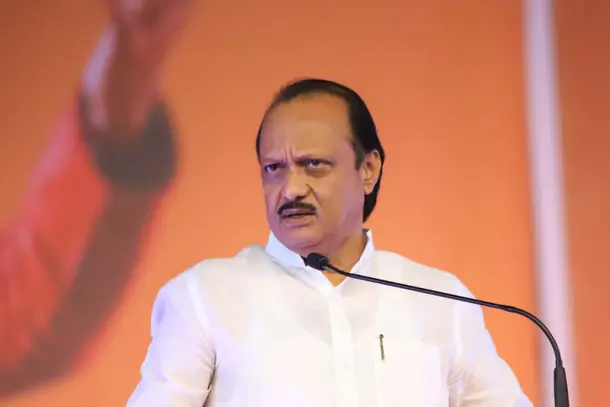
Maharashtra’s political landscape has been shaken by the sudden and tragic demise of Deputy Chief Minister and NCP leader Ajit Pawar. On Wednesday morning, a chartered Bombardier Learjet 45, en route from Mumbai to Baramati, crashed while attempting an emergency landing at Baramati airport. The Directorate General of Civil Aviation (DGCA) confirmed that all five individuals on board perished in the accident. Alongside the veteran leader, the victims include pilots Sumit Kapoor and Sambhavi Pathak, as well as Pawar’s personal security officer and an attendant. Preliminary reports suggest that poor visibility may have been a primary factor in the fatal descent. A Career Defined by Power and Pragmatism Affectionately known as “Dada,” Ajit Pawar was more than just a politician; he was a titan of Maharashtra’s cooperative sector. Rising from the shadow of his uncle, Sharad Pawar, Ajit carved a distinct path through administrative efficiency and bold, often controversial, political maneuvers. Political Roots: Entering the fray at age 23, he began his journey in a Baramati sugar cooperative before moving to the Lok Sabha in 1991 and eventually securing the Baramati Assembly seat for eight consecutive terms. Cabinet Mastery: At just 40, he became the state’s youngest Cabinet minister. Over the decades, he held critical portfolios including Finance, Irrigation, and Energy, establishing himself as a leader who was rarely away from the levers of power. The Great Realignment: His career reached a fever pitch in 2023 when he led a major faction of the NCP to join the BJP-Shiv Sena (Mahayuti) alliance, securing his place as Deputy CM once again after the 2024 elections. The Scene at Baramati Witnesses and initial visuals from the site described a harrowing scene. The aircraft was reportedly reduced to debris and ashes, with smoke visible across the Baramati skyline. Pawar was traveling to his stronghold to lead public meetings ahead of the Zilla Parishad elections—a testament to his lifelong commitment to grassroots campaigning. He is survived by his wife, Rajya Sabha MP Sunetra Pawar, and two sons, Parth and Jay. As the state enters a period of mourning, Maharashtra remembers a leader who was a central pillar of its governance and a champion for the farming community. Source: India Today

Tragic End of an Era: Maharashtra Deputy CM Ajit Pawar Killed in Baramati Plane Crash Read More »

Sun Pharma, Cipla, Zydus and Graviti recall multiple medicines in US over quality lapses

Several Indian drugmakers, including Sun Pharmaceutical Industries, Cipla, Zydus Pharmaceuticals and Graviti Pharmaceuticals, have initiated recalls of various products in the US market, largely due to manufacturing and quality-related issues, according to the latest enforcement reports issued by the US Food and Drug Administration (FDA). Sun Pharma has recalled 24,624 bottles of Fluocinolone Acetonide topical solution (60 ml), distributed by its subsidiary Taro Pharmaceuticals Inc., after the product failed to meet specifications for a known impurity. The company has also pulled back batches of Clindamycin Phosphate topical solution (60 ml), an acne treatment manufactured by Taro Pharmaceutical Industries, following out-of-specification results related to total impurities and assay values. Cipla, meanwhile, is recalling over 15,000 pre-filled syringes of Lanreotide Injection (120 mg/0.5 ml), a drug used to treat a rare hormonal disorder, which is marketed by Cipla USA Inc. Earlier this month, the company clarified that the drug is manufactured exclusively by Greek pharmaceutical firm Pharmathen, which supplies it to Cipla’s US arm. Lanreotide is among Cipla’s top three products in the US by sales. Manufacturing of Lanreotide has been temporarily halted as Pharmathen undertakes remediation following a US FDA inspection that resulted in nine observations at its facility in Greece. Cipla said supplies of the drug will remain constrained until production restarts and quality clearance is obtained. In a separate action, Cipla is also recalling 92,376 tubes of Diclofenac Sodium Topical Gel (100 g), manufactured by DPT Laboratories, after the product failed to meet pH specifications. Hyderabad-based Graviti Pharmaceuticals has recalled 4,212 bottles of Furosemide Tablets USP (40 mg, 1,000 tablets per bottle), produced for Rising Pharmaceuticals Inc., due to the presence of a foreign substance. Zydus Pharmaceuticals (USA) is recalling 22,896 bottles of Icosapent Ethyl capsules (1 gram, 120-count bottles) manufactured by Softgel Healthcare. The recall was initiated after oxidation caused by leakage from the capsules was detected. According to the FDA, use of the affected batches could result in inconsistent therapeutic outcomes and a higher risk of gastrointestinal side effects in some patients. Source: The Hindu

Sun Pharma, Cipla, Zydus and Graviti recall multiple medicines in US over quality lapses Read More »

India–EU Trade Pact Opens Doors for Exports, Services and Talent Mobility

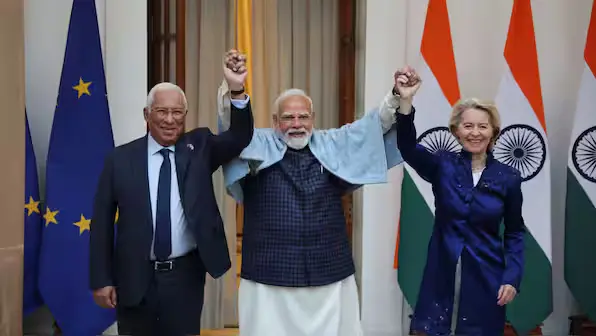
India and the European Union have formally concluded what is being described as the world’s largest trade agreement, significantly cutting tariffs and widening market access on both sides, while ring-fencing three politically and economically sensitive sectors — automobiles, steel and agriculture. Under the Free Trade Agreement (FTA), the EU will eliminate duties on 90% of Indian exports at the outset, with coverage expanding to 93% within seven years. Around 6% of goods will see partial tariff reductions or quota-based access, while nearly the entire bilateral trade basket — 99.5% — will benefit from some form of tariff concession. For India, the immediate gains are strongest in labour-intensive industries. Sectors such as marine products, chemicals, plastics and rubber, leather and footwear, textiles and apparel, base metals, gems and jewellery will enjoy zero-duty access to the European market, sharply boosting competitiveness. As a result, the EU’s average tariff on Indian goods will fall dramatically from 3.8% to just 0.1%. At the same time, both sides have taken a cautious approach to sensitive areas. In automobiles, EU cars priced below €15,000 are fully excluded from tariff concessions. Higher-end vehicles are divided into three categories, each subject to quotas and differentiated tariff reductions. Import duties on most cars will be lowered gradually from 30–35% to 10% over five years. Electric vehicle tariff reductions will begin only from the fifth year, and no concessions apply beyond quotas or to completely knocked-down (CKD) kits. Steel has been kept outside full tariff elimination, reflecting strategic and employment concerns. India, however, is pushing for better access to the EU’s duty-free steel import quotas, with discussions expected to conclude by June 30. On climate-linked trade measures, India has not secured an exemption from the EU’s carbon border duties. Instead, it will join a technical working group to verify carbon footprints and receive EU assistance to support emissions reduction efforts. Agriculture has also been carefully balanced. India has shielded key products such as dairy, cereals, poultry, soymeal, and select fruits and vegetables. At the same time, Indian exports of tea, coffee, spices, fresh produce and processed foods will gain improved access to European markets. On the import side, India will lower tariffs on EU agri-food products including wines, spirits, beer, olive oil and processed foods. Duties on premium wines, for instance, will drop from 150% to as low as 20%, while EU food safety standards will remain unchanged. Beyond goods, the agreement includes wide-ranging provisions on services, sustainability and digital trade. India will gain access to 144 EU services subsectors, while opening 102 of its own to European firms. These include IT, financial services, maritime trade, professional services and education. Binding commitments have been included on labour rights, environmental protection, women’s empowerment and climate cooperation. Digital trade rules aim to facilitate business while safeguarding privacy, security and public policy interests. The pact also lays the groundwork for enhanced business mobility, student exchanges, post-study work opportunities, social security coordination, and recognition of Indian traditional medicine practitioners in select EU countries. In exchange, India will reduce tariffs to zero on 93% of EU goods by trade value over a ten-year period. Overall, the EU will liberalise 96.8% of its tariff lines, while India will open 92.1%, making this one of India’s most comprehensive trade agreements with a developed economy. Alongside the FTA, both sides signed multiple agreements and memoranda covering security and defence cooperation, mobility, green hydrogen, disaster risk management and financial regulation. A joint roadmap titled “Towards 2030 – A Joint India–European Union Comprehensive Strategic Agenda” was also adopted, setting out collaboration priorities for the next decade. The political declaration concluding the FTA negotiations was signed by Commerce Minister Piyush Goyal and EU Trade Commissioner Maroš Šefčovič. The India–EU Security and Defence Partnership was signed by EU Vice President Kaja Kallas and External Affairs Minister S. Jaishankar, while a comprehensive mobility framework was inked by Šefčovič and Jaishankar. Source: Economic

India–EU Trade Pact Opens Doors for Exports, Services and Talent Mobility Read More »

Bank unions begin nationwide strike today, push for long-pending 5-day work week

Banking operations across public sector banks are set to face major disruption today, January 27, as bank employee unions commence a nationwide strike demanding the implementation of a five-day work week. The strike, called by the United Forum of Bank Unions (UFBU), comes after conciliation talks with the government failed to yield any breakthrough. With January 25 and 26 already declared holidays, customers are likely to experience a three-day disruption in services at public sector banks. Several banks had pre-emptively alerted customers about possible interruptions if the strike went ahead. UFBU, an umbrella body representing nine unions of bank officers and employees, said discussions were held over two days under the Chief Labour Commissioner, with participation from the Indian Banks’ Association (IBA), public sector banks, and officials from the Department of Financial Services (DFS) under the Ministry of Finance. However, the unions said the talks ended without a positive outcome, prompting them to proceed with the strike as planned. At present, bank employees get Sundays off along with the second and fourth Saturdays of every month. The demand for a five-day work week gained momentum after an understanding was reached between the IBA and UFBU during the wage revision settlement in March 2024, which included making all Saturdays holidays. Expressing disappointment over the government’s stance, UFBU reiterated that the proposed system would not lead to any loss of productivity, as employees have already agreed to extend daily working hours by 40 minutes from Monday to Friday. The unions also pointed out that institutions such as the Reserve Bank of India (RBI), Life Insurance Corporation (LIC), General Insurance Corporation (GIC), stock exchanges, and most government offices already follow a five-day work schedule, arguing there is no rationale for banks to be excluded. The strike is expected to largely impact public sector banks and some old-generation private lenders. Operations at major private sector banks such as HDFC Bank, ICICI Bank, and Kotak Mahindra Bank are unlikely to be affected. Source: PTI

Bank unions begin nationwide strike today, push for long-pending 5-day work week Read More »

Republic Day Parade 2026: School Education Ministry highlights NEP 2020 and India’s knowledge heritage

At the Republic Day Parade 2026, the Department of School Education and Literacy presented a visually rich tableau that traced India’s civilisational wisdom and its transformation through the National Education Policy (NEP) 2020. The display positioned school education as a cornerstone in the journey towards Viksit Bharat 2047, seamlessly connecting the past, present, and future of learning. Anchored by the gateway of a PM SHRI School, the tableau narrated a story that moved from ancient intellectual traditions to future-ready education. At the forefront stood Aryabhata, overlooking cheerful children holding Shunya (zero) and a globe — a powerful symbol of India’s historic contributions to global knowledge and the responsibility of passing this legacy to the next generation. Flowing behind them, expansive wings represented NEP 2020, signifying confidence, opportunity, and global preparedness, all firmly rooted in the spirit of Aatmanirbharta. The theme of “ancient roots, digital wings” came alive through children wearing VR headsets, while the Jaadui Pitara showcased joyful, play-based foundational learning using indigenous toys and multilingual, mother-tongue materials. The PM SHRI School entrance depicted students planting saplings, reinforcing values of inclusion, sustainability, and environmental stewardship aligned with Mission LiFE. Another student working with tools highlighted the early integration of skill-based education. At the heart of the tableau, the holistic vision of education was portrayed through martial arts, performing arts, and sports, underscoring balanced development. A robotic hand symbolised the harmony between tradition and technology — the journey from takhti to tablet — guided by strong cultural values. The narrative culminated at the Viksit Bharat 2047 tower, showcasing smart classrooms, tinkering labs, and innovation hubs. Visual elements such as books, gears, and electronic circuits reflected PM SHRI Schools as living embodiments of NEP 2020, committed to nurturing skilled, ethical, and empowered citizens across regions, genders, and abilities. The tableau ultimately presented NEP 2020 as a powerful catalyst — a rocket driving transformative reforms in school education — propelling India steadily towards the goal of becoming a developed nation. Source: PTI

Republic Day Parade 2026: School Education Ministry highlights NEP 2020 and India’s knowledge heritage Read More »

DGCA Grants Record 1,628 Commercial Pilot Licences in 2024, Government Says

India’s civil aviation regulator, the Directorate General of Civil Aviation, issued a record 1,628 Commercial Pilot Licences (CPLs) in 2024—the highest annual total ever—according to the government. The civil aviation ministry said the milestone reflects a sharp expansion of pilot training and certification capacity in the country. In a statement, the ministry noted that CPL issuances have grown more than 2.5 times over the past eight years. Year-wise data shows a steady climb despite pandemic disruptions: 640 licences in 2018, 744 in 2019, 578 in 2020, 862 in 2021, 1,165 in 2022, 1,622 in 2023, and 1,347 in 2024. Offering a broader snapshot of developments in 2024, the Ministry of Civil Aviation said it has been closely tracking airfare trends through real-time monitoring and ongoing coordination with airlines and online travel platforms. During the operational disruptions faced by IndiGo in December, the ministry said it exercised regulatory powers to curb opportunistic pricing. Airlines were directed to strictly comply with fare caps across affected routes, a measure that remains in place until conditions fully normalise. The directive aimed to enforce pricing discipline, prevent passenger exploitation, and ensure that travellers with urgent needs—including senior citizens, students and patients—were not burdened by excessive fares during the disruption, the ministry added. Source: PTI

DGCA Grants Record 1,628 Commercial Pilot Licences in 2024, Government Says Read More »

India Emerges as Cornerstone of UK’s £40-Billion Global Education Push

India has been identified as a priority market in the United Kingdom’s newly unveiled International Education Strategy, which sets out an ambition to grow Britain’s education exports to £40 billion a year by 2030. The strategy signals a clear shift in focus—from chasing international student numbers within the UK to expanding the global footprint of British education overseas. Under the plan, the UK government has constituted a new Education Sector Action Group that will work alongside the International Education Champion, higher education institutions, colleges and schools. The group’s mandate is to ease regulatory and trade barriers and help UK education providers scale up their presence in fast-growing international markets. At the same time, the Department for Education (DfE) has announced stricter compliance norms for institutions recruiting overseas students. These include tighter checks to ensure that those arriving in the UK are genuine students, along with the possibility of recruitment caps or even licence withdrawals for universities that fail to meet the new standards. Officials stressed that the revised approach removes numerical targets for international students in the UK and instead prioritises exporting UK education through overseas campuses, partnerships and transnational programmes. India features prominently among the UK’s focus countries, alongside Indonesia, Nigeria, Saudi Arabia and Vietnam. Emerging economies such as Brazil, Mexico and Pakistan have also been added to the strategy to widen the reach of British education globally. The International Education Champion, Professor Sir Steve Smith, will continue efforts to deepen academic and skills partnerships across these regions. UK Education Secretary Bridget Phillipson said the overseas expansion of British universities and colleges would help institutions diversify income streams, build long-term global partnerships and extend access to UK-quality education without students needing to travel abroad, while still supporting economic growth at home. The policy document highlights the University of Southampton’s Gurugram campus—the first foreign university campus established in India under the country’s revised UGC regulations—as a landmark development. It also references the joint announcement by Prime Ministers Narendra Modi and Keir Starmer in October 2025 regarding plans for nine additional UK university campuses in India. UK Trade Minister Chris Bryant described education exports as one of Britain’s strongest global success stories, driven by digital delivery, artificial intelligence and a growing focus on future-ready skills. Beyond commercial objectives, the strategy also underscores education’s role in enhancing the UK’s global influence, noting that British universities count more than 50 serving world leaders among their alumni. Government estimates suggest international students already contribute economic benefits worth around £560 per UK citizen. The strategy aims to build on this by working closely with the UK’s diplomatic network and the British Council to strengthen education systems worldwide. Officials reiterated that international student recruitment would continue to operate within the UK’s migration and visa framework, with firm enforcement to safeguard the integrity of the Graduate Route post-study work visa. Source: PTI

India Emerges as Cornerstone of UK’s £40-Billion Global Education Push Read More »

Q3 Results: New Labour Codes Dent IT Majors’ Profits by ₹5,400 Crore

India’s leading IT services firms reported a sharp one-time earnings impact in the December quarter as the implementation of the new labour codes forced changes in employee benefit provisioning. Collectively, the country’s top six IT companies—TCS, Infosys, HCLTech, Wipro, Tech Mahindra and LTIMindtree—absorbed a cumulative hit of around ₹5,400 crore, significantly weighing on their Q3 FY26 profit numbers. The new labour framework, which consolidates 29 existing laws, has altered the way companies account for benefits such as gratuity and leave encashment, resulting in substantial upfront provisions. Tata Consultancy Services (TCS), India’s largest IT exporter, faced the biggest impact. The company reported a statutory charge of ₹2,128 crore, leading to a 13.9% fall in net profit to ₹10,657 crore. CFO Samir Seksaria explained that the provision included roughly ₹1,800 crore towards gratuity and ₹300 crore for leave encashment. He also cautioned that the new codes are expected to reduce margins by 10–15 basis points on an ongoing basis. Infosys reported an exceptional one-time charge of ₹1,289 crore, which pushed its net profit down 2.2% year-on-year to ₹6,654 crore. CEO Salil Parekh said the labour codes would have a continuing annual margin impact of about 15 basis points. HCLTech recorded a one-off provision of ₹956 crore, dragging net profit down 11.2% to ₹4,076 crore. The company noted that, excluding this impact, profits would have registered growth. Wipro’s net profit declined 7% to ₹3,119 crore, affected by a ₹302.8 crore labour code-related charge along with restructuring costs. Tech Mahindra was the only major IT player to post profit growth during the quarter, with net profit rising 14% to ₹1,122 crore on improved margins. However, it too set aside around $30 million (approximately ₹272 crore) for compliance with the new wage codes. CFO Rohit Anand warned of a quarterly margin impact of about 20 basis points. LTIMindtree accounted for a one-time cost of ₹590 crore in Q3 due to the labour code implementation, adding to the sector-wide earnings pressure. Despite the near-term impact on profitability, IT leaders struck an optimistic note on business fundamentals, citing strong deal pipelines and accelerating demand driven by artificial intelligence (AI). Infosys posted an 8.9% rise in revenue to ₹45,479 crore in Q3 FY26 and raised its full-year revenue growth guidance to 3–3.5% in constant currency terms. The company reported large deal wins worth $4.8 billion during the quarter, with over half coming from new clients. Parekh highlighted strong momentum in AI adoption across customers, particularly in financial services, energy and utilities. Wipro’s revenue grew 5.5% year-on-year to ₹23,555.8 crore, supported by vendor consolidation and AI-led modernisation deals. CEO and MD Srini Pallia said enterprises globally are increasingly treating AI as a board-level priority, positioning the company well for future growth. Tech Mahindra secured new deals worth $1.096 billion in Q3, with CEO Mohit Joshi describing the demand environment as strong across regions and industry verticals. TCS reported a 4.86% increase in revenue to ₹67,087 crore. CEO K Krithivasan said AI and data-led services were key growth drivers, while COO Aarthi Subramanian noted that AI revenues rose 17% quarter-on-quarter to an annualised run rate of $1.8 billion. HCLTech posted a 13.3% rise in revenue to ₹33,872 crore, driven by a sharp sequential increase in advanced AI revenues and solid growth in engineering and R&D services. The company recorded $3 billion in net new bookings, up 43.5% year-on-year. CEO C Vijayakumar emphasised the firm’s focus on AI-powered offerings such as robotics, AI factories, custom silicon and large-scale digital transformation programmes. Hiring trends during the quarter were mixed. TCS reported a net reduction of over 11,000 employees, while Infosys and Wipro added 5,043 and 6,529 staff respectively. HCLTech indicated a strategic shift towards hiring “elite engineers,” offering significantly higher compensation to attract top AI talent. Source: PTI

Q3 Results: New Labour Codes Dent IT Majors’ Profits by ₹5,400 Crore Read More »

Spotify India Posts Profit in FY25 as Subscriptions Drive Turnaround

Spotify’s India business returned to profitability in FY25, reporting a net profit of ₹75 crore, a sharp reversal from a net loss of ₹143 crore in the previous fiscal year. The turnaround was driven by strong revenue growth, led by a surge in paid subscriptions, along with a significant cut in advertising and marketing expenses, according to regulatory filings. Spotify India LLP recorded a 48% year-on-year increase in revenue from operations to ₹514 crore in FY25, up from ₹348 crore in FY24. Including other income, total revenue climbed 50% to ₹527 crore from ₹351 crore in the previous year. Subscription revenue emerged as the key growth engine, jumping 89% to ₹317 crore, as the music streaming industry increasingly nudged users towards paid plans by limiting free-tier consumption. In India, Spotify currently offers three subscription options: Lite at ₹139 per month, Standard priced at ₹99 per month for the first three months and ₹199 per month thereafter, and Platinum at ₹299 per month. Advertising revenue also showed healthy growth, rising 38.5% to ₹187 crore during the year. Spotify is estimated to have a user base of around 70–80 million in India. The company did not respond to queries seeking comment on the results. The Indian entity operates as a limited liability partnership, with Spotify AB holding a 99.99% stake and Spotify Ltd owning the remaining 0.01%. Improved profitability was further aided by strict cost management. Total expenditure fell to ₹451 crore in FY25 from ₹494 crore a year earlier. Advertising and marketing expenses declined sharply to ₹243 crore from ₹387 crore, delivering substantial savings. However, personnel costs rose to ₹100 crore from ₹85 crore due to higher hiring and compensation, while other expenses increased to ₹100 crore from ₹13 crore, partially offsetting the reduction in marketing spends. On the balance sheet front, total assets increased to ₹896 crore as of March 31, 2025, compared with ₹851 crore a year earlier. Cash and cash equivalents also rose to ₹634 crore from ₹599 crore, reflecting a stronger liquidity position. Despite the return to profitability, Spotify India continued to carry accumulated losses. Reserves and surplus remained negative at ₹1,221 crore at the end of FY25, though this improved from ₹1,312 crore in FY24. As per Spotify Technology SA’s global annual report, the India unit had net operating loss carry-forwards of €117 million as of December 2024. These losses can be offset against future taxable profits, subject to applicable laws and regulations. Source: Economic Times

Spotify India Posts Profit in FY25 as Subscriptions Drive Turnaround Read More »

IIT Delhi Introduces Executive Programme in Healthcare Entrepreneurship and Management

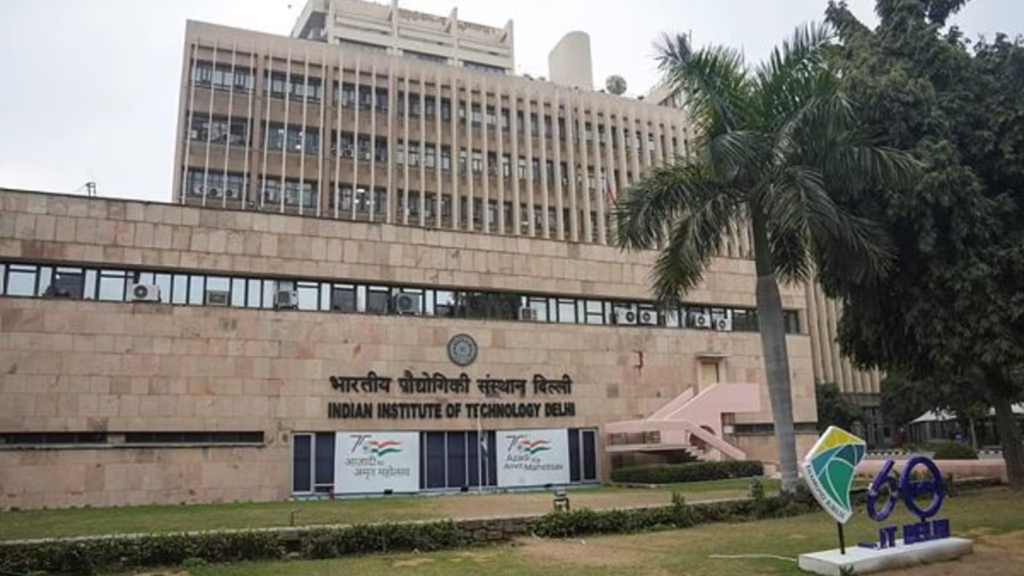
The Indian Institute of Technology (IIT) Delhi has rolled out a new executive programme focused on healthcare entrepreneurship and management, aimed at nurturing professionals who can drive innovation in India’s rapidly evolving healthcare sector. The programme will be conducted under IIT Delhi’s Continuing Education Programme (CEP), a statutory body authorised to run certificate courses and award credentials. According to IIT Delhi, the initiative is designed to equip participants with the skills and mindset required to navigate and shape the future of healthcare innovation. Applicants must possess a bachelor’s degree, while prior professional experience or exposure to projects in related domains will be considered an added advantage. The five-month programme will be delivered through live online classes held on weekends, complemented by dedicated hours for project work. The institute noted that India’s healthcare ecosystem is witnessing transformative changes, driven by the rise of digital health solutions, medical devices, artificial intelligence–enabled diagnostics, wearable technologies and a stronger focus on patient-centric care. However, persistent challenges such as fragmented service delivery, regulatory hurdles, limited commercialisation avenues and the demand for cross-disciplinary leadership continue to affect the sector. Against this backdrop, the executive programme aims to provide a comprehensive understanding of the entire healthcare innovation lifecycle. Through interactive online sessions and guided projects, participants will learn how to identify healthcare challenges and translate them into viable, market-ready solutions using design thinking, prototyping, testing and sound commercial strategies. The programme will be anchored by IIT Delhi’s Centre for Biomedical Engineering and supported by clinical expertise from specialists at AIIMS Delhi. Faculty members including Dr Arnab Chanda and Dr Biswarup Mukherjee will lead the sessions, integrating engineering, clinical practice, management and entrepreneurship to foster practical and scalable healthcare innovations. A major feature of the course is its strong emphasis on project-based learning. Participants will work on real-world healthcare problems, developing deployable prototypes with the help of structured mentoring, peer collaboration and continuous expert feedback. On successful completion, learners will receive an e-certificate from CEP, IIT Delhi, and gain access to a network of IIT Delhi faculty, AIIMS clinicians and industry professionals, enhancing both learning outcomes and professional opportunities. Source: Indian Express

IIT Delhi Introduces Executive Programme in Healthcare Entrepreneurship and Management Read More »