ArdorComm Media Group

Sunday, April 19, 2026 11:08 PM

community

RBI May Lower FY26 Inflation Forecast Amid Cooling Prices, CPI Likely to Rise in FY27: CareEdge Report

The Reserve Bank of India (RBI) is likely to revise its inflation forecast downward for the fiscal year 2025–26 during its upcoming Monetary Policy Committee (MPC) meeting in August, according to a report released by CareEdge Ratings. The report projects that Consumer Price Index (CPI) inflation may average around 3.1% in FY26 — notably below the RBI’s current estimate of 3.7%. However, inflation is anticipated to rebound to 4.5% in FY27, largely due to the low base effect from the previous year. “Given the sharp drop in FY26 inflation, a natural statistical rebound could lift average inflation to 4.5% in FY27,” CareEdge noted. The report attributes the recent softness in inflation to a significant drop in food prices and a supportive base effect. CPI inflation eased to 2.1% in June, the lowest level since January 2019, surprising market expectations. A major factor in this decline was deflation in the food and beverages category, which saw an overall contraction of 0.2% year-on-year. Specific items showed sharp price declines: vegetables fell 19%, pulses 12%, spices 3%, and meat 1.6%. The outlook for food inflation remains benign, supported by a strong agricultural season and continued base effect benefits. Core inflation, which excludes volatile food and fuel prices, ticked up slightly to 4.4% in June. However, this uptick was largely attributed to a spike in precious metal prices. When excluding gold and silver, core inflation stands at a more moderate 3.5%, the report clarified. While global economic slowdown continues to weigh on demand, CareEdge cautioned that factors such as geopolitical tensions and shifts in trade policies could still create volatility in commodity prices, warranting continued vigilance. Despite these risks, the inflation landscape appears favourable in the short term. However, the report warns that CPI inflation could breach the 4% threshold in the last quarter of FY26 as the positive base effect wanes. With actual inflation likely to undershoot RBI’s current projections for FY26, the central bank may opt to officially lower its target in the upcoming policy announcement. Source: ANI

RBI May Lower FY26 Inflation Forecast Amid Cooling Prices, CPI Likely to Rise in FY27: CareEdge Report Read More »

Despite Rise in MBBS Seats, Nearly 2,850 Vacant in 2024: Government Data

Despite a 39% surge in MBBS seats over the last few years, 2,849 undergraduate medical seats remained vacant in the 2024–25 academic year, according to the latest figures from the National Medical Commission (NMC). The data was shared in the Lok Sabha on August 1 by Anupriya Patel, Minister of State for Health and Family Welfare, in response to an unstarred question posed by TDP MP Putta Mahesh Kumar. India’s MBBS seat count rose from 83,275 in 2020–21 to 1,15,900 in 2024–25, driven by the establishment of new medical colleges and enhanced infrastructure and faculty availability. However, vacancies in undergraduate medical admissions (excluding AIIMS and JIPMER) peaked at 4,146 in 2022–23 before decreasing to 2,849 this year. The NMC has introduced the Minimum Standard Requirement Regulations, 2023, to ensure that institutions maintain robust standards in infrastructure, clinical materials, faculty strength, and other essential facilities. Among the states, Uttar Pradesh, Tamil Nadu, Karnataka, Maharashtra, and Gujarat accounted for the highest number of medical seats in both 2020–21 and 2024–25. To further boost medical education, the government has implemented a centrally sponsored scheme to upgrade district and referral hospitals into medical colleges, especially in underserved regions. Of the 157 medical colleges approved under this initiative, 131 are currently operational. Additionally, another centrally sponsored scheme is focused on expanding the capacity of existing state and central government medical colleges by strengthening infrastructure and increasing both MBBS and postgraduate seats. As part of the Pradhan Mantri Swasthya Suraksha Yojana (PMSSY), 75 Super Speciality Block projects have been approved to upgrade government medical colleges, with 71 already completed. Under the central sector initiative to establish new AIIMS, 22 institutes have been approved, and undergraduate courses have started in 19 of them. Source: Indian Express

Despite Rise in MBBS Seats, Nearly 2,850 Vacant in 2024: Government Data Read More »

71st National Film Awards 2025: Full Winners List and Highlights

The 71st National Film Awards, one of the most revered recognitions in Indian cinema, have been officially announced, honouring the best in filmmaking, performances, and technical brilliance from across the country. Known for their credibility and impartiality, the National Awards stand apart from other honours in the Indian film industry by prioritising artistic and cinematic excellence over commercial success. Administered by the Directorate of Film Festivals and presented by the President of India, these awards celebrate films certified by the Central Board of Film Certification (CBFC) during the previous calendar year (January 1 to December 31). A jury, consisting of noted film personalities, undertakes the task of screening entries and selecting winners across categories and languages. This year’s awards reflect a powerful blend of storytelling, technical achievement, and strong performances, cutting across regional and mainstream cinema. From high-profile Bollywood blockbusters to intimate regional dramas, the winners showcased the diversity and depth of Indian filmmaking. Major Acting Honours Best Actor was jointly awarded to Shah Rukh Khan for Jawan and Vikrant Massey for 12th Fail. This marked a significant milestone in Khan’s career as he bagged his first National Award for acting. Best Actress went to Rani Mukerji for her emotionally charged role in Mrs Chatterjee Vs Norway, which highlighted the struggles of a mother caught in an international legal battle. Supporting Performances Recognised Best Supporting Actor honours were shared between Vijayaraghavan (Pookkalam) and Muthupettai Somu Bhaskar (Parking). Best Supporting Actress was jointly awarded to Urvashi (Ullozhukku) and Janaki Bodiwala (Vash). Top Feature Films by Language Best Feature Film overall: 12th Fail Best Hindi Film: Kathal: A Jackfruit Mystery Best Telugu Film: Bhagavanth Kesari Best Tamil Film: Parking Best Malayalam Film: Ullozhukku Best Kannada Film: Kandeelu: The Ray of Hope Best Marathi Film: Shyamchi Aai Best Bengali Film: Deep Fridge Best Gujarati Film: Vash Best Punjabi Film: Godday Godday Chaa Best Odia Film: Pushkara Best Assamese Film: Rongatapu 1982 These selections showcase the cultural and linguistic diversity of Indian cinema, reaffirming the National Film Awards’ commitment to inclusivity. Technical Excellence and Direction Best Director: Sudipto Sen for The Kerala Story, praised for its bold narrative and technical finesse. Best Choreography: Vaibhavi Merchant for Rocky Aur Rani Kii Prem Kahaani Best Action Direction: Nandu and Prudhvi for Hanu-Man Best Lyrics: Kasarla Shyam for Balagam Best Music Direction: G.V. Prakash Kumar (Songs) for Vaathi Harshavardhan Rameshwar (Background Score) for Animal Performance in Music and Sound Best Male Playback Singer: P.V.N. S. Rohit for Baby Best Female Playback Singer: Shilpa Rao for Jawan Best Sound Design: Sachin Sudhakaran & Hariharan for Animal Other Key Technical Awards Best Cinematography: Prasanthanu Mohapatra for The Kerala Story Best Editing: Midhun Murali for Pookkaalam Best Production Design: Mohandas for 2018 – Everyone is a Hero Best Makeup: Shrikanth Desai for Sam Bahadur Best Costume Design: Sachin, Divya, Nidhhi for Sam Bahadur Special Mention: M.R. Radhakrishnan (Re-recording mixer) for Animal Final Thoughts The 71st National Film Awards not only celebrated artistic and cinematic triumphs but also reflected the evolving landscape of Indian cinema, where regional films continue to shine alongside mainstream blockbusters. The event acknowledged both legendary figures and fresh voices, reinforcing the relevance of storytelling that resonates across audiences and regions. Shah Rukh Khan’s long-awaited National Award win and the sweeping recognition for 12th Fail stood out as emotional and symbolic moments, while the inclusion of underrepresented languages and filmmakers demonstrated the Awards’ commitment to embracing India’s cinematic mosaic.

71st National Film Awards 2025: Full Winners List and Highlights Read More »

Delhi University Allows Pause and Resume Option for UG Students under NEP 2020 Guidelines

In a landmark step towards making higher education more flexible and inclusive, Delhi University (DU) has rolled out a new academic policy allowing undergraduate students to pause and resume their degree programmes. The change comes under the Multiple Entry and Exit (ME-ME) system, introduced as part of the National Education Policy (NEP) 2020 and implemented through the Undergraduate Curriculum Framework (UGCF) 2022. The ME-ME system enables students to exit a programme after completing any even-numbered semester and rejoin within a defined period—without losing their earned academic credits. The move is expected to particularly benefit students facing interruptions due to personal, financial, or professional commitments. What the New System Offers: Exit after 1st Year (Semester II): Undergraduate Certificate (minimum 44 credits) Exit after 2nd Year (Semester IV): Undergraduate Diploma (minimum 88 credits) Exit after 3rd Year (Semester VI): Bachelor’s Degree (minimum 132 credits) Continue till 4th Year (Semester VIII): Bachelor’s with Honours/Research/Entrepreneurship (minimum 176 credits) Students re-entering the programme must do so within three to four years, depending on the exit level, and within an overall seven-year cap. The credit system is based on classroom and lab hours, with one credit representing one hour of teaching or two hours of lab/field work per week. DU has clarified that students must apply for an official exit before the next academic session begins. If a student exits mid-session, only the qualification corresponding to the last completed academic year will be recognised. Any disputes related to the new system will be resolved by the Vice Chancellor. Additional rules regarding lateral admissions from other universities or institutions are expected in the coming months. Why It Matters In an era where student priorities are increasingly shaped by internships, entrepreneurial pursuits, competitive exams, or family responsibilities, this move brings Indian higher education in step with global norms. The modularity of the ME-ME system recognises academic effort at every stage and ensures students do not have to abandon their goals due to temporary setbacks. With this reform, Delhi University is not just reducing dropout rates—it is reimagining higher education for the 21st century. Source: TOI

Delhi University Allows Pause and Resume Option for UG Students under NEP 2020 Guidelines Read More »

DRDO Successfully Concludes Dual Flight-Tests of Indigenous ‘Pralay’ Missile

The Defence Research and Development Organisation (DRDO) has successfully conducted two back-to-back flight-tests of its homegrown ‘Pralay’ missile on July 28 and 29, 2025, from Dr APJ Abdul Kalam Island, located off the coast of Odisha. These tests were part of the User Evaluation Trials designed to validate both the upper and lower range capabilities of the missile system. In both trials, the Pralay missile demonstrated exceptional performance by accurately following the designated trajectory and hitting the intended targets with high precision. All onboard subsystems functioned flawlessly, with their performance verified through real-time tracking data gathered by various sensors deployed by the Integrated Test Range (ITR), including those stationed on ships near the target area. The Pralay missile, powered by solid propellant, is a quasi-ballistic weapon featuring cutting-edge guidance and navigation systems. It is designed to deliver multiple types of warheads with remarkable accuracy against a range of targets. The development of the missile was spearheaded by the Research Centre Imarat (RCI) in collaboration with several DRDO laboratories such as the Defence Research & Development Laboratory (DRDL), Advanced Systems Laboratory (ASL), Armament Research & Development Establishment (ARDE), High Energy Materials Research Laboratory (HEMRL), Defence Metallurgical Research Laboratory (DMRL), Terminal Ballistics Research Laboratory (TBRL), Research & Development Establishment (Engineers), and the Integrated Test Range. Key industry partners included Bharat Dynamics Limited (BDL), Bharat Electronics Limited (BEL), as well as several other industrial units and MSMEs. The flight-tests were closely observed by senior DRDO scientists, officials from the Indian Army and Air Force, and representatives from the participating industries. Defence Minister Rajnath Singh congratulated DRDO, the Armed Forces, and the industrial partners on the successful tests, highlighting that the integration of such modern technologies significantly enhances India’s defence capabilities. DRDO Chairman and Secretary of the Department of Defence R&D, Dr Samir V Kamat, also lauded the team for the achievement, noting that the successful conclusion of these Phase-1 trials marks a significant step toward the missile’s formal induction into the Armed Forces. Source: Economic Times

DRDO Successfully Concludes Dual Flight-Tests of Indigenous ‘Pralay’ Missile Read More »

Meenakshi Hospital Uses CRRT to Save Eight Critically Ill Patients in Thanjavur

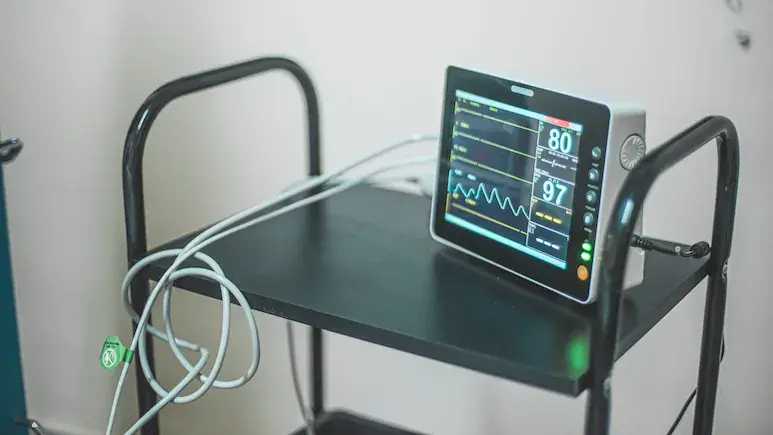
In a significant medical achievement, Meenakshi Hospital in Thanjavur has successfully saved the lives of eight critically ill patients using Continuous Renal Replacement Therapy (CRRT), a specialised form of dialysis designed for patients in intensive care. Dr. S. Gowri Shankar, Consultant Nephrologist at the hospital, revealed that the treatment was administered over the past few months to patients suffering from life-threatening kidney failure and other complications. Among the cases, one particularly severe patient—a 40-year-old man with a history of heavy alcohol consumption and smoking—was admitted with dangerously low blood pressure and critically high creatinine levels, indicating severe kidney distress. The patient, who was reliant on two inotropic drugs to sustain heart function and stabilize blood pressure, was immediately started on CRRT. This method of dialysis, unlike conventional hemodialysis, operates continuously over a 24-hour period, gently filtering the blood while preserving cardiovascular stability—crucial for patients with unstable conditions. Remarkably, within 24 hours of initiating CRRT, the patient’s vital signs began to stabilize. By the second day, his urine output—a key indicator of kidney recovery—increased significantly, and his creatinine levels returned to a safer range, indicating a strong turnaround in his condition. CRRT is particularly beneficial for patients experiencing multi-organ dysfunction or conditions such as sepsis, heart failure, severe liver issues, or dysautonomic shock, where the body fails to regulate blood pressure effectively. The therapy provides a controlled and gradual process of fluid and toxin removal, making it a safer alternative for critically ill individuals who cannot tolerate the more aggressive traditional dialysis methods. Dr. Gowri Shankar emphasized that CRRT’s ability to stabilize patients while supporting failing kidneys is proving to be a game-changer in critical care nephrology, especially for high-risk patients in intensive care units. Source: The Hindu  

Meenakshi Hospital Uses CRRT to Save Eight Critically Ill Patients in Thanjavur Read More »

India Inc Poised to Offer 6.2% to 11.3% Average Salary Hikes Across Sectors: TeamLease Report

Corporate India is set to witness salary hikes ranging between 6.2% and 11.3% in the current financial year, as companies realign their workforce strategies with a sharper focus on skill certifications and performance-linked incentives, according to the TeamLease Services’ Jobs and Salaries Primer 2025–26 report released on Tuesday. Drawing insights from over 1,300 organisations across 23 industries and 20 cities, the report highlights that some job roles may see hikes of up to 13.8%. The evolving demand for professionals who can blend technical expertise with business impact is driving this shift in compensation trends, said Kartik Narayan, CEO – Staffing at TeamLease Services. Among the sectors expected to offer the highest salary increases are Electric Vehicles (EV) and EV infrastructure (11.3%), consumer durables (10.7%), retail (10.7%), and non-banking financial companies (NBFCs) (10.4%). Top-paying roles in these sectors include: Electrical Design Engineer in the EV domain (12.4% hike), In-Store Demonstrator in consumer durables (12.2%), Relationship Executive in NBFCs (11.6%), and Fashion Assistant in retail (11.2%). The report also points to a robust revival in the blue-collar segment, thanks to rising infrastructure investments, a growing EV ecosystem, and renewed activity in real estate and manufacturing. Key roles like mechanic (10.4%), material handler (10%), machine operator (9.9%), and electrician (9.3%) are witnessing healthy pay increases. “This strong wage momentum in traditional blue-collar roles signals a need for companies to recalibrate hiring strategies in line with emerging growth sectors. For workers, upskilling will be key to remaining relevant and resilient,” Narayan added. In terms of cities and individual roles, standout salary hikes include: Quality Control Inspector in Pune (13.8%), MIS Executive in Hyderabad (13.4%), Data Engineer in Bengaluru (12.9%), Electrical Design Engineer in Mumbai (12.6%), and Sales Executive in Gurgaon (12.4%). Functionally, the most significant hikes are projected in sales and marketing roles (9.9%), followed by engineering (9.5%). Other domains such as finance, customer service, back-office operations, HR, and administration are expected to receive moderate increases between 8.2% and 8.6%, indicating balanced growth across business functions. Overall, the report underscores a broader recalibration of compensation structures in India Inc, with skill-based hiring, retention incentives, and future-ready talent emerging as strategic priorities. Source: PTI

India Inc Poised to Offer 6.2% to 11.3% Average Salary Hikes Across Sectors: TeamLease Report Read More »

Global Media & Entertainment Industry to Reach $3.5 Trillion by 2029: PwC Forecast

According to PwC’s latest Global Entertainment & Media Outlook 2025–29, the worldwide media and entertainment (M&E) sector is set to hit $3.5 trillion in revenues by 2029, up from $3 trillion in 2024. The industry is projected to grow at a compound annual growth rate (CAGR) of 3.7%, outpacing global economic growth but still trailing the more aggressive expansion seen before the pandemic. Advertising to Power Industry Expansion A major driver behind this growth will be advertising, which is forecasted to rise at a healthy 6.1% CAGR. As traditional subscription-based and paid content models experience saturation—especially in more developed markets—advertising is expected to take centre stage, increasingly fueled by digital innovations and AI. Digital ad formats currently account for 72% of all advertising revenue and are projected to rise to 80% by 2029. This shift is being bolstered by new technologies like AI-driven targeting and hyper-personalisation, especially in areas such as retail search advertising and in-game ads. Connected TV and AI-Led Disruption One of the standout trends highlighted in the report is the rapid transformation in the connected TV advertising space. In 2020, connected TV accounted for just 5.9% of traditional broadcast TV ad revenues. By 2024, this figure surged to 22%, and PwC estimates that by 2029, it will climb to $51 billion—equivalent to 45% of traditional broadcast ad revenue. The fusion of AI and personalised digital content delivery is expected to accelerate this trend further. Connectivity Still Dominates, but Gap Narrows Despite the advertising boom, connectivity remains the M&E industry’s largest revenue contributor. This segment is forecasted to generate $1.3 trillion by 2029, driven largely by mobile internet services. However, with the faster growth of digital ad revenues, the gap between connectivity and advertising spend is likely to narrow in the coming years. Strong Growth in Gaming and Cinema Video gaming is another sector poised for significant expansion. Revenues from the gaming industry are expected to reach close to $300 billion by 2029, growing at a CAGR of 5.7%. Meanwhile, the global box office is projected to climb from $33 billion in 2024 to $41.5 billion in 2029, signaling a rebound in theatrical entertainment. A Changing Landscape Ahead While macroeconomic headwinds and tight consumer spending may temper growth in some areas, PwC’s outlook suggests that innovation, digital transformation, and evolving consumer habits—particularly in ad-supported models—will redefine the M&E industry by 2029. Source: PwC

Global Media & Entertainment Industry to Reach $3.5 Trillion by 2029: PwC Forecast Read More »

Kendriya Vidyalayas See Sharpest Drop in Fresh Admissions in Five Years

Fresh admissions to Kendriya Vidyalayas (KVs) have dipped to a five-year low for the 2024–25 academic year, with only 1,39,660 new students enrolled, as per data presented by the Ministry of Education in the Lok Sabha. This marks a steady and concerning downward trend in both new enrolments and overall student numbers in India’s flagship network of centrally run schools. A Downward Spiral in Enrolments Responding to a question in Parliament, Union Education Minister Dharmendra Pradhan provided year-wise figures highlighting the consistent drop in KV enrolments. New admissions have declined from 1,95,081 in 2020–21 to 1,39,660 in 2024–25 — a fall of nearly 29%. Meanwhile, the total student strength across all KVs also saw a dip from 14,29,434 in 2021–22 to 13,50,518 in 2024–25. Academic Year Fresh Enrolments Total Student Strength 2020–21 1,95,081 13,87,763 2021–22 1,82,846 14,29,434 2022–23 1,57,914 14,24,147 2023–24 1,75,386 13,89,560 2024–25 1,39,660 13,50,518 Though there was a temporary recovery in enrolments during 2023–24, the overall trajectory has remained downward, with this year witnessing the most significant fall in both fresh admissions and total enrolment figures. Structural Strains in a National Network Established to cater primarily to children of Central Government employees — particularly those in transferable jobs within Defence, Paramilitary Forces, PSUs, and autonomous institutions — the KV system currently operates 1,280 schools across India. However, challenges such as inadequate infrastructure, teacher shortages, and admission bottlenecks, especially in urban and semi-urban areas, are beginning to strain the system. Expansion Despite Falling Numbers Despite the declining enrolment trend, the Central Government approved the setting up of 85 new Kendriya Vidyalayas in December 2024, aimed at boosting capacity in the Civil and Defence sectors. Additionally, a KV in Shivamogga, Karnataka, is being expanded by adding two new sections per class. The initiative carries a total budget of ₹5,872.08 crore — ₹2,862.71 crore allocated for capital projects (including construction) and ₹3,009.37 crore for recurring expenditures. However, actual implementation remains slow due to challenges such as: Delays in land transfer and legal ownership Approval processes for building designs and cost estimates Fund disbursal lags Administrative clearance delays at the local level These procedural hurdles often stall the timely launch of new schools or the expansion of existing ones. Decoding the Decline Experts attribute the drop in admissions to several key factors: Overcrowding: Many KVs have hit their capacity limits, especially in cities, making it harder for new students to secure seats. Construction delays: Several approved schools are yet to become operational due to incomplete infrastructure. Emerging competition: An increase in affordable, private CBSE schools in smaller towns may be attracting families away from KVs. Policy ambiguities: Unclear guidelines in certain regions are adding to confusion over eligibility and admissions. Rethinking the Road Ahead While the government continues to emphasize the ongoing expansion of the KV network, the sharp drop in enrolment calls for an urgent review of operational and policy priorities. Education experts suggest the need for swift action to improve school infrastructure, accelerate construction timelines, digitize admissions, and invest in teacher training. With public demand for affordable, quality education still high, the future of Kendriya Vidyalayas may well depend on how effectively these systemic issues are addressed. Source: TOI

Kendriya Vidyalayas See Sharpest Drop in Fresh Admissions in Five Years Read More »

TCS to Lay Off Over 12,000 Employees Amid AI Disruption and Economic Pressures

Ardorcomm news

In a landmark decision, Tata Consultancy Services (TCS), India’s largest IT services provider and the crown jewel of the Tata Group, is set to let go of 12,261 employees — nearly 2% of its global workforce — making it the biggest layoff in the company’s history. The move comes as TCS navigates a rapidly evolving technology landscape marked by AI-driven disruption, weakening demand, and global economic headwinds. The company, which had a workforce of over 610,000 as of June, is restructuring to align with new business realities. Historically, workforce reduction at TCS has been modest — for instance, in FY15, the firm cut about 3,000 jobs, roughly 1% of its employee base. This latest wave of layoffs will largely impact mid- to senior-level professionals, particularly those who cannot be transitioned into new roles within the organization. The restructuring signals a major pivot for TCS, as it intensifies its focus on automation and AI to remain competitive in an increasingly margin-sensitive market. “This transformation is about preparing TCS for the future,” CEO K Krithivasan noted in an internal communication. “While such changes are essential for our continued growth, we recognize the challenges it brings to our colleagues. We deeply appreciate their contributions and will support them through this transition.” Analysts say the decision reflects a broader industry trend. Phil Fersht, CEO of HfS Research, highlighted that AI is significantly disrupting the traditional, manpower-heavy IT services model. Clients are also pushing for steep cost reductions — sometimes as much as 20-30% — compelling firms like TCS to reevaluate their cost structures. The trend isn’t isolated to TCS. Other Tata Group companies such as Tata Motors and Tata Steel have also undertaken job cuts in recent years to streamline operations and boost profitability. In 2019, Tata Steel cut 3,000 positions in its European business. This move by TCS underscores the shifting priorities within the IT industry, where future-readiness increasingly hinges on agility, automation, and leaner operations. Source: Economic Times

TCS to Lay Off Over 12,000 Employees Amid AI Disruption and Economic Pressures Read More »