ArdorComm Media Group

Thursday, April 23, 2026 6:12 AM

community

Over 1,500 Classrooms in Dakshina Kannada and Udupi Await Repairs as Monsoon Nears

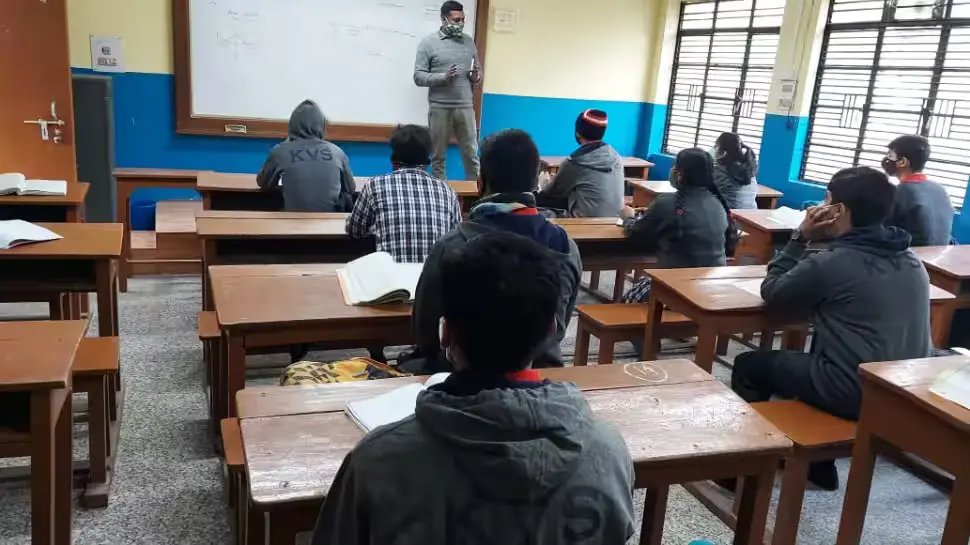
With just a month remaining for schools to reopen and the monsoon set to arrive, over 1,550 classrooms in government schools across Dakshina Kannada and Udupi districts remain in urgent need of repairs. According to data from the state education department, a total of 1,323 classrooms in Dakshina Kannada and 274 in Udupi are yet to be restored, despite a detailed repair proposal having been submitted to the Karnataka government months ago. Out of the 21,255 classrooms statewide requiring major repairs, these coastal districts represent a significant portion. The urgency is compounded by the weather, as damaged and cracked roofs in some schools are already causing water leakage. “If not addressed immediately, the rains will severely impact classroom conditions,” said a head teacher from a government school in Mangaluru, stressing the importance of completing the repairs during the summer break. Dakshina Kannada is home to 893 primary and 170 high schools, while Udupi has 570 primary and 105 high schools. During the last academic year, no direct funds were allocated to these two districts, even though 2,162 classrooms in 17 other districts received repair support. Local authorities had to rely on alternative funding sources for temporary fixes. This year, officials confirm that a proposal has once again been submitted. “We are prioritising emergency repairs, especially those that impact student safety. All essential works will be completed before the monsoon,” said Govinda Madival, DDPI of Dakshina Kannada. Ganapati K, DDPI of Udupi, assured that repairs are being carried out in phases, based on information gathered from schools. Alongside Dakshina Kannada and Udupi, Kodagu district also has 189 classrooms in need of urgent attention. Source: daijiworld

Over 1,500 Classrooms in Dakshina Kannada and Udupi Await Repairs as Monsoon Nears Read More »

Bhopal Central Jail Inmates Receive Comprehensive Medical Care at Special Health Camp

In a significant initiative aimed at ensuring healthcare access behind bars, more than 900 inmates and staff at Bhopal Central Jail availed medical services during a day-long health camp organised by the Bhopal district health department in collaboration with the District Legal Services Authority (DLSA). The camp saw a turnout of 922 individuals, including inmates and jail personnel, benefiting from consultations and treatments across multiple specialities. Medical experts provided 196 consultations in general medicine, 86 in dermatology, 44 in dentistry, 165 in ophthalmology, 69 in ENT, 128 in orthopaedics, 15 in gynaecology, and 42 in mental health services. Specialised consultations were also offered in neurology, oncology, respiratory medicine, gastroenterology, and more. Routine screenings for hypertension and diabetes were conducted to identify lifestyle-related health concerns. The camp also focused on communicable disease management and preventive care education, with medical teams actively informing attendees about government healthcare schemes and services. Dr. Prabhakar Tiwari, Chief Medical and Health Officer of Bhopal, highlighted the joint effort and underlined the need for inclusive healthcare. “The camp was organised for the well-being of inmates and jail staff, ensuring no one is left behind in accessing quality medical attention,” he said. “Health issues identified during the camp, such as high blood pressure and diabetes, are the same as those prevalent in the general population. There was no significant difference in health concerns,” he told TOI. This initiative not only provided essential care but also helped promote health awareness within the prison system, reinforcing the importance of equity in public health services. Authorities affirmed that such camps would continue to be held regularly to maintain the physical and mental well-being of inmates and staff alike. Source: TOI

Bhopal Central Jail Inmates Receive Comprehensive Medical Care at Special Health Camp Read More »

Curtin University to Lead Key Role in $271M National 3D Printing Innovation Drive

Curtin University is set to play a pivotal role in Australia’s $271 million Additive Manufacturing Cooperative Research Centre (AMCRC), a national initiative aimed at transforming the country’s manufacturing landscape through next-generation 3D printing technologies. Launched with $58 million in federal funding, the AMCRC will unite 14 research institutions and over 50 industry partners in a bid to build a connected, sovereign additive manufacturing ecosystem. This initiative targets advancements in sectors including defence, aerospace, healthcare, automotive, mining, and construction. Additive manufacturing—or industrial 3D printing—enables the creation of lighter, stronger, and more intricate components by building products layer by layer from digital designs, significantly reducing material waste. Curtin’s contribution will be driven by researchers from the John de Laeter Centre and the Curtin Corrosion Centre, who will collaborate with industry leaders such as Austal, Australia’s premier shipbuilder. Curtin’s strengths in materials science, corrosion research, and manufacturing will be key to developing innovative, sustainable solutions for industry. Curtin Deputy Vice-Chancellor Research, Professor Melinda Fitzgerald, hailed the initiative as a milestone for Australian manufacturing. “Curtin is proud to contribute to this national collaboration, using world-class research to support Australia’s sovereign capabilities and create new economic opportunities,” she said. Dr Karl Davidson and Associate Professor Zakaria Quadir, along with Associate Professor Kod Pojtanabuntoeng and Professor Vladimir Golovanevskiy, will spearhead Curtin’s involvement in AMCRC projects. Dr Davidson noted the transformative potential of additive manufacturing: “This opens new doors for materials innovation, improving supply chain resilience, efficiency, and sustainability.” The AMCRC will support research and commercialisation projects over the next seven years, also focusing on additive technologies in marine engineering, mining, and agriculture—strengthening Australia’s position in advanced manufacturing and industrial innovation. Source: Hindustan

Curtin University to Lead Key Role in $271M National 3D Printing Innovation Drive Read More »

Dengue Cases Rise in Karnataka Ahead of Monsoon, Over 1,100 Infections Reported

Dengue infections are rising steadily across Karnataka even before the onset of the monsoon, with 1,186 cases reported between January and April 30, 2025. Health officials are particularly concerned that over 50 of these cases are in infants under one year of age, while 553 infections are among children below 18. Early summer showers, stagnant water, and construction activity have led to increased mosquito breeding, with Bengaluru alone accounting for 513 cases—43% of the state’s total. The number of infections spiked significantly in April, rising from 707 cases in early March to 1,186 by the end of April. Though this year’s numbers are lower compared to the same period last year, the memory of 2024—when Karnataka recorded 32,826 dengue cases, the highest in India—has health officials on alert. The state had also reported 20 dengue-related deaths in 2024, trailing only Kerala (99 deaths) and Maharashtra (26 deaths). State Joint Director of the Integrated Disease Surveillance Programme, Dr Ansar Ahmed, confirmed that all six hospitalised cases so far this year were from Bengaluru. He urged the public to prevent water stagnation and remain vigilant, as monsoon conditions favour the spread of mosquito-borne, waterborne, and airborne diseases. Dr Haleema Yezdani, a Bengaluru-based physician, warned that water stagnation after rains becomes a prime breeding ground for mosquitoes. She emphasized early detection, noting that dengue symptoms—high fever, severe headache, fatigue, nausea, and rash—should not be ignored. In response to last year’s outbreak, Karnataka declared dengue a notifiable epidemic disease and imposed a price cap on diagnostic tests. The Health Department also reserved beds in government hospitals and launched a toll-free helpline. With more rains forecast, health authorities are stepping up awareness and surveillance efforts to prevent another outbreak. Source: Hindu  

Dengue Cases Rise in Karnataka Ahead of Monsoon, Over 1,100 Infections Reported Read More »

New CAR-T Cell Therapy Shows Hope for Refractory CD30+ Lymphoma Patients

Researchers at Sant Pau Research Institute, in partnership with Sant Pau Hospital and the Josep Carreras Leukaemia Research Institute, have developed a groundbreaking CAR-T cell therapy—HSP-CAR30—targeting the CD30 protein. This therapy has shown promising results in a Phase I clinical trial for patients with refractory CD30+ lymphomas, including Hodgkin lymphoma. Key Highlights: 100% overall response rate in 10 patients with relapsed or treatment-resistant CD30+ lymphoma. 50% achieved complete remission, with no signs of cancer on scans and tests. 60% of complete responders remained cancer-free after 34 months. No serious side effects were observed—only mild, manageable symptoms like low-grade cytokine release syndrome and no neurotoxicity. What Makes HSP-CAR30 Unique? Traditional CAR-T therapies for CD30+ lymphoma have struggled with limited cell persistence and high relapse rates. The HSP-CAR30 version is optimized to: Target a stable region of the CD30 protein, reducing immune evasion by tumor cells. Promote long-lasting immune memory by enhancing central memory (TCM) and stem-like memory T cells (TSCM-LIKE). Use a new manufacturing mix of IL-21, IL-7, and IL-15 to boost durable T-cell responses. Phase II Trial Update: 32 patients have now been treated in the ongoing Phase II trial. Over 55% have achieved complete remission. Data from both trials were presented at the 2024 ASH Annual Meeting. A Step Forward in Europe: This marks Europe’s first successful CAR-T30 study, potentially offering new hope to patients with limited treatment options. Backed by Strong Support: The project received funding and resources from: Josep Carreras Leukaemia Foundation La Marató de TV3 Carlos III Health Institute ‘La Caixa’ Foundation European Union and NextGen EU Blood and Tissue Bank, among others. With further study, HSP-CAR30 could redefine treatment for CD30+ lymphomas and bring renewed hope to patients who have exhausted standard options. Source: ANI

New CAR-T Cell Therapy Shows Hope for Refractory CD30+ Lymphoma Patients Read More »

Bengaluru Civic Polls Likely Delayed by a Year Amid Implementation of New Governance Act

The long-awaited elections to Bengaluru’s civic agency could be delayed by up to a year, following the implementation of the new Greater Bengaluru Governance (GBG) Act. The law, which replaces the existing BBMP Act, was recently approved by Governor Thaawar Chand Gehlot. However, the transition involves several procedural steps that the government must complete before polls can be held. Central to the GBG Act is the formation of a Greater Bengaluru Authority (GBA), which requires defining an expanded Bengaluru area beyond the current 786 sq km. The government also intends to restructure the city into multiple corporations—potentially up to seven—requiring new ward boundaries and reservation patterns to be drawn. Urban Development Department officials estimate that this entire process may take at least a year. However, Transport Minister Ramalinga Reddy has stated that the government aims to conduct elections by December. “We will try to complete all formalities expeditiously and consult elected representatives from all parties for their suggestions,” he said. The delay has prompted sharp criticism from opposition leaders and civil society groups. BJP leader R Ashoka accused the government of using the GBG Act as a pretext to stall elections further, pointing out that BBMP polls have already been delayed for nearly five years. CN Ashwath Narayan echoed the sentiment, blaming the current government for failing to hold timely elections after taking office in May 2023. Prakash Belawadi, convener of Bengaluru Town Hall, noted that elections could still be conducted under the BBMP Act since the appointed day under the GBG Act has not yet been notified. Civil groups are considering legal action to push for elections under the existing law. Meanwhile, the Karnataka State Election Commission plans to approach the High Court to expedite delayed elections in other cities like Mysuru, Tumakuru, and Mangaluru.

Bengaluru Civic Polls Likely Delayed by a Year Amid Implementation of New Governance Act Read More »

Delhi Cabinet Approves Landmark Bill to Regulate Private School Fees

In a major push for transparency and accountability, the Delhi Cabinet on Tuesday cleared the draft of the Delhi School Education (Transparency in Fixation and Regulation of Fees) Bill 2025. The proposed legislation, described as “bold and historic” by Chief Minister Rekha Gupta, aims to end arbitrary fee hikes by private schools across the capital. The bill will apply to all 1,677 private unaided schools in Delhi and introduces three sweeping reforms. The first reform mandates a three-tier fee regulation mechanism at the school, district, and state levels. Each school will form a School-Level Fee Regulation Committee that includes parents, granting them direct participation in fee-related decisions. District- and state-level committees will hear appeals and ensure fairness across institutions. The second reform establishes strict penalties for violations. Schools increasing fees without prior approval could be fined between ₹1 lakh and ₹10 lakh. Repeat offenders may face withdrawal of government recognition. “For too long, private schools raised fees at will. This bill ends that,” said CM Gupta. Section 15 of the bill empowers the Director of Education to enforce penalties using stringent recovery methods. These include property attachment and sale, taking possession of school assets, and appointing receivers to manage or liquidate school property. The third major reform sets clear parameters for fee determination—such as a school’s location, infrastructure quality, academic outcomes, and genuine financial need. This aims to bring long-needed consistency and transparency to fee fixation, an area frequently mired in disputes between schools and parents. With these measures, the Delhi government hopes to rein in exploitative practices, empower parents, and make quality education more accountable and accessible. Source: Hindustan

Delhi Cabinet Approves Landmark Bill to Regulate Private School Fees Read More »

Palestine Named Most Dangerous Place for Journalists in RSF’s 2025 Report

Palestine has emerged as the most dangerous place in the world for journalists, according to Reporters Without Borders (RSF), which released its 2025 World Press Freedom Index on Friday. Amid Israel’s war on Gaza, the media watchdog reported that nearly 200 journalists were killed in the first 18 months of the conflict, with at least 42 killed while actively reporting. “Trapped in the enclave, journalists in Gaza have no shelter and lack everything, including food and water,” RSF said. The situation in the West Bank is equally alarming, where both Israeli forces and settlers routinely harass journalists. A wave of arrests following October 7 marked a sharp escalation in repression, RSF noted. The report also highlighted the pressures faced by journalists from Palestinian authorities. Those suspected of collaboration with Israel face threats from groups like Hamas and Islamic Jihad, while the Palestinian Authority’s cybercrime law further restricts press freedom. Palestine dropped to 163rd in the global press freedom rankings—six places lower than in 2024. Overall, press freedom declined in 112 out of 180 countries and territories, with the global average score reaching a new low of 55. The United States dropped to 57th place, with RSF accusing President Donald Trump—now serving a second term—of “overseeing a troubling deterioration in press freedom.” The report cites his politicisation of the Federal Communications Commission (FCC), a ban on The Associated Press from the White House, and efforts to dismantle the US Agency for Global Media as key concerns. Israel dropped 11 spots to 112th, with RSF citing increasing state pressure on media independence. Only pro-government media outlets are granted access to Prime Minister Netanyahu, while dissenting voices like Haaretz face boycotts. Eritrea ranked last, with Norway, Estonia, and the Netherlands topping the list. Source: Al Jazeera

Palestine Named Most Dangerous Place for Journalists in RSF’s 2025 Report Read More »

New Education System is Transforming India’s Future, Says PM Modi at YUGM Conclave

In a powerful address at the YUGM conclave, Prime Minister Narendra Modi emphasized the transformative role of education in shaping the nation’s future. Highlighting the government’s commitment to preparing youth for the challenges and opportunities of the 21st century, he said, “The education system plays a key role in preparing the youth for the country’s future.” PM Modi pointed to the introduction of the New Education Policy (NEP) as a pivotal step toward aligning India’s education system with global standards. “After the introduction of the new Education Policy, we are seeing big changes in the national curriculum framework and learning and teaching material,” he stated. A major highlight of his speech was the integration of artificial intelligence in education. Under the “One Nation One Education” initiative, AI-based infrastructure has already been set up and is poised for expansion. Modi asserted that the goal is to “Make AI Work for India,” stressing the importance of future-ready learning environments. He also discussed the establishment of state-of-the-art research and development cells across the country, underlining their contribution to innovation and self-reliance. “We have to work to make India the best in the world in every future technology,” Modi said. The Prime Minister revealed that India’s gross expenditure on research and development has more than doubled—from ₹60,000 crore in 2013–14 to ₹1.25 lakh crore today. He emphasized the importance of rapid innovation cycles, stating, “It is crucial that the journey from idea to prototype to product is completed in the shortest time possible.” Closing his address, Modi said, “The trinity of Talent, Temperament and Technology will transform India’s future. Our university campuses are becoming dynamic centres where Yuvashakti is driving breakthrough innovations.” Source: indiatvnews

New Education System is Transforming India’s Future, Says PM Modi at YUGM Conclave Read More »

WHO Reaffirms Pledge to Shield Children from Vaccine-Preventable Diseases

During World Immunisation Week, the World Health Organisation (WHO) renewed its commitment to safeguarding children from vaccine-preventable diseases, stressing the transformative power of vaccines in improving health, education, and national development. In a video message, Saima Wazed, WHO South-East Asia Regional Director, emphasized that immunisation is one of the most effective public health measures. “Vaccines are safe, save lives, and immunisation for all is essential,” she said, reiterating this year’s theme: “Immunisation for all is humanly possible.” Wazed noted that over the past 50 years, vaccines have saved more than 154 million lives globally—equivalent to six lives every minute. The South-East Asia Region alone has accounted for 38 million of these lives, showcasing the region’s proactive stance on immunisation. She highlighted major achievements, including the sustained elimination of wild poliovirus and maternal and neonatal tetanus, as well as significant progress against measles, rubella, and hepatitis B. “Our region vaccinates over 40 million pregnant women and 37 million newborns annually and supplies 46% of the global vaccine demand,” she added. However, Wazed acknowledged ongoing challenges. “Despite our progress, more than 2 million children remain completely unvaccinated. The risk of outbreaks continues to threaten communities,” she warned. Shrinking global health budgets, she said, are putting pressure on immunisation programmes and outbreak response systems. To counter these threats, Wazed urged renewed investment in routine immunisation, greater innovation, and a united effort to end vaccine hesitancy. “To protect our progress and reach every child, we must act now,” she urged. “Vaccines represent our greatest achievement—and our children, our greatest treasure.” Wazed concluded by calling for collective action from governments, health workers, communities, and global partners to ensure no child is left behind. Source: ANI

WHO Reaffirms Pledge to Shield Children from Vaccine-Preventable Diseases Read More »