ArdorComm Media Group

Wednesday, June 24, 2026 10:20 PM

community

WHO Estimates COVID-19 Linked to 22.1 Million Excess Deaths Worldwide Between 2020 and 2023

A new report released by the World Health Organization has revealed that the COVID-19 pandemic was associated with an estimated 22.1 million excess deaths globally between 2020 and 2023, underscoring the devastating impact the crisis had on health systems and societies worldwide. Published in the WHO’s latest World Health Statistics report, the figure is more than three times higher than the officially reported COVID-19 death toll, as it includes both direct fatalities caused by the virus and indirect deaths resulting from disrupted healthcare services, delayed treatments, and strained medical systems. According to the report, the pandemic erased nearly a decade of progress in global life expectancy, with recovery remaining slow and uneven across different regions of the world. Despite the setbacks, the report highlighted encouraging progress in several public health areas. New HIV infections declined by 40% between 2010 and 2024, while tobacco and alcohol consumption also registered reductions during the same period. The number of people requiring treatment for neglected tropical diseases dropped by 36%. The WHO further noted improvements in access to essential services between 2015 and 2024. Nearly 961 million people gained access to safe drinking water, 1.2 billion received improved sanitation facilities, 1.6 billion gained access to basic hygiene services, and 1.4 billion people benefited from cleaner cooking solutions. Regional progress was also evident in some areas. The WHO African Region recorded a 70% reduction in HIV infections and a 28% decline in tuberculosis cases, outperforming global averages. Meanwhile, the South-East Asia Region was reported to be on course to meet its 2025 malaria reduction milestone. However, the report warned that several health challenges continue to threaten global progress. Malaria incidence has risen by 8.5% since 2015, moving the world further away from international targets. Anaemia continues to affect 30.7% of women of reproductive age globally, with little improvement over the last decade. The prevalence of overweight children under five reached 5.5% in 2024, while violence against women remains a serious concern, with one in four women worldwide experiencing intimate partner violence. WHO Director-General Tedros Adhanom Ghebreyesus stated that the findings reflect “both progress and persistent inequality,” adding that millions of people, especially women, children, and underserved populations, still lack access to the fundamental conditions required for healthy living. The report also expressed concern over slowing progress toward Universal Health Coverage (UHC). Between 2015 and 2023, the global UHC service coverage index improved only slightly from 68 to 71. Additionally, one in four people globally experienced financial hardship due to healthcare expenses, while nearly 1.6 billion people were either living in or pushed into poverty because of out-of-pocket medical costs in 2022. Childhood vaccination coverage also remains below global targets, contributing to renewed outbreaks of preventable diseases. Although maternal mortality has declined by 40% since 2000 and under-five mortality by 51%, many nations are still unlikely to meet the 2030 health goals. Progress in reducing deaths from non-communicable diseases has slowed considerably since 2015. The WHO further highlighted environmental and lifestyle risks contributing to poor health outcomes. Air pollution was linked to an estimated 6.6 million deaths globally in 2021, while unsafe water, sanitation, and hygiene conditions contributed to 1.4 million deaths in 2019. Yukiko Nakatani stressed the urgent need for stronger investment in primary healthcare, prevention strategies, and sustainable health financing to build more resilient healthcare systems. The report also exposed major shortcomings in global health data collection. By the end of 2025, only 18% of countries were reporting mortality data to the WHO within a year, and nearly one-third had never submitted cause-of-death information. Out of an estimated 61 million deaths worldwide in 2023, only about one-third included cause-of-death reporting, while just one-fifth contained properly coded International Classification of Diseases (ICD) data. The WHO warned that these data gaps severely weaken the ability of governments and health agencies to monitor disease trends, compare health outcomes internationally, and respond effectively to future public health emergencies. Source: The Hindu

WHO Estimates COVID-19 Linked to 22.1 Million Excess Deaths Worldwide Between 2020 and 2023 Read More »

CBSE Mandates Three-Language Formula for Class 9 Students from 2026

In a significant policy shift aligned with the National Education Policy (NEP) 2020, the Central Board of Secondary Education (CBSE) has announced that the three-language formula will become compulsory for Class 9 students starting July 1, 2026. Under the revised framework, students must study three languages, with at least two being native Indian languages. The move comes just a month after CBSE introduced its updated school curriculum for the 2026-27 academic session, where the third language requirement had initially been made mandatory only for students entering Class 6. However, the Board has now accelerated the implementation process by extending the rule to the secondary level immediately. According to the latest CBSE circular, students opting for a foreign language can choose it only if their other two languages are Indian languages. Alternatively, foreign languages may be studied as a fourth optional language. In schools where English is the medium of instruction, English will count as the non-Indian language, effectively limiting the possibility of another foreign language within the mandatory three-language structure. CBSE stated that the decision was taken to align its curriculum with the newly released NCERT syllabus for Class 9. As part of a transitional arrangement, students entering Class 9 in 2026 will study third-language textbooks designed for the Class 6 level, while Class 10 students in 2027 will use Class 7-level material for the same subject. To reduce academic pressure, the Board clarified that the third language (R3) will not be included in the Class 10 board examinations. Instead, assessments will remain entirely internal and school-based, though students’ performance in the subject will still appear on their CBSE certificates. The Board also assured parents and schools that no student will be prevented from appearing for the Class 10 board exams due to the third language requirement. Addressing concerns over teacher availability, CBSE has permitted schools to utilize teachers from other subjects who possess adequate language proficiency. Schools may also adopt inter-school collaborations, virtual teaching methods, or hire retired educators to support implementation. Institutions have been instructed to update their language offerings on the OASIS portal by June 30. Additionally, special relaxations have been provided for children with special needs, foreign nationals, and CBSE-affiliated schools located abroad, allowing greater flexibility in adopting the policy. The National Curriculum Framework for School Education (NCFSE) 2023, developed in line with NEP 2020, recommends that students study a third language from Classes 6 to 10 to encourage multilingual learning and strengthen Indian languages. Source: Indian Express

CBSE Mandates Three-Language Formula for Class 9 Students from 2026 Read More »

PCOS Renamed as PMOS in Landmark Move to Improve Global Diagnosis and Women’s Healthcare

In a major step toward better awareness and treatment, the condition long known as Polycystic Ovary Syndrome (PCOS) has officially been renamed Polyendocrine Metabolic Ovarian Syndrome (PMOS). The disorder affects more than 170 million women globally, or roughly 1 in 8 women, and experts say the new name more accurately reflects its complex nature. The renaming initiative was the result of a 14-year international collaboration involving over 50 medical and patient advocacy organizations, including the Endocrine Society. The announcement and findings were published in The Lancet. Health experts explained that the old term “PCOS” often created confusion by focusing on ovarian cysts, despite evidence showing that abnormal cysts are not a defining feature of the condition. This misunderstanding frequently led to delayed diagnoses, incomplete treatment, and a narrow view of a disorder that also impacts hormones, metabolism, mental health, skin, weight management, and reproductive health. Professor Helena Teede of Monash University, who led the global process, said the new terminology is designed to improve recognition and long-term care for millions of women. She noted that although medical guidelines have improved over time, changing the name was essential to better reflect the science and lived experiences of patients. The consultation process included more than 22,000 survey responses, workshops with healthcare professionals, and direct input from women living with the condition across multiple countries. Experts also emphasized the importance of selecting a name that works across cultures and avoids unnecessary stigma, especially in regions where reproductive terminology can carry social sensitivity. A three-year transition period has now begun, with global education campaigns underway. PMOS is expected to be fully adopted in the 2028 International Guideline update. Patient advocates welcomed the change, calling it a historic moment that could lead to earlier diagnosis, fairer healthcare access, and stronger research investment for future generations. Source: Endocrine Society  

PCOS Renamed as PMOS in Landmark Move to Improve Global Diagnosis and Women’s Healthcare Read More »

AI Still Costs More Than Human Workers, Says Nvidia Executive Bryan Catanzaro

Artificial intelligence may be advancing rapidly, but it is not yet the cheaper alternative to human labour, according to Bryan Catanzaro, a senior executive at Nvidia. He believes companies expecting immediate savings by replacing employees with AI may be misunderstanding the current economics of the technology. Speaking in an interview with Axios, Catanzaro said that for his own team, computing costs significantly exceed staff expenses. His comments challenge the growing belief that layoffs combined with AI adoption automatically improve profitability. The remarks come as major tech firms such as Meta and Microsoft continue reducing headcount while simultaneously pouring billions into AI infrastructure. Meta has reportedly planned workforce cuts of around 10%, impacting nearly 8,000 employees, while also freezing or removing thousands of open positions. Microsoft has also introduced one of its largest voluntary buyout programs in recent years. At the same time, spending on AI is accelerating. According to Morgan Stanley estimates, major technology companies have already invested $740 billion in capital expenditure in 2026, representing a sharp increase from the previous year. Meanwhile, more than 92,000 layoffs have been recorded across the tech sector so far this year. Studies suggest AI still lacks economic efficiency in many job categories. A 2024 study from Massachusetts Institute of Technology found AI automation made financial sense in only 23% of visual-task jobs, while human workers remained the lower-cost option in the majority of cases. Experts say one of the biggest barriers is the high cost of computing power, data centres, and energy required to run large AI systems. Keith Lee of the Swiss Institute of Artificial Intelligence described the situation as temporary, predicting costs may fall sharply over the next few years as hardware and model efficiency improve. However, affordability alone may not be enough. Analysts note that AI systems must also become more reliable, accurate, and easier to integrate into everyday business operations before they can truly replace human workers at scale. For now, Catanzaro’s message is straightforward: replacing people with AI does not automatically mean lower costs, as human labour often remains the more practical and economical choice. Source: Economic Times

AI Still Costs More Than Human Workers, Says Nvidia Executive Bryan Catanzaro Read More »

Government Raises Gold, Silver Import Duty to 15% to Control Imports and Support Rupee

In a significant policy move, the Indian government has increased import duties on gold and silver to 15% from the earlier 6%, aiming to reduce precious metal imports and ease pressure on the country’s foreign exchange reserves. The decision comes amid growing concerns over India’s rising trade deficit and weakening rupee, as heavy bullion imports have added strain to external finances. Analysts believe the higher tariffs could discourage fresh demand in one of the world’s largest gold-consuming markets. The announcement follows Prime Minister Narendra Modi’s recent appeal urging citizens to postpone non-essential gold purchases for a year in the national interest. He had cited global economic uncertainty and tensions in the Middle East as reasons to conserve foreign exchange reserves. According to trade estimates, India’s gold imports have surged sharply in recent years, with increasing shipments from the UAE. Policy experts have also called for a review of tariff concessions under the India-UAE trade agreement, which they say contributed to higher imports. Union Minister Ashwini Vaishnaw also supported the move, stressing the need to reduce import-driven spending as geopolitical instability continues to impact global markets and energy routes through the Strait of Hormuz. The tariff hike has triggered mixed reactions. While some see it as a necessary step to protect the rupee and improve the trade balance, others fear it may encourage smuggling, disrupt wedding-season buying, and increase costs for consumers. Source: TOI  

Government Raises Gold, Silver Import Duty to 15% to Control Imports and Support Rupee Read More »

Box Office Revival Drives Indian Film Industry Back to Theatre-First Releases

India’s entertainment industry is witnessing a major shift as the strong comeback of cinema halls encourages filmmakers and studios to once again prioritise theatrical releases before digital premieres. After the pandemic pushed many movies directly to streaming platforms, rising box office collections are restoring confidence in the traditional release model. Industry experts say successful big-screen performances have proven that theatres remain a powerful revenue source, especially for large-scale commercial films. As a result, producers are increasingly choosing cinemas as the first destination for new releases, followed later by OTT platforms. At the same time, streaming services have become more cautious in acquiring film rights and are focusing on selective content investments. This has further strengthened the appeal of theatrical launches, where movies can generate immediate audience buzz and stronger earnings. The renewed theatre-first strategy is expected to benefit multiplex operators, distributors, and production houses, while OTT platforms may continue concentrating more on original web series and exclusive digital content. With audiences returning to cinemas for immersive movie experiences, the big screen is once again becoming the preferred launchpad for India’s film industry. Source: Economic Times  

Box Office Revival Drives Indian Film Industry Back to Theatre-First Releases Read More »

CBSE Class 12 Result 2026 Declared: Pass Percentage Falls to 85.20%, Girls Outshine Boys

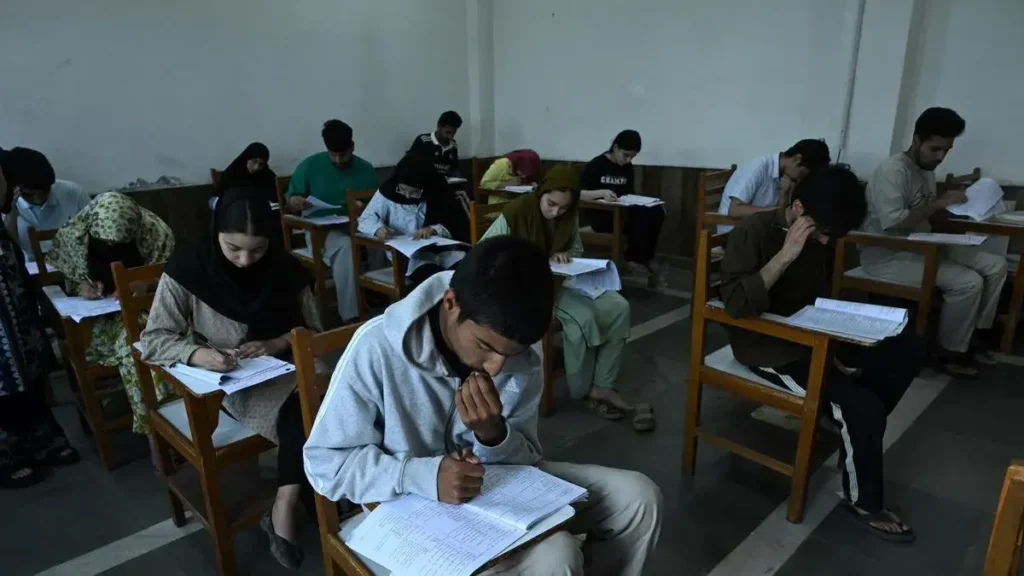
The Central Board of Secondary Education has officially announced the Class 12 board examination results for 2026 on May 13. Students who appeared for the Senior Secondary examinations can now access their marksheets through the official result portals. This year, the overall pass percentage stands at 85.20%, reflecting a decline of 3.19 percentage points compared to 2025, when the pass rate was 88.39%. Performance Overview A total of 17,80,365 students had registered for the examinations, while 17,68,968 candidates appeared. Out of these, 15,07,109 students successfully cleared the exams. Major Highlights Overall pass percentage recorded at 85.20% Girls performed better than boys by 6.73 percentage points Thiruvananthapuram emerged as the top-performing region with a 95.62% pass rate Prayagraj reported the lowest regional pass percentage at 72.43% Official Websites to Check Results Students can access their Class 12 results through: results.cbse.nic.in cbse.gov.in digilocker.gov.in umang.gov.in Steps to Download CBSE Class 12 Result 2026 Visit the official CBSE result portal. Click on Senior Secondary School Examination (Class XII) 2026. Enter roll number, school number, admit card ID, date of birth, and security pin. Submit the details. Download the marksheet for future reference. Alternative Result Access Options To avoid website traffic congestion, students can also use: DigiLocker for digital marksheets UMANG App for mobile access CBSE Grading System A1: Top one-eighth of passed students A2: Next one-eighth B1 to D2: Subsequent performance brackets E: Failed candidates Students are advised to verify all details on their marksheet carefully and keep a copy for admission and future academic processes.

CBSE Class 12 Result 2026 Declared: Pass Percentage Falls to 85.20%, Girls Outshine Boys Read More »

NEET-UG 2026 Cancelled Over Paper Leak Row; Fresh Exam to Be Held, CBI Probe Ordered

The National Testing Agency (NTA) has cancelled the NEET-UG 2026 examination conducted on May 3 after allegations of a question paper leak surfaced. A fresh examination will now be held on new dates, which will be announced later through official channels. In an official statement released on Tuesday, May 12, the NTA said the decision was taken with the approval of the Government of India to ensure fairness, transparency, and confidence in the country’s examination system. According to the agency, inputs reviewed in coordination with central authorities and findings shared by law enforcement agencies led to the cancellation of the medical entrance test. The revised schedule for the re-exam and admit card release will be communicated soon. The controversy began after reports emerged that a “guess paper” circulated before the exam allegedly contained several questions similar to those in the actual test paper. Following these claims, the Rajasthan Special Operations Group (SOG) launched an investigation into possible irregularities. Rajasthan Police SOG Additional Director General Vishal Bansal said officials are examining whether the circulation of the material was linked to an organised network. The Central Government has also referred the matter to the Central Bureau of Investigation for a detailed probe. The NTA stated it will provide complete cooperation and share all records required for the investigation. Meanwhile, protests erupted in New Delhi, where members of the National Students’ Union of India demonstrated near Shastri Bhawan demanding accountability over the alleged leak. The NTA admitted that re-conducting the examination would cause inconvenience and stress to students and their families, but maintained that protecting the credibility of the national examination system was the top priority. Source: The Hindu

NEET-UG 2026 Cancelled Over Paper Leak Row; Fresh Exam to Be Held, CBI Probe Ordered Read More »

WHO Chief Warns ‘Work Not Over’ After Hantavirus Cruise Ship Evacuation

Tedros Adhanom Ghebreyesus has said global efforts to contain the hantavirus situation are still ongoing, following the evacuation of passengers from the cruise ship MV Hondius after a deadly outbreak onboard. Speaking on Tuesday, May 12, at a joint press conference in Madrid alongside Pedro Sánchez, the WHO chief stated that while the immediate response had progressed, the threat had not fully passed. “Our work is not over,” Tedros said, adding that there was currently no evidence of a wider outbreak. However, he cautioned that the long incubation period of the virus means more cases could still emerge in the coming weeks. The MV Hondius has drawn international concern after three passengers died from the rare disease. Health experts, however, stressed that the current global public health risk remains low and said the situation should not be compared to the early days of the Covid-19 pandemic. Over 120 passengers and crew members were airlifted from Spain’s Canary Islands on Sunday and Monday. Many countries have adopted precautionary measures for returning evacuees, with most following WHO guidance that recommends a 42-day quarantine and close monitoring of high-risk contacts. In contrast, the Centers for Disease Control and Prevention in the United States indicated that American evacuees may not automatically face quarantine. Acting CDC director Jay Bhattacharya said quarantine decisions would depend on individual circumstances. The handling of the ship also created diplomatic tension, as nations debated who would host the vessel and care for passengers. Cape Verde declined to receive the ship while it remained offshore near Praia, leading to emergency evacuations of critically ill passengers to Europe. Spain later permitted the vessel to anchor near the Canary Islands for evacuation operations, though regional leaders reportedly opposed the move. Defending Spain’s response, Sánchez said the world needs cooperation rather than fear, adding that nations must act with solidarity during such crises. Source: AFP Photo Credit: Reuters

WHO Chief Warns ‘Work Not Over’ After Hantavirus Cruise Ship Evacuation Read More »

Work From Home and Employee Productivity: Myth vs Reality

The debate around work from home (WFH) has transformed from a temporary pandemic response into one of the most important workplace discussions of the modern era. For HR leaders, business owners, and employees alike, one question continues to dominate conversations: Does working from home truly improve productivity, or is it just a convenient trend? The answer is neither a simple yes nor no. Productivity in a remote environment depends on multiple factors—company culture, leadership, technology, employee mindset, and the nature of the job itself. While critics often assume that home-based employees are distracted or less committed, growing evidence suggests that remote work can significantly enhance performance when managed effectively. This blog explores the myths and realities surrounding work from home and employee productivity, helping organizations understand what truly drives success in the remote era. The Biggest Myth: Employees Work Less at Home One of the most common misconceptions is that employees spend less time working when they are at home. The image of someone answering emails from the couch while watching television has long shaped public opinion. However, reality paints a different picture. Many studies and workplace surveys have shown that remote employees often work equal or longer hours than office-based workers. Without commuting time, employees gain additional hours that can be redirected into focused work, rest, or personal wellbeing. In many cases, people start earlier, take shorter breaks, and feel more accountable for results. The shift from measuring “hours present” to measuring “output delivered” has revealed an important truth: being seen at a desk does not always equal being productive. Reality: Productivity Depends on Environment, Not Location Productivity is less about where people work and more about how they work. An employee sitting in a noisy office filled with interruptions may accomplish less than someone working quietly from home. On the other hand, an employee in a chaotic home environment may struggle more than they would in a structured office setting. This means work from home is not automatically productive—but neither is office work. The real drivers of productivity include: Clear goals and expectations Access to the right tools and technology Strong communication systems Autonomy and trust A distraction-free workspace Mental wellbeing and work-life balance When these conditions are present, remote employees often thrive. Myth: Collaboration Suffers Outside the Office Another common belief is that teamwork collapses when employees are not physically together. While spontaneous hallway conversations may reduce, modern collaboration tools have changed how teams interact. Video meetings, instant messaging, shared documents, project management platforms, and cloud-based systems now enable real-time coordination from anywhere. In fact, many teams report that remote communication becomes more intentional and efficient. Meetings are shorter, agendas are clearer, and updates are documented instead of lost in casual conversation. The key challenge is not collaboration itself—it is poor communication habits. Reality: Employees Value Flexibility, and That Boosts Performance Flexibility is one of the strongest benefits of remote work. When employees have greater control over their schedules, they often manage energy and time more effectively. Some perform best early in the morning, while others are more productive later in the day. Work from home can allow employees to align tasks with their natural productivity cycles. Additionally, flexibility helps employees manage family responsibilities, health needs, and personal commitments—reducing stress and improving engagement. A less stressed employee is usually a more focused and productive employee. Myth: Managers Lose Control in Remote Work Traditional management models often relied on visibility: seeing employees at desks, observing activity, and measuring attendance. Remote work challenges this mindset. Some leaders interpret the lack of physical presence as a loss of control. But effective leadership has never truly been about surveillance—it has always been about results, coaching, and trust. Remote work pushes managers to become better leaders by focusing on: Goal setting Performance outcomes Frequent feedback Team motivation Relationship building This shift can strengthen management quality across the organization. Reality: Burnout Can Increase If Boundaries Are Missing While remote work has many benefits, it also carries risks. Without clear boundaries, employees may find it difficult to disconnect. Workdays can extend into evenings, and constant online availability can create exhaustion. Productivity may initially rise, but long-term burnout can reduce performance dramatically. This is where HR plays a critical role. Organizations must promote healthy remote practices such as: Defined working hours Mandatory breaks Wellness support Encouraging time off Respecting non-working time Realistic workloads Sustainable productivity matters more than short bursts of overwork. What HR Leaders Should Focus On For HR professionals, the goal should not be choosing between office or home. The goal should be designing a work model that supports both business outcomes and employee wellbeing. Key HR priorities include: 1. Performance Based Evaluation Measure employees on deliverables, quality, and impact—not desk time. 2. Strong Digital Infrastructure Provide reliable tools for collaboration, communication, and cybersecurity. 3. Employee Engagement Create virtual culture through recognition, learning programs, and social connection. 4. Manager Training Teach leaders how to manage remote and hybrid teams effectively. 5. Flexible Policies Allow different teams to operate in ways that suit their roles and responsibilities. The Future Is Hybrid, Not Extreme The most successful organizations are moving beyond all-or-nothing thinking. Instead of insisting everyone return to office full-time or remain fully remote, many are adopting hybrid models. This combines the best of both worlds: Remote focus time In-person collaboration Greater flexibility Improved employee satisfaction Stronger talent attraction and retention Productivity in the future will come from choice, trust, and smart systems. Final Verdict: Myth vs Reality So, does work from home hurt productivity? Myth: Remote employees are lazy, distracted, and less productive. Reality: Remote employees can be highly productive when supported by the right culture, leadership, and tools. The real productivity challenge is not location—it is outdated management practices, unclear expectations, and lack of trust. For HR leaders, work from home is not simply a policy issue. It is an opportunity to redesign work for the modern workforce. Because in the end, productive employees do not need to be watched—they need

Work From Home and Employee Productivity: Myth vs Reality Read More »