ArdorComm Media Group

Wednesday, February 25, 2026 3:18 PM

Author name: admin

IIT Kanpur to Host Udghosh 2023 Sports Festival, Featuring National School Quiz

IIT Kanpur is preparing for its annual sports festival, Udghosh 2023, and to make it more accessible to school students, the institute has introduced the Udghosh National Open School Quiz (UNOSQ) for students in grades 5 to 12. The competition consists of two phases, where participants will need to demonstrate their logical thinking, problem-solving skills, general knowledge, and sports acumen. The quiz is segmented into four categories to cater to different age groups: Pool A for younger students (grades 5 and 6), Pool B for emerging talents (grades 7 and 8), Pool C for champions (grades 9 and 10), and Pool D for pioneers (grades 11 and 12). In the first phase, participants will engage in intellectual challenges, featuring a mix of logic, aptitude, problem-solving, general awareness, and sports knowledge. It promises to be a mental adventure that sharpens thinking skills. The first phase is scheduled for August 27. The second phase, set for September 3, is exclusively for the top 100 students. It will present even more demanding questions to test participants’ mettle and knowledge. The UNOSQ will conclude on September 7, with the final winners announced on that day. Participants will also have the opportunity to attend interactive sessions with industry experts and thought leaders. A felicitation ceremony is planned at IIT Kanpur on October 8 as part of the closing celebrations for Udghosh 2023. Winners will receive prizes worth over Rs 50,000, along with various merchandise and goodies.

IIT Kanpur to Host Udghosh 2023 Sports Festival, Featuring National School Quiz Read More »

Dr. Bhavna Chibber, Principal, Laburnum Public School, Gurugram, Emphasizes on Skill Based Learning

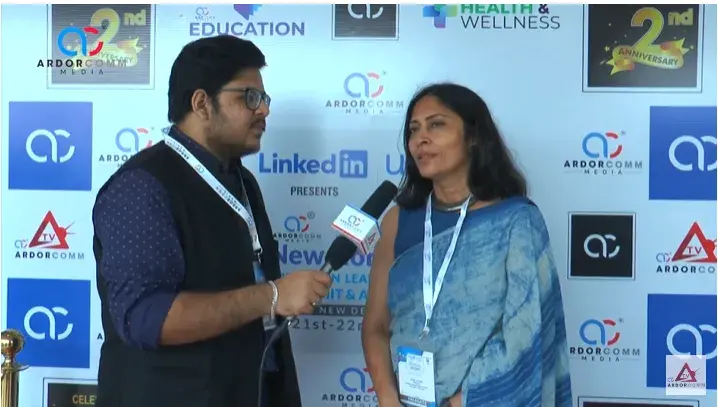
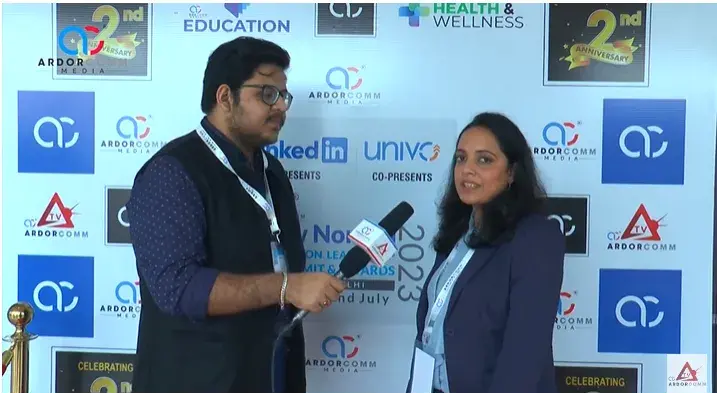
 “Skills are unique, indigenous, and the educators, who are the curators in the classroom, must know what kind of skill to develop in each learner,” says Dr. Bhavna Chibber, Principal, Laburnum Public School, Gurugram, in an Interview with Pratik Ghosh, Content Writer, ArdorComm Media Group at the ‘New Normal – Education Leadership Summit & Awards 2023’ #ELSANewDelhi #ELSAGurugram How are you feeling to witness the New Normal Education Leadership Summit and Award? It was an awesome experience to listen to all the dignified personalities. We have learned so many things here, and the discussions were so interesting that we thought this kind of conference should be held for our leaders. These kinds of forums are essential. I’m thankful to ArdorComm Media for providing the opportunity to educators to spread their wings, learn, and take the lead. In this new normal, adaptability and flexibility are crucial skills, and now is the time when we’re preparing our learners to thrive in this world. So, thanks to ArdorComm Media for providing this platform for leaders to share, learn, collaborate, and grow. What’s your take on skill-based learning and the multi-disciplinary approach in education? There are two different things: skill-based learning and the multi-disciplinary approach. When we talk about Saksham, we follow a 5S philosophy: Saksha, Saksham, Samarth, Shodak, and Sanskar. There’s a thin line difference between Saksham and Samarth. For example, consider car driving. I drive a car, so it’s easy for me to understand how the clutch works, how to change gears, etc. But how competent am I? That’s called Saksham. Skill development is about preparing learners for the future, not just for the near future, but for the years ahead. Skills are unique, indigenous, and the educators, who are the curators in the classroom, must know what kind of skill to develop in each learner. Regarding the interdisciplinary approach, terms like interdisciplinary, multidisciplinary, and transdisciplinary have been integrated. Collaborative projects are a key strategy to enhance the interdisciplinary approach on the school campus. Any message for the ArdorComm Median on its 2nd anniversary? Keep soaring high, the sky is the limit.

Dr. Bhavna Chibber, Principal, Laburnum Public School, Gurugram, Emphasizes on Skill Based Learning Read More »

Anita Gupta, Principal, Raman Munjal Vidya Mandir, Gurugram, shares her views on Implementing Technology in Education

 “Technology is going to stay forever, we all know that. So, no school or no education sector or nobody can be away from it,” says Anita Gupta, Principal, Raman Munjal Vidya Mandir, Gurugram, in an Interview with Pratik Ghosh, Content Writer, ArdorComm Media Group at the ‘New Normal – Education Leadership Summit & Awards 2023’ #ELSANewDelhi #ELSAGurugram How are you feeling to witness the New Normal Education Leadership Summit and Award? First of all, I would like to thank ArdorComm for organizing such a wonderful, enriching conference, and which is actually experiential learning. Because it’s just not we are talking about general things or theoretical things, we are having in-depth enriching sessions, talking about the practicality of whatever the concepts have been introduced through NEP or NCF and the use of technology. So, it’s the amalgamation of innovation, technology, skill, and whatever can be adapted in the school curriculum. How are you implementing technology in your school? Technology is going to stay forever, we all know that. So, no school or no education sector or nobody can be away from it. So, when it comes to my school, we are lucky enough because computer education and all, it was started almost two decades before, so we were already aware of it. But when suddenly, this pandemic had struck, so we were easy to make our teachers understand and our students also how to go about with the online classes. So, then we made it a part and parcel in the daily teaching also. Because before the pandemic, we even introduced the Smart Board concept in our classes and every classroom has got. So, they were already aware that technology is there to stay. We were already aware, students knew, parents also knew, we were teaching teachers to have the curriculum. So, in that way, we didn’t face the problems. And now also, we are able to. So, we have the technological problems, of course, because when it comes to, like, net issues are there or how to make it stop at what level, so these things are there. But otherwise, technology definitely is a great tool, not just in terms of its, physical presence, but also the soft content it has got. The only thing is we have to make our students and the whole environment understand that this is how you are going to make use of it. So, when we know how to use it, when we are enabled, then we can make use of it. And that’s what we are going, we are doing it. Not only in the subject enrichment activities, but also otherwise also. Like if I say, it’s too easy to take these students to the virtual tour of any place and to connect them off with the experiences, feeling it, so lively seeing the things like what we talk about VR, AI, and all these kinds of things, they can experience it themselves. So that’s how we are making use of it. We have embedded it in our curriculum. Any message for ArdorComm Media Group on its 2nd anniversary? Yes, first of all, hearty congratulations on your completion of two successful years, and that too bringing so many educators together under the same roof, sharing such valuable inputs. So, I wish them good luck and looking forward to many new ideas like this concept of what we are talking about, improvement from here to there. So, I want this to be continued.

Anita Gupta, Principal, Raman Munjal Vidya Mandir, Gurugram, shares her views on Implementing Technology in Education Read More »

Aurobindo Pharma Gets USFDA Approval for Icatibant Injection

 A significant achievement for Aurobindo Pharma emerges as its wholly-owned subsidiary, Eugia Pharma Specialities, gains the final green light from the US health authority for the production and distribution of a generic Icatibant injection. This injection is integral in addressing hereditary angioedema. The endorsement, bestowed by the US Food & Drug Administration (USFDA), pertains to the 30 mg/3 mL (10 mg/mL) strength of Icatibant injection, presented as a single-dose pre-filled syringe. Aurobindo Pharma disclosed this development through an official filing. Distinguished as both bioequivalent and therapeutically tantamount to Takeda Pharmaceuticals USA Inc’s reference listed drug FIRAZYR (Icatibant injection), this milestone holds considerable significance. The company announced the scheduled launch of this product in September 2023. Drawing attention to its market potential, Aurobindo Pharma indicated that the approved offering corresponds to a market size valued at approximately USD 137 million, as per IQVIA data encompassing the 12 months concluding in June 2023.

Aurobindo Pharma Gets USFDA Approval for Icatibant Injection Read More »

Wipro Collaborates with IIT Delhi to Establish Centre of Excellence in Generative AI

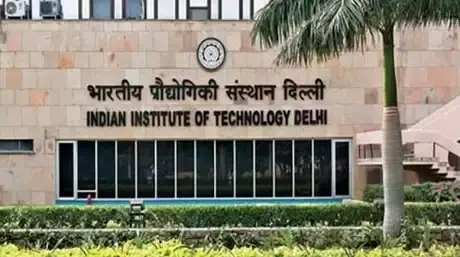
 Wipro, a prominent IT company, has unveiled a centre of excellence centred around generative artificial intelligence (AI) in collaboration with the Indian Institute of Technology, Delhi (IIT Delhi). The newly established centre is situated within the Yardi School of Artificial Intelligence at IIT Delhi and is intended to foster applied research in the realm of generative AI. According to an official statement, the primary objective of this Centre of Excellence (CoE) is to foster and enhance research and development capabilities in emerging domains like generative AI, while also facilitating connections between candidates and a pool of talented individuals. Wipro’s Chief Technology Officer, Subha Tatavarti, emphasized the aim of this initiative. Working collaboratively, Wipro’s CoE teams will engage in the creation of inventive solutions employing AI, Machine Learning (ML), and other cutting-edge technologies, as stated by the company. Experts suggest that this centre of excellence will offer students the opportunity to gain practical insight into industry-specific problems, thereby equipping them with both understanding and solutions. Professor Mausam, the Head of the Yardi School of AI at IIT Delhi, expressed enthusiasm about the partnership, noting that it will provide valuable learning and growth prospects for students. This collaboration is anticipated to yield mutual benefits and significantly contribute to India’s progress in these pivotal new technology domains.

Wipro Collaborates with IIT Delhi to Establish Centre of Excellence in Generative AI Read More »

Dr. Anup Kumar Rajput, Head of Publication Division at NCERT, Ministry of Education, Government of India, Emphasizes the Crucial Role of Digital Technology in Enhancing Learning

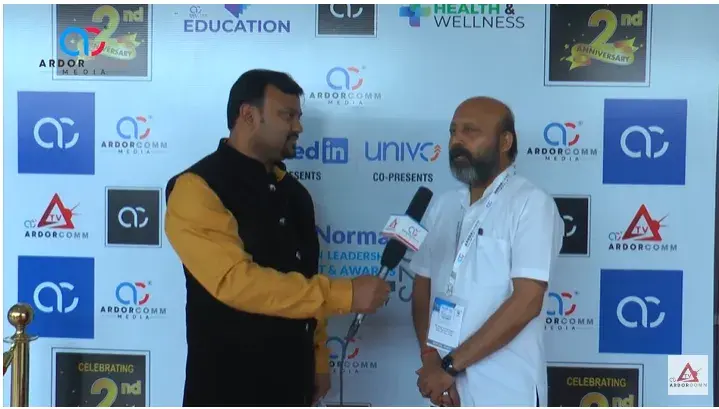
 “Nowadays, children have access to a plethora of learning resources, particularly digital ones. This highlights the necessity of incorporating digital technology into our school education system,” says Dr. Anup Kumar Rajput, Head of Publication Division at NCERT, Ministry of Education, Government of India, in an interview with Chandan Anand, CEO & Group Editor, ArdorComm Media Group at the ‘New Normal – Education Leadership Summit & Awards 2023’ #ELSANewDelhi #ELSAGurugram What are the takeaways of today’s session for you? Very nice. You are doing a good job by getting all these people collected together, and they are discussing the real issues which they are either facing with the policy or with the curriculum. So, the discussion is not only for the sake of discussion, but certainly, we will find out solutions to many of our problems, which we want the system to improve itself. Obviously, such kind of gatherings are very, very important, and you are doing a good job. I am finding many people are very good in having their own experiences shared here. So, that certainly is going to give a good way to implement the National Education Policy and the National Curriculum Framework for the foundational stage. We have seen that NEP has included Early Childhood Education as a part of the main framework of school education. What are your views on that? It’s essential. The Government of India has realized that foundational education, particularly preschool education, is very, very important and this should be included in the mainstream of education. Earlier, it was not, internationally it has been done long back when they recognized that preschool education is having the same importance as school education. So, that’s why this time, it has been realized and now it is going to come into the school education system, particularly the government education system, and will improve the learning levels of children. Even learning difficulties will somewhere be reduced with this inclusion of preschool in the mainstream education system. Normally we find children who have learning problems or maybe learning deficiencies after class three or four. So, now those most probably will be reduced because it has been envisaged in the policy that there should be a strong foundation. Once the foundation of literacy and numeracy is built up then obviously learning of all other subjects will not be a bigger problem for all the children. How does e-learning and digitalization play a role in these sectors? E-Learning has to play a major role because, during my childhood, we only had two primary learning resources: books and teachers. The books back then were not very advanced, often printed with just a single color. Similarly, our teachers were not very well-equipped with teaching materials. However, now, things have changed drastically. Nowadays, children have access to a plethora of learning resources, particularly digital ones. This highlights the necessity of incorporating digital technology into our school education system. But the approach should be a blended one. There are several ways to integrate digital technology. First, teachers can teach on their own, utilizing the resources available to them. Second, collaborative teaching can take place, where multiple teachers contribute their expertise. The third approach involves teachers using technology to aid their teaching. These methods can be blended together, both inside and outside the classroom. We can even explore innovative models like the flipped classroom, which has been experimented with not only in India but also in other countries. The key is to seamlessly integrate digital technology and e-learning into the teaching and learning process. However, the role of teachers remains crucial. They need to adapt and learn how to effectively use digital tools and resources. By doing so, they can harness the benefits of digital technology to enhance the learning experience for students and improve their learning outcomes. What changes have you brought in the NCERT books to make them more interesting for students and kids? NCERT follows the National Curriculum Framework. So, CBSE has to play a major role in board classes like class 10, 11, and 12. So, before that, the National Curriculum Framework is there, on the basis of which the curriculum is framed in different subjects for different classes. And this time, the major objective behind all other things is Competency-Based Education. Now, competencies have been placed at the center, and competency means simply the combination of knowledge, skills, attitudes, and values. When all these four things join together, then we say children are becoming competent. Our whole system was now earlier working only on knowledge, we were giving knowledge through books. Now, the skill part has been added into it, and attitude and values are required to be there. So, obviously, we need different learning material which is to be given to the children and to the teachers. So, this time, the material which is embedded with technology, that is required. For example, in the print books, you will find QR codes have been given at different places, almost at the beginning of every chapter. QR codes are obviously giving you an idea about the audios available there, videos available, they can play a video, they can play an audio, they can see an animation, and so on. So, number one is that, number two, keeping in view all sorts of learners because we have learners with different abilities. Some are visually impaired, some are physically impaired, some are hearing impaired, and so on. So, for all sorts of children, now we want that these books should be conducive to the requirements of all the children. So, that’s why the embossed books are being prepared, books with augmented reality material along with them, that’s also being prepared. Audiobooks have been prepared. NCERT has prepared audiobooks. But one issue is very important that this all is going to increase the volume of a book, the weight of a book and then children have to certainly carry these books. So, obviously one thing which this National Curriculum Framework has mentioned, NEP


Dr. Anup Kumar Rajput, Head of Publication Division at NCERT, Ministry of Education, Government of India, Emphasizes the Crucial Role of Digital Technology in Enhancing Learning Read More »

Arijit Ghosh, AVP- Academics, Seth M.R. Jaipuria Schools, Emphasizes on the Vision for the Education Sector

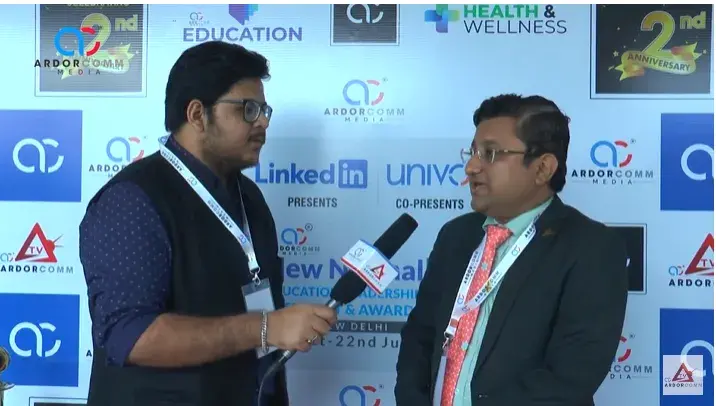
 “I think the first prerogative for the schools is to comply with the national policies which have come out after a long time,” says Arijit Ghosh, AVP- Academics, Seth M.R. Jaipuria Schools, in an Interview with Pratik Ghosh, Content Writer, ArdorComm Media Group at the ‘New Normal – Education Leadership Summit & Awards 2023’ #ELSANewDelhi #ELSAGurugram How are you feeling to witness the New Normal Education Leadership Summit and Award in Delhi? Oh, it’s fantastic. First of all, thank you for having me here today. I think the topics which have been discussed today are very, very relevant in the present times. So, about sustainable development goals and especially its impact from early childhood, from the foundational years. We all know that the NCF is out for foundational stages of school education, so it’s very, very important. Also, the topics like the STEM education, the relevance of STEM education, the skills. So, these are very, very valid discussion points and we see the buzz happening in the room and a lot of learning being shared. The theme of our event is India Vision 2030. According to you, what should be the vision for the school education sector going ahead? So, first and foremost is the kind of compliance with the NEP and what the vision is with the NEP and the NCF documents which are now coming out. So, I think the first prerogative for the schools is to comply with the national policies which have come out after a long time. That’s one. Number two, I think it’s a very aspirational document, the National Education Policy, with all the global perspectives also into taking into account. So, I think if we focus more on bringing impact, and I would say having data into our schools is very, very important. The impact measurement. It’s not about just checking the boxes of what we are doing, but there has to be a real value add to every single action that we take. So, if we are able to monitor that, what is bringing about these changes in the lives of the students and the other stakeholders, I think that would be a great start. How are you implementing technology in your schools? In our schools, a little background, we are a 50-school chain, present in five different states primarily in UP, but we have our presence in MP, Bihar, Rajasthan, and Uttarakhand as well. We have close to 42,000 students, presence in 36 cities, tier 2 and tier 3 cities primarily. With regards to technology, yes, all our lesson plans have the TLMS which have a resemblance with the technological factors. Be it animations, be it quizzes in that format. So, that’s one. We are also very progressive in our data collection. So, a lot of focus is on collecting or capturing the right data and then processing it into valuable information. So, that helps us feed back into our own implementation and use it as a reflection as to how do we better our intervention or support system to our schools. Also, just to share that we are very much in tune with the National Education Policy. Like you know, the benchmark assessments are kind of a mandate as per NEP. So, from last year, we started doing benchmark assessments for students of grades three, five, and eight, taking competencies from PISA. So, that’s going well. That’s on a technological platform that is being conducted, and we have the analytics, student wise analytics, school-wise analytics to go with it. In this kind of forums where we bring in education leaders, EdTech players, as well as the government, how does this kind of forum benefit the education sector? I think it’s very, very good. First of all, it allows us to kind of hit the pause button from our day-to-day work. It kind of allows us to reflect also onto what we are doing. The discussions which are so valuable and so enriching, that helps us to reflect on the work which we are doing in our own context. Not every solution can be just picked up from a certain place and implemented in place B. There has to be contextualization. There has to be an understanding of the student background and other stakeholder backgrounds which are there. Obviously, a little bit of contextualization is required in every single solution. But these kinds of convocations, this kind of seminars, help us to go back to the drawing board and make those little tweaks if required. Any message for ArdorComm Media Group on its 2nd anniversary? I think keep on doing the great work which you’re doing. I think this is a fantastic platform to bring educators together and have this kind of a conference. My only one suggestion would be to keep in mind in the future sessions if we can have more closer roundtable discussions, more enriching, more deepening. I think that would add more value to what we are doing.

Arijit Ghosh, AVP- Academics, Seth M.R. Jaipuria Schools, Emphasizes on the Vision for the Education Sector Read More »

Jio, Vodafone Idea, and Airtel Set to Expand Workforce by 25% in FY24

In the upcoming fiscal year, Reliance Jio, Vodafone Idea, and Bharti Airtel are projected to grow their employee count by up to 25%. This surge in hiring is attributed to the increasing adoption of 5G technology within the telecommunications sector. Notably, the industry is witnessing a substantial uptick in recruitment compared to the pandemic period. Throughout FY23, job hires in the telecommunications industry saw a remarkable rise ranging from 40% to 45%. The latter half of the year also experienced a significant growth in job opportunities, ranging from 30% to 36%. The impetus for this substantial hiring expansion is largely linked to the influence of 5G technology. Alongside the rollout of 5G, recruiters emphasized that the key factors driving demand are emerging domains like network security, whitespace spectrum, virtual network operations, integration of big data with IoT, specialists in cybersecurity, and cloud services. Furthermore, the escalated efforts of businesses towards digitalization have further fuelled the demand for telecommunications services. As of the conclusion of FY23, Reliance Jio employed 95,326 personnel, while Airtel had a workforce of 64,407, and Vodafone Idea had 15,604 employees. Recently, Reliance Jio Infocomm announced its successful deployment of 5G technology using 26 gigahertz millimetre waves across India. This achievement has enabled speeds of up to 2 gigabits per second. The company highlighted its accomplishment of fulfilling its minimum rollout obligations across all 22 circles and various spectrum bands ahead of schedule, aligned with the spectrum allocation as of August 17, 2022.

Jio, Vodafone Idea, and Airtel Set to Expand Workforce by 25% in FY24 Read More »

NMC Mandates Exclusive Online Counselling for MBBS & PG Admissions to Prevent Seat Blocking

In preparation for the admission cycle of MBBS and post-graduate (PG) medical programs for the academic year 2023-24, the National Medical Commission (NMC) has instructed Kaloji Narayana Rao University of Health Sciences (KNRUHS) to exclusively conduct counselling through online means. The NMC, the governing body overseeing medical education, communicated to the health university that physical counselling must be strictly avoided. This directive follows the PG seat-blocking scandal of 2022, which led to an investigation into fraudulent seat blocking by private medical colleges under the management quota. KNRUHS officials had taken legal action and reported the matter to the police. This marks the first instance of entirely online counselling, eliminating the flexibility previously enjoyed by private colleges to fill vacant seats. The new regulation mandates online counselling for stray vacancy rounds, encompassing 100% of seats in undergraduate and PG courses in deemed universities. While online counselling can be conducted multiple times, any seats left vacant after initial rounds must remain unoccupied. The NMC’s communication stated, “All state counselling agencies are urged to prepare for conducting online counselling for all rounds, including stray vacancy rounds in private medical colleges from the academic year 2023-2024.” This initiative aims to combat the issue of seat blocking effectively. Previously, in the last year, ‘B’ category seats (management quota seats in private colleges) and the final mop-up round were followed by the conversion of remaining seats to ‘C’ (NRI) category quota seats, carrying fees ranging from 11.55 lakh to 60 lakh per year. A representative from KNRUHS explained that by shifting the entire counselling process online, the potential for name duplication will be eradicated.

NMC Mandates Exclusive Online Counselling for MBBS & PG Admissions to Prevent Seat Blocking Read More »

Aditi Goradia, Managing Director, Billimoria High School, Highlights the Benefits of Residential Schools

“They live with each other, so they’re making lifelong friends as well,” says Aditi Goradia, Managing Director, Billimoria High School, in an Interview with Pratik Ghosh, Content Writer, ArdorComm Media Group at the ‘New Normal – Education Leadership Summit & Awards 2023’ #ELSANewDelhi #ELSAGurugram How are you feeling to witness the New Normal Education Leadership Summit & Awards in Delhi? It’s always a pleasure to come to these things and meet all of these educators from across the country, and there’s so much learning and collaborating happening. It’s great. The theme of our event is India Vision 2030. According to you, what should be the vision for the school education sector? I think a lot more training for teachers, a lot more growth infrastructure. The framework is already in place, now its time to execute it. How are you implementing technology in your school? We don’t use textbooks, we use the learning outcomes document established by CBSE. Our teachers formulate their own curriculum. We have taught the teachers how to use AI tools for their research and to put their resources together. There’s a lot of project-based learning for the kids that requires technology. Billimoria High School is a residential school, so what importance does it play for a student to stay there and get educated? So, in today’s day and age, it’s very difficult to balance life for kids because in the cities, it’s very hectic and there’s a lot of device exposure, a lot of device addiction in a very unproductive manner. In a residential school, all of that is a little more controlled. It’s a good balance of co-curriculars and social skills. They live with each other, so they’re making lifelong friends as well. It’s a more learning conducive environment. What’s your take on skill development in this 21st century? I think that we are preparing for a world where the jobs we know will not exist, and the jobs that will exist don’t exist now. So, more than content, it’s really important to focus on concept learning. It’s important to prepare kids for a variety of skills and even the NEP says 21st-century skills like collaboration, problem-solving, financial literacy. These are the things we need to focus on with the kids. In these kinds of forums where we bring in the education leaders, the EdTech players, as well as the government. How does this kind of forum benefit the education sector? A lot of schools are doing a lot of different things because there’s so much freedom now under the NCF for each of us to figure out what we need to do for our kids. It’s really important for us to meet each other because then we learn from each other. There might be something one school is doing that we haven’t thought of, but it’s something we can adapt to, something we can borrow. And collaborations, it’s very important for our kids to see how our other kids are doing. So, there’s a lot of exchange programs and stuff that come out of these conferences. Any message for ArdorComm Media Group on its 2nd anniversary? Yes, you guys are doing an amazing job. It’s a great energetic team. We love Chandan, we love working with him. So, congratulations, may there be many, many, many more years of doing this.

Aditi Goradia, Managing Director, Billimoria High School, Highlights the Benefits of Residential Schools Read More »