ArdorComm Media Group

Thursday, March 19, 2026 3:44 AM

Author name: admin

Centre may increase DA by 5% in March 2023

According to media reports, the government employees under the 7th Pay Commission will get a hike in their dearness allowance (DA) by March 2023. Additionally, if these reports are to be believed, the centre also intends to increase the dearness relief (DR) for pensioners. Generally, the DA and DR are revised twice a year between January and July. So, as the new year is around the corner, the central government employees are anticipated to get a 3 to 5 per cent hike in their DA for March 2023. The media reports further suggest that the central government employees will also receive the long pending 18-month DA arrears soon. In the previous DA increment in September 2022, about 48 lakh central government employees and 68 lakh pensioners benefitted. The Centre increased DA by 4% in September 2022, bringing the total increase to 38%. Prior to this, the 7th Pay Commission raised the 34 percent DA received by central government employees in March 2022 by 3%. However, the decision to increase the DA will be determined based on the inflation rate and the 7th CPC’s recommendations. There is a potential that the DA will be hiked further if the inflation rate is high at the time.

Centre may increase DA by 5% in March 2023 Read More »

Govt. plans to revive unserved and underserved airports, heliports, and water aerodromes by next year

The government aims to revive and develop 100 unserved and underserved airports, heliports, and water aerodromes by next year. This is part of a plan to operationalize 1,000 routes under the Ude Desh ka Aam Nagrik, UDAN, scheme. In response to a question in the Rajya Sabha, Civil Aviation Minister Jyotiraditya Scindia stated that the government has approved a budget of Rs 4,500 crore for the revival of existing unserved, underserved airports, airstrips of state governments, the Airports Authority of India, PSUs, and civil enclaves. He stated that the Airports Authority of India has been monitoring the status of awarded aerodromes’ revival/development. He added UDAN launched in October 2016, is applicable for a period of 10 years. The Minister added, UDAN aspires to improve the Regional Connectivity Scheme and to make air travel affordable to the masses. Mr Scindia stated that 453 routes have been launched following four rounds of bidding up until last month, with seventy airports, including two Water Aerodromes and nine Heliports, being operational. According to him, the UDAN scheme provides affordable air connectivity to Tier-2 and Tier-3 cities. He further stated that over two lakh UDAN flights had been operated, with over one crore people benefiting so far.

Govt. plans to revive unserved and underserved airports, heliports, and water aerodromes by next year Read More »

AIIMS data retrieved, services restored

More than two weeks after the AIIMS cyber-attack, Minister of State for Health Bharati Pravin informed the Lok Sabha on Friday that all data had been recovered from an unaffected backup server, and that most of the institute’s services had been restored. In response to a question, Pawar stated that no specific amount of ransom was wanted by the hackers, despite the fact that a statement on the server implied it was a cyber-attack. The All India Institute of Medical Sciences has filed a FIR with the Special Cell of the Delhi Police in connection with the attack, according to the minister’s written reply. The e-Hospital application of the National Informatics Centre (NIC) was hosted on five physical servers at AIIMS Delhi. All data for the e-Hospital was recovered from an unaffected backup server and restored on new servers. “Most of the functions of e-Hospital applications like patient registration, appointment, admission, discharge etc have been restored after two weeks of the cyber-attack,” Pawar stated in a written response. Also Read: AIIMS server attack is part of a larger conspiracy by organised gangs: Minister The National Nodal Agency for Responding to Cyber Security Incidents, the Indian Computer Emergency Response Team (CERT-In), has “Empanelled Information Security Auditing Organizations” for auditing computer systems, networks, and applications involving public service delivery, including the Ayushman Bharat Digital Mission (ABDM). AIIMS took immediate steps to enhance security, including endpoint hardening, string firewall policies, and network segmentation, according to the minister. To reduce the patient load on the Delhi hospital, the Pradhan Mantri Swasthya Suraksha Yojana (PMSSY) has approved the setting up of 22 new AIIMS and 75 projects of upgradation of existing government medical colleges or institutions through the establishment of super speciality blocks or trauma centres. They are in various stages of delivering inpatient and outpatient services to the underprivileged. Day-to-day operations or surgeries, as well as accompanying duties and record keeping, were carried out manually. The dashboard for real-time emergency bed availability at AIIMS Delhi was designed in-house, according to the reply.

AIIMS data retrieved, services restored Read More »

ISRO and MSDE collaborate on technical training at National Skill Training Institutes

In Bangalore, Mumbai, and Trivandrum, the Ministry of Skill Development and Entrepreneurship (MSDE) has collaborated with the ISRO Technical Training Programme. The training programme was officially launched on 15th December 2022 at the National Skill Training Institute (NSTI) in Bengaluru. This programme intends to provide a formal framework for short-term courses to provide training to ISRO technical employees with the goal of boosting their capacity and developing their skills in accordance with the country’s space industry’s newest trends and requirements. Over the next five years, more than 4000 ISRO technical professionals will be trained in the programme at different NSTIs located across India. The course ‘Industrial Hydraulic and Controls’ on hydraulics will begin the training at NSTI Bengaluru. This course covers fluid power systems, the difference between hydraulics and pneumatics, basic hydraulic laws, hydraulic system components, hydraulic symbols, flow control valve, pressure regulation, pressure-controlled valves, hydraulic accumulators, and practical demonstrations. The programme will begin with ‘Industrial Automation’ at NST Mumbai and ‘Software Development’ at NSTI Trivandrum. The course will last five days and will train 20 trainees in each NSTI.

ISRO and MSDE collaborate on technical training at National Skill Training Institutes Read More »

Government spend on print, TV ads sees significant decline

The government is spending less than half of what it did seven years ago on print and television advertising, according to a response to Parliament from the information and broadcasting ministry on Tuesday. The ministry reported that it spent 424.84 crore and 473.67 crore on print and TV advertising in 2014-15, respectively, and 508.22 crore and 531.60 crore the following year. In 2016-17, the expenditure on print ads was roughly 468.53 crore and 609.15 crore on TV, which increased to 636.09 crore and 468.92 crore the following year. In 2018-19, it fell to 429.54 crore and 514.28 crore, respectively. In 2019-20, the spending was 295.05 crore and 317.11 crore. During the years when Covid was looming large, the government spent just approximately 197.49 crore on print ads and 167.98 crore on TV in 2020-21. Last year, it was 179.04 crore and 101.24 crore, respectively. This year, the government has spent 91.96 crore on print advertising and 76.84 crore on television advertising. The Central Bureau of Communication has been responsible for all expenditures.

Government spend on print, TV ads sees significant decline Read More »

Parliamentary committee proposes digitization of books at Delhi Public Library to increase membership

Article on Gov

A parliamentary committee expressed concern about the decline in membership at the Delhi Public Library and suggested that the government create a virtual library through large-scale text digitization. According to the 328th report of the parliamentary Standing Committee on Transport, Tourism, and Culture, ‘Action Taken by the Government on the Recommendations/Observations of the Committee contained in its 310th report on the subject Functioning of Central Libraries in the Country,’ the Delhi Public Library has seen a decrease in membership in recent times, with the COVID-19 pandemic being one of the reasons. “It has come down to 1.5 lakh membership from what it was prior to coronavirus period i.e. 1.85 lakh. Being a model library created in 1951 in Asia with UNESCO’s technical, financial assistance, it should lead other libraries in country and extend all possible help in their growth. Delhi Public Library should make all out efforts to increase its membership/viewership in the interest of general public,” according to the report. In their response, the Ministry of Culture acknowledged that there has been a “perceptible decline” in the membership of the Delhi Public Library (DPL) over the last two years.  “This was mainly due to the Covid situation and also absence of reading habit among the society. However, Delhi Public Library has been striving to increase its membership by conducting outreach activities, approaching schools/ colleges/ RWAs, distributing membership forms and waiving of membership fee,” the ministry said. The Committee also proposed that the Indian public library system be changed while keeping current advancements in the field of Information and Communication Technology (ICT) in mind, in order to provide minimum network-based services to the urban and rural populations. Libraries should be created as Community Information Centre models, and computerization of libraries should be implemented quickly to improve them, according to the report. In their reply, the culture ministry stated that it has already built the Indian Culture Portal, where knowledge and cultural resources from diverse Ministry of Culture institutions are now available in the public domain on a single platform. “This project is part of the Prime Minister’s Digital India initiative to showcase information about India’s rich tangible and intangible cultural heritage both at home and abroad,” according to the ministry. This portal contains documents, photographs, audio-visual files, and other data from archives, museums, academies, and libraries throughout the country. It contains around 2.5 lakh digital artefacts with metadata. It also has around 9 lakh bibliographic entries. The content is divided into 19 categories, including rare books, e-books, archives, paintings, and union catalogues, among others. It also contains nine content categories, including stories, snippets, historical cities, and forts. Currently, the portal is available in English and Hindi. It is accessible via the Indian Culture App, which is available for both Android and iPhone.

Parliamentary committee proposes digitization of books at Delhi Public Library to increase membership Read More »

Govt allocates Rs 1037.90 crore to New India Literacy Programme for next five years

The government has allocated a total of Rs 1037.90 crore for the five-year New India Literacy Programme (NILP). The centrally sponsored initiative, which will be implemented over a five-year period from 2022-23 to 2026-27, was announced in February of this year. The Foundational Literacy and Numeracy component of the programme intends to reach 5 crore learners over the course of five years. “The total financial outlay of NILP for five years (FYs 2022-23 to 2026-27) is Rs 1037.90 crore, out of which Rs 700 crore is Central share and Rs 337.90 crore is state share. The Central and state shares are in the ratio of 60:40 for all states other than North Eastern Region (NER) and Himalayan states where the sharing pattern between the Centre and the State is in the ratio of 90:10,” said Annpurna Devi, minister of state for education, in a written reply to the Lok Sabha. According to the education ministry, the major challenge that the government is currently facing in implementing the NILP scheme is the opening and mapping of all bank accounts of Single Nodal Agencies (SNAs) and Implementing Agencies (IAs) in all states with Public Financial Management System (PFMS). The funds will be transferred via PFMS and state treasuries. As a result, it is a need for the release of funds under the updated procedure standards of the finance ministry. The difficulty comes because this is the first year of implementation, according to Annpurna Devi. According to the ministry, all states and UTs have been made aware of the initiative through a communication dated March 11, 2022, along with a plan for its implementation. Because the NILP began in the current fiscal year 2022-23, funds allocated or used for the programme during the previous three years are no longer applicable, it stated. During the current financial year, 2022-23, states and UTs would get more than Rs 208 crore (Rs 208.96,42,893) for the New India Literacy Programme. The government stated that the scheme intends to educate non-literates above the age of 15 with foundational literacy, numeracy, and critical life skills in order to give continuing education opportunities. The ministry replaced the term “adult education” with “education for all” in February because the former did not include anyone above the age of 15.

Govt allocates Rs 1037.90 crore to New India Literacy Programme for next five years Read More »

Air India has put in place an ethics governance framework in order to develop its ethics culture

Organizations with a strong ethics culture can motivate their employees and people around them to speak honestly and with integrity. TATA Group-owned Air India has chosen to develop an ethics governance structure in order to boost the airline’s ethics culture. The airline has also announced the formation of committees at the regional and apex levels. The apex committee would be led by Campbell Wilson, managing director and CEO of Air India. Air India’s chief ethics counsellor (CEC), chief human resource officer (CHRO), chief financial officer (CFO), and chief operations officer (COO) are also members of the committee. The apex committee would be in charge of formalising any ethics or related guidelines, as well as approving policies, forms, and procedures pertaining to ethics guidelines. According to the internal document, regional ethics committees can escalate issues to the apex committee if they arise. One of the committee’s major responsibilities will be to create a “positive ethics culture” through continual engagement, AI engagement, and ethics training. This mission will also be supported by local ethics counsellors (LECs) and regional ethics champions. Gurjot Malhi has been appointed as the new CEC. Previously, he was the CEC of Vistara, where he attempted to establish a system along the same lines. Malhi has been at Tata Steel for almost a decade. He has served as an advisor to the managing director of Tata Steel, as well as an advisor to Tata Sons in Bombay House and the CEO of Vistara.

Air India has put in place an ethics governance framework in order to develop its ethics culture Read More »

No shortage of teachers, principals in KVs across country: Education Ministry

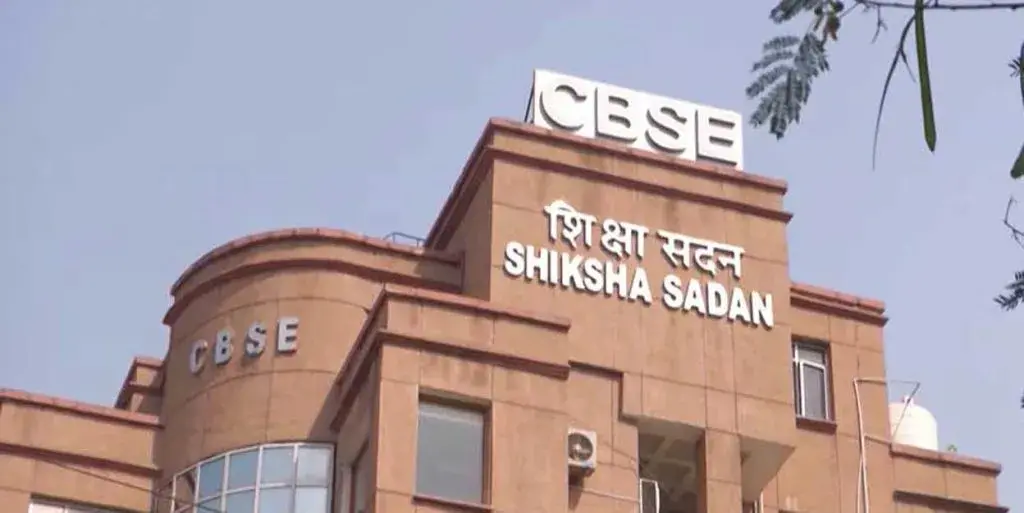
The Lok Sabha was informed on Monday that there is no lack of principals and teachers in Kendriya Vidyalayas across the country. According to the Ministry of Education, the Kendriya Vidyalaya Sangathan (KVS), an autonomous body that operates KVs across the country, has carried out a rationalisation effort to ensure the availability of an adequate number of regular teachers in the school. Annapurna Devi, Union Minister of State for Education, provided the information in a written reply in Lok Sabha. “There is no such shortage of principals and teachers as teachers are regularly engaged on contractual basis pending regular recruitment, for which advertisement has been issued recently. Also, KVS has carried out a rationalisation exercise for ensuring availability of adequate number of regular teachers in the school,” she said. Responding to a question about whether there was no scheme for career progression or a transfer policy, which resulted in many employees spending five to seven years at distant locations and complaining of “policy paralysis,” Devi stated that there are notified schemes for career progression and transfer guidelines for all categories of employees in KVS. “There is no policy paralysis and KVS has been actively making special efforts to address learning loss arising from the pandemic. Such learning recovery measures, depending on the requirements of the students include remedial measures taken to address the problem and difficult areas of each student, extra classes, assigning expert teachers for personalised attention, parental engagement, use of technology and specific instructional material and worksheet and workbooks to address the specific learning requirements of students,” Devi stated. The Minister also denied that some principals were bitter and frustrated, and alleged that there was “employee unrest” because some of them were forced to work double shifts.  “No such matter has been reported,” she stated. Source: PTI

No shortage of teachers, principals in KVs across country: Education Ministry Read More »

UGC new draft guidelines: UG ‘honours’ degree only after four years, not three

According to the draft guidelines issued by the University Grants Commission (UGC), students would be able to obtain an undergraduate “honours” degree after completing four years rather than three. On Monday, the draft ‘curriculum and credit framework for four-year undergraduate programmes’ prepared in compliance with National Education Policy is expected to be notified. “Students will be able to get a UG degree in three years on completion of 120 credits (measured through the number of academic hours) and a UG honours degree in four years on completion of 160 credits. “If they wish to go for a research specialisation, they will have to undertake a research project in their four-year course. This will get them an Honours degree with research specialisation,” the draft read. “Students who have already enrolled and are pursuing a three-year UG programme as per the existing Choice Based Credit System (CBCS) are eligible to pursue a four-year undergraduate programme. The university may provide bridge courses (including online) to enable them to transition to the extended programme,” it noted. Students currently receive an honours degree after completing three years of undergraduate studies. The Four Year Undergraduate Programme (FYUP) also provides students with several entry and exit points. If they leave before three years, they will be allowed to return within three years of their leave and must complete their degree within a seven-year term. According to the document, the FYUP curriculum should include major and minor stream courses, courses from other disciplines, language courses, skill courses, and a set of courses on environmental education, understanding India, digital and technical solutions, health and wellness, yoga education, and sports and fitness. Students can choose to continue with their present major or change their major at the end of the second semester. Students will also have the option of pursuing a UG with a single or double major. “A student has to secure a minimum of 50 per cent credits from the major discipline for the 3-year/4-year UG degree to be awarded a single major,” the document stated. Source: PTI

UGC new draft guidelines: UG ‘honours’ degree only after four years, not three Read More »