ArdorComm Media Group

Wednesday, February 11, 2026 3:27 AM

Health & Wellness Community

Government Mobilizes Team to Combat Rising Heatwave Hospitalizations in Affected States

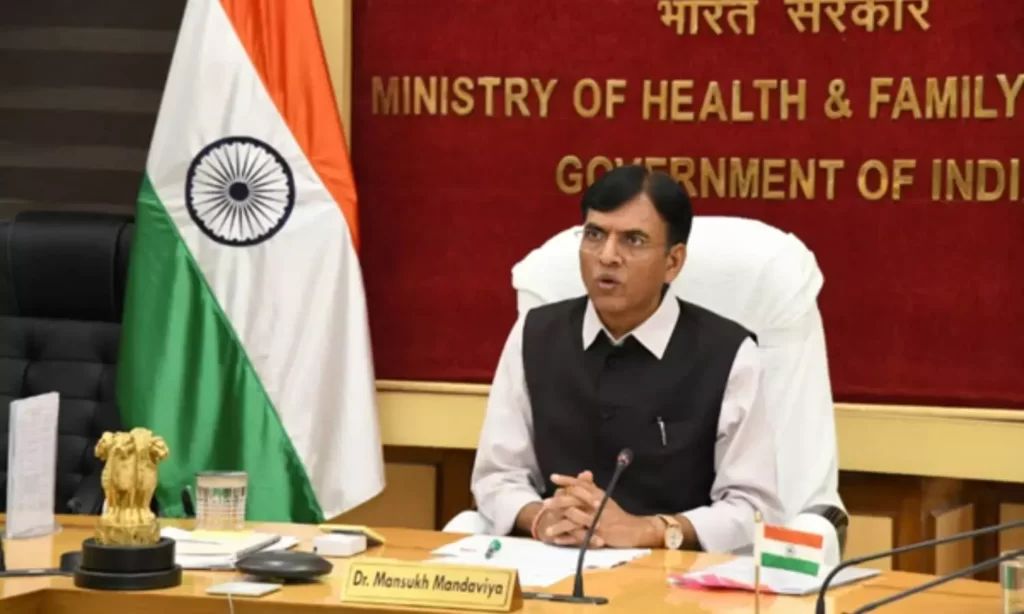
In response to the alarming rise in heatwave-related hospitalizations across several states, Health Minister Mansukh Mandaviya led a high-level meeting to assess the country’s preparedness. Mandaviya announced the deployment of a five-member team comprising senior officials from the Health Ministry and the Indian Meteorological Department (IMD) to visit the states most severely affected by the scorching heatwave. The Indian Council of Medical Research (ICMR) has also been instructed to propose measures to mitigate the adverse impact of the heatwave. Mandaviya emphasized the need for comprehensive arrangements at all levels to safeguard lives and prevent heatstroke fatalities. A virtual meeting with the health ministers of the affected states will also be conducted to address the soaring temperatures and its health implications. The Indian Meteorological Department has forecasted severe to very severe heatwave conditions in various regions, including Uttar Pradesh, Bihar, Haryana, Tamil Nadu, Madhya Pradesh, Jharkhand, Vidarbha, Odisha, West Bengal, Andhra Pradesh, and Telangana, among others. A heatwave is characterized by unusually high temperatures exceeding the normal maximum temperature during the summer season, as defined by the National Disaster Management Authority. Typically occurring between March and June, heatwaves can occasionally extend into July.

Government Mobilizes Team to Combat Rising Heatwave Hospitalizations in Affected States Read More »

India Earns $7.4 Billion from Medical Tourism in the Last Decade, Expects $43.5 Billion in Next 10 Years: Officials

According to officials, India has generated approximately $7.4 billion in revenue through medical tourism in the past decade. This figure is projected to reach $43.5 billion over the next ten years. The health sector in India has experienced significant private investments in the last five years, as highlighted during the BIMSTEC Health Forum organized by the Indian Chamber of Commerce. The forum addressed various topics, including the integration of mental health into overall healthcare, emphasis on universal health coverage, telemedicine, information sharing, exchange of human capital, and collaborative opportunities. Given the BIMSTEC nations’ concern for climate change, the officials stressed the importance of coordination between the commercial and public healthcare sectors, as well as the government, to implement positive changes while considering environmental factors. Medical tourism is recognized as an export for two BIMSTEC members, India and Thailand. Additionally, there have been discussions about partnering with the Thai government to adopt West Bengal government’s healthcare scheme, ‘Swastha Sathi,’ and develop a progressive medical insurance plan. BIMSTEC, established in 1997, is a regional organization comprising a combined population of over 1.68 billion people and a GDP of around $2.88 trillion.

India Earns $7.4 Billion from Medical Tourism in the Last Decade, Expects $43.5 Billion in Next 10 Years: Officials Read More »

AIIMS Delhi Inaugurates AMRIT Pharmacy, Offering Affordable Medications and Round-the-Clock Service

An AMRIT pharmacy was recently opened at AIIMS Delhi with the aim of providing affordable medications. The pharmacy, known as the Affordable Medicines and Reliable Implants for Treatment (AMRIT) pharmacy, has 13 dedicated counters and operates 24/7. This extended working hour facility will be beneficial for individuals in need of urgent medical attention or immediate access to essential medicines. Presently, the pharmacy offers a wide range of around 1,500 drug formulations, covering various medical conditions. Moreover, the pharmacy is committed to expanding its inventory to meet the evolving demands of patients, ensuring that they can always find the medications they require. The director of AIIMS, M Srinivas, expressed pride in offering affordable medicines of high quality and stated that efforts would continue to expand the pharmacy’s offerings based on patient needs. Additionally, AIIMS is working towards establishing an MoU with AMRIT Pharmacy to provide stents and implants at reasonable rates.

AIIMS Delhi Inaugurates AMRIT Pharmacy, Offering Affordable Medications and Round-the-Clock Service Read More »

AstraZeneca Partners with Quell for $2 Billion Cell Therapy Development Agreement

AstraZeneca and Quell Therapeutics have entered into a significant agreement, valued at over $2 billion, to collaborate on the development of cell therapies for the treatment of autoimmune diseases. This partnership aims to create innovative treatments that could potentially provide a cure for conditions such as type 1 diabetes and inflammatory bowel disease. Under the terms of the agreement, AstraZeneca will provide an upfront payment of $85 million to Quell, with the potential for additional payments exceeding $2 billion based on the achievement of development and commercialization milestones.

AstraZeneca Partners with Quell for $2 Billion Cell Therapy Development Agreement Read More »

Pharmacies in Government Hospitals to Provide Medication Instructions in Vernacular Language

Pharmacists working in government hospitals will now be required to provide medications in envelopes with dosage instructions written in the local language. The objective of this measure is to enhance patient safety, ensure quality assurance, and prevent medication errors. The new policy applies to all patients seeking treatment at government hospitals. Due to the high patient volume, doctors in these hospitals may not always have sufficient time to explain dosage instructions and timings to each patient individually. Additionally, medical prescriptions are typically written in English, which many patients receiving care at government hospitals may not understand. As per the new directive, pharmacists from the hospital’s dispensary will be responsible for writing the names of the medicines, along with their dosages and timings, in the local language on a stamped format that includes the hospital’s name. A health official stated that this initiative aims to promote the safe and appropriate use of medications.

Pharmacies in Government Hospitals to Provide Medication Instructions in Vernacular Language Read More »

AIIMS Implements ABHA-Based App to Reduce OPD Waiting Times

AIIMS in New Delhi has successfully implemented a new app called ABHA, which stands for Ayushman Bharat Health Account, aimed at reducing waiting times and long queues for Outpatient Department (OPD) patients. The implementation of this app has yielded impressive results, with AIIMS issuing a total of 73,700 ABHA-based scan and share OPD tokens to date, securing the hospital’s position as a leader in providing efficient and patient-centric healthcare services. The ABHA mobile application has significantly improved the patient experience by streamlining the registration process and reducing waiting times. Previously, patients had to endure long queues at OPD registration counters, causing discomfort and inconvenience. However, with the introduction of the ABHA-based scan and share facility, patients can now easily bypass these queues by scanning a designated QR code and receiving a unique token number. When their token is displayed, they can directly approach the counter without waiting in line. By embracing this advanced technology, AIIMS New Delhi demonstrates its commitment to utilizing digital solutions for the benefit of its patients. Dr. M Srinivas, the Director of AIIMS New Delhi, expressed his enthusiasm for the positive impact of this technology on patient care, emphasizing the institution’s goal of continuously improving the patient experience. The introduction of the ABHA-based Scan and Share facility is part of AIIMS New Delhi’s ongoing commitment to innovation and excellence in healthcare delivery, as they strive to provide a world-class healthcare experience.

AIIMS Implements ABHA-Based App to Reduce OPD Waiting Times Read More »

FDA Approves Pfizer’s RSV Vaccine for Older Adults, Expanding Protection Against Respiratory Illness

Pfizer’s respiratory syncytial virus (RSV) vaccine for older adults has been approved by the US Food and Drug Administration (FDA), becoming the second vaccine against this common respiratory disease to receive approval. The FDA’s decision closely follows the approval of a similar vaccine by GSK Plc. Pfizer’s vaccine, named Abrysvo, is authorized for individuals aged 60 and older, matching the age group for GSK’s vaccine. According to a late-stage study, Pfizer’s vaccine demonstrated 67% effectiveness among adults aged 60 and older with two or more RSV symptoms and 85.7% efficacy against severe illness characterized by three or more symptoms. Both Pfizer and GSK anticipate a lucrative market for RSV vaccines. Pfizer aims to make its vaccine available in the third quarter before the next RSV season, pending approval from the US Centers for Disease Control and Prevention (CDC). The CDC’s advisory committee is scheduled to convene in June to discuss various aspects, including the target recipients and dosing intervals for the vaccines. Pfizer has not disclosed the price of the vaccine but has stated that it will be value-based to support routine vaccination within the recommended age group. If the CDC recommends routine use, the vaccine will likely be widely accessible at no cost for most older Americans covered by the Medicare health plan. Although RSV typically causes mild cold-like symptoms, it can lead to severe illness and hospitalization, particularly among individuals aged 65 and older, resulting in approximately 14,000 deaths annually in the United States. Furthermore, Pfizer is pursuing FDA approval for its RSV vaccine to protect infants by vaccinating pregnant women. If approved, it would be the first RSV vaccine available for safeguarding babies, who face a high risk of severe illness. The vaccine has received support from the FDA’s external expert panel for use in pregnant women. Pfizer plans to launch its RSV vaccine for older adults and pregnant women in the United States and Europe this year. Moderna Inc also intends to seek approval for its RSV vaccine targeting individuals aged 60 and older later this quarter. In November, Sanofi and AstraZeneca gained European marketing authorization for their antibody treatment nirsevimab, designed to prevent RSV in newborns and infants, and it is currently undergoing FDA review.

FDA Approves Pfizer’s RSV Vaccine for Older Adults, Expanding Protection Against Respiratory Illness Read More »

Government to implement PLI schemes for basic chemicals used in pharma and other industries: Mandaviya Mansukh

ardorcomm-news

Chemicals and Fertilisers Minister Mansukh Mandaviya announced plans to introduce the Product Linked Incentive (PLI) scheme for fundamental chemicals on Friday and urged the pharmaceutical and medical device sector to concentrate on producing high-quality goods at competitive prices to compete globally. The minister stated that Modi government is “pro-poor, pro-farmers but also industry-friendly” when speaking at an international conference on the pharmaceutical and medical device industries. He also stated that all policies are being developed following extensive talks with the industry and other stakeholders. Mandaviya emphasised that India is the “pharmacy of the world” and that the sector needs to concentrate on research and developments as well as be aware of global development in order to maintain its position as a leader. He stated that the sector should be prepared for international competition. Mandaviya stated that in order to succeed in the global marketplace, companies must “bring affordability, and do quality manufacturing.” “We have to advance our reputation with affordability and quality. Bargaining with quality damages our world-class reputation. I do not want to tolerate that,” he said. He urged industry support for the government’s initiatives to ensure the quality of the pharmaceutical and medical device industries. “Any negligence in the quality will prove to be detrimental in the global competition,” the minister stated, adding that he does not wish to take harsh measures on the industry. The government has introduced PLI-I and PLI-II initiatives for this industry, according to Mandaviya, to increase domestic production and exports while also making it more self-sufficient. According to Mandaviya, “in the coming days, we are coming up with PLI scheme for basic chemicals also,” based on the industry’s feedback. Mandaviya emphasised the need for research and development in this industry and urged MSMEs working in it to make advantage of government facilities that have been made available to everyone. The minister published the National Medical Devices Policy 2023 and its strategy document prior to his speech. Additionally, he established the Medical Devices Export Promotion Council. The “Assistance to Medical Device Clusters For Common Facilities (AMD-CF)” scheme was also launched by Mandaviya.

Government to implement PLI schemes for basic chemicals used in pharma and other industries: Mandaviya Mansukh Read More »

COVID pandemic highlighted numerous gaps in the global health architecture: PM Modi

The COVID-19 pandemic, according to Prime Minister Narendra Modi, has shown numerous weaknesses in the global health infrastructure. He also underlined that concerted action is required to create resilience in global systems. While India demonstrated its commitment to international cooperation by sending nearly 300 million vaccine doses to more than 100 countries, Modi said the pandemic also highlighted the need to improve global health equity in his video message to the 76th session of the World Health Assembly in Geneva, Switzerland. “Many of these countries were from the Global South. I am sure that supporting equal access to resources will be a top priority for the WHO in the coming years,” he said. Modi stated that during the past five years, India has strived to improve the availability, usability, and affordability of healthcare. An approach that takes into account the scope of India’s diversity can also serve as a model for others, he said. We are eager to help the WHO with similar initiatives in low- and middle-income nations. The prime minister stated that many of India’s efforts are geared at improving health at the last mile, whether it is through the world’s largest health insurance programme, Ayushman Bharat, or the vast expansion of health facilities, or the drive to bring sanitation and drinking water to millions of people. He added that ancient practises like yoga, ayurveda, and meditation address the physical, mental, and social facets of health. According to India’s traditional thinking, being free of illness does not equate to being in good health. He expressed his happiness that India would soon be home to the first Global Centre for Traditional Medicine of the WHO. The International Year of Millets is another thing that makes me pleased because it shows how important millets are to the world. Modi emphasised that the globe is viewed as a single family in India’s ancient scriptures. “During our G20 Presidency this year, we are working with the theme of ‘One Earth, One Family, One Future’. Our vision for good health is ‘One Earth One Health’. We can be healthy only when our whole ecosystem is healthy. So, our vision is not restricted to just humans. It extends to the entire ecosystem, including animals, plants and the environment,” he said.

COVID pandemic highlighted numerous gaps in the global health architecture: PM Modi Read More »

Government mandates that doctors have a unique ID

According to the National Medical Commission’s (NMC) new regulations, doctors must get a Unique Identification Number (UID) in order to practise medicine in the nation. The NMC ethics board will centrally generate the UID, which will thereafter grant the practitioner registration in NMR and the right to practise medicine in India. A common national medical register will be maintained for all of the nation’s licenced medical professionals, according to the most recent NMC announcement. The Ethics and Medical Registration Board (EMRB) of the NMC will maintain the same. All entries for registered medical practitioners from all State Registers kept by the various State Medical Councils will be included in this record, together with all pertinent information on the practitioner. The “Registration of Medical Practitioners and Licence to Practise Medicine Regulations, 2023” new notification stated that the license to practise medicine granted to a registered medical practitioner will be valid for a period of five years after which the medical practitioner will have to renew the license by submitting an application to the State Medical Council. It said that applications for licence renewal may be submitted up to three months before the license’s validity expires.

Government mandates that doctors have a unique ID Read More »