ArdorComm Media Group

Monday, August 3, 2026 11:28 PM

community

NCERT Announces Revision of CBSE Syllabus for Classes 3 and 6 from 2024-25 Academic Session

The National Council of Education Research (NCERT) is set to introduce revised syllabi for Classes 3 and 6 of the Central Board of Secondary Education (CBSE) in line with the National Curriculum Framework for School Education (NCF-SE) 2023. These changes are scheduled to take effect from the academic year 2024-25. A notice issued by NCERT outlines the plan for implementing the revised curriculum, emphasizing the need for adjustments to school timetables to accommodate the changes. Collaboration among CBSE, Kendriya Vidyalaya Sangathan (KVS), and Navodaya Vidyalaya Samiti (NVS) is deemed essential for the successful implementation of these modifications. The notice highlights the importance of proactive communication from CBSE to school heads, teachers, and parents regarding the updated syllabi and recommended time allocations for Grades 3 and 6. It underscores the significance of engaging students in playful and activity-based learning, aligning with the holistic approach advocated by the National Education Policy (NEP) 2020. To facilitate a smooth transition for students, NCERT will provide a syllabus bridge program for Grade 6 and clear guidelines for Grade 3. These initiatives aim to acquaint students with new pedagogical perspectives and areas of study, including Arts, Physical Education, Vocational Education, and The World Around Us. The revised Grade 3 syllabi encompass a diverse range of topics, reflecting contemporary educational perspectives. NCERT is developing activity books and textbooks tailored to the updated curriculum to support students’ learning experiences. Schools are urged to disseminate this information to all stakeholders and adopt a proactive strategy to ensure students’ seamless adaptation to the revised syllabi. By fostering awareness and collaboration among educators, parents, and the wider community, NCERT aims to enhance the quality and effectiveness of education delivery in line with evolving educational standards and objectives.

NCERT Announces Revision of CBSE Syllabus for Classes 3 and 6 from 2024-25 Academic Session Read More »

IPL 2024 Rule Book: Two Bouncers Per Over, Two Referrals, No Stop Clock

The upcoming 2024 season of the Indian Premier League (IPL) will see significant changes in its rule book, maintaining the allowance of two bouncers per over for bowlers, a departure from previous seasons where only one short ball was permitted. Earlier introduced in the Syed Mushtaq Ali Trophy (SMAT), a national T20 championship in the BCCI domestic calendar, the second bouncer rule will now be a part of the IPL playing conditions as well. In contrast to T20 Internationals, where only one short ball is allowed, the IPL and other domestic T20 competitions will permit two bouncers per over, akin to Test and One Day International (ODI) matches. Former India pacer and Chennai Super Kings’ ex-bowling coach Laxmipathy Balaji hailed this decision as a positive move, citing its potential to enhance the bowlers’ arsenal and balance the contest between bat and ball. Balaji emphasized the significance of the second bouncer, particularly in the death overs, offering bowlers an additional strategic option. With the participation of top-class fast bowlers in the IPL, he anticipates thrilling contests between bat and ball. In another notable change, the IPL will continue with the rule of checking for a catch while a referral is made for stumping, differing from ICC regulations. BCCI officials justify this decision, stating that failing to check for a catch before reviewing a stumping could unfairly disadvantage the fielding side. Teams will retain two referrals and the ability to review wides and no balls, a rule introduced last year. However, the IPL will not adopt the stop clock rule, a recent addition to ICC playing conditions for white-ball international games.  

IPL 2024 Rule Book: Two Bouncers Per Over, Two Referrals, No Stop Clock Read More »

Airbus Abandons Potential Acquisition of Atos Data Division, Leaving Atos in Limbo

Atos, an IT services company facing financial challenges, has hit another roadblock in its attempt to sell off part of its business to address its debt issues. Airbus, a potential acquirer of Atos’s big data and security business, has decided to walk away from the deal after completing its due diligence investigation. The failure of this deal has led Atos to once again postpone the release of its audited financial statement for 2023 as it reassesses its options. This setback adds to the company’s existing challenges, as it has already faced difficulties in finalizing a deal with another potential buyer, EP Equity Investment, for its infrastructure management business. Although Airbus might have seemed like an unlikely savior, given its expertise in cybersecurity and data management through its own operations, the potential synergies between the two companies did not materialize into a successful acquisition. Despite Atos’s efforts to explore strategic alternatives, including the possibility of another buyer, the company finds itself in a state of uncertainty. Atos now faces the task of bringing together its legacy and modern business segments while navigating its financial difficulties and evaluating its strategic options. The company’s CEO, Paul Saleh, has not ruled out the possibility of seeking another buyer for its assets. However, the uncertainty surrounding Atos’s future, compounded by concerns over national security implications and its contracts with the French Ministry of Defense, poses challenges for the company’s clients and its ability to attract new business. As Atos continues to grapple with its financial woes and search for a path forward, the outcome of its strategic evaluations will be closely watched by stakeholders, including CIOs in industries such as healthcare, manufacturing, and defense that rely on Atos’s services.

Airbus Abandons Potential Acquisition of Atos Data Division, Leaving Atos in Limbo Read More »

Uttar Pradesh Education Department Employees Booked for Alleged Fraudulent Appointment of Urdu Teachers

Four employees of the education department in Uttar Pradesh, including the Basic Shiksha Adhikari (BSA), have been booked for allegedly appointing Urdu teachers based on forged documents in Siddharth Nagar district, officials reported on Wednesday. The FIR was filed on Tuesday following an investigation by the UP Special Task Force (STF), which uncovered their involvement in irregularities. The accused are accused of facilitating the appointment of suspended teachers in the district by forging signatures of senior officials and providing affiliation to nonexistent schools. The individuals involved have been identified as BSA Devendra Kumar Pandey, block education officer Kunwar Vikram Pandey, and clerks Mukul Mishra and Shiv Sagar Choubey. Superintendent of Police Prachi Singh stated that a former BSA of Siddharth Nagar filed a complaint with ADG, STF, Amitabh Yash, highlighting irregularities in the recruitment of Urdu teachers and the issuance of appointment letters. Despite multiple complaints to the authorities, no action was taken to investigate the matter, the complainant alleged. The complaint also mentioned the grant of recognition to certain schools through fraudulent signatures, as well as forgery of appointment letters and salary payment orders. A subsequent report from the district basic education officer revealed that the recognition of 15 schools was questionable due to missing documents. The complainant further alleged that a junior clerk involved in the activities was being shielded by the BSA and called for a thorough investigation. After a preliminary examination, the allegations were deemed credible, leading to the filing of an FIR. The SP affirmed that further investigation is ongoing to ascertain the extent of the wrongdoing.

Uttar Pradesh Education Department Employees Booked for Alleged Fraudulent Appointment of Urdu Teachers Read More »

Decoding Lok Sabha Election Dates 2024: A Comprehensive Guide

Blog on government

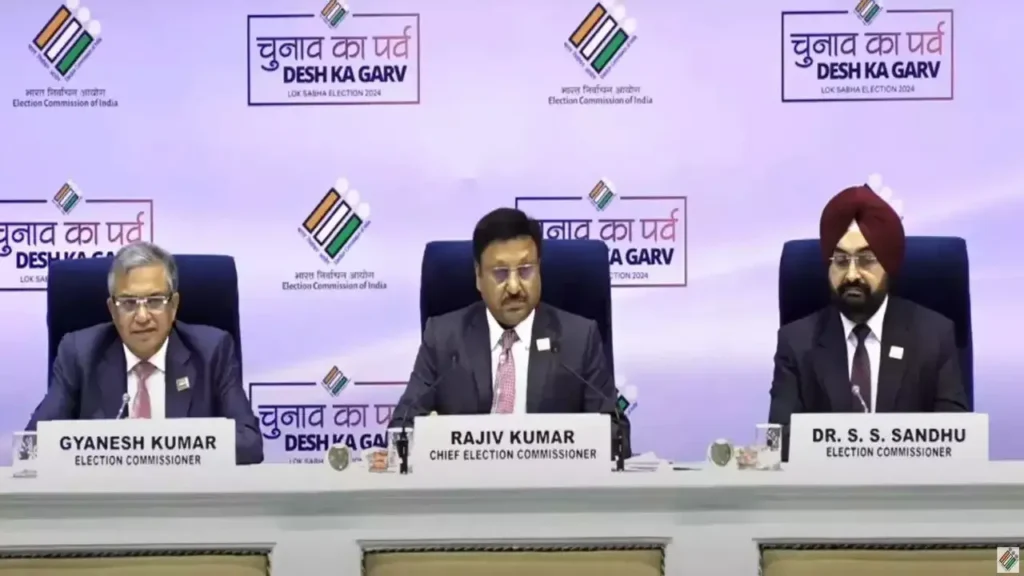
The Lok Sabha elections in 2024 are not just a democratic exercise but a reflection of the nation’s aspirations and values. As the Election Commission of India (ECI) unveils the detailed schedule for the electoral process, the entire country gears up for a momentous event that will shape the course of governance for the coming years. With each phase of polling, voters will exercise their fundamental right to choose their representatives, contributing to the vibrant tapestry of Indian democracy. Understanding the Electoral Schedule: The Lok Sabha elections in 2024 are scheduled to commence on April 19 and will be conducted in seven phases, culminating in the announcement of results on June 4. The phased approach ensures efficient management and widespread participation across the diverse regions of the country. The Lok Sabha Election 2024 schedule unfolds in seven meticulously planned phases, each covering a diverse array of states and union territories, with their unique political landscapes and demographic compositions. In Phase I, slated for April 19, voters from 21 states and union territories will cast their ballots across 102 Lok Sabha constituencies. From the northeastern states of Arunachal Pradesh, Assam, and Manipur to the heartland states of Bihar, Madhya Pradesh, and Rajasthan, this phase encompasses a wide geographic spread, reflecting the nation’s rich diversity. Moving on to Phase II, scheduled for April 26, the electoral process extends to 13 states, with 89 parliamentary constituencies up for grabs. States like Karnataka, Maharashtra, and Uttar Pradesh witness significant polling activity during this phase, underscoring their political significance in shaping the national narrative. Phase III, set for May 7, sees polling across 12 states and union territories, covering 94 Lok Sabha constituencies. From the vibrant landscapes of Gujarat and Karnataka to the politically crucial battlegrounds of Uttar Pradesh and West Bengal, this phase captures the essence of India’s democratic ethos. May 13 marks Phase IV, with polling spanning 10 states and union territories, encompassing 96 parliamentary constituencies. From the coastal regions of Andhra Pradesh and Odisha to the hinterlands of Jharkhand and Madhya Pradesh, this phase witnesses a diverse array of electoral dynamics at play. Phase V, slated for May 20, focuses on 49 Lok Sabha constituencies across 8 states, including Bihar, Maharashtra, and Uttar Pradesh. With each phase, the electoral process gains momentum, drawing closer to the culmination of results on June 4. Phase VI, scheduled for May 25, extends to 7 states, covering 57 parliamentary constituencies. From the national capital territory of Delhi to the agrarian landscapes of Uttar Pradesh and West Bengal, this phase underscores the democratic fervor resonating across the country. Finally, Phase VII, held on June 1, witnesses polling in 57 Lok Sabha constituencies across 8 states and union territories. From the picturesque landscapes of Himachal Pradesh to the bustling streets of Punjab and Uttar Pradesh, this phase brings the curtain down on a monumental electoral exercise, paving the way for the announcement of results and the dawn of a new political era on June 4. Key Phases and Constituencies: Each phase of the elections covers specific states and union territories, with varying numbers of constituencies. From April 19 to June 1, voters will cast their ballots in different regions, shaping the political landscape for the next term of governance. Notably, states like Uttar Pradesh, Maharashtra, and West Bengal witness multi-phase polling due to their large electorate and diverse demographics. Importance of Model Code of Conduct: The announcement of election dates triggers the enforcement of the Model Code of Conduct (MCC), which guides the conduct of political parties and candidates during the electoral process. The MCC ensures a level playing field and prohibits the ruling government from making policy decisions that could influence voters. Political Dynamics and Party Strategies: The Lok Sabha elections serve as a battleground for various political parties, with the incumbent NDA government aiming for a rare third term. Conversely, opposition parties, united under the INDIA bloc, view the elections as an opportunity to challenge the ruling coalition’s dominance and advocate for democratic values. Voter Outreach and Participation: With approximately 97 crore eligible voters, voter outreach and participation are crucial aspects of the electoral process. The ECI, along with political parties and civil society organizations, endeavors to ensure maximum voter turnout by providing essential facilities and promoting awareness campaigns. Looking Ahead: As the nation gears up for the Lok Sabha elections, the political landscape undergoes dynamic shifts, reflecting the aspirations and concerns of diverse communities. The electoral process serves as a cornerstone of democracy, empowering citizens to exercise their right to choose their representatives and shape the future of the country. The Lok Sabha elections in 2024 represent a significant milestone in India’s democratic journey, marked by extensive preparations, spirited campaigns, and the collective voice of millions of voters. Through active engagement and informed decision-making, citizens contribute to the vibrant tapestry of Indian democracy, ensuring a brighter and inclusive future for generations to come.


Decoding Lok Sabha Election Dates 2024: A Comprehensive Guide Read More »

India Inc’s Board Sizes Decrease Amid Heightened Governance Scrutiny

Amid increasing scrutiny on governance issues, corporate boards in India are witnessing a reduction in size, according to a report by Excellence Enablers, backed by former SEBI Chairman M Damodaran. In fiscal years FY’18 and FY’19, the range of board members varied from 4 to 22. However, the maximum board size has contracted to 16 by FY23. The report underscores the importance of ensuring adequate board membership to effectively constitute mandatory board committees. With five required board committees, sufficient members are needed to prevent overlap among committee memberships. Highlighting the essence of good corporate governance, the report emphasizes the significance of voluntary adherence to governance best practices. Entities that proactively adopt governance measures often influence regulatory standards for the broader business community. Under the Companies Act, 2013, public companies must have a minimum of three directors, while private companies require at least two directors. The maximum limit for board size is fifteen directors. SEBI mandates that listed public companies appoint one-third of their board as independent directors, except for Public Sector Undertakings (PSUs). Additionally, if the chairperson is a non-executive director, one-third of the board must comprise independent directors. In cases where there’s no regular non-executive chairperson, at least half of the board should consist of independent directors. As of March-end 2023, six companies were found to be non-compliant with independent director norms. The report stresses the importance of maintaining a balanced mix of executive and non-executive directors on boards to leverage diverse perspectives and experience. It cautions against combining the roles of Chairman and MD/CEO, highlighting the potential conflict of interest and the adverse impact on corporate governance. Moreover, the report recommends making the appointment of a lead independent director mandatory for boards chaired by executives to ensure effective governance oversight.

India Inc’s Board Sizes Decrease Amid Heightened Governance Scrutiny Read More »

UK’s NHS Recruits 2,000 Doctors from India to Address Medical Workforce Shortage

The UK’s National Health Service (NHS) has embarked on an initiative to recruit 2,000 doctors from India. Under this fast-track program, doctors will undergo postgraduate training in India before being deployed to hospitals in the UK. The initiative aims to tackle the NHS’s longstanding struggle with medical workforce shortages, exacerbated by factors such as low wages, expensive training, and burnout due to heavy workloads. Brexit has further complicated the issue, leading to increased reliance on overseas-trained doctors. Notably, the recruited doctors will be exempted from the Professional and Linguistic Assessments Board (PLAB) examination, typically mandatory for practicing in the UK, upon completion of their training program. However, concerns have been raised regarding the potential impact on India’s healthcare system, with fears of brain drain and the loss of skilled professionals. While some experts view this initiative as a valuable opportunity for Indian doctors to gain international experience, others emphasize the importance of offering ample opportunities and fair compensation to locally trained doctors in India. Additionally, the lack of widespread awareness about the initiative among the medical community in India highlights the need for better promotion and communication efforts. Ultimately, the initiative represents a significant stride towards global healthcare collaboration, with the potential to enhance healthcare standards and foster a mutually beneficial exchange of knowledge and expertise between India and the UK. Key Points: The NHS plans to recruit 2,000 doctors from India to address medical workforce shortages. Recruited doctors will undergo six- to twelve-month postgraduate training in India before deployment to UK hospitals. Exemption from the PLAB examination will be granted upon completion of the training program. Concerns have been raised about potential brain drain and the impact on India’s healthcare system. Improved awareness and promotion efforts are needed to ensure the success of the initiative. The initiative signifies a step towards global healthcare collaboration and knowledge exchange. Currently, 25-30% of the NHS’ medical workforce consists of doctors trained overseas.

UK’s NHS Recruits 2,000 Doctors from India to Address Medical Workforce Shortage Read More »

Vistara Issues Ultimatum to Pilots Over New Pay Structure Amid Merger with Air India

Vistara, in the midst of its merger with Air India, has given an ultimatum to its pilots regarding a new pay structure, sparking concerns among pilots, particularly First Officers, who anticipate significant pay cuts. The ultimatum, issued just hours before the deadline to accept the new pay terms, warns of potential exclusion from the integrated airline for those who fail to comply. The new pay structure, under scrutiny by pilots, offers a minimum guaranteed flying time of 40 hours for all pilots, down from the current 70 hours. Consequently, First Officers are expected to endure a pay cut of nearly 57%. They argue that under the new terms, they would need to fly up to 76 hours to earn what they previously earned at 70 hours, while Captains and Senior Captains face less drastic reductions, needing to fly 52-55 hours and 55-60 hours, respectively, to maintain their previous salary levels. Legal experts weigh in, suggesting that changes to employment conditions post-hiring may not be legally enforceable, potentially rendering any bonds or agreements signed by pilots, particularly in relation to training loans owed to the airline, invalid. Moreover, concerns loom over the transition of some pilots to widebody aircraft from the current narrowbody Airbus A320, potentially delaying their career progression to Captain roles and impacting their earnings. With plans to halve flight operations by June and cease independent operations by October as part of the integration process with Air India, Vistara aims to conclude the merger by mid-2025. Conditional approval from regulatory bodies in Singapore and India has been secured, with further approvals pending. The ultimatum has intensified tensions between Vistara and its pilots, highlighting the complexities and challenges associated with mergers and restructuring within the aviation industry.  

Vistara Issues Ultimatum to Pilots Over New Pay Structure Amid Merger with Air India Read More »

Macquarie University Announces AUD $40,000 Scholarship for Indian and Sri Lankan Students

Macquarie University has introduced a prestigious scholarship worth AUD $40,000 aimed at recognizing exceptional students from India and Sri Lanka. The scholarship, valued at AUD 10,000 per year, will be awarded to outstanding candidates commencing their studies at Macquarie University from the academic year 2024-25 onwards. Interested students can apply for this scholarship via the official Macquarie University website at mq.edu.au. Eligibility Criteria: To qualify for this scholarship, applicants must meet the following criteria: Must be a full-time international student enrolling in an undergraduate or postgraduate degree program on campus. Must hold citizenship of India or Sri Lanka. Should possess a full offer of admission from Macquarie University. Must accept the offer letter and pay the commencement fee by the specified due date mentioned in the offer letter. Scholarship Details: The scholarship, amounting to AUD $10,000 per year, will be allocated towards tuition fees for coursework degree programs offered at Macquarie University’s Sydney campus. This scholarship will be distributed annually, providing significant financial assistance to deserving students throughout the duration of their studies. For instance, a student enrolled in a four-year undergraduate degree program stands to receive up to AUD $40,000 over the course of four years towards their total tuition fees. Application Process: Applications for this scholarship are open year-round, and candidates who submit their applications will automatically be considered for the scholarship. Successful applicants will be notified accordingly. Key Areas of Study: Macquarie University offers a diverse range of academic disciplines, including but not limited to: Banking & Finance (Fintech, Environmental Finance, Financial Management) Data Science Information Technology (IoT, AI, Information Systems, Networking, Cyber Security) Engineering (Electrical, Electronics, Mechanical, Mechatronics, Renewable Energy, Civil, Construction, Software) Business Analytics Management Medicine Arts, Media, and Communications Through this scholarship initiative, Macquarie University aims to support talented students from India and Sri Lanka in pursuing their academic aspirations and fostering excellence in higher education.  

Macquarie University Announces AUD $40,000 Scholarship for Indian and Sri Lankan Students Read More »

Delhi High Court Upholds Ban on Bloomberg’s Defamatory Article Against ZEE Entertainment

Bloomberg India’s legal woes deepen as the Delhi High Court delivers a blow by dismissing its appeal against ZEE Entertainment Enterprises. Upholding the Sessions Court’s order from March 1, 2024, the High Court reaffirmed the injunction restraining Bloomberg from disseminating the allegedly defamatory article dated February 21, 2024, targeting ZEE Entertainment. Justice Shalinder Kaur, in her ruling, emphasized the existence of prima facie evidence supporting the necessity of an interim injunction, citing potential irreparable harm if the defamatory content remained unchecked. The court’s decision to dismiss Bloomberg’s appeal underscores the seriousness of the allegations and the need to protect ZEE Entertainment’s reputation from further harm. Furthermore, the High Court directed Bloomberg to adhere to the directives of the additional District Judge within three days, underscoring the urgency of compliance with the legal proceedings. ZEE Entertainment had filed a lawsuit in the Delhi Sessions Court, alleging that Bloomberg’s article contained false and misleading information aimed at tarnishing the company’s image. The Sessions Court had previously issued an interim ex-parte order on March 1, 2024, instructing Bloomberg to remove the contentious article from its platform within a week and refrain from publishing it on any medium, online or offline. ZEE Entertainment argued that the article’s inaccuracies regarding corporate governance and business operations had led to a significant decline in its share price, causing substantial losses for investors. With the Delhi High Court’s dismissal of Bloomberg’s appeal, the legal battle between the media giant and ZEE Entertainment intensifies, highlighting the importance of upholding journalistic integrity and corporate reputation in the digital age.  

Delhi High Court Upholds Ban on Bloomberg’s Defamatory Article Against ZEE Entertainment Read More »