ArdorComm Media Group

Sunday, April 12, 2026 11:33 AM

community

Punjab government to give free uniform to 15.49 lakh govt school students

Punjab Education Minister Gurmeet Singh Meet Hayer announced on Thursday that for the academic year 2022-23, his department will provide free uniforms to 15,49,192 government school students from grades 1 to 8. The education department has released a grant of Rs 92.95 crore, he said in an official statement. Mr Hayer stated that Rs 50.72 crore has been granted for 8,45,429 girls, Rs 32.75 crore for 5,45,993 boys from the scheduled caste category, and Rs 9.46 crore for 1,57,770 boys from the BPL (below poverty line) category, out of the total beneficiary students. The school management committees (SMCs) will distribute the free uniforms. The minister went on to say that the SMCs will spend Rs 600 per student on uniforms. The minister asked school officials not to buy uniforms from any specific shop. Source: PTI

Punjab government to give free uniform to 15.49 lakh govt school students Read More »

Employees at Infosys can expect a wage increase of at least 12%

It’s time for Infosys employees to rejoice. The IT giant has decided to give its staff a compensation increase of 12 to 13% on average. Employees with high potential may receive a raise of 22 to 23 percent, plus a retention bonus. This approach is intended to lower turnover and control attrition, which was at 27.7% in Q4. This appealing raise is likely to lure both experienced professionals and freshers to the Company. According to Mint, Infosys hired 85,000 freshers in the previous fiscal year and plans to hire 50,000 college graduates in FY23. Infosys’ top performers can expect better roles and more opportunity to upskill and receive training on emerging technologies like artificial intelligence (AI) and machine learning (ML). Infosys has been witnessing substantial attrition recently. Its attrition rate was 10.9 percent in March 2021, but it increased to 25.5 percent in the quarter ended December 31. Infosys isn’t the first IT firm to announce compensation increases. Tata Consultancy Services (TCS) has also declared that in the financial year 2023, its employees’ salaries will be increased by six to eight percent. Microsoft, too, recently announced its aim to double its global compensation budget. This is Microsoft’s strategy for maintaining competitive pay in a competitive labour market.

Employees at Infosys can expect a wage increase of at least 12% Read More »

India’s media and entertainment ecosystem expected to generate 53 billion dollars annually: I&B Minister Anurag Thakur 

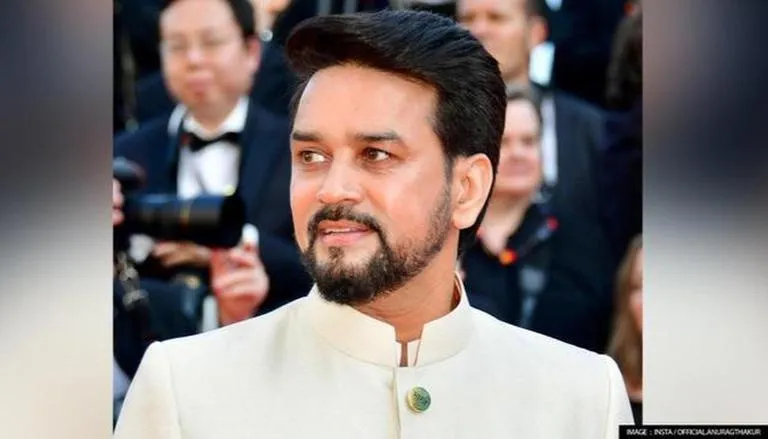
Anurag Thakur, the Minister of Information and Broadcasting, stated that India has the potential to become a global content subcontinent and a preferred destination for film post-production. The government’s plans, he said, are aimed at growing India’s media and entertainment ecosystem, which is estimated to generate 53 billion dollars annually. Mr. Thakur remarked during the India Forum on ‘India-The Content Hub of the World’ that Indian cinema has entertained not only Indians but also worldwide audiences. He stated that cinema has beautifully depicted India’s journey and that Indian cinema has played a significant role in portraying the country’s fight for independence. According to him, the Indian media and entertainment sector contributes significantly to the economy and serves as a global showcase for the country’s soft power. In the previous eight years, he noted, the government has taken many steps to enhance co-production and film shoots in the country. The government, according to the Minister, has established the Animation, Visual Effects, Gaming, and Comic (AVGC) task force, which is comprised of industry stalwarts, to prepare a policy roadmap for India to achieve a quantum leap in this sector. He stated that measures have been taken to preserve the country’s film heritage through digitization. According to him, the OTT market has enormous potential, with the country’s OTT market predicted to develop at a rate of 21% yearly. Among those present at the panel discussion were Prasoon Joshi, Chairperson of the Central Board of Film Certification and Veteran Lyricist, R Madhavan, Indian Filmmaker Shekhar Kapoor, Secretary Ministry of Information and Broadcasting Apurva Chandra, and others.

India’s media and entertainment ecosystem expected to generate 53 billion dollars annually: I&B Minister Anurag Thakur  Read More »

Vedantu is laying off another 424 employees, citing scarcity of capital

Vedantu, the edtech unicorn that made headlines earlier this month for laying off about 200 employees, is cutting off even more staff. This time, the company laid off nearly 7% of its workers, or 424 people. “Currently, the external environment is tough. War in Europe, impending recession fears, and Fed rate interest hikes have led to inflationary pressures with massive correction in stocks globally and in India as well. Given this environment, capital will be scarce for upcoming quarters,” Krishna told Vedantu’s employees in a blog. “With Covid tailwinds receding, schools and offline models opening up, the hyper-growth of 9X, Vedantu experienced during the last 2 years will also get moderated. For long term sustenance of the mission, V would need to adapt too,” Krishna added. Krishna stated that the company wants to build a runway of at least 30 months without sacrificing its primary value of student centricity, and that it will focus on lowering client acquisition costs through innovation and automation in operations. Krishna also stated that Vedantu reviewed all of its projects and divided them into core and non-core projects in order to align all projects and teams with Vedantu’s primary focus areas and rationalise those that were out of sync. “The result is, that a few teams and projects will have to be deprioritized and, in the process, a few of our Vedans will be let go as well,” Krishna stated. Employees who are being reassessed will receive an email inviting them to meet with HR and their managers one-on-one, according to Krishna, who also stated that the company will extend benefits such as health insurance to employees and their families until August 5. Krishna further stated that Practo will provide access to 15 doctor consultations as well as cheap pathology and pharmacy services until April 29 of next year.

Vedantu is laying off another 424 employees, citing scarcity of capital Read More »

India plans to deploy a 6G telecom network by the end of the decade: PM Modi

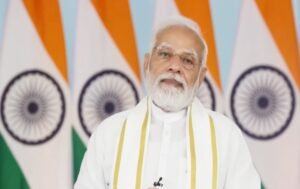
Prime Minister Narendra Modi announced on Tuesday that India plans to build out a 6G telecom network by the end of the decade, which will deliver ultra-high-speed internet connectivity. India now has 3G and 4G telecom networks, with 5G expected to be launched in the coming months.He said the 5G network rollout will add USD 450 billion to the Indian economy, speaking at the silver jubilee event of telecom industry regulator TRAI. “This is not just increasing internet speed but also the pace of development and creating jobs,” he stated, adding that 5G technology will improve the country’s governance, quality of life, and ease of doing business.It will boost growth in agriculture, health, education, infrastructure and logistics, he said. Modi stated that connectivity will determine the country’s progress in the twenty-first century, and that new infrastructure must be implemented.A task force, according to the prime minister, has begun work on deploying a 6G network before the end of the decade. Modi said the 2G era was symbolic of policy paralysis and corruption under the previous Congress-led UPA government.Under his leadership, the country transitioned to 4G and is presently transitioning to 5G. He added that teledensity and internet users are rapidly increasing, and that India’s mobile manufacturing units have grown from two to over 200, making it the world’s largest mobile manufacturing hub. The prime minister also stated that his government has promoted healthy competition, resulting in India having one of the world’s lowest telecom data rates.In the telecom sector, an indigenous 5G test bed is a vital step toward India ‘s self-reliance, he noted. Source: PTI

India plans to deploy a 6G telecom network by the end of the decade: PM Modi Read More »

Takeda launches hemophilia drug Adynovate in India

Takeda Pharma has expanded its unique rare diseases portfolio in India with the launch of Adynovate, an extended half-life recombinant Factor VIII (rFVIII) medication for haemophilia A patients that uses existing technology (controlled PEGylation). It also stated that Adynovate, when used in conjunction with MYPKFIT, the first and only FDA-approved app, provides a personalised and interactive prophylaxis treatment option that allows both healthcare professionals and patients to monitor factor VIII levels in real time from the comfort of their own homes using a mobile phone. Patients on prophylaxis receive alerts when their predicted factor VIII levels are low, as well as reminders when their infusions are due, ensuring excellent prophylactic coverage. Adynovate, which is administered in three phases with the BAXJECT III system, avoids the requirement for vial disinfection because vials are fully built in the system housing. It can be stored at room temperature for up to three months without exceeding the expiration date, provided that the temperature does not exceed 30°C (86°F). Takeda Pharma has been focused on driving thorough research to enable the development of successful and novel treatments in the company’s chosen therapy areas as a global leader in pharma, according to the corporate statement.

Takeda launches hemophilia drug Adynovate in India Read More »

Adani Group set to buy 49% stake in Quintillion Business Media

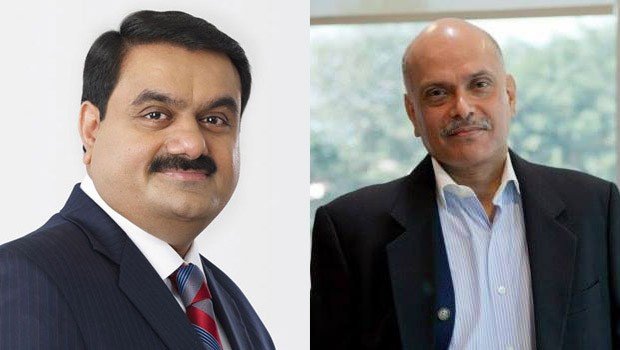
According to a regulatory statement to the exchanges, Adani Group’s unit AMG Media Networks will acquire a 49 percent stake in Raghav Bahl’s digital business news platform Quintillion Business Media for an undisclosed amount. Earlier this year, the Adani Group bought a minority stake in Quintillion Business Media for an undisclosed sum. In accordance with its proposed acquisition of a 49 percent stake in the media company, it has signed a Shareholders’ Agreement with Quintillion Media Ltd (QML) and QBML, as well as a share purchase agreement with QML, QBML, and Ltd (QDML). The deal is reportedly subject to customary closing conditions as well as necessary regulatory approvals. Quint Digital Media’s stock jumped dramatically on Monday, gaining more than 9% at 12.13 p.m. The current price of the stock is Rs 325. Adani Enterprises signed a Memorandum of Understanding with Quint on March 1, 2022, and stated its intention to enter the media business by acquiring an undefined minority stake in QBML. “The proposed transaction with the Adani Group is only for QBM, a digital business news platform, and has nothing to do with Quint Digital’s other digital media/media tech properties, such as The Quint, Quintype Technologies, the new minute, and Youthkiawaaz,” it had stated. Gautam Adani’s port-to-energy business has been considering a move into the media space for several months. It engaged veteran journalist Sanjay Pugalia to oversee its media company, Adani Media Ventures, in September of last year. The Adani Group, which consists of seven publicly listed companies that operate airports and ports, power generation and transmission, coal, and a city gas distribution network, has a market capitalization of about USD 150 billion. Source: PTI

Adani Group set to buy 49% stake in Quintillion Business Media Read More »

UGC begins outreach for tie-ups between Indian and foreign universities

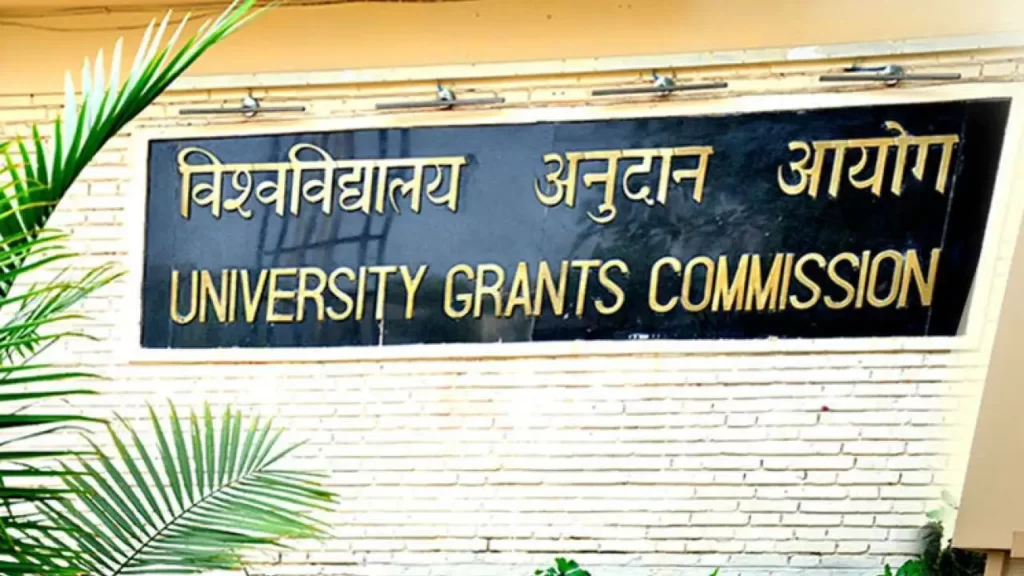
The University Grants Commission (UGC) has reached out to over 500 foreign universities throughout the US, UK, Europe, and East Asia as part of a massive push to increase collaborations between Indian and foreign higher education institutions. The commission currently plans to meet with the heads of foreign missions in India to discuss possible collaborations in accordance with the recently announced regulations on twinning, joint degree, and dual degree programmes, which will take effect in the academic year 2022-23. In April, the University Grants Commission (Academic Collaboration between Indian and Foreign Higher Education Institutions to Offer Joint Degrees, Dual Degree, and Twinning Programmes) Regulations, 2022 were published. “We have also sent them (foreign institutions) a list of eligible Indian universities with whom MoUs can be signed. We have not written to any universities in China although some of their universities fulfil the eligibility criteria,” UGC chairperson M Jagadesh Kumar told The Indian Express on Sunday. Foreign institutes interested in collaborating must be ranked in the top 1000 in the Times Higher Education or QS rankings. Indian universities that satisfy the same level or are ranked among the top 100 in the National Institutional Ranking Framework (NIRF) or have a minimum NAAC score of 3.01 are eligible. Academic collaborations between Indian and foreign institutions in the higher education sector are one of the National Education Policy 2020’s core recommendations. Work is also being done to make it easier for prestigious Indian universities like IIT Delhi to open campuses abroad. Last December, a committee chaired by IIT council chairman Dr. K Radhakrishnan published its suggestions for the establishment of offshore campuses of Indian higher educational institutions. Another expert panel’s deliberations to attract prominent foreign universities to open campuses in India have also reached the “final stage,” according to Prof Kumar. “It will also reduce a part of the outflow of foreign exchange which stands at about $US 25 billion currently.”  Approximately 50,000 international students are now enrolled in Indian colleges, according to official estimates. Source: Indian Express

UGC begins outreach for tie-ups between Indian and foreign universities Read More »

Reimagining higher education through the ‘PHYGITAL’ mode of learning: Enhancing student employability

It was almost unimaginable until recently that practical training for skill-based vocational courses could be given so efficiently online! The desire to utilize digital technology in combination with traditional training techniques has enabled us re-imagine skilling in higher education in many new ways, thanks to the push from COVID-19. “Not only did the pandemic force us to reconsider how we delivered skill training; the new National Education Policy (NEP) 2020 also asks for speeding up skill-based training through “Blended learning” or in a “Phygital mode.” In simple terms, phygital learning is the combination of physical and digital learning environments or platforms. Learning in a phygital paradigm aids in the development of domain skills as well as the development of digital abilities. As a result, a phygital model that includes workplace experience, vocational competence, and crucial employability skills has a favourable impact on the learners’ professional career preparedness,” said Chandan Anand, Founder, CEO & Group Editor of ArdorComm Media Group while moderating the panel session at ArdorComm- Higher Education and EdTech Conclave & Awards 2022, Pune on 6th May 2022. In what ways phygital education helps in making teaching learning easier and stay motivated? To propel discussion on this, the eminent higher education leaders and industry experts emphasized on the same. Sanjay Padode, Founding President and Chancellor, Vijaybhoomi University; Chairman, JAGSOM said, it is important for us to understand that there are three aspects in this context. First is physical, second is digital and the third is employability. We are trying to figure out how the phygital world is actually going to impact employability. So, let’s look at the physical world and the digital world, they have been existing for the last 20 years, its just that during COVID 19 it has impacted us and digital has emerged because that was the only option over the last two years, so digital just emerged off. Fortunately, it is good to know that earlier we were completely physical so it’s completely polarized and in the last two years it has been completely digital. The phygital is going to happen now, where we have understood the limitations of digital right now and we know the powers of physical. So, there’s a big debate going around amongst all the educators. I know a lot of faculties who are very comfortable in class, and talk with people. Many students are not coming to the classes, these are some of the sub-challenge of the phygital world. What’s really happening is that its not really about physical teaching or digital teaching, it’s a broader impact. It is the impact on the physical and digital all over. For example, let’s say I’m in Harvard in the physical time and I have a five-year experience, and gave up a cozy job, obviously if I’ve got into Harvard I must be a top performing student, so I must be having a cozy job, I give that up to go into a two-year program so I’m losing some money and I’m shelling out a huge amount of 100-200 thousand dollars from my pocket to go through the program. Now I go to Harvard, lockdown happens, one month I’m learning from home and then I realize ok now that I’m learning from home why don’t I go back to my job guy and tell can I work from home. So, the job guy says that’s good you start working, so I start working, and at some point, of time I realize this arrangement is working well. And then COVID disappears and Harvard says please come back to classroom, students say why the hell did I lose my job. Now that I have tested the fact that I can learn from home and work from home, why the hell should I give it away. See the mixing of physical and digital is happening in the student’s mind. Now how do we leverage learning, we take cognizance of the fact that this possibility exist, now here is an opportunity where we have a learner who is in the work place. So, I don’t have to arrange for internships, how we can bring that in a class and merge is going to determine how you are going to enhance employability. We have to understand how we can leverage both of these facets to do that. Prof. (Dr.) G.K.Shirude, Vice-Chancellor, Sri Balaji University, Pune said, afterall learning never ends, never stops. Even pandemic has not, rather given us a different opportunity and opened up the creative eyes of the society as well as the digital platform. Phygital from decades together have no issues, we are accustomed with that habituated with that and therefore vigilance up to some extent. But the credit goes to the pandemic because it has given a big push as far as the transformation process is concerned. Whenever I say digitalization is concerned I will always prefer that unless the youngsters, our learners, they are not habituated by using these tools they are not going to be accepted in the industry. So, whenever we talk about employment and phygital, now there is no question as far as physical or digital. Physical is going on society has accepted it, and students have accepted it. Again, there are two things, I’m talking about ‘India’ and not talking about ‘Bharat’, where the infrastructure is quite well and particularly Digi-education is always focused, target oriented and employment is the target. What is the outcome that is expected from the students? It is where they are going to be placed. So now there are three questions whenever we talk about the phygital and employment. What are the expectations of the students from us now? What are the expectations of the parents from us? And what are the expectations of the industries from the institutes and universities? If we have these three questions in our mind, particularly whether the universities or whether the PG programs or standalone institutes are concerned. The question is very simple K+S which creates the


Reimagining higher education through the ‘PHYGITAL’ mode of learning: Enhancing student employability Read More »

CUET not required for admission to Meghalaya colleges: Education Minister

Union Education Minister Dharmendra Pradhan announced on Thursday that the Common University Entrance Test (CUET) would not be required for admission to undergraduate programmes in institutes affiliated with the North Eastern Hill University (NEHU) in Meghalaya. Pradhan wrote to Chief Minister Conrad K Sangma, explaining that the exemption was granted for this academic year due to geographic challenges, remote locations, and insufficient digital access and infrastructure. In the letter, the education minister stated that “The affiliated colleges of NEHU will continue with the existing practice for admission instead of CUET.” Starting this academic year, the Common University Entrance Test (CUET) will be used for admission to programmes at all central universities. On April 25, the chief minister met with Pradhan to request an exemption for Meghalaya colleges. Sangma expressed gratitude to Pradhan for the exemption. “On behalf of the students of my State, I would like to express my gratitude to Hon’ble Minister @dpradhanbjp ji (Dharmendra Pradhan) for allowing colleges affiliated to NEHU to continue with existing practice for admission instead of #CUET (sic),” he tweeted. Source: PTI

CUET not required for admission to Meghalaya colleges: Education Minister Read More »