ArdorComm Media Group

Wednesday, February 25, 2026 8:36 AM

Author name: admin

Digital Leap for Cooperative Sector as Central Registrar Embraces Technology for Ease of Doing Business

A significant digital transformation is underway in the cooperative sector, as the Central Registrar of Cooperative Societies (CRCS) office in Pune prepares to launch its digital portal. Scheduled to be inaugurated by Union Minister for Home and Cooperation, Amit Shah, the portal aims to promote ease of doing business in line with Prime Minister Narendra Modi’s vision of ‘Sahkar se Samridhi’. This initiative by the Ministry of Cooperation marks a major step in strengthening the cooperative movement across the country. The objectives of computerizing the CRCS office are multifaceted, including paperless applications and processing, automatic compliance with the Multi State Co-operative Societies Act (MSCS Act) and Rules through software, and enhanced ease of doing business. The new portal will facilitate transparent processing, improved analytics through MIS (Management Information Systems), and efficient communication. The platform will encompass various modules such as registration, amendment of bye-laws, annual return filing, audits, inspections, inquiries, arbitrations, elections, and more. It will also incorporate the latest amendments to the MSCS Act, 2002, streamlining the entire process through electronic workflows. User registration will be OTP-based, ensuring compliance checks, and video conferencing for hearings will be available. The project aims to register new MSCS entities efficiently, fostering a seamless functioning process. With over 1,550 multi-state cooperative societies registered in the country, the CRCS plays a crucial role in administering the MSCS Act, 2002. The digital transformation will ease activities related to multi-state cooperatives and establish a robust digital ecosystem, while also encouraging youth participation through a ‘hackathon’ competition. The ministry has actively sought feedback from National Cooperative Societies and Multi-State Cooperative Societies to enhance the new portal and create a more inclusive and tech-driven cooperative sector.

Digital Leap for Cooperative Sector as Central Registrar Embraces Technology for Ease of Doing Business Read More »

Pankaj Jain, Regional Director India Subcontinent, UTS College, Highlights on Transforming Education through Technology and Global Collaboration

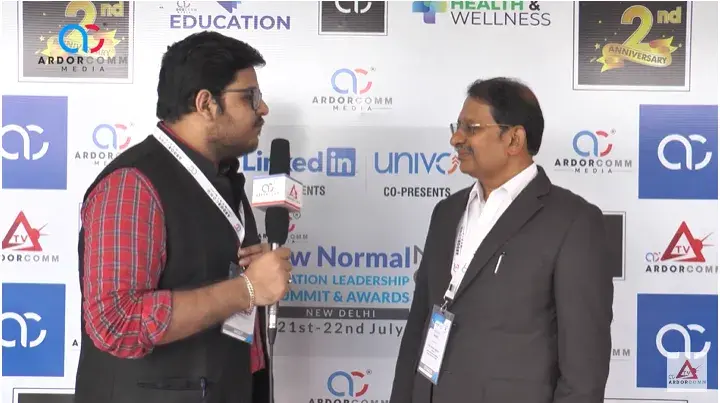
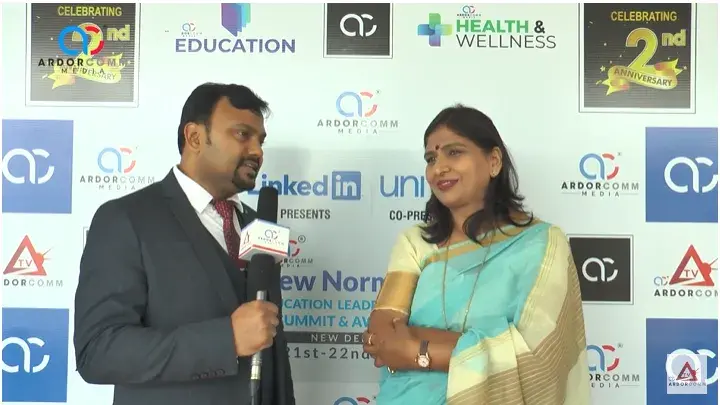
“Technology is very, very important, obviously, and you need to focus on technology because without technology, India cannot progress, the world cannot progress now,” says Pankaj Jain, Regional Director India Subcontinent, UTS College in an Interview with Pratik Ghosh, Content Writer, ArdorComm Media Group at the ‘New Normal – Education Leadership Summit & Awards 2023’ #ELSANewDelhi #ELSAGurugram How are you feeling to witness the New Normal Education Leadership Summit and Awards in Delhi? I think it’s a good conference. I am at the inaugural session, and we had a lot of senior dignitaries from AICTE, Pankaj Mittal Ji, and the chief guest. It’s good because many times, you are sitting in your offices, and you don’t realize what is happening in technology, what is happening in AI. When you attend such conferences, you open minds because you are away from the office, and you learn a lot of things because these are people from universities. We had Dr. Madhu Chitkara Madam from Chitkara University, and we had the minister from Nagaland as the chief guest. Chandan Ji also spoke a lot of things, so it is always good and helpful to attend such conferences. I would say for all the university delegates, all the foreigners also, to come and attend such conferences. What’s your take on the technology implementation in the education sector? I think, as the lady from LinkedIn also said in the inaugural session, technology is the boom. Like she was saying, we have 10 million guests added every month, which is big numbers. I think it is very important as we talked about AI also, Chat GPT also. So, technology is very, very important, obviously, and you need to focus on technology because without technology, India cannot progress, the world cannot progress now. As you know, the theme of our event is India Vision 2030. How do you see the vision of India till 2030 in the education sector? I think with the new education policy being implemented, like I work for UTS College Australia, we have done two transnational education tie-ups in Gujarat as well as in Bangladesh, and we’re exploring something in Nepal also. So, T&E are the future of NEP 2020, and as per the minister, Dharmendra Pradhan Ji, he also said that we need to focus on this. I had visited Gift City also recently in Ahmedabad in Gandhinagar, a very good city, with a lot of universities and schools coming up, multinational coming up. So, I think by 2030, we should be able to do much better, maybe even before that itself if the BJP government comes to power, which I hope they will come. We should be very positively aiming for reaching this goal by 2026 only. You have a lot of contributions to the International Education. Can you share some key highlights of your contribution? I have been into International Education for the last 24 years. I am a UK MBA plus worked for a UK University for 11 years, then as a consultant, now working for UTS College, which is in Australia, for the last three and a half years. I think a lot of students are going abroad. We have seen around 12 to 30 lakh students going abroad every year, and obviously, the five major countries are UK, USA, Canada, Australia, New Zealand, which are the top five English-speaking countries. But students have started going to France also now, Germany also now, Poland also now, Japan also now. So, it’s a big thing, and it is good because students get a lot of exposure outside. They learn a lot of things, become self-independent, and can take right decisions. All the universities are trying to open campuses in India also now as per the new policy announced by the government that you can open campuses. So, we can see in the next five-six years, a lot of foreign universities will start campuses in India. So, besides students going abroad to study, we will have foreign faculty, or whatever the tie-ups they do, the courses will be delivered in India, and you can have Indian degrees also studying in India and being residing in India also. ArdorComm Media has completed two years of its existence, any message on this occasion? I think ArdorComm Media has been doing very well. The two-day conference is very promising, with a lot of leading experts in education, academia. I’m not a professor by chance, so I cannot talk a lot of things on lectures on teaching style, but I’m still a sales marketing guy. I think it is a good way of doing. You have 200 plus delegates and speakers, which is good. If you have a thousand-plus, then people don’t have time to interact, so at least if you have a small cohort, you can have time to interact. People can exchange cards, develop relations because it is networking also, relation-building also, and if there’s some work, why don’t we work jointly? That’s the whole idea of a conference.  

Pankaj Jain, Regional Director India Subcontinent, UTS College, Highlights on Transforming Education through Technology and Global Collaboration Read More »

Prof. Prafulla Agnihotri, Director, Indian Institute of Management, Sirmaur, Emphasizes on Recreating the Era when India was a Global Leader in Education

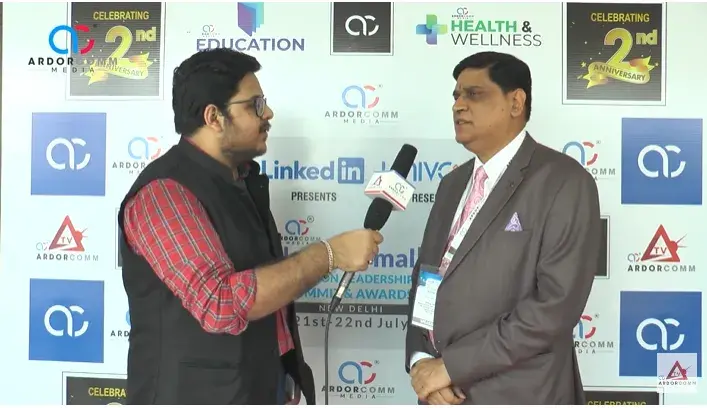
“Let’s recreate that place, let’s recreate Nalanda, Takshashila, and let’s recreate that era where we were the leaders in education,” says Prof. Prafulla Agnihotri, Director, Indian Institute of Management, Sirmaur in an Interview with Pratik Ghosh, Content Writer, ArdorComm Media Group at the ‘New Normal – Education Leadership Summit & Awards 2023’ #ELSANewDelhi #ELSAGurugram How are you feeling to witness the New Normal Education Leadership Summit and Awards in Delhi? It’s a very well-organized Summit. I am meeting you guys for the first time, and so far, whatever that I’ve seen is a very good organization. As you know, the theme of our event is India’s Vision 2030. What’s your opinion about the education sector going ahead till 2030? Before I say about the future, let me say something about the past. India was always a global leader. We had Nalanda, Takshashila. People from all over the world used to come up to us, look at our Ved, I don’t like to call it Veda. Ved is the right word. They are centuries older, and they have all the wisdom that is required in the world. We were the knowledge creators at one point in time. Then, somehow it disappeared. We had to take back this country to that level, that level of knowledge creation, and be a forerunner in the field of education. If you go to the US, who are the torchbearers of modern education in any field, you’ll find in most of the fields, be it management, be it medicines, be it astrology, we Indians dominate those fields. So, what do we do there? Why can’t we do it over here? The talent remains the same, and many of them are the first-generation scientists who have gone over there after studying here in India. They’ve done their basic graduation in India. So, let’s recreate that place, let’s recreate Nalanda, Takshashila, and let’s recreate that era where we were the leaders in education. Do you think NEP somehow focuses on this vision? Definitely, NEP is a big step. I’ve been in the field of education for about 35 years, and right from the beginning, I used to feel, why am I doing what I was doing? Look at the basic educational philosophy. I don’t like a particular subject, but still, I have to study that. Why? There are most of them, we say we have very less enrolment ratio. Forget enrolment ratio, there are just a few who enrol and complete the program. Your matriculation, for that matter, these are huge dropout ratios, especially if you go to semi-urban and rural places. The problem is people drop out because they have much less to do, much less to understand in subjects like mathematics, science, and so on, and those subjects are thrust upon them. If we could do away with those subjects or once they have the basic knowledge of mathematics, they don’t need to know that. A carpenter doesn’t need to know about high-level calculus. So, even if he can do away with that, and we can give them more skill-based education, those people will be able to do well for themselves in their life. Point number two, we had lost the basic purpose of education. We would not tell them about how to live life, what are our responsibilities as a civilian, and so on. And that’s why we were conducting, in my opinion, educated illiterates. They would know how to read and write, he may have great degrees, but then after some time, he’ll just throw something out of his car on the road. He will just roll down the window of his car and spit on the road. Where is that education? That should be reflected in one’s own personality and behaviour in public too. I’m sure the new education policy has a great emphasis on even changing these fundamental behavioural patterns as well. Any message for ArdorComm Media Group on our 2nd year anniversary? I wish you all the best, and let’s hope that we meet on your first silver jubilee.

Prof. Prafulla Agnihotri, Director, Indian Institute of Management, Sirmaur, Emphasizes on Recreating the Era when India was a Global Leader in Education Read More »

Union Health Minister to Launch e-CARe Portal for Swift Repatriation of Indians Who Pass Away Abroad

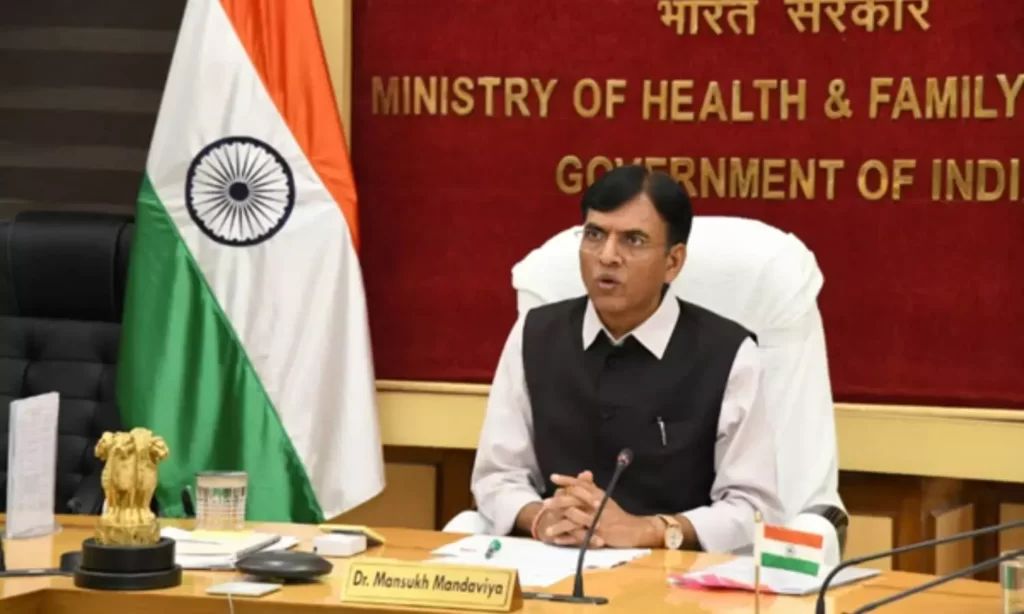
Health Minister Mansukh Mandaviya is set to launch the e-CARe (e-Clearance for Afterlife Remains) portal, a groundbreaking initiative to expedite the repatriation of deceased Indians from foreign countries. The portal’s primary goal is to establish a 24×7 Designated Nodal officer, ensuring swift scrutiny and approval within a 48-hour timeframe. This move aims to bring uniformity to the entire process, eliminating any subjectivity previously present in the procedures conducted by Airport Health Offices (APHOs). The e-CARe portal offers numerous advantages, including round-the-clock accessibility, faster clearance, instant messaging for easy tracking, increased accountability, and flexibility in application submission. It allows any family member of the deceased to apply and become the consignee, not solely relying on the airlines. Moreover, it streamlines coordination among multiple stakeholders through a single interface. The functioning of the portal involves timely intimations sent via email, SMS, and WhatsApp to relevant parties, including the Central International Health Division, Nodal Officer, APHOs, consignees, and airlines. During the initial 48 hours, updates are provided every 12 hours for the first 36 hours, followed by escalations every four hours for the subsequent 12 hours to prevent any clearance delays. Stakeholders can conveniently track the application status through the e-CARe portal using a registration number. The e-CARe Portal ensures seamless coordination and transparency throughout the repatriation procedure. The final verification of original documents will take place at the respective arrival airport by the concerned APHO, ensuring a well-regulated and efficient process.

Union Health Minister to Launch e-CARe Portal for Swift Repatriation of Indians Who Pass Away Abroad Read More »

Ministry of Education Launches Study in India Portal to Attract International Students

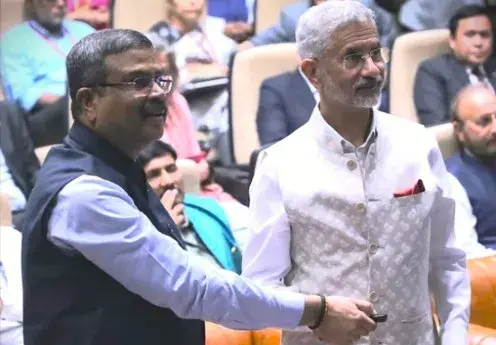
The Union Minister for Education, Dharmendra Pradhan, and the Union Minister for External Affairs, Dr. S Jaishankar, jointly inaugurated the Study in India (SII) portal. This dedicated website aims to provide comprehensive information about higher education institutions (HEIs) in India, promoting the country as an attractive destination for international students. The Study in India portal will showcase various academic programs offered by HEIs, encompassing undergraduate, postgraduate, doctoral courses, and courses in the Indian Knowledge System (IKS) such as Yoga, Ayurveda, and classical arts, among others. Prospective students can explore details about academic facilities, research support, and other relevant information available at these institutes. One of the portal’s key features is the ability for students to apply to multiple institutes and courses of their choice through a streamlined and well-organized application process. It serves as a one-stop platform for student registration, visa application, course selection, and receiving offer letters from the chosen institute. The Study in India program will partner with educational institutions meeting specific criteria, including National Institutional Ranking Framework (NIRF) ranking of <=100, National Assessment and Accreditation Council (NAAC) accreditation score of >=3.01, and Institutes of National Importance (INI). Under the Ministry of Education’s (MoE) auspices, the program’s primary objective is to attract a higher number of international students to India by offering affordable and high-quality education in line with global standards. The Education Minister highlighted that the SII portal reflects the commitment to make India a preferred education destination and to foster academic inclusivity, in alignment with the National Education Policy (NEP). The Union Minister for External Affairs emphasized that the portal signifies the government’s dedication to position India as a global education hub, welcoming students from diverse backgrounds. The launch event witnessed the presence of ambassadors from over 10 countries and students currently studying in India from Russia, Thailand, Japan, Ethiopia, Ecuador, Kazakhstan, and the Republic of Korea. The Study in India portal is expected to facilitate and simplify the academic journey of international students, further elevating India’s status as an excellent educational hotspot.

Ministry of Education Launches Study in India Portal to Attract International Students Read More »

Trend of Trending: The Dynamics of Social Media Trends

Article on MEA

In recent years, social media has become an integral part of Indian society, shaping the way people communicate, share information, and consume content. One prominent aspect of social media is the phenomenon of “trending.” The term “trending” refers to content that gains sudden and widespread popularity, becoming a focal point of online discussions and interactions. In the Indian context, the trend of trending has witnessed remarkable growth and has a significant impact on various aspects of life. This article explores the dynamics of social media trends in India, delving into the factors behind their popularity, their implications, and the challenges they present. The Mechanics of Trending Trending on social media platforms such as Twitter, Facebook, Instagram, and YouTube is driven by algorithms that track engagement metrics such as likes, shares, comments, and retweets. When a particular post or hashtag receives a surge in these interactions in a short period, it gains visibility and appears on the platform’s “trending” section. The algorithm then exposes the content to a broader audience, leading to even more interactions and, potentially, a viral effect. Factors Behind Trending Pop Culture and Entertainment: In the Indian context, entertainment plays a pivotal role in the popularity of trending content. Be it a movie trailer, a new song, or a teaser from a highly-anticipated web series, entertainment-related content often spreads like wildfire across social media platforms. Bollywood and regional cinema have a profound impact on the digital trend landscape. Social Causes and Activism: Social media has become a powerful tool for raising awareness about various social issues and causes. Whether it’s campaigns for women’s rights, environmental activism, or movements like #MeToo and #BlackLivesMatter, trending hashtags amplify voices and bring important issues to the forefront. News and Politics: Political events and breaking news also dominate the trending space. Indians actively engage in discussions about current affairs, political developments, and government policies, turning social media into a virtual battleground for ideologies. Memes and Viral Challenges: Humour and creativity go hand in hand with trends. Memes and viral challenges are quick to capture the attention of netizens, becoming a source of entertainment and a means of fostering community participation. Implications of Trending Culture Amplification of Voices: The trend of trending empowers individuals and marginalized communities to express their opinions and stories, often leading to social change. It has created a space for unheard voices and allowed for greater representation and diversity in the public discourse. Impact on Branding and Marketing: For businesses and celebrities, trending content presents both opportunities and challenges. A well-planned social media campaign can boost brand visibility and sales, but negative trends can also harm a brand’s reputation if not managed wisely. Influence on Public Opinion: Social media trends have a remarkable impact on shaping public opinion and attitudes. Political campaigns and propaganda often exploit this influence to sway public perceptions. Challenges and Ethical Concerns Spread of Misinformation: With trends spreading at an unprecedented speed, there is a risk of misinformation going viral, leading to panic, chaos, and potential harm. Addressing the dissemination of false information is a critical challenge. Mob Mentality and Hate Speech: The herd mentality that trends foster can also lead to online harassment, hate speech, and cyberbullying. Platforms must implement robust mechanisms to combat these issues. Algorithm Bias: The algorithms responsible for determining trends might inadvertently favor certain content, leading to a lack of diversity in trending topics. This could marginalize smaller communities and niche interests. Conclusion The trend of trending in the Indian context showcases the tremendous power of social media to influence opinions, drive change, and shape public discourse. From raising awareness about social issues to fuelling entertainment and marketing, trends have become an integral part of modern life. However, striking a balance between free expression and responsible use of social media is essential. As the trend of trending continues to evolve, individuals, policymakers, and platform developers must collaborate to address the challenges it poses and ensure that social media remains a force for good in the Indian context. The author, Pratik Ghosh is associated with ArdorComm Media

Trend of Trending: The Dynamics of Social Media Trends Read More »

Dr. (Mrs.) Pankaj Mittal, Secretary General, Association of Indian Universities, Highlights the key initiatives taken by AIU

“The National Educational Policy talks about Internationalization of higher education, and we are trying to help it out by making one Indian Network of International Higher Education,” says Dr. (Mrs.) Pankaj Mittal, Secretary General, Association of Indian Universities in an interview with Chandan Anand, CEO & Group Editor, ArdorComm Media Group at the ‘New Normal – Education Leadership Summit & Awards 2023’ #ELSANewDelhi #ELSAGurugram How do you justify events like this, where we have policymakers, academicians, educators, corporates, and EdTech at a common platform? Association of Indian Universities, is the largest association of the world with a membership base of around 955 universities. We feel that we are answerable to our universities, we want to give them the best facilities and services. So, when we attend events like this, we come to know so many new things, like new technologies and developments in the education sector, especially in the private sector. You have many speakers like starting from policy makers as well as the policy implementers. So, these events are good for us and we keep on learning. These events contribute to the development and improvement of education quality, and they help in bringing new advancements to the knowledge of the people. So, I think these are very good events and very good initiatives, keep it up and keep holding such events and all the best for the future. Would like to understand more about AIU, any special highlights which under your leadership AIU is about to implement or has implemented successfully? Association of Indian Universities is the largest association and our mandate is very big. Unlike most of the associations in the world, we are dealing with the students, we are engaging with the teachers, we are engaging with the Vice Chancellors. For students we have many programs starting from sports and culture, to student research projects. We deal with the teachers in making the capacity building, we deal with the Vice Chancellors in terms of having roundtables and conferences. Some two three initiatives which I would like to highlight here is the National Educational Policy talks about Internationalization of higher education, and we are trying to help it out by making one Indian Network of International Higher Education. So, INIHE we call it in short where we are trying to help the Indian universities to internationalize. We know that India is a vast country, there’s a lot of diversity, there are universities that are very good in Internationalization, there are universities who have the intent to do Internationalization but they don’t know how to do it, whom to contact, how to partner. So, in all these cases we are helping the universities, how to even open an International student’s office, how big the office should be, what should be the objectives, what that office should be doing, what staff should be there. So, in all these things and also in partnering with the foreign institutions, if you are not able to find a partner, we help you find a partner, we help foreign universities to find partner in India. Many times, they don’t know that which university is particularly good in a specific area, so we have an AIU collaboration portal, in the specific areas you come to know that which Indian university is good. We have recently established AADC which is Academic and Administrative Development Centres, and the purpose is that many times the university teachers don’t know how to use technology effectively for the teaching learning, so these centres are basically training teachers to use the technologies for teaching learning, for research, for assessments and evaluation so that it becomes much more effective. So, like these we are taking many initiatives, including one initiative which is having consultancy services for the universities. Nowadays there are many private consultants and at times they are also fleecing the universities, so we have made the consultancy service in which we are helping the universities to find good consultants in all the areas whether it is Internationalization, industry-university connect, NAAC accreditation, NIRF ranking. So, these are some of the major initiatives there are many more. How can universities enrol with the AIU if they are not already a member? It’s very simple, the only requirement is that you should be having a 2F certification from the UGC. So, if you are included in the section 2F list of the UGC, you can enrol as a member of AIU, there’s a proforma given in the website of AIU, just fill up that proforma and we do it very fast, within a month you get the membership and you know how valuable that membership would be because we have less than 1100 universities in the country out of which 950 are our members and it is voluntary not mandatory so, they see value in the membership. So, if your university is not a member, do become a member today. How would you educate or advise people their role for implementing NEP faster in their capacity in their institutions? NEP implementation is something which has to be done in bits and pieces not like a capsule which you have to swallow as a whole. Its like a tablet which can be eaten bit by bit. So, there are many aspects of NEP which can be implemented immediately and many have been implemented but there are many aspects which are long drawn, for example de-affiliation of colleges with universities, 15 years timeline is given, to make every university multidisciplinary, to make every university large. 4-year degree program is something which has been implemented in many of the universities. ABC (Academic Bank of Credit) which has been established but it will take some time. So, there are many aspects which are already implemented, some are being implemented and some will be implemented in future depending upon the timelines drawn in the NEP 2020 document. We are successfully celebrating our second year of existence and it’s our second anniversary, any wishes for ArdorComm Media? I

Dr. (Mrs.) Pankaj Mittal, Secretary General, Association of Indian Universities, Highlights the key initiatives taken by AIU Read More »

Shri Temjen Imna Along, Hon’ble Minister of Higher Education & Tourism, Government of Nagaland, Highlights Transformative Changes in Higher Education

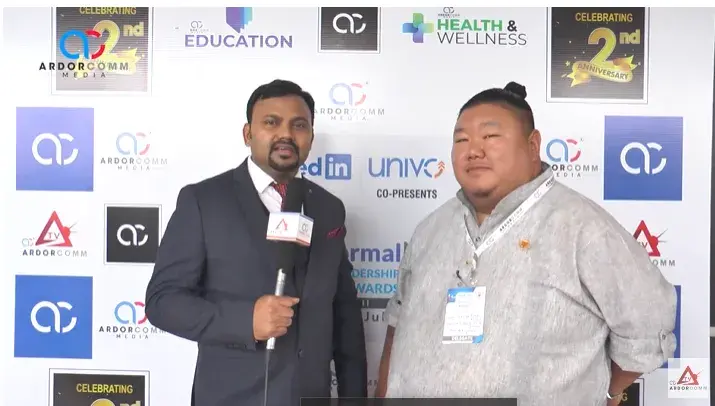
“We look forward to seeing students from all over the country coming to Nagaland for their education in the next five to ten years,” says Shri Temjen Imna Along, Hon’ble Minister of Higher Education & Tourism, Government of Nagaland in an interview with Chandan Anand, CEO & Group Editor, ArdorComm Media Group at the ‘New Normal – Education Leadership Summit & Awards 2023’ #ELSANewDelhi #ELSAGurugram You have been heading this portfolio for many years now, what changes have you experienced then and now? Higher education has transformed immensely in my state of Nagaland and everywhere in this nation, especially because of the visionary leadership of our Honourable Prime Minister, Shri Narendra Modi Ji, in bringing in the new National Education Policy. It’s a trajectory shift from the British way of education to our traditional and inclusive way of education. So, the National Education Policy 2020 will go a long way in transforming and curating the lives of human resources for the betterment of our nation. What is the dynamics or dynamism of higher education in your state? Higher education in the state of Nagaland is doing very well. With the implementation of the National Education Policy, the colleges have become centres of excellence. Accreditations are being done, and NAAC has been quite successful in Nagaland. Also, with the help and support of the Honourable Chief Minister, Shri Neiphiu Rio, and our government in Delhi, everything is going on okay. How does Nagaland attract students from across India? Some Central institutions like SARS (South Asian Regional Standards), ICAR (Indian Council of Agricultural Research), and NIT (National Institutes of Technology) attract students from all over the world. With the pristine environment, better quality of education, and better air to breathe, students from many parts of the country come to Nagaland. Additionally, the inhabitants of Nagaland are students, and we are rebuilding and curating institutions, so we look forward to seeing students from all over the country coming to Nagaland for their education in the next five to ten years. What has been the role of education corporates or EdTech players in higher and technical education? Education corporates and platforms like the New Normal Education Leadership Summit and Awards in New Delhi by ArdorComm Media are the right platforms where we can connect and curate education for today’s modern children. Facilitation needs to be done to provide value education that will curate the life of our human resources in the nation. What was the takeaway of today’s session? With all the patrons of education who spoke, I got to learn a lot. At the end of the day, everyone wants to see value education in our country, Bharat, which will curate the life of our human resources. Thank you for inviting me, and all the best on your second anniversary of your ArdorComm Media.

Shri Temjen Imna Along, Hon’ble Minister of Higher Education & Tourism, Government of Nagaland, Highlights Transformative Changes in Higher Education Read More »

Zomato Empowers Employees’ Health with Chief Fitness Officer Appointment and Rs 2.52 Cr ESOP Allocation

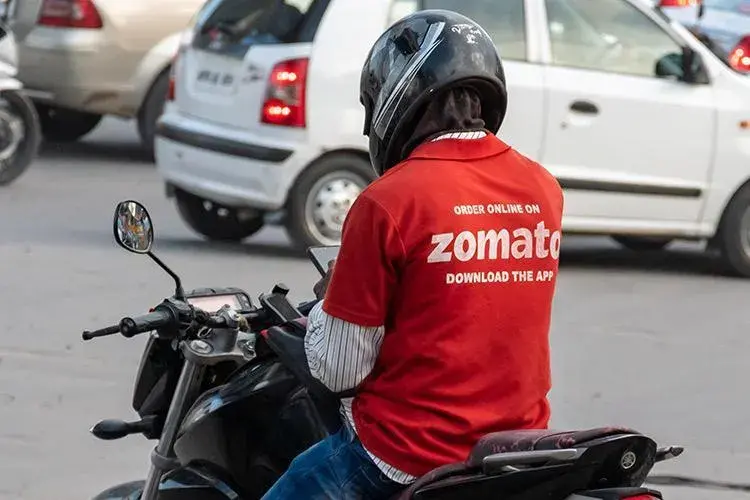
Zomato, the popular food-delivery platform, has allocated employee stock option plans (ESOP) worth Rs 2.52 crore to certain employees and subsidiaries. The company’s board has given the green light to issue 2,52,59,179 fully paid-up shares with a face value of one rupee each. In a move that showcases its commitment to employee well-being, Zomato’s CEO, Deepinder Goyal, announced the appointment of a Chief Fitness Officer (CFO). Anmol Gupta and his team will closely monitor the health and eating habits of employees, including delivery personnel and restaurant partners, to ensure they stay fit and healthy. The company’s concern for employee wellness is evident from the provision of an on-site gym at its Gurugram headquarters and the availability of mental health experts for consultation. Additionally, the company’s leave policy promotes physical and mental well-being for its staff. The positive results from Hyperpure, Zomato’s restaurant supplies wing, contributed to a remarkable 70% increase in the platform’s revenue during the last quarter of the 2023 financial year. Moreover, the company managed to reduce losses by 47%, amounting to Rs 188.2 crore compared to the previous year. Notably, Deepinder Goyal had previously pledged to donate the earnings from his vested stock options, valued at around Rs 700 crore, to the Zomato Future Foundation. These ESOPs granted during the second half of FY23 were part of this commitment.

Zomato Empowers Employees’ Health with Chief Fitness Officer Appointment and Rs 2.52 Cr ESOP Allocation Read More »

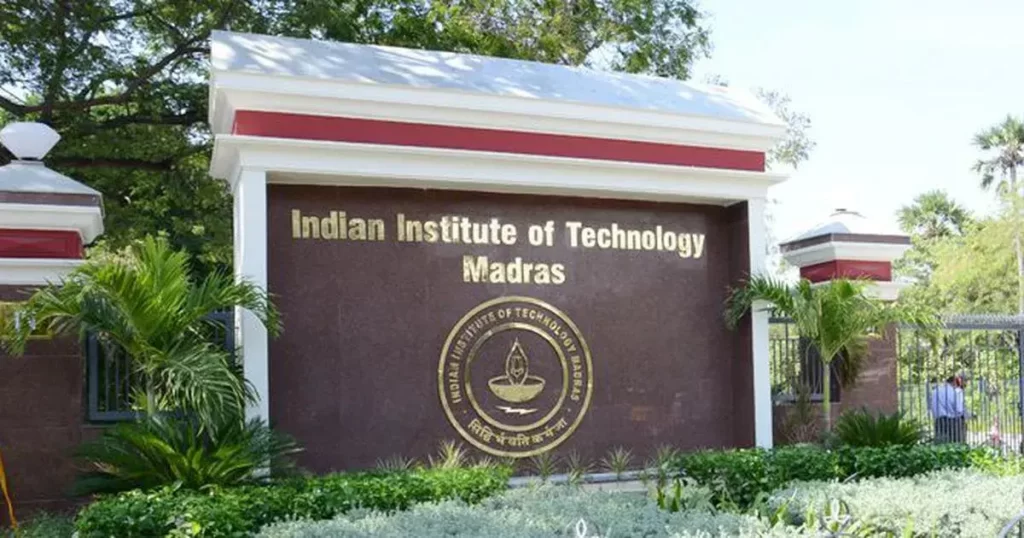
IIT Madras Revolutionizes Energy Education with Web-Enabled ‘Applied Petroleum Engineering & Hydrogen Energy’ Course, GATE Score Not Required

IIT Madras is set to revolutionize the field of energy education with the launch of a groundbreaking course titled ‘Applied Petroleum Engineering & Hydrogen Energy’ (PGPEH). In partnership with Zemblance Hydrocarbons Private Limited, the university’s Digital Skills Academy is offering a post-graduate level advanced certification program that breaks away from the traditional norms. Breaking barriers, this web-enabled hybrid program combines diverse courses in petroleum engineering, renewable energies, and hydrogen energy. Remarkably, applicants do not need a GATE score to be eligible for this course. The initiative aims to address industry needs by upskilling and enhancing employability for engineering graduates and working professionals. The mastermind behind this venture is Professor Rajesh Nair, leading the program, with invaluable support from Zemblance Hydrocarbons and IITM Pravartak Technologies Foundation. The collaboration includes Ed4All, ensuring the program’s reach extends to Africa, Latin America, South Asia, the USA, the UK, and the Middle East. The program doesn’t rely solely on online assessments; it incorporates offline exams held at various centers across India for comprehensive evaluation and qualification of participants. The inaugural date is set to be Teachers Day, September 5, 2023. Candidates eligible for this program include engineering and technology graduates, those with Master’s degrees in relevant science subjects, and working professionals in the oil and gas industries or related fields. As an additional advantage, the course will feature a stellar lineup of professors from IIT-Madras and experienced industry experts from distinguished organizations such as ONGC, Indian Oil Corporation Limited, GAIL (India), and Chennai Petroleum Corporation Limited. Their practical insights will enrich the web-enabled learning experience. For those seeking more information on this transformative program, they can reach out to info@zemblance.com or visit the course details on https://digitalskills.pravartak.org.in/course_details.php?courseID=70&cart or zemblance.com. This pioneering initiative by IIT Madras promises to reshape the future of energy education and workforce development, bridging the gap between academia and industry needs on a global scale.

IIT Madras Revolutionizes Energy Education with Web-Enabled ‘Applied Petroleum Engineering & Hydrogen Energy’ Course, GATE Score Not Required Read More »