ArdorComm Media Group

Saturday, January 31, 2026 11:29 PM

Author name: admin

IISC retains top rank, JSS Academy & Shoolini University achieves second position among Indian institutes in the THE World University rankings 2023

IISc retains its position as the top Indian institution in the 2023 THE World University rankings In the most recent round of Times Higher Education (THE) rankings, which the majority of Indian Institutes of Technology (IITs) have boycotted for the third year in a row due to concerns about transparency, the Indian Institute of Science (IISc) has maintained its top spot among Indian institutions. The IISc is ranked in the range of 251-300, making it the top Indian institution overall. According to a statement released by THE, the University of Oxford has emerged as the top institution globally among 1,799 universities from 104 countries. The Shoolini University of Biotechnology and Management Sciences (351-400 overall), which debuted in the rankings, has grabbed the second position among Indian institutions. In the universities category of the National Institutional Ranking Framework (NIRF) 2022, the Himachal Pradesh-based private university is ranked 96th. However, JSS Academy of Higher Education and Research, another private university based in Karnataka, and Shoolini University share the same spot among Indian institutions. Algappa University, a public university in Tamil Nadu, placed third in India (401-500). IIT Ropar received the second place in the Indian category last year, but it has dropped to sixth place this year and to the 501-600 band globally from the 351-400 band last year. The parameters used to rate the institutions include teaching (30%), research (30%), citations (30%), international outlook (7.5%), and industry outcome (2.5 percent). A “reputational survey” has 15 percent weight in both teaching and research. Over 121 million citations from over 15.5 million research publications were analysed for this year’s ranking, which also includes survey responses from 40,000 experts worldwide. JSS Academy of Higher Education and Research, Shoolini University of Biotechnology and Management Sciences, and Alagappa University rounded out the top three Indian institutions.

IISC retains top rank, JSS Academy & Shoolini University achieves second position among Indian institutes in the THE World University rankings 2023 Read More »

Moonlighting will not be accepted at TCS

Tata Consultancy Services (TCS) views moonlighting as unethical. The activity is against the company’s core beliefs and culture. So far, no staff member has been expelled for it. However, it has been made clear to staff members that the company will not accept moonlighting. According to Rajesh Gopinath, CEO of TCS, the Company’s stance on moonlighting is expressly specified in the employment contract. Moonlighting is reportedly considered a “ethical issue” that goes against TCS’s core values and culture by Milind Lakkad, the company’s chief human resources officer, according to a report by Mint. Earlier, organisations like Wipro, Infosys, and IBM have stated their displeasure of the practise. Wipro fired 300 employees who were found to be moonlighting and “violating integrity” in September, making it clear that it would not allow such conduct within the company. Working a second job while still employed by one company is known as moonlighting. Swiggy made news for its permissive approach on staff moonlighting as long as the relevant supervisors were aware of it and had given their approval. While there isn’t a legislation in India specifically prohibiting “moonlighting,” there are regulations that control or place limitations on dual employment to a certain extent. IT companies worry about moonlighting because they think it could reduce staff productivity and jeopardise the confidentiality of customer data.

Moonlighting will not be accepted at TCS Read More »

Nasal spray trial for AstraZeneca’s COVID vaccine suffers setback

The COVID-19 shot, which Oxford University researchers and AstraZeneca Plc jointly developed, suffered a setback on Tuesday when first tests on humans did not yield the anticipated protection levels. In the trial, which was in the first of usually three phases of clinical testing, only a small percentage of individuals experienced an antibody response in the respiratory mucous membranes, according to a statement released on Tuesday by the University of Oxford. Additionally, the blood immune response was less strong than the one from a vaccine shot in the arm. Nasal spray vaccines against the coronavirus have received a lot of attention from researchers around the world because the approach is thought to have the potential to prevent infection as well as disease because it may elicit an immune response directly in the airways, where the virus enters the body. The procedure would also be less painful and more controllable than injections. Products that are administered via the airways have previously received regulatory approval in China and India. The COVID-19 nasal spray vaccine from Bharat Biotech was approved by the Indian Health Minister last month, and the inhaled COVID-19 vaccine from CanSino Biologics Inc. was given emergency permission by China’s drug regulator last month. While the results of Bharat’s trial have not yet been released, CanSino claims that studies show that their vaccine, administered using a nebulizer device, can develop robust immunity to successfully contain the infection. Twelve volunteers who had previously completed a conventional two-dose immunisation course by injection were also enrolled in the British trial together with 30 previously unvaccinated people. According to Sandy Douglas, main investigator of the experiment at Oxford University’s Jenner Institute, “The nasal spray did not perform as well in this study as we had hoped.” “We believe that delivery of vaccines to the nose and lungs remains a promising approach, but this study suggests there are likely to be challenged in making nasal sprays a reliable option,” she continued. According to the statement, no significant adverse events or safety issues were reported throughout the trial, which was funded by AstraZeneca.  

Nasal spray trial for AstraZeneca’s COVID vaccine suffers setback Read More »

Infosys has been accused of bias and discrimination

Infosys has been charged with discrimination in hiring. The IT major reportedly didn’t hire women with children, those from India, or those who were 50 or older. Jill Prejean, a former vice president of talent acquisition at Infosys, has made these allegations. Prejean claims that since she resisted the Company’s demand to discriminate, she was subjected to retaliation and unfair treatment. She has since filed a lawsuit against Infosys, and this is not the first time that the US-based IT company has been accused of discrimination in recruiting. The company has been named in the case along with former senior vice president and consulting head Mark Livingston, as well as former partners Dan Albright and Jerry Kurtz. Prejean contends that by standing her ground against discrimination in the employment of senior executives, she unintentionally encouraged the animosity of the two former partners. She herself had joined Infosys in 2018, at the age of 59, and was horrified to learn that individuals were discriminated against throughout the selection process based on their age, gender, and domestic caregiving responsibilities. Additionally, she says that Kurtz and Albright among others were resistant to her attempts to reform this culture. Prejean’s case should be dismissed, according to the Company and the accused, because there is not enough evidence to support it.

Infosys has been accused of bias and discrimination Read More »

UGC sets to amend guidelines to foster college autonomy

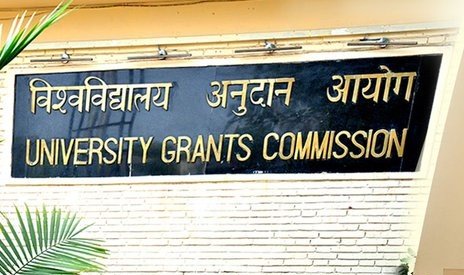
In accordance with suggestions made in the National Education Policy 2020, the University Grants Commission (UGC) is streamlining the procedure by which colleges achieve autonomous status. Prof. M. Jagadesh Kumar, chairperson of the UGC, stated that the Commission has adopted draft regulations in this regard, which will be made available to the public for stakeholder feedback by Tuesday. The proposed changes are largely intended to speed up the process of obtaining autonomy status and link it to NAAC ratings. For instance, at the moment, proposals for autonomy are initially reviewed by expert committees through site visits. However, under the proposed changes, on-site visits won’t be necessary anymore. “A standing committee of the UGC shall examine the application of the college for conferment of autonomous status. The approval/rejection letters may be issued on the basis of the decision of the standing committee. The decisions may be ratified by the committee subsequently,” according to the draught regulations. Additionally, if the concerned college receives grade A accreditation from the NAAC, the autonomous status—which is currently awarded initially for a term of 10 years—will now be automatically extended for another 10 years. For at least three programmes with a minimum score of 675, technical colleges will need NBA accreditation. Colleges that have operated as autonomous units for a continuous period of 15 years will be granted the status permanently once the revised regulations are passed, and they won’t need to reapply as long as they maintain their high NAAC or NBA ratings. In the US, there are about 500 autonomous colleges. According to the NEP, “it is envisaged that over a period of time every college would develop into either an autonomous degree-granting college, or a constituent college of a university – in the latter case, it would be fully a part of the university.” According to Prof. Kumar, the proposed changes were made after an expert committee reviewed the existing regulations. “These regulations will also provide freedom to the autonomous colleges to determine and prescribe their own courses of study and syllabi, and restructure and redesign the courses to suit local needs, make it skill oriented and in consonance with the job requirements. Further, the autonomous college may prescribe their own admission rules, evolve methods of assessment,” he stated.

UGC sets to amend guidelines to foster college autonomy Read More »

125 toppers of classes 10, 12 board exams in Chhattisgarh rewarded with chopper ride in Raipur

A helicopter ride was given to at least 125 deserving Chhattisgarh students who excelled in the Class 10 and 12 board exams on Saturday, according to an official. In accordance with the announcement made by Chief Minister Bhupesh Baghel, the state and district-level toppers of the Class 10 and 12 board exams had joyrides in a seven-seater helicopter. This is the first-time board exam toppers have been honoured in such a special way, he said. The official stated that a programme of felicitation had been held at the Police Parade Ground. The Chief Minister had previously declared that the top 10 deserving students in the Classes 10 and 12 board exams will have a helicopter ride as a reward. Varsha Dewangan of Raipur, who obtained the top position in Raipur and the tenth rank in Chhattisgarh in the Class 12 board exam, expressed appreciation and said she was excited during the ride and it felt like a dream come true. Devanand Kameti, a deserving Class 10 student from the Narayanpur district, which has been severely affected by naxalite activity, said, “It was a great pleasure and memorable moment for me to get a helicopter ride, as the place where I come from does not even have proper road connectivity and other facilities.” Source: PTI

125 toppers of classes 10, 12 board exams in Chhattisgarh rewarded with chopper ride in Raipur Read More »

Gujarat government unveils plan to attract $12.5 trillion in investments

Aatmanirbhar Gujarat Schemes for Assistance to Industries, an ambitious programme launched by Gujarat Chief Minister Bhupendra Patel, aims to generate employment for at least 15 lakh people and attract investments of Rs 12.50 trillion over the course of the next five years. The two themes of the programmes outlined by the Gujarat chief minister are contributing to the global supply chain and greening the manufacturing process. In order for industries to be able to participate in the global supply chains, they will need particular help, which will be provided by the programmes under Aatmanirbhar Gujarat. The Aatmanirbhar Gujarat Schemes for Assistance to Industries was created with the intention of inspiring young people to develop and create jobs while also supporting aspiring entrepreneurs to realise their entrepreneurial dreams. According to the plans, MSMEs will receive capital subsidies up to Rs 35 lakh for micro industries and Net SGST reimbursement up to 75% of fixed capital expenditure over 10 years. In addition, MSMEs may receive interest subsidies of up to Rs 35 lakh annually for a period of seven years, as well as a five-year exemption from paying electricity duty. For five years, large industries will be spared from electricity duty. A manufacturing unit would qualify as a big industry if it had a fixed capital investment in plant and machinery of more than Rs 50 crore. The Gujarat government’s new programme will benefit big companies by providing Net SGST reimbursement up to 18% of fixed capital investment over 20 years and 100% of input SGST paid on capital goods over the same period of time. Under these programmes, mega industries would be eligible to get a 100% reimbursement of the stamp duty and registration fees they paid to the Gujarat government for the purchase or lease of the project’s property.

Gujarat government unveils plan to attract $12.5 trillion in investments Read More »

NCERT postpones the National Talent Search Examination (NTSE) 2022

The National Talent Search Examination (NTSE) has been postponed until further orders, according to a recent announcement from the National Council of Educational Research and Training (NCERT). Since NTSE was not approved after March 31, 2021, the programme has been put on hold till further notice, according to an official notice from the NCERT. The Ministry of Education (MOE) of the Government of India entirely funds the central sector programme known as the National Talent Search Scheme. The NTS scheme is implemented by NCERT. The scheme was approved till March 31, 2021. The scheme’s further implementation in its present form has been postponed until further orders because it has not been approved. “This is for the information of all concerned,” the official notice reads. Recently, the NTSE 2021 was held on October 24, 2021, at 68 exam centers across the nation, and the final results were made public on February 18 on the official NCERT website, ncert.nic.in. On February 9, 2022, the Council made the provisional results and the OMR sheet available on the official NCERT website. The Ministry of Education (MOE) of the Government of India (Gol) entirely funds the NTSE scholarship programme, which is administered by the NCERT. Every year, two phases of the scholarship test are held: stage 1 (state level) and stage 2. (national level). The second stage is hosted by NCERT, whilst the first stage is run by the states.

NCERT postpones the National Talent Search Examination (NTSE) 2022 Read More »

Khilkhilat ambulance services for newborns will soon be launched by the Maharashtra Govt

The government of Maharashtra will soon begin providing Khilkhilat Ambulance services for infants, according to Mangal Prabhat Lodha, a cabinet minister for the state. According to Lodha, these ambulances are specifically made to deliver the mother and the newborn child to their houses. “On the line of Gujarat government, Maharashtra government to also start Khilkhilat Ambulance services for newly born baby, these ambulances are specially designed to drop the mother and the newborn child at their home.” said Lodha, who also serves as the Minister of Women and Child Development in Maharashtra. This ambulance would have a distinctive siren-like Khilkhilat, and Lodha continued, “Usually, we see newborn babies start crying by hearing the sound of an ambulance siren. Initially, we are planning to bring it to suburban Mumbai at five places and after seeing the response will decide to launch it completely.” “These Khilkhilat ambulances will be designed by keeping in the minds little babies and the main motive behind this is to give happiness to the family and babies as it’s a special moment for the family to have a new baby as a new member in the family,” he concluded. Mangal Prabhat Lodha is also the guardian minister for Mumbai suburban district. A safe return home is the goal of the Khilkhilat service, which is free for mothers and infants. The project, Vatsalaya, situated in Maharasthra, was inspired by the initiative, which was launched in Gujarat in September 2012. The Khilkhilat ambulances include a nutrition kit for the newborn kid, a schedule of vaccinations to be administered at particular intervals, and details about the government hospitals nearby.

Khilkhilat ambulance services for newborns will soon be launched by the Maharashtra Govt Read More »

Government will digitally monitor the localization of EV parts as part of the FAME-II policy

To monitor the level of localization of electric vehicles receiving subsidies under the 10,000 crore FAME-II policy, the government is developing an automated data transfer system. This action is being taken to support domestic production while preventing incentives for imported vehicles at the expense of Indian tax payers. Beginning on October 1, the IT-enabled system based on Application Programming Interface (API) would allow for the smooth transfer of a set of crucial data related to domestic value addition (DVA) from the beneficiaries’ current enterprise resource planning (ERP) systems to the nodal ministry’s portal as well as traceability of products based on digital footprints. As part of the 10,000 crore FAME-II policy, the government is developing an automated data transfer system to track the amount of localization in EVs receiving subsidies. This action is being taken to support domestic production and prevent taxpayer-funded incentives for the purchase of imported vehicles. Scheduled to begin on October 1, the IT-enabled system based on Application Programming Interface (API) would allow the seamless transfer of a set of crucial data related to domestic value addition (DVA) from the beneficiaries’ current enterprise resource planning (ERP) systems to the nodal ministry’s portal as well as traceability of products based on digital footprints. Arun Goel, secretary of the ministry for heavy industries, stated that the action would increase both business efficiency and the ecosystem for EV manufacturing in India. “If similar systems are replicated for schemes requiring substantial value-addition across ministries, it will ensure transparency. This will further attract investments in India and promote indigenous manufacturing,” he said. According to top sources, the technology will allow for the monitoring and verification of domestic value addition carried out by businesses without infringing on non-disclosure agreements (NDAs). Original equipment makers (OEMs) have digital records of domestic value addition that are more granularly detailed. However, pre-defined information is obtained for monitoring and verification at the ministry level. Therefore, there is no way to divert.    

Government will digitally monitor the localization of EV parts as part of the FAME-II policy Read More »