ArdorComm Media Group

Wednesday, February 25, 2026 10:46 PM

Author name: admin

Flipkart Boosts Infrastructure and Workforce for Expansion

Flipkart is actively pursuing its expansion plans by investing in infrastructure and building a highly skilled workforce. The company aims to utilize its Kirana delivery program for over 40% of its shipping operations. To support this initiative, Flipkart has increased its infrastructure by more than 19 lakh square feet in various states such as Uttar Pradesh, Bihar, Gujarat, Rajasthan, and Telangana. New hires are undergoing comprehensive training tailored to their roles, including knowledge about supply chain processes, scanners, handheld devices, mobile applications, point-of-sale machines, and other relevant technologies. This strategy not only involves physical expansion but also focuses on developing a skilled workforce capable of efficiently managing the complexities of the supply chain. Flipkart’s commitment to training its employees in advanced technology and providing them with the necessary tools reflects its dedication to streamlining the delivery process and ensuring a smooth customer experience. Additionally, the expansion of warehousing space in key Indian states signifies a strategic move to strengthen Flipkart’s storage and distribution capabilities. With this expansion and a well-trained workforce, Flipkart is poised for growth and enhanced efficiency as it continues to compete in the online retail landscape.

Flipkart Boosts Infrastructure and Workforce for Expansion Read More »

U-Win Portal Revolutionizes Routine Immunization Records

The government is gearing up to introduce the ‘U-Win’ portal, modelled after the successful Co-Win COVID-19 vaccine management system. This new platform is aimed at maintaining a digital registry of routine immunizations as part of the Universal Immunization Programme (UIP). Currently, the U-Win initiative is undergoing a pilot phase in two districts of each state and Union Territory. The U-Win portal, similar to Co-Win, was initially launched on January 11 in 65 districts nationwide. At present, UIP vaccination records are managed manually, but U-Win will eliminate the need for physical records. It will facilitate the digitization of session planning and provide real-time updates on vaccination statuses. This will address challenges posed by multiple vaccines and doses, as well as the absence of an individual tracking mechanism. Furthermore, it aims to raise awareness among beneficiaries regarding session details, locations, and dates, especially in urban areas, while also addressing disparities in immunization coverage among states and Union Territories. A significant issue to tackle is the lack of record-keeping for immunizations administered at private health facilities. U-Win seeks to become the centralized repository for immunization service information, encompassing pregnancy details, newborn registrations, and vaccinations at birth. The system will also maintain live updates on vaccination statuses, delivery outcomes, and the planning of routine immunization sessions. It aims to provide personalized tracking for pregnant women and newborns, sending reminders for upcoming doses and following up on dropouts. The U-Win platform will empower healthcare workers and program managers with real-time data on routine immunization sessions and vaccine coverage, facilitating better planning and distribution. Additionally, it will offer information on upcoming sessions in specific areas for the following month and a list of beneficiaries due for vaccination. Pregnant women and children will receive vaccine acknowledgments and immunization cards linked to their Ayushman Bharat Health Account (ABHA ID). States and districts will have access to a common database for efficient tracking and vaccination of beneficiaries. Citizens can also check nearby routine immunization sessions and book appointments through the platform. Lastly, all electronic vaccination certificates, similar to COVID vaccination certificates, will include pictures of Prime Minister Narendra Modi. As of August 28, U-Win has registered over 6.8 million beneficiaries and digitally tracked more than 13 million vaccine doses. This includes registrations for 33,58,770 infants aged 0-1 years, 20,98,338 children aged 1-5 years, and 14,20,708 pregnant women, with 1,32,60,903 doses being tracked digitally.

U-Win Portal Revolutionizes Routine Immunization Records Read More »

PM Modi Highlights India’s Inclusive Tech Initiatives and Global Impact

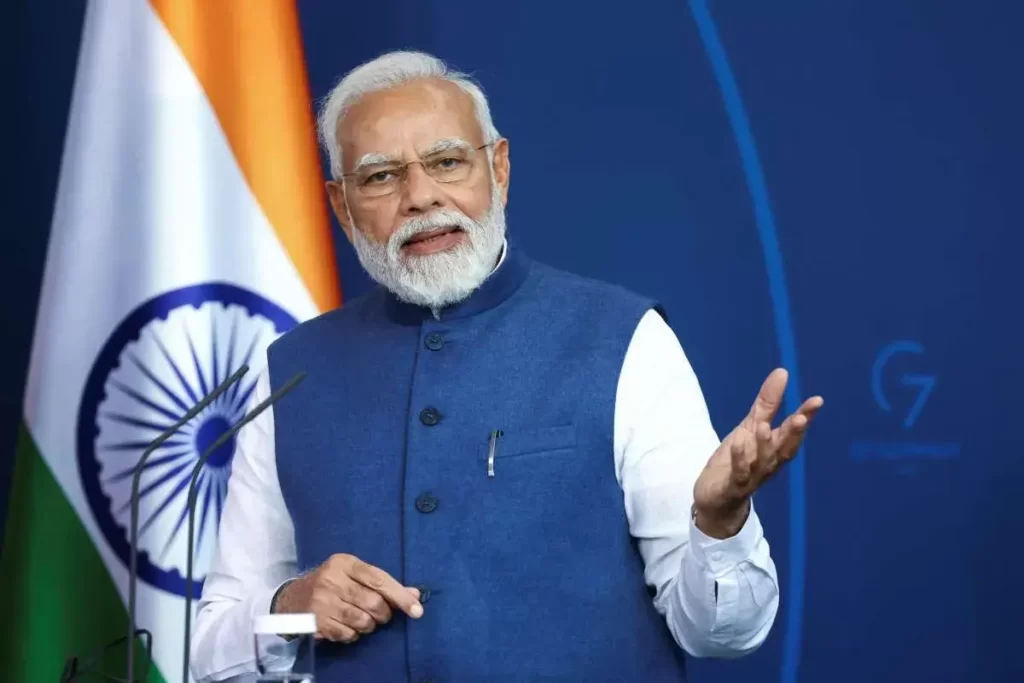
In an interview with a news agency, Prime Minister Modi discussed how India’s digital public infrastructure is promoting social inclusion and democratizing technology. He emphasized that India’s efforts have gained global recognition and are paving the way for a broader global movement. Prime Minister Modi highlighted the success of the CoWIN initiative, which facilitated the world’s largest vaccine drive, providing over 200 crore free doses. The platform, CoWIN, was even made open source for other countries to adopt. Referring to the UPI initiative, Modi noted that digital transactions are empowering businesses of all sizes, from street vendors to major banks, and contributing to financial inclusion. He praised India’s Digital Public Infrastructure for its role in delivering public services during the pandemic, citing the Jan Dhan-Aadhar-Mobile (JAM) Trinity’s effectiveness in ensuring financial inclusion and benefit transfers. Modi also mentioned the ONDC e-commerce initiative, which is seen as a significant step in democratizing digital platforms and creating a level playing field. He discussed the adoption of India’s digital public infrastructure by the G20 forum, which has established principles for a secure digital economy and laid the foundation for the One Future Alliance to coordinate global efforts in this regard. Prime Minister Modi highlighted the Ayushman Bharat Digital Mission’s impact on healthcare service delivery and India’s commitment to global health through the G20’s Global Digital Health Initiative. He stressed India’s approach of using technology to promote inclusion and equality, turning it into a force for good. Modi also addressed the government’s efforts to enhance cybersecurity, acknowledging the challenges posed by technology in combating illicit financial activities and terrorism. The Prime Minister celebrated India’s achievements across various domains, including the space sector, startups, sports, and education, expressing optimism about India’s economic prospects in the near future. This interview provides valuable insights into India’s efforts to leverage technology for social inclusion and global cooperation. Interview link: https://www.pmindia.gov.in/en/news_updates/ptis-exclusive-interview-with-prime-minister-narendra-modi/

PM Modi Highlights India’s Inclusive Tech Initiatives and Global Impact Read More »

IIT Madras Adds International Immersion to Executive MBA

The Department of Management Studies (DoMS) at the Indian Institute of Technology (IIT) Madras has introduced a new component called “international immersion learning” to its Executive MBA program designed for working professionals. This program, as described in an official statement from IIT Madras, places a strong emphasis on developing global leadership skills and cultural intelligence. Prospective candidates have until October 19 to apply for this program through the official website at doms.iitm.ac.in/emba. The classes will be conducted in person on alternate weekends starting from January 2024. To be eligible, applicants should have a graduation score of at least 60% in any discipline, a minimum of three years of work experience, and they must pass an entrance exam and a virtual personal interview conducted by the Department of Management Studies. The program has a duration of two years and offers a comprehensive and practical curriculum. It includes three projects that apply theoretical concepts to real-world business challenges, as outlined by IIT Madras. The Executive MBA program will provide knowledge aligned with industry demands in areas such as the digital economy, global strategy, and Industry 4.0 technologies. It covers core management principles, their practical application to real-world problems, integrated concepts spanning various business domains, global perspectives, and the use of digital tools in decision-making processes. As part of this initiative, students from the 2023 and 2024 batches of the Executive MBA program participated in a nine-day immersion program at the IÉSEG School of Management across two countries and three locations, including Brussels in Belgium and Paris and Lille in France. This program involved classroom sessions aimed at understanding global cultures and business practices in a region with complex socio-cultural dynamics like Europe. During the immersion program, students had the opportunity to explore the innovation and research center at Decathlon, gaining insights into its operations. They also visited Ports de Lille, France’s largest inland river port, to gain an understanding of France’s transportation network. Additionally, they learned about the workings of European governance through interactions with members of the European Parliament and the European Commission. The program also included a socio-cultural experience in a typical French household. The primary objectives of this program include equipping mid-career working professionals with in-depth functional knowledge and a broad understanding of industrial domains, fostering an integrative approach to decision-making across business boundaries, and developing leadership qualities to contribute effectively in a global business environment.

IIT Madras Adds International Immersion to Executive MBA Read More »

ISRO’s Aditya-L1 Mission: India’s Solar Observatory Launches Successfully

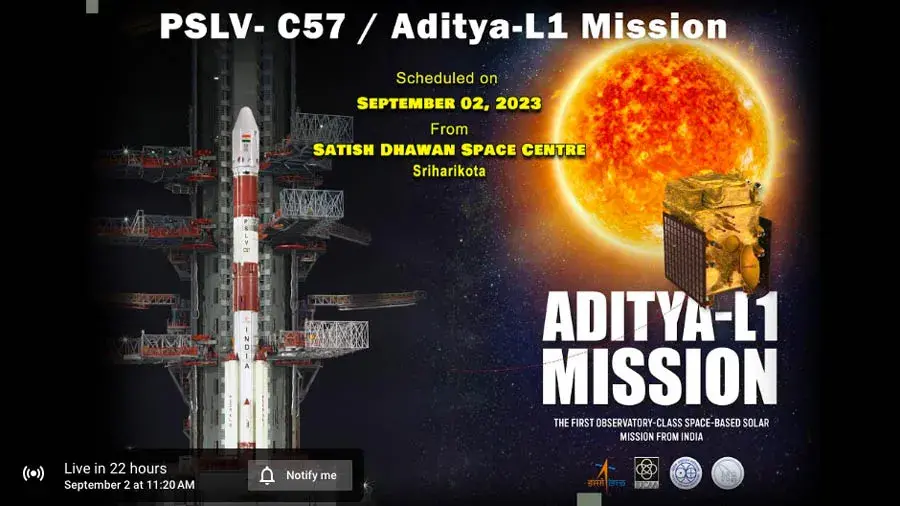
In a historic leap for India’s space exploration endeavours, the Indian Space Research Organisation (ISRO) has achieved a remarkable milestone with the successful launch of the Aditya-L1 solar observatory. This mission marks India’s inaugural foray into dedicated solar research, as the spacecraft embarks on a groundbreaking journey to the Sun-Earth L1 point. With precise placement into its intended orbit, Aditya-L1 now sets its sights on unravelling the enigmas of our nearest star, promising groundbreaking insights into solar dynamics and their influence on space weather. This mission not only positions ISRO at the forefront of solar science but also holds immense potential for advancing our understanding of the solar system’s intricate workings and their implications for life on Earth. PSLV-C57/Aditya-L1 Mission: The launch of Aditya-L1 by PSLV-C57 is accomplished successfully. The vehicle has placed the satellite precisely into its intended orbit. India’s first solar observatory has begun its journey to the destination of Sun-Earth L1 point. — ISRO (@isro) September 2, 2023 Prime Minister Narendra Modi congratulated the scientists and engineers at ISRO for the successful launch of India’s first Solar Mission, Aditya -L1. After the success of Chandrayaan-3, India continues its space journey. Congratulations to our scientists and engineers at @isro for the successful launch of India’s first Solar Mission, Aditya -L1. Our tireless scientific efforts will continue in order to develop better… — Narendra Modi (@narendramodi) September 2, 2023 Aditya-L1 will be India’s pioneering space-based mission focused on unravelling the mysteries of our nearest star, the Sun. This state-of-the-art spacecraft will be positioned in a halo orbit around the Lagrange point 1 (L1) of the Sun-Earth system, situated approximately 1.5 million kilometers from Earth. This unique orbit offers a significant advantage – uninterrupted views of the Sun, free from any eclipses or occultations. Consequently, Aditya-L1 will provide invaluable real-time observations of solar activities and their impact on space weather. The spacecraft is equipped with seven payloads designed to observe various layers of the Sun, including the photosphere, chromosphere, and the outermost layer, the corona. These payloads utilize electromagnetic, particle, and magnetic field detectors to gather data. Positioned at the Lagrange point L1, four of these payloads will directly observe the Sun, while the remaining three will conduct in-situ studies of particles and fields, offering crucial insights into the dynamics of solar activity within the interplanetary medium. The Aditya-L1 payloads are expected to deliver vital information on several key aspects, including the enigmatic problem of coronal heating, coronal mass ejections, pre-flare and flare activities, space weather dynamics, and the propagation of particles and fields in space. Science Objectives: The primary scientific objectives of the Aditya-L1 mission encompass: Solar Atmospheric Dynamics: Investigating the dynamics of the solar upper atmosphere, particularly the chromosphere and corona. Coronal Heating and Plasma Physics: Studying the mechanisms behind chromospheric and coronal heating, as well as the behavior of partially ionized plasma, initiation of coronal mass ejections, and solar flares. Particle Dynamics: Observing the in-situ particle and plasma environment to provide data for understanding particle dynamics originating from the Sun. Corona Heating Mechanism: Examining the physics of the solar corona and its heating mechanisms. Plasma Diagnostics: Providing diagnostics for coronal and coronal loop plasma, including temperature, velocity, and density measurements. Coronal Mass Ejections: Investigating the development, dynamics, and origins of coronal mass ejections (CMEs). Magnetic Field Studies: Studying magnetic field topology and measurements in the solar corona. Space Weather Drivers: Identifying the drivers for space weather, including the origin, composition, and dynamics of the solar wind. The launch of Aditya-L1 heralds a significant milestone in India’s space research efforts, positioning the country at the forefront of solar science and space weather forecasting. As Aditya-L1 embarks on its mission to unlock the secrets of the Sun, it promises to shed light on crucial aspects of our solar system, benefiting both scientific understanding and practical applications on Earth.


ISRO’s Aditya-L1 Mission: India’s Solar Observatory Launches Successfully Read More »

NCERT Granted Deemed University Status

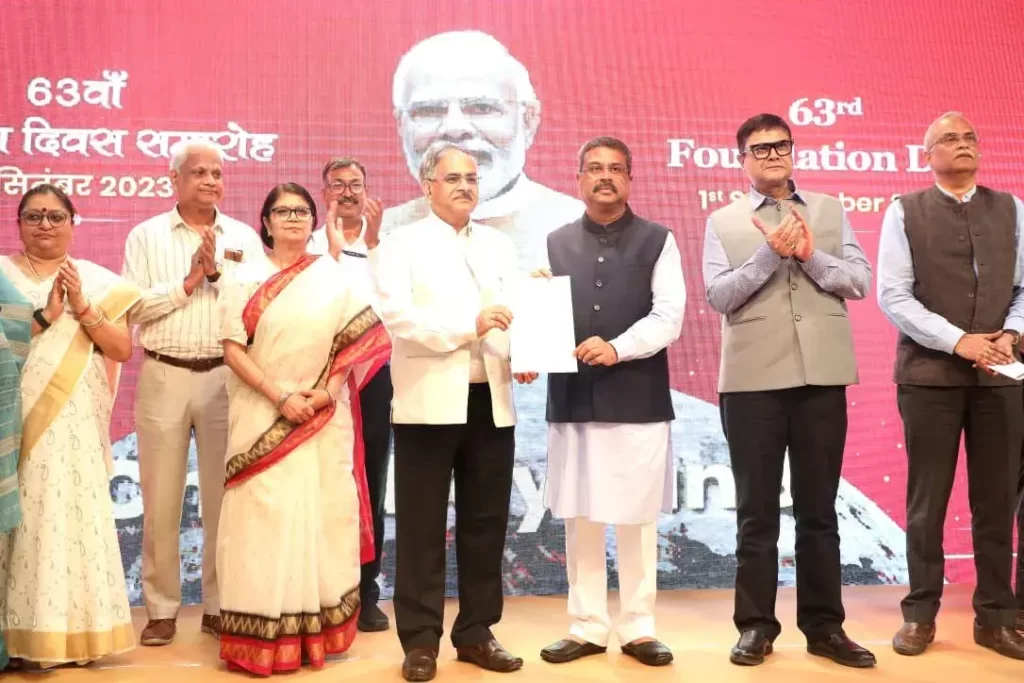
In a significant development, the National Council of Educational Research and Training (NCERT) has been granted the prestigious status of a deemed university, as announced by the Union Minister for Education and Skill Development and Entrepreneurship, Dharmendra Pradhan. This announcement was made during the commemoration of NCERT’s 63rd foundation day in the national capital. Over the years, NCERT has played a pivotal role in educational research and has actively influenced various aspects of school education, teacher training, and adult literacy. With this new status as a research university, NCERT will have the opportunity to engage in global collaborations and contribute to the international educational landscape. Minister Pradhan also highlighted the significance of “Jadui Pitara,” an innovative play-based learning-teaching material designed for children aged 3 to 8 years, which has the potential to positively impact 10 crore children across the country. During his address, Minister Pradhan stressed the importance of creating educational content in native languages. He proposed the establishment of Augmented Reality, Virtual Reality, and Artificial Intelligence labs in all seven regional NCERT centres to foster research and innovation in India. These centres should be equipped with state-of-the-art technologies from around the world and have infrastructure ready for the future. He also urged NCERT to standardize teacher training curricula in Early Childhood Care and Education (ECCE). Recognizing the significance of the fourth industrial revolution, Minister Pradhan suggested the creation of concise booklets covering various subjects, including recent developments like India’s Covid-19 management and Chandrayaan 3. He emphasized the importance of imparting knowledge about the latest advancements alongside Indian values and traditions to the new generation. During the event, students from the Regional Institute of Education in Bhopal performed a skit and song in 22 languages, showcasing the educational impact of “Jadui Pitara.” Additionally, a short film highlighted several noteworthy initiatives and achievements of NCERT. Minister Pradhan also inaugurated a new Information and Communication Technology (ICT) laboratory at the Central Institute of Educational Technology (CIET) as part of the celebrations. NCERT, established in 1961 under the Society Act, has been instrumental in advising and assisting the government in matters related to school education. This recent recognition as a deemed university marks a significant milestone in its educational journey.

NCERT Granted Deemed University Status Read More »

Hindustan Coca-Cola Beverages to Train 25,000 Women in Financial and Digital Literacy

Hindustan Coca-Cola Beverages (HCCB) has embarked on a mission to provide financial and digital literacy training to 25,000 women across India in collaboration with the Y4D foundation. This initiative aims to bridge the knowledge gap in financial matters and technology. The training will be conducted in classroom settings at various locations throughout the country. Through this effort, HCCB seeks to empower women to take control of their financial independence and harness the opportunities presented by government schemes and the digital realm. HCCB has previously supported women-led self-help groups, enabling them to manage their businesses successfully, and now aims to cultivate more entrepreneurs through this initiative. The financial literacy training will cover essential concepts such as banking fundamentals, account opening procedures, unified payments interface (UPI) training, investment guidance, net banking, and information on government schemes like Beti Bachao Beti Padhao and Sukanya Samriddhi Yojana Nari Shakti. The digital literacy training will encompass subjects like mobile banking, digital market connections, and cyber safety and security to equip these women with the necessary skills to thrive in the digital age. The women will be grouped based on their individual requirements, needs, digital literacy levels, and financial knowledge to ensure a more focused and effective learning experience. According to Himanshu Priyadarshi, Chief Public Affairs, Communications & Sustainability Officer at Hindustan Coca-Cola Beverages, the company is committed to fostering an equitable environment, not only for its employees but also for the communities in which it operates. By enhancing the financial and digital literacy of these women, HCCB hopes to contribute to India’s economic growth. HCCB firmly believes that the financial and digital inclusion of underserved women is vital to unlock India’s economic potential, aligning with Prime Minister Modi’s call for women-led development and the role of technology in promoting inclusivity and positive change. Gaurav Sharma, Chief People Officer at Hindustan Coca-Cola Beverages, emphasizes that their commitment to empowering women extends beyond the organization to society at large, creating sustainable progress. He is confident that these training sessions will serve as impactful channels to uplift and equip these 25,000 women with essential digital and financial skills, fostering positive change in the broader community and contributing to a more empowered, inclusive, and resilient society.

Hindustan Coca-Cola Beverages to Train 25,000 Women in Financial and Digital Literacy Read More »

Polio Remains a Public Health Emergency of International Concern: WHO

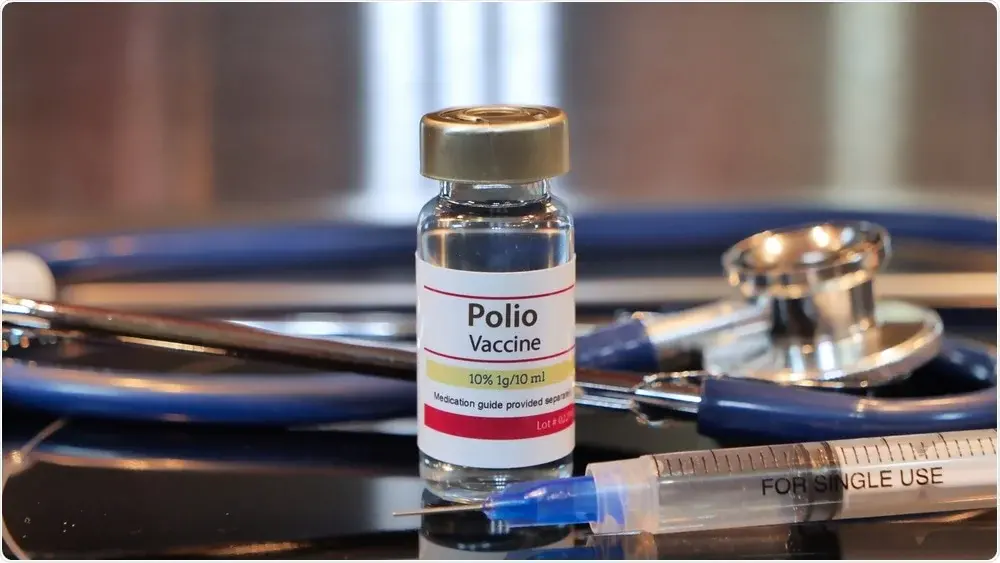
The World Health Organization (WHO) has issued a report stating that the risk of the poliovirus spreading internationally remains a significant concern for public health. Currently, there are no travel restrictions in place for Pakistan. The potential for the international transmission of Wild Poliovirus type 1 (WPV1) in Pakistan, Afghanistan, and Africa is influenced by various factors. One of the reasons for polio transmission in Pakistan is the ongoing spread of the virus from eastern Afghanistan across the border. Additionally, there is a worrisome number of unvaccinated children in southern Afghanistan, posing a continuous risk of WPV1 reintroduction in that region. The report highlights suboptimal immunization coverage during vaccination campaigns in southeastern Africa, specifically in Malawi, Mozambique, Zambia, and Zimbabwe, which may lead to insufficient population immunity to stop transmission. In Pakistan, a new WPV1 case was reported in Khyber Pakhtunkhwa province on February 20, 2023. Furthermore, environmental surveillance has detected three positive samples in 2023, two in Punjab and one in KP, with two of them linked to viruses circulating in Afghanistan. In Afghanistan, no new cases have been reported in 2023, with the last case occurring on August 29, 2022. However, there have been 18 positive environmental samples in 2023, all from the eastern region, with three from Kunar and 15 from Nangarhar. Regarding the WPV1 outbreak in southern Africa, there have been no new cases reported since August 10, 2022, in Mozambique. To mitigate the risk of polio spread, the WHO committee recommends that all residents and long-term visitors (staying more than four weeks) of all ages should receive a dose of either bivalent oral poliovirus vaccine (bOPV) or inactivated poliovirus vaccine (IPV) between four weeks and 12 months before international travel. Travelers should also obtain an International Certificate of Vaccination or Prophylaxis as proof of vaccination. The committee emphasizes the need to restrict international travel for residents lacking appropriate polio vaccination documentation at the point of departure, regardless of the mode of transportation.

Polio Remains a Public Health Emergency of International Concern: WHO Read More »

Government Calls Special Parliament Session, Sept 18-22, Agendas Awaited

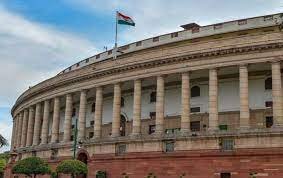
The Central Government has summoned a “special session of Parliament” scheduled to run from September 18 to 22, with five sittings in total, as confirmed by Union Minister Pralhad Joshi on a social media platform. Joshi expressed optimism for productive discussions and debates during this session, known as the 13th Session of the 17th Lok Sabha and the 261st Session of the Rajya Sabha, during what he referred to as the “Amrit Kaal.” The government has not yet disclosed specific agendas for this session, although some reports speculate that it might involve the transition from the old Parliament building to the new one. It’s possible that this session could commence in the old building and conclude in the new facility. Additionally, discussions about a roadmap for the nation’s next 25 years are anticipated during the session. Notably, the inauguration of the new Parliament building took place while there was significant unrest due to the wrestlers’ agitation. In a previous Monsoon session of Parliament held between July 20 and August 11, tensions ran high between the ruling coalition and the opposition, primarily due to the issue of ethnic violence in Manipur. During that session, a vote of no confidence against the Modi government was introduced by I.N.D.I.A but was easily defeated on the final day, marked by the opposition’s walkout during the Prime Minister’s address.

Government Calls Special Parliament Session, Sept 18-22, Agendas Awaited Read More »

Maharashtra Announces Ambitious Plan for 1,499 New Colleges in 2023

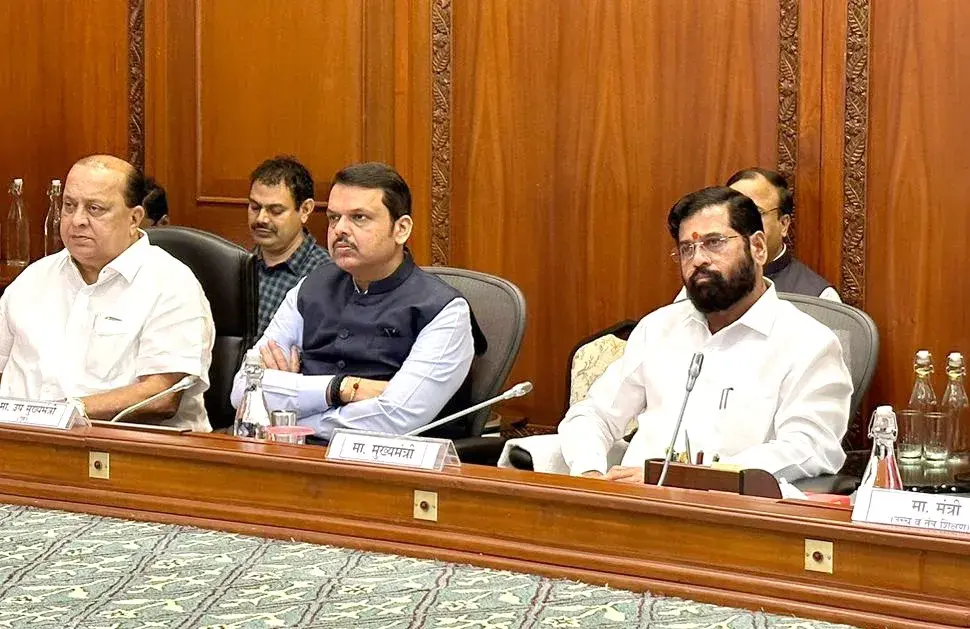
Around 1,499 new colleges are set to be established in Maharashtra this year, as revealed by Deputy Chief Minister Devendra Fadnavis. The decision was announced during a gathering of the Maharashtra State Commission for Higher Education and Development (MAHED), presided over by Chief Minister Eknath Shinde, held at Sahyadri Guest House. Fadnavis shared that the meeting centered around a five-year strategy (2024-2029) that was discussed and sanctioned to determine the specific locations for these proposed colleges. Fadnavis took to Twitter and mentioned that during this meeting, a comprehensive five-year plan for 2024 to 2029 was endorsed to identify suitable locations for initiating colleges and institutions. As per this blueprint, this year will witness the establishment of colleges in 1499 different sites across the state. 🕜1.45pm | 30-8-2023 📍 Mumbai | दु. १.४५ वा. | ३०-८-२०२३ 📍मुंबई. 🔸 Meeting with Maharashtra State Commission for Higher Education and Development (MAHED) 🔸 महाराष्ट्र राज्य उच्च शिक्षण व विकास आयोग (माहेड) समवेत बैठक@mieknathshinde #mumbai #maharashtra pic.twitter.com/3vIJKX8SbI — Devendra Fadnavis (@Dev_Fadnavis) August 30, 2023 Additionally, discussions during the meeting also witnessed experts expressing contentment with the National Education Policy (NEP) of 2020.

Maharashtra Announces Ambitious Plan for 1,499 New Colleges in 2023 Read More »